Choosing the right microphone preamp can make a major difference when recording vocals, podcasts, instruments, or streaming at home. The best option depends on your microphone type, available gain, noise performance, and whether you need a standalone unit or a complete audio interface.
We compare 10 microphone preamps for home use, including inline activators for low-output dynamic microphones, rack-style preamps with tone controls, and USB interfaces that combine microphone gain with recording connectivity.
Best 10 Microphone Preamps for Home Use Picks for 2026
Best All-in-One Interface
Focusrite Scarlett Solo 3rd Gen

- One XLR mic preamp with 56dB gain
- Air mode adds recording clarity
- 24-bit/192kHz USB recording
Best For: Home musicians, podcasters, and creators needing a complete interface
Best for Quiet Dynamic Mics
Cloudlifter CL-1 Mic Activator

- Adds up to +25dB of clean gain
- Uses phantom power without passing it to passive ribbons
- Useful for podcasts, vocals, and streaming
Best For: Home studios using low-output passive microphones
Best Compact Inline Upgrade
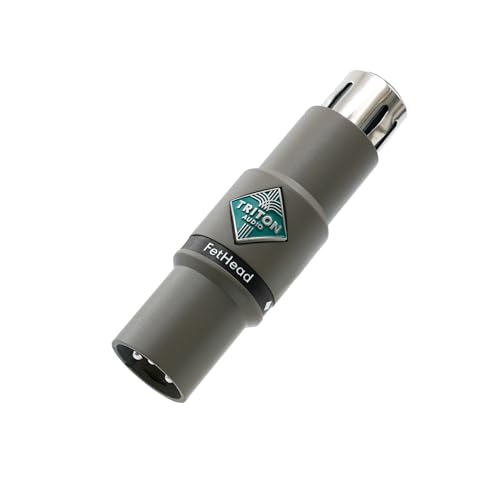
- Low-noise Class-A JFET amplifier
- Shielded compact enclosure
- Four matched JFETs
Best For: Home recordists wanting a compact inline preamp
Best Rack-Mount Control Center
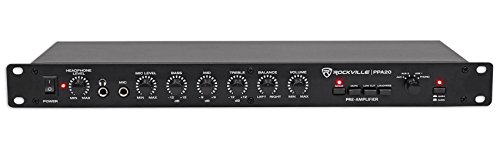
- Three-band EQ and broad tone controls
- Phono, AUX, mic, RCA, XLR, and headphone connections
- Rack-mountable 1U design with low-cut and ground lift
Best For: Home audio systems needing multiple inputs and hands-on control
Best Low-Noise Upgrade

- 19–66dB gain with stated -120dBV EIN
- Supports microphones and instruments
- Type-C power and multiple output formats
Best For: Flexible home recording setups needing substantial gain
Best Simple Inline Booster

- Adds 28dB of gain
- Compact inline form factor
- Designed for dynamic microphones
Best For: Minimal home setups needing extra dynamic-mic level
Best for Dynamic Mics
StudioMan DPM1 29dB XLR Preamp

- Adds 29dB to dynamic and ribbon mics
- Requires 48V phantom power
- Rugged plug-and-play metal XLR design
Best For: Home podcasting and vocals with a compatible dynamic mic
Compact Home Studio Pick

- Clean, transparent 20dB gain
- 48V support for dynamic and condenser mics
- Compact metal housing for home or portable use
Best For: Home studios, podcasting, recording, and live streaming
Dynamic Mic Specialist

- +25dB clean gain for dynamic and passive ribbon mics
- Balanced XLR input and output
- Compact shielded metal chassis
Best For: Dynamic-mic podcasting, streaming, and home recording
High-Gain Inline Option

- Class A circuit with 28dB gain
- 48V phantom-power compatibility
- Shielded inline XLR design
Best For: Low-sensitivity dynamic microphones and XLR home setups
Best All-in-One Interface – Focusrite Scarlett Solo 3rd Gen
The Focusrite Scarlett Solo 3rd Gen is a practical starting point for microphone preamps for home use, combining one XLR mic preamp with a Hi-Z instrument input in a compact USB-C audio interface. Its Air mode, 56dB gain range, and up-to-192kHz recording support suit home vocals, podcasts, and instruments.
Best For: Home musicians, podcasters, and creators who need a complete USB recording interface.
Pros:
- High-performance mic preamp with switchable Air mode for added clarity.
- 24-bit/192kHz converters and Gain Halos support detailed, low-distortion recording.
- Includes headphones and monitor outputs plus a useful software bundle.
Cons:
- Provides one XLR microphone preamp, so it is not designed for multi-mic recording.
- Requires a computer or compatible iPad-based setup for USB recording.
Choose the Scarlett Solo when you want microphone gain, instrument connectivity, monitoring, and recording software in one straightforward home-studio package.
Best for Quiet Dynamic Mics – Cloudlifter CL-1 Mic Activator
The Cloudlifter CL-1 is an inline gain booster for microphone preamps for home use, adding up to 25dB of ultra-clean gain to quiet passive microphones. It uses phantom power while keeping phantom power from reaching compatible passive ribbon microphones, making it useful for vocals, voiceovers, podcasts, and streaming.
Best For: Home studios using low-output passive dynamic or ribbon microphones.
Pros:
- Adds up to +25dB of microphone gain while preserving the microphone’s natural sound.
- Designed to reduce noise and improve clarity for quiet audio sources.
- Works with standard microphone inputs that provide +48V phantom power.
Cons:
- It is an inline activator, not a standalone recording interface or complete preamp system.
- Requires a compatible phantom-powered microphone input.
The CL-1 makes sense when your existing interface or mixer lacks enough clean gain for a passive microphone, but it should be viewed as an addition to—not a replacement for—a primary preamp.
Best Compact Inline Upgrade – Triton Audio FetHead
The Triton Audio FetHead is a compact inline microphone preamp for home use built around a low-noise Class-A JFET amplifier. Its shielded enclosure and matched JFET design make it a focused option for adding inline gain while keeping the setup small.
Best For: Home recordists who want a compact, low-noise inline preamp.
Pros:
- Uses a low-noise Class-A JFET amplifier.
- Features a shielded enclosure for a compact, focused design.
- Employs four matched JFETs and a double single-ended amplifier topology.
Cons:
- The supplied notes do not specify a gain figure or detailed microphone compatibility.
- It is an inline preamp rather than a full USB interface with monitoring and recording connections.
The FetHead is worth considering when space and low-noise inline amplification matter most, provided your existing microphone setup supplies the connections and power it requires.
Best Rack-Mount Control Center – Rockville PPA20 Pre-Amplifier
The Rockville PPA20 is a rack-mount preamplifier for home use that combines a 1/4-inch microphone input with a three-band EQ, multiple AUX inputs, phono connectivity, and XLR master outputs. Its low-cut filter, ground lift, balance controls, and headphone output make it suited to broader home audio and live-style setups.
Best For: Home audio systems and rack-based setups needing multiple inputs and hands-on tone control.
Pros:
- Offers three-band bass, midrange, and treble EQ for sound shaping.
- Provides phono, five AUX, microphone, RCA, XLR, and headphone connections.
- Includes low-cut, ground-lift, mute/pad, balance, and loudness controls.
Cons:
- Uses a 1/4-inch microphone input rather than a stated XLR microphone input.
- Its rack-mount format and broad audio controls may be more than a simple home recording setup requires.
- The supplied notes do not provide a microphone gain range.
Pick the PPA20 if flexible routing and analog-style control are more important than a compact USB recording interface, particularly for rack-mounted home audio or live-oriented systems.
Best Low-Noise Upgrade – RO03 66dB Mic Preamp
The RO03 is a versatile choice for home users looking for microphone preamps for home use with substantial gain, low stated noise, and support for dynamic, condenser, ribbon, and instrument sources. Its Type-C power input also makes it easier to use in portable recording setups.
Best For: Home recordists who need flexible microphone and instrument connectivity with up to 66dB of usable gain.
Pros:
- Offers a 19–66dB gain range and a stated -120dBV EIN.
- Supports dynamic, condenser, and ribbon microphones, plus instruments through a 1MΩ input.
- Provides XLR, TRS, and TS outputs, with Type-C power for added portability.
- Can deliver three outputs simultaneously and includes +4dBu and -10dBV output options.
Cons:
- The two input ports cannot be used simultaneously.
- The manufacturer recommends connecting to an audio interface’s TRS line input for the lowest noise, so the right cable may be necessary.
- It is a single-channel unit.
The RO03 stands out when you want more than a simple inline booster. Its broad source compatibility and instrument-friendly impedance make it a practical centerpiece for a flexible home recording chain, provided you follow the recommended TRS connection guidance.
Best Simple Inline Booster – 28dB Dynamic Mic Preamp
This compact inline unit is a straightforward option for microphone preamps for home use when a dynamic microphone needs an additional 28dB of gain. Its small cylindrical design is suited to a minimal setup between the microphone and the rest of the signal chain.
Best For: Dynamic-microphone users who want a simple, compact 28dB signal boost.
Pros:
- Adds 28dB of gain to a dynamic microphone signal.
- Compact dimensions make it easy to fit into a home recording setup.
- Lightweight black design keeps the installation unobtrusive.
Cons:
- The supplied information only specifies compatibility with dynamic microphones.
- Its feature set is more limited than a full preamp with multiple inputs and outputs.
- The notes do not specify additional controls, noise performance, or included accessories.
Choose this model when your needs are focused on one job: adding 28dB to a dynamic microphone. It is best viewed as a basic inline gain solution rather than a fully featured recording preamp.
Best for Dynamic Mics – StudioMan DPM1 29dB XLR Preamp
The StudioMan DPM1 is a focused option among microphone preamps for home use, adding 29dB of gain to low-output dynamic and ribbon microphones. Its plug-and-play XLR format is designed to sit between the microphone and an interface or mixer, but it requires 48V phantom power and is not intended for condenser microphones.
Best For: Podcasters, streamers, and home vocalists using compatible dynamic or ribbon microphones with a 48V-equipped interface or mixer.
Pros:
- Provides a stated +29dB of clean, transparent gain for dynamic and ribbon microphones.
- Compact metal housing is designed for durability and interference shielding.
- Works with standard XLR microphones and interfaces or mixers supplying 48V phantom power.
- Includes a one-year manufacturer warranty and stated technical support.
Cons:
- Requires 48V phantom power, which is not included.
- Strictly not for condenser microphones.
- It is a fixed-gain inline adapter rather than a full preamp with adjustable controls.
The DPM1 makes sense if you already have a phantom-powered interface or mixer and need more headroom from a quiet dynamic or ribbon microphone. Confirm both microphone type and phantom-power availability before choosing it.
Compact Home Studio Pick – 20dB Mic Preamp
For home users seeking microphone preamps for home use, this compact model provides 20dB of balanced gain in a lightweight housing. Its 48V power support makes it suitable for both dynamic and condenser microphones, while the fully balanced circuit is designed to keep added noise low.
Best For: Home studios, podcasting, recording, and live streaming setups that need a small, straightforward XLR preamp.
Pros:
- Provides clean, transparent 20dB gain.
- Supports both dynamic and condenser microphones with 48V power.
- Compact, lightweight design is easy to store or transport.
- Black metal casing helps reduce electromagnetic interference.
Cons:
- Offers less gain than some competing models in this selection.
- Its XLR-focused design may require additional equipment for certain setups.
This is a practical entry-level choice when you want a portable signal boost without a bulky desktop unit. The 20dB gain and broad microphone compatibility make it flexible for typical home recording and streaming chains.
Dynamic Mic Specialist – StudioMan CL-100 XLR Preamp
Among microphone preamps for home use, the StudioMan CL-100 is aimed specifically at dynamic and passive ribbon microphones. It delivers up to 25dB of clean gain through balanced XLR connections and uses a compact metal chassis suited to desk-based recording setups.
Best For: Home studios, podcasting, streaming, and recording chains built around dynamic or passive ribbon microphones.
Pros:
- Designed for dynamic and passive ribbon microphones.
- Provides +25dB of clean gain with noise suppression.
- Standard balanced XLR input and output integrate with interfaces and mixers.
- Compact metal housing offers EMI/RFI shielding and portability.
Cons:
- Its stated design focus is narrower than models intended for both dynamic and condenser microphones.
- Requires compatible equipment with XLR connections for integration.
The CL-100 stands out when a dynamic microphone needs a stronger signal before reaching an interface or mixer. Its published frequency response, compact chassis, one-year warranty, and technical support add practical appeal for home recording users.
High-Gain Inline Option – Bolanle NK1 28dB XLR Preamp
The Bolanle NK1 is a compact inline option for shoppers comparing microphone preamps for home use. Its Class A transistor circuit supplies 28dB of gain, while XLR connectivity and 48V phantom-power compatibility help it fit into microphone, mixer, and audio-interface setups.
Best For: Users who need a high-gain inline booster for low-sensitivity dynamic microphones or an XLR-based home recording chain.
Pros:
- Offers 28dB of gain for low-sensitivity microphones.
- Compatible with 48V phantom power and XLR equipment.
- Balanced output and shielded alloy casing are designed to reduce interference.
- Gold-plated copper contacts are intended to support stable signal transmission.
Cons:
- It has no power plug and relies on compatible 48V phantom-power equipment.
- Its inline format provides fewer described controls than a full desktop preamp.
With the highest stated gain in this group, the NK1 is well suited to situations where a dynamic microphone’s output is especially low. Its one-piece XLR design keeps the signal path simple, provided your interface or mixer supplies compatible phantom power.
How We Picked the Best Microphone Preamps for Home Use
We focused on practical features that matter in untreated rooms and compact home studios: usable clean gain, low noise, microphone compatibility, connection type, phantom-power requirements, build quality, and setup simplicity. The list includes inline boosters, standalone preamps, and USB audio interfaces so you can match the product to your existing equipment.
Specifications such as gain ratings and equivalent input noise are useful starting points, but real-world compatibility matters just as much. An inline preamp may need 48V phantom power from an audio interface, while a USB interface can provide both the preamp and computer connection in one device.
Quick Comparison
| Best For | Recommended Type | What to Look For |
|---|---|---|
| Low-output dynamic or ribbon microphones | Inline activator | Clean gain, low noise, phantom-power pass-through |
| Recording directly to a computer | USB audio interface | Mic input, headphone output, monitor control, driver support |
| Multiple sources or rack setups | Standalone or rack preamp | Input flexibility, EQ, crossover, and output options |
| Simple vocal or podcast rigs | Compact XLR preamp | Plug-and-play operation and durable housing |
Key Buying Factors for Microphone Preamps for Home Use
Gain and Noise
Choose enough gain to reach a healthy recording level without pushing the preamp into audible hiss. Low-output dynamic and ribbon microphones typically benefit most from an inline booster with roughly 20 to 30 dB of additional gain. A higher gain rating is not automatically better if the circuit adds noise.
Microphone and Phantom-Power Compatibility
Check whether your microphone is dynamic, condenser, or ribbon. Condenser microphones require phantom power, while passive inline boosters commonly draw phantom power from the interface and pass it through to the microphone. Use extra caution with passive ribbon microphones and confirm the manufacturer’s guidance before enabling phantom power.
Connections and Workflow
XLR in-line units are convenient when you already own an audio interface or mixer. A USB interface is usually the better choice when you need direct computer recording, headphone monitoring, and volume control in one box. Rack preamps make more sense when you need permanent installation or additional processing.
Controls and Features
Basic clean gain is often preferable for voice recording, but EQ, crossover controls, metering, and multiple outputs can be valuable for live sound or complex setups. Avoid paying for controls you will not use, especially in a small home studio.
Who Should Buy Which Microphone Preamps for Home Use?
Buy an inline activator if your dynamic microphone sounds quiet even with your interface gain turned high. Choose the Focusrite Scarlett Solo if you need a straightforward computer-recording setup with microphone input and monitoring in one device. Consider a compact standalone XLR preamp for a simple mixer-based vocal or podcast rig.
A rack-style unit is best for users who need extra routing or tone-shaping controls, while a higher-gain, low-noise preamp is the better fit for sensitive ribbon microphones or demanding broadcast microphones. Before buying, verify connector requirements, phantom-power behavior, available gain, and whether the unit fits your existing interface or mixer.