The best drawing tablet with pen pressure makes digital lines feel more natural by responding to how lightly or firmly you press the stylus. That control matters for sketching, shading, lettering, photo editing, and digital painting.
This roundup includes compact screenless tablets, shortcut-rich work surfaces, and pen displays from Wacom, XPPen, HUION, and GAOMON. Use the guide below to match pressure sensitivity, size, connectivity, and display features to your workflow.
Best 10 Drawing Tablet with Pen Pressure Picks for 2026
Best Screen-Based Pick

- 11.6-inch full-laminated display
- 8,192 pressure levels with tilt support
- Red dial and eight shortcut keys
Best For: Connected computer users who want direct-on-screen drawing
Best Compact Starter

- Compact 6-by-3.7-inch active area
- Battery-free pen with 4,096 pressure levels
- Includes software access and training
Best For: Beginners, students, and space-conscious creators
Best Color-Accurate Display
- 16,384 pressure levels with PenTech 4.0
- 99% sRGB and factory color calibration
- Dual dials, five keys, and full lamination
Best For: Detailed artwork and color-conscious connected workflows
Best Large Pen Tablet

- Large 10-by-6.25-inch active area
- 16,384 pressure levels with 60-degree tilt
- Eight shortcuts and broad OS compatibility
Best For: Manga, animation, teaching, and spacious screenless drawing
Best Large Workspace Pick

- 10 x 6.25-inch working area
- 8,192 pressure levels with tilt support
- 28 programmable shortcut controls
Best For: Artists who want a spacious, customizable non-display tablet
Best Screen Tablet for Beginners

- 11.9-inch full-laminated drawing display
- 16,384 pressure levels with magnetic stylus
- One-cable USB-C connection
Best For: Beginners who prefer drawing directly on a screen
Best Compact Travel Pick

- Portable 6 x 4-inch active area
- 8,192 pressure levels with battery-free pen
- Six customizable shortcut keys
Best For: Mobile sketching, note-taking, and lightweight creative work
Best Beginner Drawing Tablet with Pen Pressure

- 16,384 pressure levels with 60° tilt support
- Large 10 x 6.25-inch active area
- Eight customizable keys and battery-free stylus
Best For: Beginners wanting a spacious, versatile pen tablet
Best Compact Drawing Tablet with Pen Pressure
- 8,192 pressure levels with a battery-free pen
- Compact 6.5 x 4-inch active area
- Four customizable express keys
Best For: Portable drawing, annotation, and online work
Best Wireless Drawing Tablet with Pen Pressure
- 16,384 pressure levels with tilt response
- Bluetooth 5.0 and USB connectivity
- Eight customizable shortcut keys
Best For: Portable, cable-free drawing and online teaching
Best Screen-Based Pick – XP-Pen Artist12 Pro
The XP-Pen Artist12 Pro is a strong choice if you want a drawing tablet with pen pressure and a built-in screen. Its 11.6-inch full-laminated display, 8,192 pressure levels, tilt support, and shortcut controls are suited to artists who prefer drawing directly on the canvas.
Best For: Digital artists, illustrators, teachers, and creators who want a compact pen display for a connected computer.
Pros:
- Full lamination and anti-glare film help reduce parallax and reflections.
- Battery-free stylus offers 8,192 pressure levels and up to 60-degree tilt support.
- Red dial and eight customizable shortcut keys can speed up common tasks.
- Works with Windows, macOS, ChromeOS, and Linux.
Cons:
- It is a monitor-style tablet and must be connected to a host device.
- The 11.6-inch screen may feel compact for users who want a larger canvas.
Choose the Artist12 Pro when direct-on-screen drawing matters more than portability. The laminated display and physical controls make it a practical upgrade for sketching, painting, annotation, and online instruction.
Best Compact Starter – Wacom Intuos Small
The Wacom Intuos Small is a simple, compact option for anyone seeking a drawing tablet with pen pressure without paying for an integrated display. Its battery-free pen, 4,096 pressure levels, and plug-and-play design make it suitable for learning digital art and editing.
Best For: Students, beginners, teachers, and creators who want a small tablet for drawing, photo editing, design, and document markup.
Pros:
- Battery-free EMR pen provides a pen-on-paper style experience.
- Four ExpressKeys offer quick access to shortcuts.
- Compatible with Windows, Mac, Chromebook, and Android devices.
- Software and online training are included after registration.
Cons:
- It has a 6-by-3.7-inch active area, which may feel limiting for broad gestures.
- Its 4,096 pressure levels are lower than several newer alternatives.
The Intuos Small is a sensible entry point for pressure-sensitive drawing when desk space and budget are priorities. Its compact footprint and included learning resources make it especially approachable for new users.
Best Color-Accurate Display – HUION Kamvas 13 Gen 3
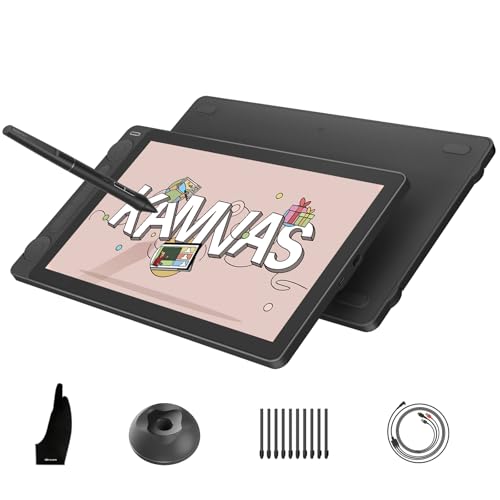
The HUION Kamvas 13 Gen 3 combines a screen with high-resolution pressure input, making it a compelling drawing tablet with pen pressure for detailed artwork. It adds 16,384 pressure levels, full lamination, paper-textured Canvas Glass 2.0, and broad color coverage for creators who value control and display fidelity.
Best For: Artists, designers, editors, and illustrators who want a portable pen display with advanced pressure response and color-focused specifications.
Pros:
- PenTech 4.0 provides 16,384 pressure levels, 2g initial activation force, and tilt auto-alignment.
- Full-laminated Canvas Glass 2.0 reduces glare and adds a paper-textured drawing feel.
- Covers 99% sRGB/Rec.709 and 90% Adobe RGB, with factory calibration to Delta E below 1.5.
- Two dials and five press keys provide configurable workflow controls.
Cons:
- It must be connected to a computer or laptop and is not standalone.
- Its advanced controls and calibration features may be more than casual users need.
For color-sensitive work and detailed line control, the Kamvas 13 Gen 3 is the most feature-rich screen option in this group. Its 865-gram body and symmetrical design also support mobile and left- or right-handed setups.
Best Large Pen Tablet – XP-Pen Deco 01 V3
The XP-Pen Deco 01 V3 is a screenless drawing tablet with pen pressure, offering a generous 10-by-6.25-inch working area for sketching, manga, animation, and remote teaching. Its battery-free stylus, 16,384 pressure levels, tilt support, and eight shortcut keys provide substantial control without adding a display.
Best For: Beginners, manga and anime creators, students, online tutors, and users who want a large portable workspace.
Pros:
- Large 10-by-6.25-inch active area provides room for broad strokes.
- Stylus supports 16,384 pressure levels and 60-degree tilt for shading.
- Eight customizable shortcut keys support faster navigation.
- Works with Windows, macOS, Android, ChromeOS, and Linux.
Cons:
- The screenless design requires looking at a connected device while drawing.
- Android users may need the XPPen Tools app for aspect-ratio adjustment.
- It connects by USB rather than operating independently.
The Deco 01 V3 is a practical value pick when workspace size matters more than an integrated screen. Its thin, ambidextrous design and included accessories make it easy to carry between school, home, and studio setups.
Best Large Workspace Pick – HUION Inspiroy H1060P
If you want a drawing tablet with pen pressure and plenty of room for expressive strokes, the HUION Inspiroy H1060P combines a 10 x 6.25-inch working area with 8,192 pressure levels. Its battery-free stylus, tilt support, and extensive shortcut controls make it suitable for drawing, painting, and photo-editing workflows.
Best For: Artists, illustrators, and hobbyists who prefer a larger non-display tablet with customizable controls.
Pros:
- Large 10 x 6.25-inch working area in a slim 10mm design
- Battery-free stylus with 8,192 pressure levels and ±60° tilt support
- 12 programmable press keys plus 16 programmable soft keys
- Works with Windows, macOS, Android, and Linux Ubuntu systems
Cons:
- Requires a USB adapter for connection to a Mac computer
- Does not currently support iPhone or iPad
- Ubuntu use requires the Xorg display server rather than Wayland
The H1060P is a strong choice when workspace and shortcut access matter more than portability. Its symmetrical design also allows left-handed users to rotate the tablet through the driver.
Best Screen Tablet for Beginners – XPPen Artist 12 3rd
The XPPen Artist 12 3rd is a drawing tablet with pen pressure that puts the artwork directly under the stylus. Its 11.9-inch full-laminated, anti-glare screen, paper-like etched surface, and 16,384 pressure levels are designed to make digital drawing feel more immediate and approachable.
Best For: Beginners, students, and artists who want an affordable screen-based drawing experience with a simple connection setup.
Pros:
- 11.9-inch full-laminated display with AG+AF nano-etched glass
- X4 magnetic stylus offers 16,384 pressure levels and 60° tilt support
- Full-featured USB-C one-cable connection supports data, video, and power
- Includes eight customizable shortcut keys and an S20 foldable stand
Cons:
- One-cable setup depends on a compatible full-featured USB-C connection
- The included display stand may add extra bulk for portable use
With its direct-on-screen workflow and paper-feel surface, the Artist 12 3rd can reduce the adjustment period for new digital artists. It also supports Windows, macOS, Android, ChromeOS, and Linux systems, along with popular software such as Photoshop and Krita.
Best Compact Travel Pick – HUION Inspiroy H640P
For portable work, the HUION Inspiroy H640P is a compact drawing tablet with pen pressure, a 6 x 4-inch active area, and an 8,192-level battery-free stylus. It is small enough for a laptop bag while still offering programmable keys and pressure-responsive control for drawing, notes, photo editing, and signatures.
Best For: Students, traveling artists, and users who need a lightweight tablet for sketching, editing, or everyday pen input.
Pros:
- Compact 6 x 4-inch active area with a 0.61-pound, 0.3-inch-thin design
- Battery-free PW100 stylus with 8,192 pressure levels
- Six customizable press keys and two pen buttons for workflow control
- Supports Windows, macOS, Linux, and Android devices
Cons:
- Smaller active area provides less room than larger drawing tablets
- Does not support iPhone or iPad
- Only six tablet shortcut keys are included
The H640P prioritizes portability without giving up pressure-sensitive pen input. Its driver supports left-handed use, and its compatibility with creative, note-taking, and online education applications makes it useful beyond illustration.
Best Beginner Drawing Tablet with Pen Pressure – XPPen Deco 01 V3
The XPPen Deco 01 V3 is a strong choice if you want a drawing tablet with pen pressure that feels approachable for learning digital art. Its 16,384 pressure levels, 60-degree tilt support, large active area, and battery-free stylus provide room to develop smoother lines and shading.
Best For: Beginners and amateur artists who want a spacious, customizable tablet for drawing, note-taking, and compatible creative software.
Pros:
- 16,384 pressure levels and up to 60-degree tilt support for nuanced strokes.
- Large 10 x 6.25-inch drawing area with eight customizable shortcut keys.
- Battery-free stylus requires no charging and includes replacement nibs.
- Supports Windows, macOS, Android, Chrome OS, and Linux.
Cons:
- It is a pen tablet rather than a display tablet, so you draw while viewing a separate screen.
- Android support requires Android 10.0 or later.
The Deco 01 V3 stands out for combining beginner-friendly setup with a generous workspace and high pressure sensitivity. Choose it if drawing space matters more than wireless operation or a built-in display.
Best Compact Drawing Tablet with Pen Pressure – GAOMON S620
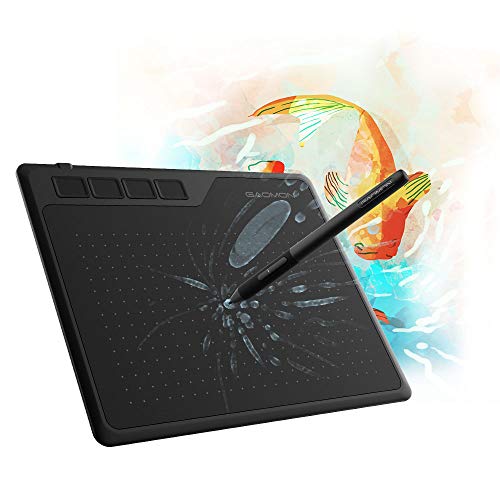
The GAOMON S620 is a compact drawing tablet with pen pressure designed for portable digital art, handwriting, signatures, and online work. Its battery-free pen delivers 8,192 pressure levels, while the 6.5 x 4-inch active area keeps the tablet easy to carry.
Best For: Students, beginners, and creators who need a lightweight tablet for drawing, annotation, online meetings, or rhythm gaming.
Pros:
- 8,192 pressure levels provide precise control for lines and shading.
- Battery-free stylus avoids charging interruptions.
- Four customizable express keys can streamline common functions.
- Compact 6.5 x 4-inch active area suits travel and smaller workspaces.
Cons:
- It has fewer pressure levels and shortcut keys than the XPPen options here.
- It is not compatible with iPad or iPhone.
- USB connectivity is wired rather than wireless.
The S620 is a practical pick when portability and basic creative control are priorities. Its smaller surface is easier to pack, though artists who prefer expansive hand movement may want a larger model.
Best Wireless Drawing Tablet with Pen Pressure – XPPen Deco mini7W
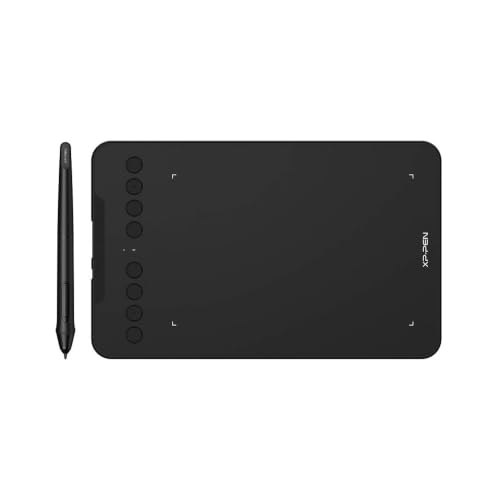
The XPPen Deco mini7W combines wireless flexibility with the pressure control expected from a drawing tablet with pen pressure. Its battery-free stylus offers 16,384 pressure levels and tilt response, while Bluetooth 5.0 and the included USB dongle support convenient connections.
Best For: Artists, teachers, remote workers, and students who want a portable tablet that can connect wirelessly to compatible computers and mobile devices.
Pros:
- 16,384 pressure levels and tilt response support smooth, controlled strokes.
- Bluetooth 5.0 and USB wireless connectivity offer flexible setup options.
- Eight customizable shortcut keys help tailor the workflow.
- Compatible with Windows, macOS, Android, Chrome OS, and Linux.
Cons:
- The 7 x 4-inch active area is smaller than the Deco 01 V3’s workspace.
- Wireless use depends on the compatible connection method and included accessories.
The Deco mini7W is the most flexible option here for users who value cable-free work. It balances high pressure sensitivity and shortcut controls with a smaller, travel-friendly format.
How We Picked the Best Drawing Tablet with Pen Pressure
We focused on practical features that affect everyday drawing rather than relying on pressure-level numbers alone. The selection covers both screenless tablets and pen displays, with options for beginners, students, hobbyists, and more demanding creative work.
Our comparison considers active drawing area, stylus technology, pressure response, tilt support where available, shortcut keys, wired or wireless connectivity, operating-system compatibility, portability, and overall value. A high pressure rating can be useful, but driver quality, pen calibration, surface feel, and tablet size are equally important.
Quick Comparison
- Best for drawing directly on the screen: XPPen Artist 12 Pro, XPPen Artist 12 3rd, or HUION Kamvas 13 (Gen 3).
- Best compact starter options: Wacom Intuos Small, HUION Inspiroy H640P, or GAOMON S620.
- Best larger screenless work areas: HUION Inspiroy H1060P and XPPen Deco 01 V3.
- Best for wireless portability: XPPen Deco mini7W, subject to device and software compatibility.
Key Buying Factors for a Drawing Tablet with Pen Pressure
Pressure Sensitivity and Pen Feel
Pressure sensitivity controls line thickness, opacity, or brush size in supported software. For most users, a reliable battery-free stylus and smooth pressure curve matter more than simply choosing the highest advertised level. Look for tilt support if you use realistic shading or textured brushes.
Screen or Screenless Design
A pen display lets you draw where you see the cursor, which can feel intuitive for illustration and retouching. It is usually more expensive and requires desk space plus extra cables. A screenless tablet is often lighter, more affordable, and comfortable with a properly positioned monitor.
Active Area and Ergonomics
Small tablets suit travel, limited desks, and casual edits, while a larger active area gives broad arm movement and may feel better for detailed artwork. Check the tablet’s footprint, shortcut placement, surface texture, and whether your monitor setup supports comfortable posture.
Controls, Connections, and Compatibility
Express keys can speed up undo, zoom, brush-size changes, and canvas rotation. Confirm the driver supports your operating system and preferred applications before buying. Wired USB models are simple and dependable; Bluetooth models add flexibility but may require charging or pairing management.
Who Should Buy Which Drawing Tablet with Pen Pressure?
Beginners and students should start with a compact Wacom Intuos, HUION H640P, or GAOMON S620 if affordability and easy setup matter most. Digital artists wanting a larger workspace should consider the HUION H1060P or XPPen Deco 01 V3.
Illustrators who prefer direct on-screen drawing should choose an Artist 12 model or the Kamvas 13. These are better suited to users willing to manage display cables and calibrate the pen. Traveling creators and casual editors may prefer the Deco mini7W, provided wireless compatibility meets their needs.
Before purchasing, verify current driver support, included cables, software compatibility, return terms, and the exact model generation. Those details can matter as much as pressure sensitivity when choosing the right drawing tablet.