The best drawing tablet for artists should make your workflow feel natural, whether you sketch casually, illustrate professionally, or edit photos and designs. The right choice depends on your preferred screen size, pressure sensitivity, shortcut controls, software setup, and budget.
These 10 picks include compact pen tablets, full-featured pen displays, and a standalone option for artists who want to work without a computer. Use the guide below to narrow the list based on how and where you create.
Best 10 Drawing Tablet for Artists Picks for 2026
Best Professional Display
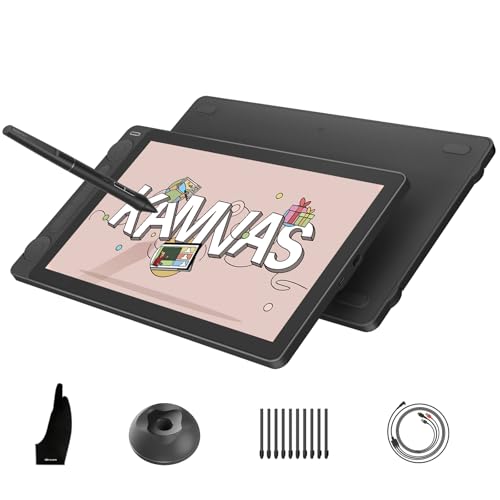
- Full-laminated, paper-textured 13.3-inch display
- 16,384-pressure PenTech 4.0 stylus
- Accurate color with dual dials and shortcut keys
Best For: Artists needing a portable, color-accurate pen display
Best Simple Starter Tablet

- Compact screenless design with 6-by-3.7-inch active area
- Battery-free 4,096-pressure EMR pen
- Four ExpressKeys plus included software access
Best For: Students, beginners, and everyday digital creators
Best Tilt-Controlled Display
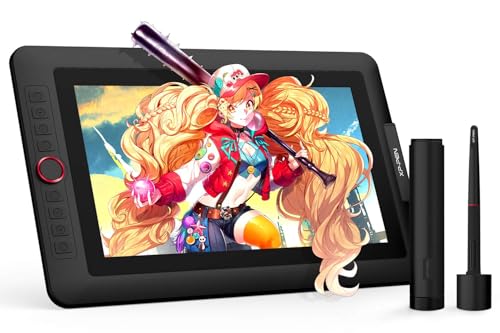
- Fully laminated 13.3-inch FHD pen display
- 60-degree tilt and 16,384 pressure levels
- Dial plus eight customizable shortcut keys
Best For: Illustrators and animators who use tilt-based shading
Best Shortcut-Rich Pen Tablet

- Large 10-by-6.25-inch working area
- 12 press keys and 16 programmable soft keys
- Battery-free tilt pen with 8,192 pressure levels
Best For: Artists wanting a large screenless workspace and many shortcuts
Premium Precision Pick
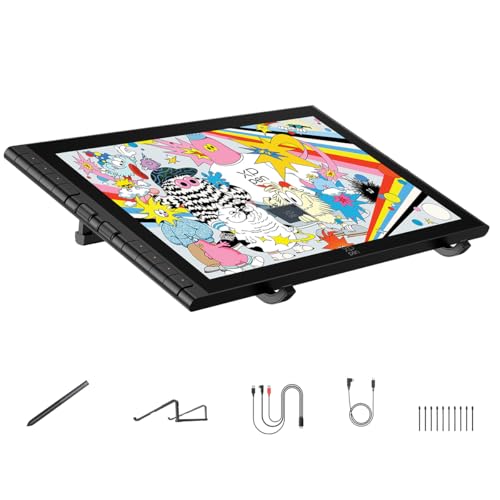
- 16K pressure-sensitive X4 stylus with low activation force
- 15.4-inch laminated FHD display with etched glass
- Wide color coverage, dual wheels, and eight shortcut keys
Best For: Artists who prioritize precision, color control, and a spacious desktop display
Standalone Travel Option

- Works independently without a computer
- 10.1-inch FHD IPS display with Android 12
- Up to five hours of battery use and pre-installed apps
Best For: Beginners, students, and mobile artists who want an all-in-one drawing device
Portable Pro Pick

- Lightweight 1.58-pound, 11.9-inch pen display
- 16K X4 pen with tilt support and replacement tips
- Factory-calibrated color, AG glass, wheels, and shortcut keys
Best For: Mobile illustrators and students who want advanced features in a compact display
Professional Precision

- Pro Pen 3 with 8,192 pressure levels and tilt support
- Ten ExpressKeys plus two mechanical dials
- Bluetooth or USB connectivity for Mac and PC
Best For: Professional artists who prefer a separate monitor
Immersive Full-HD Display
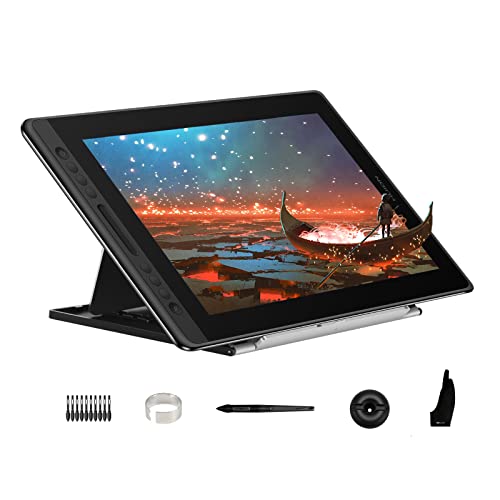
- 15.6-inch laminated anti-glare drawing display
- 120% sRGB coverage with 1000:1 contrast
- Six shortcut keys, touch bar, and adjustable stand
Best For: Artists seeking direct-on-screen drawing at a compact size
Color-Critical Creative Work
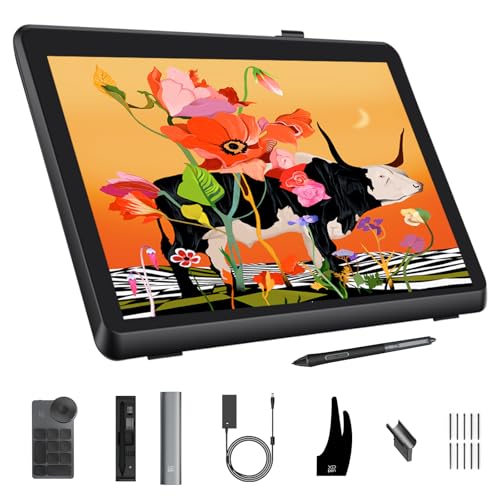
- 21.5-inch 2.5K display with Delta E under 1
- 16,384-pressure-level stylus with tilt support
- Wireless keydial with 40 customizable keys
Best For: Professionals needing a large, color-accurate pen display
Best Professional Display – HUION Kamvas 13 (Gen 3)
The HUION Kamvas 13 (Gen 3) is a strong drawing tablet for artists who want a compact pen display with professional color coverage, a paper-textured surface, and precise pen response. Its 13.3-inch full-laminated screen must connect to a computer or laptop, but the dual dials and shortcut keys can make demanding creative workflows more efficient.
Best For: Artists, designers, animators, and editors who need accurate color and a portable screen-based workspace.
Pros:
- Full-laminated Canvas Glass 2.0 surface reduces glare and provides a natural paper-like feel.
- PenTech 4.0 offers 16,384 pressure levels, 2g initial activation force, and tilt auto-alignment.
- 99% sRGB/Rec.709 and 90% Adobe RGB coverage, with factory calibration to ΔE<1.5.
- Two dials, five press keys, and a slim 11.7mm, 865g design support efficient portable work.
Cons:
- It is a pen display, not a standalone tablet, and requires connection to a compatible computer, laptop, or supported Android device.
- Compatibility and connection requirements vary by operating system and device.
Choose the Kamvas 13 (Gen 3) if screen-based drawing, color fidelity, and configurable controls matter more than standalone operation. Its compact build also suits artists who work in multiple locations.
Best Simple Starter Tablet – Wacom Intuos Small
The Wacom Intuos Small is a straightforward drawing tablet for artists who prefer a compact, screenless design. Its battery-free pen, four ExpressKeys, and broad software compatibility make it practical for drawing, photo editing, design work, and digital markup without adding a display to your desk.
Best For: Students, teachers, beginners, and creators who want a dependable small tablet for computer-based creative work.
Pros:
- Battery-free EMR pen provides a pen-on-paper feel without charging.
- Works with Windows, Mac, Chromebook, and Android devices according to the supplied compatibility details.
- Four ExpressKeys provide convenient shortcut access.
- Registration includes access to creative software and Wacom online training.
Cons:
- The small 6-by-3.7-inch active area may feel restrictive for broad gestures or detailed work.
- It has no built-in screen, so you draw while viewing your computer or connected device.
- It uses a USB-A connection.
The Intuos Small is a sensible choice when portability, simplicity, and established pen technology are priorities. Consider a larger or screen-based model if you want more workspace or direct on-screen drawing.
Best Tilt-Controlled Display – XPPen Artist 13.3 Pro V2
The XPPen Artist 13.3 Pro V2 is a drawing tablet for artists who want direct on-screen control, tilt support, and customizable physical controls. Its fully laminated 13.3-inch display, red dial, and eight shortcut keys are designed to keep common adjustments within reach, though the pen display must connect to a computer or laptop.
Best For: Illustrators, animators, concept artists, photo editors, and 3D creators who value screen-based drawing and tilt-enabled shading.
Pros:
- Fully laminated FHD display minimizes parallax for a more direct drawing experience.
- Supports up to 60 degrees of tilt with a battery-free stylus and 16,384 pressure levels.
- High color coverage is listed at 123% sRGB, 91% Adobe RGB, and 88% NTSC.
- Red dial and eight customizable keys streamline zooming, brush sizing, canvas rotation, and other shortcuts.
Cons:
- It requires connection to a computer or laptop and is not a standalone drawing device.
- The supplied notes do not specify standalone operation or tablet-based use without a compatible host device.
Pick the Artist 13.3 Pro V2 if tilt-sensitive strokes, direct display drawing, and hands-on shortcut controls fit your workflow. It is particularly appealing for artists who frequently shade, rotate canvases, or adjust brush settings.
Best Shortcut-Rich Pen Tablet – HUION Inspiroy H1060P
The HUION Inspiroy H1060P is a drawing tablet for artists who want a generous screenless workspace and many customizable controls. Its 10-by-6.25-inch working area, battery-free tilt pen, and combination of programmable keys suit drawing, painting, writing, and shortcut-heavy software workflows.
Best For: Artists, illustrators, hobbyists, and students who prefer a larger non-display tablet with extensive shortcut customization.
Pros:
- 10-by-6.25-inch working area gives more room for natural strokes than compact tablets.
- Battery-free stylus supports 8,192 pressure levels and ±60-degree tilt.
- Twelve programmable press keys and 16 programmable soft keys offer extensive shortcut options.
- Supports Windows, macOS, Android, and Ubuntu, with symmetrical left- and right-handed use.
Cons:
- It has no built-in drawing screen, so artwork is viewed on the connected computer or device.
- iPhone and iPad are not supported according to the supplied notes.
- Ubuntu use requires the Xorg display server; Wayland is not supported.
The H1060P is a practical fit for artists who want ample workspace and more shortcut controls than a basic pen tablet provides. Its screenless design keeps the setup simple, but users wanting direct on-screen drawing should choose a pen display instead.
Premium Precision Pick – XP-Pen Artist 16 3rd
For artists seeking a professional drawing tablet for artists, the XP-Pen Artist 16 3rd combines a spacious 15.4-inch FHD display with a paper-like etched surface, highly sensitive pen input, and extensive shortcut controls. Its color coverage and nearly parallax-free laminated screen make it suited to detailed illustration, animation, and design work.
Best For: Digital artists, illustrators, animators, and 3D creators who want a large, color-focused pen display.
Pros:
- 16,384 pressure levels, low activation force, tilt support, and a magnetic X4 stylus for precise, responsive strokes.
- 15.4-inch fully laminated FHD display with anti-glare etched glass and minimal parallax.
- Strong color coverage, including 99% sRGB, 98% Adobe RGB, and 97% Display P3, with OSD profile controls.
- Eight customizable keys, dual scroll wheels, included foldable stand, and compatibility with Windows, macOS, Android, ChromeOS, and Linux.
Cons:
- Requires a compatible computer or mobile device for most workflows; it is not a standalone tablet.
- The larger 15.4-inch format may be less convenient for frequent travel than a smaller display.
The Artist 16 3rd is a strong choice when screen size, color flexibility, and precise pen performance matter more than portability. Its controls and included stand also make it practical for long desktop sessions.
Standalone Travel Option – Frunsi RubensTab T11 Pro
The Frunsi RubensTab T11 Pro stands apart from many choices in the drawing tablet for artists category because it works without a computer. Its 10.1-inch Android display, pre-installed drawing apps, and built-in battery support portable sketching, note-taking, and other everyday creative tasks.
Best For: Beginners, students, teachers, and artists who want a self-contained drawing device for travel or flexible use.
Pros:
- Standalone design needs no external computer and runs Android 12.
- 10.1-inch 1920×1200 IPS display, multi-touch controls, and included adjustable stand case.
- Built-in 5800mAh battery provides up to five hours of continuous use and can be extended with a power bank.
- Includes pre-installed drawing apps, a battery-free pressure-sensitive pen, Wi-Fi, and a 12-month warranty.
Cons:
- Its listed 1,024 pressure levels are lower than the pressure sensitivity offered by the XP-Pen alternatives here.
- The smaller display may feel limiting for artists who need a larger canvas for detailed work.
- Battery life is rated for up to five hours, so extended mobile sessions may require recharging.
The RubensTab T11 Pro is the most convenient option for creating away from a desk. Choose it when independence and portability are more important than a large workspace or computer-based software compatibility.
Portable Pro Pick – XP-Pen Artist 12 3rd
For artists who need a compact drawing tablet for artists, the XP-Pen Artist 12 3rd offers a lightweight 11.9-inch pen display without giving up advanced controls. Its etched-glass surface, 16K stylus, factory-calibrated color, and included stand make it suitable for detailed work at home, school, or on the go.
Best For: Illustrators, manga artists, art students, and creators who value portability alongside professional pen and color performance.
Pros:
- Lightweight 1.58-pound design with an 11.9-inch screen and narrower bezels for easier carrying.
- 16,384 pressure levels, 60-degree tilt support, low activation force, and a magnetic X4 pen with replacement tips.
- Full-laminated AG glass reduces glare and fingerprints while keeping parallax low and adding paper-like friction.
- Factory-calibrated 99% sRGB display, dual X-Dial wheels, eight customizable keys, and broad operating-system compatibility.
Cons:
- The 11.9-inch display provides less working area than the Artist 16 3rd.
- Like other pen displays in this comparison, it generally needs a computer or compatible device rather than operating independently.
The Artist 12 3rd is a balanced pick for creators who want high-end pen input and useful controls in a travel-friendly format. It is especially appealing when desk space or carrying weight is a concern.
Professional Precision – Wacom Intuos Pro Medium
For artists who prefer drawing on a separate monitor or laptop, the Wacom Intuos Pro Medium is a professional drawing tablet for artists focused on precise control and efficient workflows. Its Pro Pen 3 supports 8,192 pressure levels, tilt recognition, customizable grips, and lag-free tracking, while Bluetooth connectivity keeps your workspace flexible.
Best For: Animators, designers, photographers, and other professionals who want a premium pen tablet without an integrated screen.
Pros:
- Pro Pen 3 offers 8,192 pressure levels, tilt support, and adjustable ergonomics.
- Ten customizable ExpressKeys and two mechanical dials provide quick access to shortcuts.
- Supports wired USB and wireless Bluetooth connections with Mac and PC computers.
- Large active area in a relatively compact 11.4-by-8.1-inch design.
Cons:
- It does not include an integrated display, so you draw while looking at a separate monitor.
- Its professional controls and customization may be more than casual users need.
The Intuos Pro Medium is a strong choice when pen accuracy, shortcut access, and build quality matter more than having a built-in screen. It is especially well suited to established creative workflows involving animation, design, photo, video, or 3D work.
Immersive Full-HD Display – HUION Kamvas Pro 16
The HUION Kamvas Pro 16 is a screen-based drawing tablet for artists who want to draw directly on a 15.6-inch display. Its fully laminated, anti-glare screen offers 120% sRGB color gamut coverage, while the battery-free pen provides 8,192 pressure levels and 60-degree tilt support.
Best For: Digital painters, illustrators, and designers who want direct-on-screen drawing with adjustable viewing angles and broad operating-system compatibility.
Pros:
- 15.6-inch full-laminated display with anti-glare glass and 1920-by-1080 resolution.
- 120% sRGB color gamut and a 1000:1 contrast ratio support vivid, detailed visuals.
- Six programmable shortcut keys and a touch bar help streamline common commands.
- Includes an adjustable stand with viewing angles from 20 to 60 degrees.
Cons:
- It is not standalone and must connect to a computer or laptop.
- USB connectivity uses a cable, so it offers less wireless flexibility than some alternatives.
- The 15.6-inch display is Full HD rather than higher resolution.
The Kamvas Pro 16 combines direct screen drawing with useful color coverage, shortcut controls, and an included adjustable stand. It is a practical option for artists who want a more natural drawing position without moving up to a larger display.
Color-Critical Creative Work – XPPen Artist Pro 22 Gen 2
The XPPen Artist Pro 22 Gen 2 is a large drawing tablet for artists who need a spacious, color-accurate canvas. Its 21.5-inch 2.5K display is Calman Verified with Delta E under 1, and it covers 99% of Adobe RGB and sRGB plus 94% of Display P3 for demanding illustration, photography, and design work.
Best For: Professional artists, photographers, and graphic designers who prioritize color consistency, high resolution, and a generous direct-drawing workspace.
Pros:
- 21.5-inch 2560-by-1440 display delivers a spacious 137 PPI workspace.
- Calman Verified color accuracy with Delta E under 1 and broad color-gamut coverage.
- X3 Pro stylus provides 16,384 pressure levels, 60-degree tilt, and felt nibs.
- Includes a wireless ACK05 keydial with 40 customizable keys and a physical dial.
Cons:
- Its large footprint may not suit compact desks or mobile setups.
- The included stand adjusts from 15 to 88 degrees but is not height adjustable; the optional ACS15 stand is separate.
- As a pen display, it requires a compatible connected computer or device.
With its large 2.5K screen, verified color performance, high-resolution stylus input, and separate wireless keydial, the Artist Pro 22 Gen 2 is built for serious creative production. It is the strongest fit here for users who can accommodate its size and want extensive workspace and control.
How We Picked the Best Drawing Tablet for Artists
We focused on the features that most affect everyday drawing: pen accuracy, pressure sensitivity, screen quality, active area, shortcut controls, connectivity, compatibility, portability, and overall value. The selection includes both screenless tablets and pen displays so beginners, students, hobbyists, and professionals can compare suitable options without assuming one format fits everyone.
We also considered practical details such as whether a tablet requires a computer, how much desk space it occupies, and whether its controls or display features can improve a long creative session.
Quick Comparison
| Tablet type | Best for | Main advantage |
|---|---|---|
| Small pen tablet | Beginners and compact desks | Affordable, portable setup |
| Medium or large pen tablet | Illustrators and editors | More workspace and shortcut control |
| Pen display | Artists who prefer direct drawing | Draw directly on the screen |
| Standalone tablet | Mobile creators | Works without a separate computer |
Key Buying Factors for a Drawing Tablet for Artists
Screen or Screenless Design
A screenless tablet is usually less expensive, lighter, and easier to position beside a monitor. It can take a little practice because your hand draws on the tablet while your eyes follow the cursor. A pen display feels more like traditional drawing, but it needs desk space, cables, and usually a connected computer. A standalone model is the most flexible for travel, though it may offer fewer desktop-app options.
Size and Working Area
Small tablets suit limited desks and occasional work. Medium models offer a useful balance for illustration and photo editing. Larger displays provide more room for broad strokes and detailed timelines, but they cost more and are less portable.
Pen Performance and Surface
High pressure sensitivity can help with line-weight control, but calibration and pen tracking matter just as much. A full-laminated or etched surface can reduce parallax and provide a more paper-like feel. Check whether the pen is battery-free and whether replacement nibs are readily available.
Controls, Connectivity, and Compatibility
Shortcut keys, dials, and touch controls can speed up repetitive commands, especially in large creative applications. Confirm compatibility with your operating system and preferred software before buying. Also check whether the package requires HDMI, USB-C, a power adapter, or a separate display connection.
Who Should Buy Which Drawing Tablet for Artists?
Beginners and students: Start with a compact Wacom Intuos or a similarly sized screenless model if you want a low-cost way to learn digital drawing.
Artists upgrading from a basic tablet: A 13-inch pen display offers direct-on-screen control without taking over your desk.
Illustrators and digital painters: A medium or large display, such as the 15.6- or 22-inch options, provides more room for detailed work and multitasking.
Photo editors and designers: Consider a screenless tablet with Bluetooth or programmable controls if you value efficient navigation and a clean monitor view.
Traveling or computer-free creators: Choose the standalone tablet, but verify its operating system, app support, storage, and accessory requirements before purchase.