Live keyboards can deliver wide stereo tones, powerful transients, and complex effects—but only when the signal reaches the mixing console cleanly. The right direct box helps convert keyboard outputs to balanced XLR feeds while reducing hum, noise, and cable-related problems.
We’ve gathered 10 passive DI options suited to keyboard rigs, from compact single-channel units to stereo boxes with ground lifts, attenuation pads, and dual inputs.
Best 10 Di Boxes for Live Keyboards Picks for 2026
Isolation-Focused Pick

- Passive two-channel stereo design
- Transformer isolation with ground lift
- 15 dB pad for hot signals
Best For: Stereo keyboards needing isolated outputs
Road-Ready Value

- Dual 1/4-inch stereo inputs
- Ground lift and 15 dB pads
- Passive, power-free operation
Best For: Stereo keyboards and DJ or backing-track rigs
Mono Stage Essential
Radial Pro DI Passive Direct Box

- Passive mono direct-box design
- Custom transformer in the signal path
- Rugged I-beam construction
Best For: Mono keyboard feeds to mixers, consoles, or snakes
Computer-Rig Flexibility
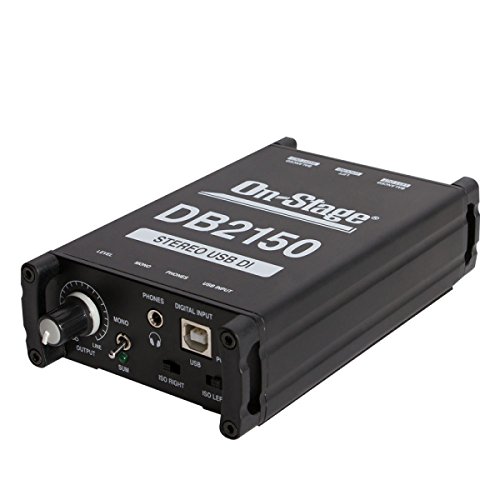
- USB connectivity for computer rigs
- Headphone output and mono-sum switch
- Ground lift and left/right isolation
Best For: Keyboard setups combining computers and monitoring
Versatile Dual-Channel Pick

- Two passive channels for stereo keyboards
- 0, -20, and -40 dB attenuation
- Filter, phase, and ground-lift controls
Best For: Stereo keyboard rigs needing flexible passive signal control
Road-Ready Stereo Value

- Dual-channel passive design
- Ground lift for hum reduction
- Three attenuation settings and balanced XLR output
Best For: Touring keyboardists needing a simple stereo DI
Simple Attenuation Specialist

- Single-channel passive design
- 1/4-inch input and throughput
- Variable attenuation with lift and ground modes
Best For: Single keyboard channels needing a practical passive DI
Versatile Hum Control

- Handles keyboard and other unbalanced sources
- Offers attenuation and hum cancellation
- Supports balanced and unbalanced XLR connections
Best For: Flexible keyboard, PA, and recording connections
Pro-Grade Simplicity
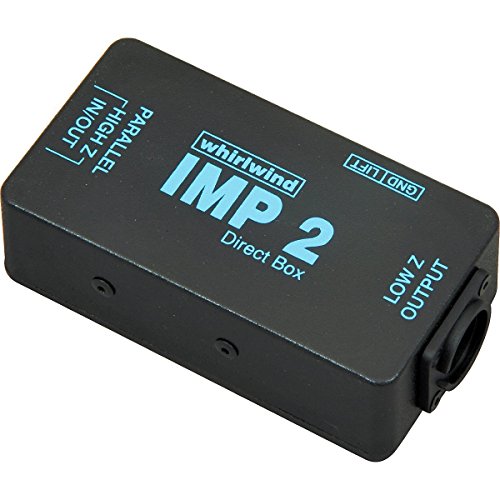
- Converts unbalanced signals to balanced mic level
- Uses a riveted TRHL transformer
- Compact, economical one-channel design
Best For: Simple and durable live keyboard signal conversion
Hot-Signal Control

- Includes pad and ground-lift switches
- Offers input, through, and balanced XLR connections
- Passive, single-channel, and requires no power
Best For: Live keyboards with hot outputs or ground buzz
Isolation-Focused Pick – Radial ProD2 Stereo DI
For live keyboards needing a clean stereo connection to a mixer, the Radial ProD2 provides passive two-channel DI operation with transformer isolation. Its 15 dB pad and ground-lift switch add useful control for hot signals and unwanted noise in a live setup.
Best For: Stereo keyboards and other stereo instrument sources that need transformer isolation.
Pros:
- Passive stereo, two-channel design
- Isolation transformer helps separate connected audio paths
- 15 dB pad and ground-lift switch
- Uses 1/4-inch and XLR connections
Cons:
- Passive design does not provide active gain or signal boosting
- Its stereo format may be more than needed for a mono source
The ProD2 is a practical choice among DI boxes for live keyboards when stereo operation and isolation are priorities. Its compact stainless-steel enclosure is also suited to portable rigs.
Road-Ready Value – Mackie MDB-2P Stereo DI
The Mackie MDB-2P is a straightforward option for live keyboards, offering dual 1/4-inch high-impedance inputs for stereo sources. Its passive design needs no power, while the ground lift and 15 dB pads help address hum and strong signals before they reach the mixer.
Best For: Stereo keyboards, DJ controllers, and backing-track rigs requiring a simple passive connection.
Pros:
- Dual 1/4-inch inputs support stereo keyboard setups
- Ground lift helps reduce ground-loop buzz
- 15 dB pads accommodate hot signals
- Passive operation requires no power
Cons:
- Passive operation offers no active signal gain
- Its feature set is focused on basic DI duties rather than signal processing
For musicians comparing DI boxes for live keyboards, the MDB-2P emphasizes useful essentials: stereo inputs, noise-control options, and a roadworthy steel case without requiring a power source.
Mono Stage Essential – Radial Pro DI Passive Direct Box
The Radial Pro DI is a passive mono direct box for keyboard players who send a single channel to a mixer or snake. Its custom transformer and rugged I-beam construction make it a focused option for live or studio use with keyboards and other instruments.
Best For: Mono keyboard signals in live performances, studios, and professional snake or console systems.
Pros:
- Passive mono operation is simple to integrate
- Custom transformer is built into the signal path
- Rugged I-beam construction
- Specified for keyboards, bass, acoustic guitars, and drum machines
Cons:
- Mono design does not preserve a stereo keyboard output
- The supplied notes do not list a pad or ground-lift control
The Pro DI suits players who need a dependable mono connection rather than a feature-heavy stereo unit. Choose it when your keyboard rig can be routed through one channel.
Computer-Rig Flexibility – OnStage DB2150 USB DI
The OnStage DB2150 adds computer-oriented connectivity to the usual DI role, making it worth considering for live keyboards used with a personal computer. It includes a 3.5mm headphone output, mono-sum switching, ground lift, and separate isolation switches for the left and right channels.
Best For: Keyboard and computer-based rigs that need stereo routing, monitoring, and isolation controls.
Pros:
- USB hardware connectivity for a computer-based setup
- 3.5mm headphone output supports monitoring
- Mono-sum switch can combine stereo sources
- Ground lift and separate left/right isolation switches
Cons:
- Its extra computer and monitoring features may be unnecessary for a basic keyboard-to-mixer connection
- The supplied notes specify Windows platform support rather than broad platform coverage
Among DI boxes for live keyboards, the DB2150 stands out for hybrid rigs that combine a keyboard, computer, and monitoring workflow. Its custom-wound transformer and isolation controls add flexibility for stage connections.
Versatile Dual-Channel Pick – ART DualZDirect
For live keyboards and other stereo sources, the ART DualZDirect offers two passive channels with flexible signal control. Its balanced outputs, attenuation settings, filter, phase, and ground-lift options make it practical for connecting high-impedance sources to a sound system.
Best For: Keyboard players and performers who need a dual-channel passive DI with detailed routing and signal-control options.
Pros:
- Two channels suit stereo keyboard setups.
- Three-level input attenuation supports different signal strengths.
- Includes low-pass filter, phase invert, and ground-lift switches.
- Requires no battery and has a three-year manufacturer’s defect warranty.
Cons:
- Passive design may offer fewer controls than an active DI.
- Its tabletop format may require dedicated space near the keyboard rig.
The DualZDirect is a strong choice when you want one passive box to manage a stereo keyboard signal while retaining useful control over attenuation, grounding, filtering, and phase.
Road-Ready Stereo Value – Bolanle DB2 Passive DI
The Bolanle DB2 is a practical option for live keyboards when you need two passive channels and balanced XLR outputs. It converts high-impedance instrument signals for long-distance transmission and includes ground lift plus three attenuation settings for managing hum and overload.
Best For: Touring keyboardists and small live rigs that need a dual-channel DI with stereo capability and noise-reduction features.
Pros:
- Dual-channel design works well for stereo keyboards and synthesizers.
- Ground lift helps reduce ground-loop hum and interference.
- 0, -20, and -40 dB attenuation settings add signal flexibility.
- Scratch-resistant, rust-proof construction is intended for frequent use.
Cons:
- It is a passive unit, so it does not provide active amplification.
- The supplied notes do not specify a warranty.
With two channels, balanced XLR output, and touring-oriented construction, the DB2 is a straightforward choice for keyboard players who want stereo DI functionality without a complicated setup.
Simple Attenuation Specialist – Livewire SPDI Passive DI
The Livewire SPDI is a compact passive option for live keyboards and other high-impedance instruments. It provides a 1/4-inch input and throughput connection, a balanced floating XLR output, variable attenuation, and a lift mode for separating the input ground from the XLR output.
Best For: Keyboard players who want a straightforward single-channel DI with throughput and adjustable attenuation.
Pros:
- 1/4-inch input and output support signal throughput to another device.
- Balanced, floating XLR output is designed to ignore +48V phantom power.
- Variable attenuation accommodates a range of input levels.
- Lift and ground modes provide grounding flexibility.
Cons:
- Single-channel design is less suitable for stereo keyboards without two units.
- The supplied notes do not list a warranty or multiple attenuation values.
The SPDI keeps the setup focused on essential DI duties, making it a sensible fit when your keyboard rig needs one channel, a thru connection, and practical attenuation and ground controls.
Versatile Hum Control – Pyle Premium Passive DI Box
For musicians comparing DI boxes for live keyboards, the Pyle PDC21 offers a practical way to route an unbalanced keyboard output to balanced or unbalanced XLR connections. Its passive design includes an input attenuator and ground-lift functionality for handling hot signals and unwanted buzz in live sound or recording setups.
Best For: Keyboard players and small live rigs that need flexible connections plus hum reduction.
Pros:
- Connects keyboards, guitars, bass, and outboard processors through its 1/4-inch input.
- Converts unbalanced sources for connection to a main PA or recording mixer.
- Includes buzz and hum cancellation capability and an input attenuator.
- Can also connect line outputs from consumer stereo equipment.
Cons:
- Its passive format may offer fewer controls than an active DI box.
- The supplied description does not specify multiple channels.
The Pyle is a flexible, budget-oriented choice when a keyboard rig needs basic impedance conversion, signal attenuation, and ground-related noise control in one compact unit.
Pro-Grade Simplicity – Whirlwind IMP 2 Passive DI
The Whirlwind IMP 2 is a straightforward option for live keyboard players who want a compact passive DI box with professional-oriented construction. It converts an unbalanced line- or instrument-level signal to a low-impedance, balanced mic-level output for a mixer or PA.
Best For: Keyboardists who prioritize a simple one-channel signal conversion box with a small footprint.
Pros:
- Converts line- or instrument-level unbalanced signals to balanced mic level.
- Uses Whirlwind’s TRHL transformer, which is riveted to the chassis.
- Compact footprint suits crowded live setups.
- Designed as an economical direct box with professional quality and durability.
Cons:
- Provides one channel only.
- The supplied notes do not mention a ground-lift switch or input pad.
Choose the IMP 2 when dependable, no-frills conversion matters more than extra controls. Its single-channel passive layout is particularly suited to a focused keyboard or instrument signal path.
Hot-Signal Control – Yovus DB-1 Passive DI Box
The Yovus DB-1 is a practical candidate among DI boxes for live keyboards, especially when you need to tame a hot output or address ground-related buzz. It provides 1/4-inch input and through connections, a balanced XLR output, a pad switch, and ground lift without requiring power.
Best For: Keyboard rigs needing a passive, single-channel DI with signal padding and ground-lift control.
Pros:
- Includes a pad switch for softening hot sources.
- Ground lift helps address buzz caused by electrical grounding issues.
- Provides 1/4-inch input and through jacks plus an XLR output.
- Requires no power and uses a metal enclosure.
Cons:
- It is a single-channel passive unit.
- The supplied specifications do not identify the pad’s attenuation amount.
The DB-1 makes a strong practical case for keyboard players who value straightforward stage routing and useful troubleshooting controls. Its pad and ground lift are especially relevant when connecting directly to a live PA.
How We Picked the Best Di Boxes for Live Keyboards
We focused on practical stage requirements rather than appearance or extra features alone. Each selected unit is a passive direct box intended to connect instrument-level or line-level sources to balanced mixer or snake inputs. We considered channel count, stereo compatibility, transformer isolation, ground-lift controls, attenuation options, connector layout, portability, and overall suitability for repeated live use.
Because keyboards commonly use left and right outputs, stereo-capable models received particular attention. Single-channel boxes can still work well when a mono feed is acceptable or when two identical units are used.
Quick Comparison
- Best for demanding professional rigs: Radial models are strong choices when rugged construction and dependable isolation matter most.
- Best for stereo keyboards: Dual-channel units such as the Radial ProD2, Mackie MDB-2P, ART DualZDirect, and Bolanle DB2 simplify left/right connections.
- Best for flexible gain handling: Models with attenuation pads can better accommodate hotter keyboard outputs.
- Best for simple mono setups: The Whirlwind IMP 2, Radial Pro DI, and similar single-channel boxes keep the signal path straightforward.
Key Buying Factors for Di Boxes for Live Keyboards
Stereo or Mono Operation
Choose a two-channel DI if you use stereo piano samples, rotary effects, delays, reverbs, or wide synth patches. A mono box is sufficient for a centered mix, but summing stereo outputs should be handled carefully to avoid phase or level issues.
Passive Design and Headroom
Passive DIs require no battery or phantom-power setup and are often reliable for touring. Check whether the unit can handle your keyboard’s output level without unwanted distortion. An input attenuation pad is useful when a workstation or stage keyboard produces a particularly hot signal.
Ground Lift and Isolation
A ground-lift switch can help eliminate hum caused by differences between connected power systems. Transformer isolation is another valuable feature, especially when the keyboard rig, amplifier, computer, and front-of-house system share multiple connections.
Connections and Stage Durability
Look for sturdy 1/4-inch inputs, secure XLR outputs, accessible switches, and a housing that can withstand transport. Keep cable runs balanced after the DI whenever possible, and confirm that the box’s input and output arrangement fits your pedalboard, stand, or rack layout.
Who Should Buy Which Di Boxes for Live Keyboards?
Touring keyboardists and working bands should prioritize rugged stereo models with isolation and ground lift. Home-to-stage players may prefer a compact, affordable passive unit with attenuation for occasional gigs. Players running mono rigs can save space with a single-channel DI, while stereo-effects users should choose a dual-channel model to preserve the intended soundstage. If your keyboard feeds both a personal amplifier and front of house, verify that the selected DI provides the routing or pass-through connections your setup requires.