The best loop stations for live performances help musicians build layered arrangements, control transitions, and add rhythm without relying on a full backing track.
We selected 10 options spanning compact pedals, tabletop controllers, and advanced multi-track systems so solo performers, singers, guitarists, and electronic musicians can find a practical fit.
Best 10 Loop Stations for Live Performances Picks for 2026
Flagship Floor Control
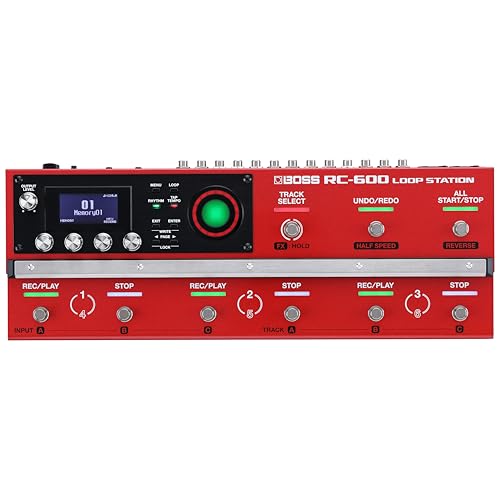
- Six simultaneous stereo phrase tracks
- Extensive onboard effects and customization
- Nine assignable footswitches for hands-free control
Best For: Serious live performers building complex layered sets
Visual Song-Form Looper
Singular Sound Aeros Loop Studio
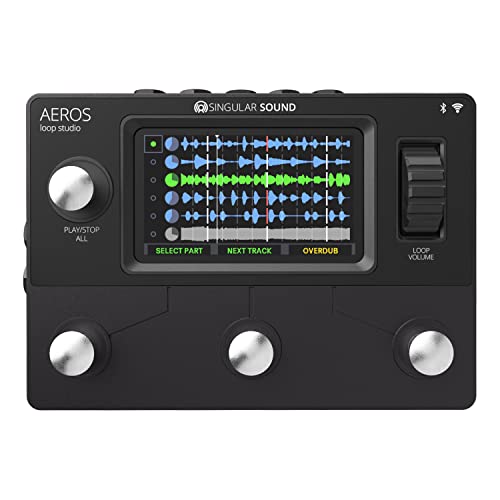
- Six song parts and six tracks per song
- Touchscreen with color-coded waveforms
- Up to 10 hours of recording per song
Best For: Structured live sets requiring visual control and mixing
Tabletop Mixing Hub

- Five stereo phrase tracks with dedicated faders
- Dual sections for simultaneous effects
- XLR mic inputs with phantom power
Best For: Tabletop vocal, beatbox, and electronic performances
Six-Track Performance Lab

- Six tracks with stereo I/O
- Quantized or free-running recording
- BPM, speed, overdub, and punch-in/out control
Best For: Flexible multi-track looping with timing and speed control
Studio-Ready Control
- Five stereo tracks for layered arrangements
- Two XLR mic inputs with phantom power
- Includes footswitches and expression pedal
Best For: Tabletop performers needing extensive live-loop control
Dual-Track Performance

- Dual-track looping with advanced processing
- 16 drum kits and 57 preset rhythms
- 99 phrase memories plus USB WAV management
Best For: Hands-free live performers wanting rhythms and effects
Compact Fingerstyle Creativity

- Two simultaneous stereo phrase tracks
- Four input and four track FX
- 64 phrase memories with USB audio/MIDI
Best For: Electronic performers and beatboxers using tabletop control
Professional Precision

- 32-bit processing for high-quality looping
- 13 hours of stereo recording and 99 memories
- Rhythms, MIDI, USB, and color LCD control
Best For: Stage performers needing advanced, expandable looping
Rhythm-Driven Performance
BOSS RC-10R Rhythm Loop Station

- 280+ rhythm styles with fills and transitions
- Two-track operation for separate song parts
- Sixteen drum kits and six hours of recording
Best For: Solo acts building full, rhythm-supported arrangements
Simple Looping Essential

- Straightforward record, overdub, and playback controls
- 12 minutes of stereo recording
- Clear 24-segment loop-mode indicator
Best For: Beginners and players wanting essential phrase layering
Flagship Floor Control – BOSS RC-600
For performers comparing loop stations for live performances, the BOSS RC-600 is built for complex, layered sets. It combines six simultaneous stereo tracks with extensive effects and highly assignable foot control, making it a powerful floor-based centerpiece for hands-free performance.
Best For: Guitarists, singer/songwriters, multi-instrumentalists, and experienced looping musicians who need extensive control from the floor.
Pros:
- Records and edits up to six simultaneous stereo phrase tracks in real time.
- Offers 49 Input FX types and 53 Track FX types, with up to four effects used at once in each section.
- Nine freely assignable footswitches and three pedal modes support customized workflows.
- 32-bit AD/DA conversion and 32-bit floating-point processing provide class-leading sound quality.
Cons:
- Its 8.2-pound, 22.88-inch-wide floor design may be more equipment than casual users need.
- The extensive controls and customization may require a learning period.
The RC-600 is a strong choice when your live rig demands multiple stereo layers, deep effects options, and hands-free control. Its size and advanced feature set make it better suited to serious performers than simple looping setups.
Visual Song-Form Looper – Singular Sound Aeros Loop Studio
The Singular Sound Aeros Loop Studio gives performers a visual, hands-on way to manage loop stations for live performances. Its touchscreen, color-coded waveforms, song-part structure, and built-in mixer are designed to make complex looping easier to follow onstage.
Best For: Performers who want visual loop management, hands-free mixing options, and long recording capacity for structured live sets.
Pros:
- Supports six song parts and six tracks per song with unlimited overdubs.
- Provides up to 10 hours of recording time per song.
- LCD screens, color-coded waveforms, and Mixer View aid live navigation and level control.
- Supports up to three instruments with multiple input, output, and routing options.
Cons:
- An SD card is required for expandable storage but is not included.
- Touch controls may appeal less to players who prefer traditional physical footswitches.
With its song-oriented workflow and visual interface, the Aeros is particularly compelling for performers who organize complete arrangements rather than only repeating short phrases. Internal storage, SD export, and a two-year manufacturer warranty add practical value for touring use.
Tabletop Mixing Hub – BOSS RC-505mkII
For tabletop loop stations for live performances, the BOSS RC-505mkII focuses on immediate access to tracks, effects, and routing. Five stereo phrase tracks, dedicated faders, customizable buttons, and multiple microphone and line inputs make it well suited to performance setups built around hands-on mixing.
Best For: Vocalists, beatboxers, electronic performers, and tabletop musicians who want direct control over layered tracks and effects.
Pros:
- Provides five simultaneous stereo phrase tracks with independent volume faders.
- Includes dual Input FX and Track FX sections with four simultaneous effects each.
- Offers two XLR microphone inputs with phantom power and multiple stereo line connections.
- Stores up to 99 memories containing tracks, effects, settings, and control assignments.
Cons:
- The tabletop format is not designed for conventional foot-operated control.
- Its 23.4-inch length requires substantial table or stand space.
The RC-505mkII is a strong live-performance command center when faders and buttons are more useful than footswitches. Its connectivity and memory system also make it practical for performers who switch between prepared setups.
Six-Track Performance Lab – Electro-Harmonix 95000
The Electro-Harmonix 95000 Performance Loop Laboratory offers a focused set of tools for loop stations for live performances. With six tracks, stereo I/O, quantized or free-running recording, and adjustable speed, it supports both tightly timed arrangements and more flexible experimental looping.
Best For: Players who want six-track looping with BPM control, overdubbing, punch-in/out recording, and speed-shifting options.
Pros:
- Provides six tracks, stereo I/O, and more than six hours of looping.
- Supports both quantized and non-quantized recording modes.
- TAP sets loop BPM, while speed adjustment covers a two-octave range.
- Loop progress can be displayed in bar/beat format for timing awareness.
Cons:
- The supplied notes describe fewer onboard effects than the feature-heavy BOSS alternatives.
- Its 12.6-inch design may still require dedicated pedalboard space.
The 95000 is a practical fit for performers who prioritize track capacity and timing flexibility over a large effects library. Its quantize options, speed control, and punch-in/out recording make it adaptable for both structured and expressive performances.
Studio-Ready Control – Boss RC-505 Mk2 Loop Station
The Boss RC-505 Mk2 is a powerful tabletop choice for loop stations for live performances, especially when hands-on control and multiple stereo layers are central to your setup. It provides five stereo tracks, two XLR microphone inputs with phantom power, stereo line inputs, rhythm generation, and physical button-and-knob controls.
Best For: Vocalists, beatboxers, and tabletop performers who need extensive track and input control.
Pros:
- Five stereo tracks support layered live arrangements.
- Two XLR microphone inputs include phantom power.
- Includes USB connectivity, rhythm generation, and multiple looping controls.
- Supplied components include a footswitch, dual footswitch, expression pedal, and AC adaptor.
Cons:
- Its tabletop format is less suited to performers who want a conventional floor pedal.
- The extensive controls may require more setup familiarity than a simpler looper.
Choose the RC-505 Mk2 if you want a feature-rich tabletop centerpiece for building complex live loops with microphones, instruments, and rhythm parts.
Dual-Track Performance – BOSS RC-500 Loop Station
The BOSS RC-500 is a practical pedal-style option for loop stations for live performances, combining dual-track looping with onboard rhythms, loop effects, and extensive memory. Its multi-color display and footswitch-oriented design help performers manage loops while playing.
Best For: Live musicians who want dual-track looping, built-in rhythms, and hands-free control.
Pros:
- Provides dual-track looping with 32-bit AD/DA conversion and 32-bit floating-point processing.
- Offers 16 drum kits, 57 preset rhythms, and A/B variations.
- Stores up to 99 phrase memories and supports WAV file management over USB.
- Includes reverse and Loop FX such as repeat, scatter, shift, and vinyl flick.
Cons:
- MIDI uses mini TRS jacks, and the BMIDI-5-35 adaptor cable is sold separately.
- External footswitches or an expression pedal are supported but not listed among the included components.
The RC-500 is a strong fit for performers who want a compact, foot-controlled looper with polished audio processing, rhythm support, and room to save many performance ideas.
Compact Fingerstyle Creativity – BOSS RC-202 Loop Station
The BOSS RC-202 offers a compact, hands-operated approach to loop stations for live performances. With two simultaneous stereo phrase tracks, dedicated controls, input and track effects, and 64 phrase memories, it is designed for progressive music creators, electronic performers, and beatboxers.
Best For: Club performers and electronic musicians who prefer fingertip control and sampler-style effects.
Pros:
- Two stereo phrase tracks can run simultaneously with dedicated controls.
- Four input FX and four track FX are available at the same time.
- Provides 64 phrase memories across eight banks of eight.
- Supports USB audio/MIDI plus optional footswitch, expression pedal, and MIDI expansion.
Cons:
- Optional footswitches and expression pedals are not included.
- Its hands-on tabletop design may not suit performers seeking primarily foot-operated control.
The RC-202 is a focused choice when compact size, fingertip operation, and creative effects matter more than a larger track count or a traditional pedal layout.
Professional Precision – BOSS RC-5 Loop Station
For musicians seeking loop stations for live performances, the BOSS RC-5 combines high-resolution audio processing, generous recording capacity, and flexible control in a compact pedalboard-friendly design. Its color LCD and broad connectivity make it practical for both stage and studio use.
Best For: Performers who want detailed loop control, extended stereo recording, and MIDI-ready integration.
Pros:
- 32-bit AD/DA conversion and 32-bit floating-point processing support professional-grade audio quality.
- Offers 13 hours of stereo recording and storage for 99 phrase memories.
- Includes 57 rhythms with A/B variations, seven drum kits, reverse playback, MIDI I/O, and USB connectivity.
- Multi-color LCD provides clear status and parameter visibility in different lighting conditions.
Cons:
- Optional PSA adapter is required for extended sessions beyond battery operation.
- Advanced MIDI and external-control features may be more than casual loopers need.
The RC-5 is a strong choice when sound quality, memory, rhythm support, and expandable control matter more than having a simple plug-and-play looper.
Rhythm-Driven Performance – BOSS RC-10R Rhythm Loop Station
The BOSS RC-10R is designed for loop stations for live performances that need more than repeating phrases. It pairs song-based, two-track looping with dynamic rhythms, making it useful for building structured performances in a relatively small footprint.
Best For: Solo performers who want synchronized rhythm sections, song-part changes, and broad style coverage.
Pros:
- Provides more than 280 preset rhythm styles with intros, endings, fills, and transitions.
- Two-track operation supports separate song parts for more structured arrangements.
- Includes 16 drum kits, six hours of stereo recording, and storage for 99 phrase memories.
- Output filtering can optimize sounds for a guitar amp or full-range sound system.
Cons:
- Its rhythm-focused feature set may be unnecessary for players seeking only basic looping.
- Operation is corded electric, so it is less suited to battery-powered setups.
Choose the RC-10R if dynamic accompaniment and song-like transitions are central to your performance; it offers considerably more rhythmic variety than a basic looper.
Simple Looping Essential – BOSS RC-1 Loop Station Pedal
For players comparing loop stations for live performances, the BOSS RC-1 keeps the experience straightforward. It supports recording, overdubbing, playback, undo, and redo with a clear loop-status indicator, making it an approachable option for guitar, bass, and keyboard players.
Best For: Beginners and performers who want a compact, easy-to-use looper for essential phrase layering.
Pros:
- Simple controls cover recording, playback, overdubbing, undo, and redo.
- 12 minutes of stereo recording and phrase retention after power-off support practical use.
- 24-segment LED indicator clearly shows the current loop mode.
- Stereo inputs and outputs work with guitar, bass, keyboards, and other instruments.
Cons:
- It lacks the rhythm library, LCD editing, and advanced MIDI features found on more sophisticated models.
- AC adapter is optional and sold separately.
The RC-1 is a sensible starting point for players who value immediate operation and reliable core looping over extensive rhythm or control features.
How We Picked the Best Loop Stations for Live Performances
We compared these loopers by live workflow, recording capacity, track organization, connectivity, rhythm features, control layout, and portability. A good performance looper should be easy to operate while playing, provide dependable timing, and match the complexity of your set. We also included models at different price and experience levels rather than treating maximum features as the only measure of quality.
Because these products use different formats, the right choice depends on whether you need a simple phrase pedal, hands-free control over multiple sections, or a tabletop instrument designed for detailed arrangement and manipulation.
Quick Comparison
| Best For | Look For | Typical Format |
|---|---|---|
| First-time users | Simple controls and clear loop status | Compact pedal |
| Guitar-and-vocal performers | Multiple inputs, rhythm support, and foot control | Floor-based looper |
| Layered song arrangements | Several tracks, phrase memories, and section control | Advanced floor unit |
| Beatmakers and electronic performers | Hands-on controls, stereo operation, and MIDI | Tabletop looper |
| Experimenters | Flexible routing, synchronized tracks, and deep editing | Performance loop laboratory |
Key Buying Factors for Loop Stations for Live Performances
Track Layout and Loop Control
Check how many independent tracks or phrases can run at once and how easily you can stop, start, undo, redo, and switch sections. Simple single-loop pedals are fast to learn, while multi-track models are better for verses, choruses, and evolving arrangements.
Foot Control and Hands-Free Operation
Guitarists and vocalists should prioritize clearly spaced footswitches, assignable controls, and optional external foot-control support. Tabletop units can offer more direct access to effects and track controls but may require a separate controller for completely hands-free performance.
Rhythm, Synchronization, and Timing
Built-in drum patterns can provide a complete foundation, especially for solo acts. Look for tap tempo, quantization, automatic timing, MIDI clock, or other synchronization tools if you plan to connect drum machines, keyboards, or a computer.
Inputs, Outputs, and Connectivity
Confirm the unit supports your instruments, microphones, stereo sources, and monitoring setup. USB audio, MIDI, external control, and separate outputs can make rehearsals and live routing easier, but unused connections should not outweigh a familiar interface.
Memory, Durability, and Portability
Phrase storage matters when you perform a repeatable set. Also consider power requirements, enclosure durability, switch noise, display visibility, and whether the unit fits comfortably on your pedalboard or performance table.
Who Should Buy Which Loop Stations for Live Performances?
Choose a compact pedal if you want immediate looping for guitar, bass, or vocals with minimal setup. Move to a floor-based multi-track model if your songs need several sections, rhythm parts, or coordinated foot control. Tabletop loopers suit beatmakers, keyboardists, and progressive performers who want hands-on manipulation and deeper arrangement options. If synchronization and routing are central to your show, prioritize advanced connectivity and independent track control over the smallest footprint.