A good metronome makes it easier to spot uneven timing, build speed gradually, and keep practice sessions focused. The best choice depends on whether you want a compact digital tool or a mechanical pendulum you can see across the room.
These 10 options span portable digital models and traditional mechanical designs. Use the guide below to narrow them down by controls, sound, visibility, and how you practice.
Best 10 Metronome for Practice Picks for 2026
Best for Structured Sessions
Sondery ProBeat Digital Metronome
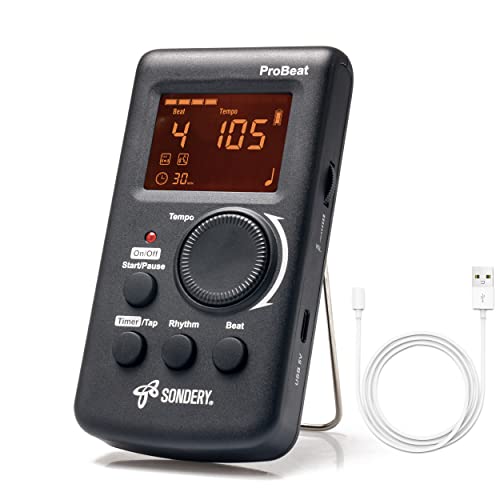
- Tap tempo and four timer presets
- Vocal counting plus three digital sounds
- USB rechargeable with LED and earphone jack
Best For: Timed sessions with flexible beat cues
Best for Long Rechargeable Use
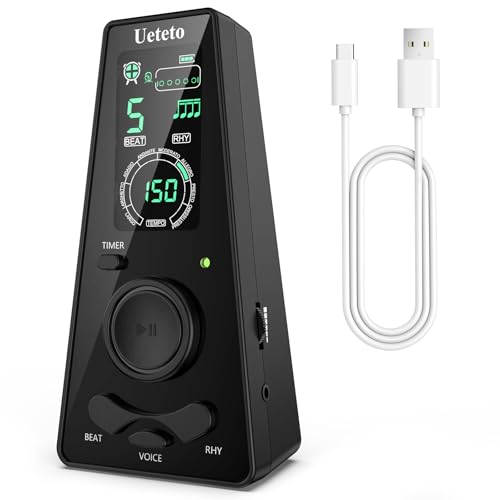
- Up to 16 hours of stated continuous use
- Headphone jack with volume control
- LCD, flashing LED, and vocal counting
Best For: Extended sessions and headphone practice
Best for Traditional Click and Bell

- Wind-up operation needs no battery
- Audible click and bell
- 40–208 BPM with five beat selections
Best For: Traditional pendulum-based practice
Best for Simple Pendulum Practice

- Battery-free pendulum operation
- Clear, loud audible beat
- 40–208 BPM and five beat settings
Best For: Simple home practice with a mechanical beat
Long-Battery-Life Pick

- Up to 400 hours on alkaline batteries
- 0–9 beats and eight rhythm types
- Timer, sound-out, and tap-tempo modes
Best For: Flexible rhythm practice with fewer battery changes
Dial-Control Pick

- 39-position dial covers 40–208 BPM
- Adjustable volume and two click tones
- A and B♭ tones, beat LED, and earphone jack
Best For: Tactile tempo control and reference-pitch practice
Rhythm-Training Pick

- 0–9 beats and eight rhythm types
- Pendulum, Full Step, and tap tempo
- Timer and sound-out modes
Best For: Varied rhythm exercises in a black-and-red finish
Classic Wind-Up Pick
Ueteto Wood-Grain Tower Metronome

- Battery-free wind-up mechanism
- 40–208 BPM tempo range
- Selectable bell accents
Best For: Traditional practice at a music stand
Portable Practice Pick

- Compact, battery-powered design
- Odd-time-signature support
- Visual cues and play-along patterns
Best For: Portable practice with varied rhythms
Simple Mechanical Pick
Standard Black Mechanical Metronome

- 40–208 BPM adjustment
- Five bell settings
- Stated one-year manufacturer warranty
Best For: Beginners wanting simple mechanical controls
Best for Structured Sessions – Sondery ProBeat Digital Metronome
If you want a metronome for practice that helps organize a session, the Sondery ProBeat combines a 40–208 BPM tempo range with tap tempo, vocal counting, and 15-, 30-, 45-, or 60-minute timers. Its color screen and rotary dial make settings easy to see and adjust.
Best For: Musicians who want timed practice sessions and several ways to follow the beat.
Pros:
- Offers vocal counting and three digital sounds.
- Includes a speaker, visual LED indicator, and 3.5 mm earphone jack.
- Rechargeable by USB and weighs about 4.3 ounces.
Cons:
- Tempo range tops out at 208 BPM.
- Timers are limited to four preset lengths.
The ProBeat is a useful pick when session timing and flexible beat cues matter more than a traditional pendulum display.
Best for Long Rechargeable Use – Ueteto Digital Metronome
The Ueteto digital model is a metronome for practice when you want an adjustable click and a rechargeable battery. It covers 40–208 BPM, offers nine rhythm patterns and beats numbered 0–9, and pairs its LCD with a flashing LED.
Best For: Players who want headphone listening, volume control, and extended use between charges.
Pros:
- 3.5 mm headphone jack and adjustable volume support quieter practice.
- Offers English vocal counting and electronic beats.
- Listed for up to 16 hours of continuous use after an approximately two-hour charge.
Cons:
- Screen turns off after 30 seconds, requiring a button press to wake it.
- At a listed 5.53 inches long, it takes more bag space than smaller pocket models.
Choose this one if battery endurance and listening options are priorities; the screen-saving behavior is worth noting if you frequently glance at the display.
Best for Traditional Click and Bell – Ueteto Mechanical Metronome
For a wind-up metronome for practice, this Ueteto model provides a visible pendulum motion along with an audible click and bell. Its 40–208 BPM range and 0, 2, 3, 4, and 6 beat selections cover common tempo and accent exercises without a battery.
Best For: Beginners and other players who prefer a traditional pendulum, click, and bell.
Pros:
- Works without charging or batteries.
- Audible click and bell provide beat and accent cues.
- Offers tempo adjustment from 40 to 208 BPM.
Cons:
- Requires winding; a full wind lasts at least 18 minutes, depending on tempo.
- Beat selections are limited to 0, 2, 3, 4, and 6.
This is the straightforward mechanical choice if watching the pendulum helps you keep time and you do not mind winding it during longer sessions.
Best for Simple Pendulum Practice – AODSK Mechanical Metronome
The AODSK is a mechanical metronome for practice with piano, guitar, violin, bass, or drums. Set the pendulum for a tempo from 40 to 208 BPM, choose a beat setting of 0, 2, 3, 4, or 6, and follow its clear, loud sound without relying on batteries.
Best For: Players who want a simple, battery-free tempo reference for home practice.
Pros:
- Pendulum and audible beat provide visual and sound cues.
- No battery or charging required.
- Supports five beat settings and a 40–208 BPM tempo range.
Cons:
- Does not offer the headphone output or timer controls found on some digital models.
- Its approximately 1.17-pound weight is less convenient to carry than a small digital unit.
This AODSK model keeps the focus on basic tempo and accents. It makes sense if a traditional pendulum is more useful to you than digital extras.
Long-Battery-Life Pick – Korg MA-2 Blue/Black
If you want a metronome for practice that can stay in your instrument case, the blue-and-black Korg MA-2 offers a visual beat display, an audible buzzer, and up to 400 hours of operation on alkaline batteries.
Best For: Musicians who want varied rhythm settings and long battery life in a compact digital metronome.
Pros:
- Pendulum, Full Step, and tap-tempo settings offer several ways to set the pace.
- Supports 0–9 beats and eight rhythm types for varied exercises.
- Timer and sound-out modes add options for daily practice.
Cons:
- The click comes from an electronic buzzer, which may not suit players who prefer a different sound.
- The stated 400-hour battery life depends on using alkaline batteries.
The MA-2 is a flexible choice when rhythm options and fewer battery changes matter more than a simple dial-based interface.
Dial-Control Pick – Seiko SQ50-V Quartz Metronome
For a metronome for practice with straightforward physical controls, the Seiko SQ50-V uses a 39-position rotary dial to set tempos from 40 to 208 BPM. Its adjustable volume and choice of two click tones let you tailor the audible beat.
Best For: Players who prefer a tempo dial and want A or B♭ reference tones alongside the beat.
Pros:
- Rotary dial makes tempo selection direct.
- High and low click tones, adjustable volume, and a red beat LED offer different ways to follow the pulse.
- A=440Hz and B♭ tone generators support reference-pitch practice; an earphone jack allows private listening.
Cons:
- The dial offers 39 preset positions rather than every individual BPM setting.
- Its listed tempo range stops at 40 and 208 BPM.
Choose the SQ50-V if tactile tempo selection and reference tones are more useful to you than a broader set of rhythm patterns.
Rhythm-Training Pick – Korg MA-2 Black/Red
The black-and-red Korg MA-2 is a metronome for practice when you need to work through different beats and rhythms. It pairs a visual beat display with an electronic buzzer and provides up to 400 hours of use on alkaline batteries.
Best For: Players working on varied rhythm exercises who also want a practice timer.
Pros:
- Offers 0–9 beats and eight rhythm types for structured rhythm work.
- Pendulum, Full Step, and tap-tempo settings provide flexible tempo control.
- Timer and sound-out modes add practice functions beyond the basic beat.
Cons:
- Switching between metronome, timer, and sound-out functions requires using the MODE button.
- Its audible beat is an electronic buzzer, which may not be everyone’s preferred click sound.
This is the same MA-2 feature set as the blue-and-black version, so the black-and-red color is the main reason to choose between them.
Classic Wind-Up Pick – Ueteto Wood-Grain Tower Metronome
If you want a traditional metronome for practice, the Ueteto pairs an audible mechanical click with a wood-grain tower design. Its 40–208 BPM range and selectable bell accents cover a variety of practice tempos and beat patterns.
Best For: Musicians who want a battery-free metronome with a classic look.
Pros:
- Wind-up operation needs no batteries.
- Offers 0, 2, 3, 4, and 6 beat settings.
- Audible click and bell can be followed while reading sheet music.
Cons:
- Requires winding; a full wind lasts at least 18 minutes, depending on tempo.
- Wood-grain appearance is a finish on a plastic housing, not a wood body.
Choose this one if the visible pendulum-style routine and traditional sound appeal more than a compact, carry-along design.
Portable Practice Pick – BOSS Dr. Beat DB-30
The BOSS Dr. Beat DB-30 is a compact metronome for practice when you need something easy to carry. It combines visual practice assistance, odd-time-signature support, and play-along patterns in a battery-powered unit.
Best For: Players who want portable rhythm practice, including odd-time work.
Pros:
- Supports odd time signatures and play-along patterns.
- Provides visual practice assistance.
- Includes a phones jack and auto power-off function.
Cons:
- Runs on a battery rather than a wind-up mechanism.
- Its pattern-based features may be more than you need for a basic beat.
At 5.2 x 3.45 x 1.35 inches, the DB-30 is the carry-friendly option here, particularly if visual cues and varied rhythms matter to your practice.
Simple Mechanical Pick – Standard Black Mechanical Metronome
This standard black mechanical metronome for practice offers straightforward tempo and bell controls without a screen. Its adjustable 40–208 BPM range and 0, 2, 3, 4, and 6 bell settings suit practice on instruments including piano, guitar, violin, and drums.
Best For: Beginners and families seeking a straightforward mechanical practice aid.
Pros:
- Adjustable 40–208 BPM tempo range.
- Five bell settings for different beat patterns.
- Backed by stated 30-day returns and a one-year manufacturer warranty.
Cons:
- At 8.5 inches tall and 1.2 pounds, it is less pocket-friendly than a small electronic unit.
- Its body is plastic with metal components, not an all-metal build.
This is a practical choice if you prefer hands-on mechanical controls and want the stated return and warranty coverage; check the seller’s current terms before buying.
How We Picked the Best Metronome for Practice
We organized these 10 picks around practical differences that matter during daily practice: digital versus mechanical operation, portability, visual feedback, sound, and available controls. The list includes compact digital models from Korg, Seiko, BOSS, Sondery, and Ueteto, alongside several tower-style mechanical options. We have not independently verified every specification or tested every unit side by side, so check the current listing for power requirements, tempo range, and included accessories before buying.
Quick Comparison: Digital or Mechanical?
Digital metronomes are generally the easier choice when you want a small device for a music bag, adjustable settings, or features beyond a steady click. Compare the specific models for options such as visual indicators, beat patterns, or voice counting rather than assuming every digital unit has them.
Mechanical metronomes suit players who prefer a visible swinging pendulum and a physical tempo-setting control. They need a stable, level surface and take up more space, but they do not require you to navigate menus. If you share a room, consider whether the ticking volume will work for everyone nearby.
Key Buying Factors for a Metronome for Practice
Tempo and Beat Settings
Make sure the available tempo range covers your slowest exercises and fastest passages. If you work on time signatures, subdivisions, or accented beats, check whether a digital model supports the patterns you actually use. Beginners may be better served by straightforward controls than by settings they will rarely touch.
Sound, Sight, and Placement
A click must be audible over your instrument without becoming distracting. For drums or loud group practice, look closely at volume and headphone options where offered. A prominent display or pendulum can help when you would rather follow a visual pulse. For a piano or desk setup, check that the device will sit securely where you can see and reach it.
Power and Portability
Rechargeable, battery-powered, and wind-up designs fit different routines. If you travel, favor a compact model and confirm its charging or battery requirements. A mechanical model can be convenient at home if you have space for it and prefer not to manage batteries.
Who Should Buy Which Metronome for Practice?
New players: start with an easy-to-set model that makes each beat clear. Traveling musicians: prioritize a compact digital unit. Piano and string players practicing in one spot: consider a mechanical metronome if the pendulum helps you follow the pulse. Players working on varied rhythms: compare digital beat and accent settings before choosing.
The best Metronome for Practice is the one you will turn on regularly. Choose clear feedback and convenient controls first; pay for extra features only if they support your exercises.