If you’re looking to elevate your music production setup, choosing the right MIDI interface is essential. With so many options available, it can be tough to find one that suits your needs. Each interface has its unique features and benefits, making it vital to know what to look for. Let’s explore the top choices that can enhance your workflow and creativity in the studio. You might be surprised by what these devices can do for your sound.
Focusrite Scarlett Solo 3rd Gen USB Audio Interface

The Focusrite Scarlett Solo 3rd Gen USB Audio Interface is perfect for solo musicians and podcasters looking to capture studio-quality sound with ease. You’ll appreciate the high-performing mic pre-amps that enhance your recordings’ brightness, while the switchable Air mode adds clarity to your acoustic instruments. With two high-headroom instrument inputs, you can achieve excellent recordings for guitar and bass. Gain Halos help prevent clipping, ensuring clean takes. Plus, the interface supports up to 24-bit/192kHz recording quality, letting you maintain every sonic detail. Don’t forget the included software, which provides essential tools for effects and mastering, all backed by a three-year warranty.
Best For: Musicians, podcasters, and producers seeking an easy-to-use audio interface that delivers studio-quality recordings and playback.
Pros:
- High-performing mic pre-amps enhance recording brightness and clarity.
- Supports professional-quality recordings at up to 24-bit/192kHz.
- Comes with a comprehensive software package for effects and mastering tools.
Cons:
- Limited to solo users or small setups due to only one mic input.
- May require additional adapters for certain instruments or setups.
- Some users may find the included software less comprehensive than other options.
PreSonus Studio 24c USB Audio Interface

If you’re looking for an affordable yet powerful USB audio interface, the PreSonus Studio 24c is an excellent choice. This 2×2 interface offers 192 kHz audio quality, ensuring your recordings sound pristine. With two XMAX-L mic preamps, you can easily connect microphones, instruments, or line sources. It features two balanced ¼-inch TRS outputs for studio monitors and a high-power headphone output for detailed monitoring. Plus, the MIDI In/Out allows for seamless integration with your setup. The included mixer knob provides low-latency direct monitoring, while the front-panel controls and LED meters keep your levels in check. Enjoy recording with Studio One DAW!
Best For: Musicians and home recording enthusiasts seeking an affordable, high-quality audio interface for their studio setup.
Pros:
- High-quality audio: Supports up to 192 kHz for pristine sound recordings.
- Versatile connectivity: Features XMAX-L mic preamps for connecting microphones, instruments, or line sources.
- User-friendly design: Includes front-panel controls and LED level meters for easy monitoring and adjustments.
Cons:
- Limited I/O: Only provides 2 inputs and 2 outputs, which may not be sufficient for larger setups.
- Dependence on USB power: Requires connection to a computer for power, limiting portability.
- Basic software: The included Studio One DAW may not have all the advanced features some users desire.
PreSonus AudioBox 96 USB Audio Interface
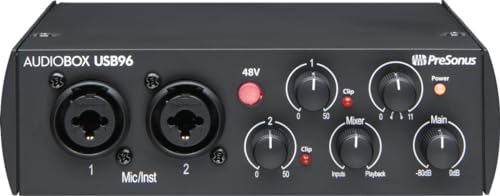
For musicians and creators looking to kickstart their recording journey, the PreSonus AudioBox 96 USB Audio Interface stands out with its user-friendly design and exceptional audio quality. This compact, 2-channel USB 2.0 interface features high-quality Class-A mic preamps and instrument inputs, allowing you to record with clarity. It supports up to 24-bit/96 kHz recording and playback, ensuring professional sound. Plus, it’s USB bus-powered, making it perfect for mobile setups. With over $1000 in included software like Studio One Artist, it’s ideal for beginners and seasoned pros alike, simplifying your workflow while delivering impressive performance.
Best For: Musicians, podcasters, and aspiring producers looking for a reliable and easy-to-use audio interface for recording.
Pros:
- High-quality Class-A mic preamps for superior audio clarity.
- USB bus-powered design allows for convenient mobile recording without additional power supply.
- Comes with over $1000 worth of recording software, making it a great value for users.
Cons:
- Some limitations in recording percussion instruments due to preamp sound pressure levels.
- May not offer as many advanced features for experienced professionals.
- Limited to 2 channels, which might not suffice for larger recording setups.
M-Audio AIR 192×14 USB Audio Interface for Studio Recording
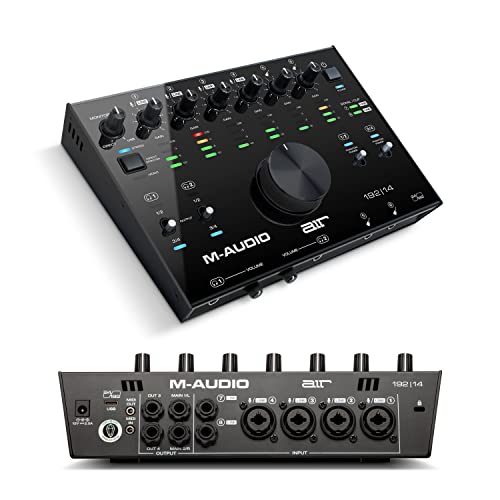
Looking for an audio interface that combines high-quality sound with versatile connectivity? The M-Audio AIR 192×14 is your answer. With 8 inputs and 4 outputs, it supports everything from vocals to instruments. You’ll enjoy premium 24-bit/192kHz audio quality thanks to its crystal preamps and AD converters. The class-leading 2.59ms latency guarantees your recordings are tight and responsive. Plus, it features MIDI in/out connections for seamless integration with your synths and sequencers. Bundled software like MPC Beats and Ableton Live Lite helps you get started right away. Elevate your studio with this powerful, user-friendly interface.
Best For: Musicians and home studio producers seeking a high-quality audio interface with versatile connectivity options.
Pros:
- Premium audio quality with 24-bit/192kHz resolution for professional recordings.
- Low latency of only 2.59ms ensures tight and responsive performance during recording and monitoring.
- Includes MIDI connectivity for easy integration with synthesizers and other external MIDI devices.
Cons:
- Limited number of outputs (4) may not be sufficient for larger setups or complex recording sessions.
- Bundled software may require additional learning time for beginners unfamiliar with DAWs.
- USB-C compatibility may require adapters for users with older USB interfaces.
Mackie Onyx Producer 2X2 USB Audio Interface

The Mackie Onyx Producer 2X2 USB Audio Interface stands out as an ideal choice for musicians and producers seeking high-quality audio recording in a compact and durable package. With high-resolution 24-Bit/192kHz recording capabilities, it features two boutique-quality Onyx mic preamps, ensuring exceptional fidelity and dynamic range. You’ll appreciate the XLR/TRS combo inputs for various sources, and the 48v Phantom Power supports studio condenser mics. Zero-latency direct monitoring allows for seamless tracking, while dedicated outputs cater to studio monitors. Plus, its bus-powered design makes it perfect for mobile recording, delivering durability without compromising portability.
Best For: Musicians and producers seeking a compact, high-quality audio interface for recording and monitoring.
Pros:
- High-resolution 24-Bit/192kHz recording for exceptional audio quality.
- Durable bus-powered design makes it ideal for mobile recording without the need for an adapter.
- Zero-latency direct monitoring allows for seamless tracking while recording.
Cons:
- Limited to 2 input channels, which may not be sufficient for larger recording setups.
- USB 2.0 connectivity may not offer the fastest transfer speeds compared to newer USB standards.
- No onboard effects processing, requiring reliance on external software for effects and mixing.
M-AUDIO M-Track Duo USB Audio Interface for Recording and Streaming

Ideal for musicians and podcasters seeking a compact and versatile solution, the M-AUDIO M-Track Duo USB Audio Interface offers dual XLR inputs with phantom power, allowing you to connect condenser microphones effortlessly. With 48 kHz audio resolution, your recordings sound professional. The interface features zero-latency monitoring through a 1/4” headphone output and stereo outputs, ensuring you hear everything in real time. Plus, it’s easy to set up with various devices, including guitars and keyboards. You’ll appreciate the included MPC Beats Software for music production, making this interface a valuable addition to your studio setup.
Best For: Musicians and podcasters looking for a compact and versatile audio interface for recording and streaming.
Pros:
- Compact and portable design, ideal for on-the-go recording.
- High-quality 48 kHz audio resolution for professional sound.
- Easy setup with various devices and includes MPC Beats Software for music production.
Cons:
- Sensitivity in gain controls may require careful adjustment.
- Potential compatibility issues with older PC systems.
- All inputs blend into a single output, limiting output mixing options.
MAONO USB Audio Interface for PC (PS22 Lite Black)

For podcasters, voice actors, and musicians seeking high-quality audio recording without the complexity, the MAONO USB Audio Interface (PS22 Lite Black) stands out. It offers a high-resolution recording of 24-bit/192kHz and a dynamic range of 106dB, all in a compact design that fits in your palm. You’ll appreciate its compatibility with both condenser and dynamic microphones, plus a dedicated instrument input for guitars. With plug-and-play capability and intuitive modes, setup is a breeze. The included ProStudio Routing Software enhances your streaming and content creation, making it a versatile choice for any creative project.
Best For: Podcasters, voice actors, and musicians looking for an easy-to-use audio interface with high-quality recording capabilities.
Pros:
- High-resolution recording at 24-bit/192kHz with a dynamic range of 106dB.
- Compact and lightweight design makes it highly portable.
- Plug-and-play setup with intuitive modes for seamless recording and streaming.
Cons:
- Lacks built-in effects like noise reduction and reverb; must be added in DAW software.
- Limited to USB-C compatibility, which may require adapters for some devices.
- May not support advanced features available in higher-end audio interfaces.
M-AUDIO M-Track Solo USB Audio Interface
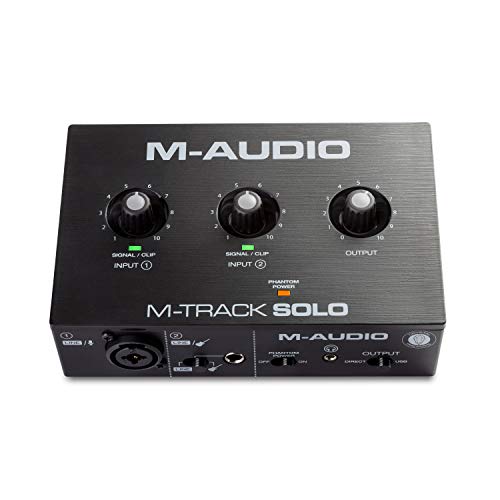
Looking to elevate your recording, streaming, or podcasting setup? The M-AUDIO M-Track Solo USB Audio Interface is your go-to solution. It offers 48 kHz audio resolution for crystal-clear recordings on Mac or PC. With a combo XLR/Line input and an additional Line/Instrument input, you can record two channels simultaneously. This compact interface is USB-powered, making it perfect for portability. You’ll appreciate the zero-latency monitoring through its USB/Direct switch. Plus, it includes MPC Beats software and is compatible with various devices, ensuring you have everything you need to create amazing audio content.
Best For: Beginners and professionals looking for a portable and user-friendly audio interface for recording, streaming, and podcasting.
Pros:
- Compact and USB-powered design enhances portability for on-the-go recording.
- High-quality 48 kHz audio resolution ensures clear sound for various applications.
- Includes essential software like MPC Beats and compatibility with multiple devices.
Cons:
- Lacks loopback functionality for recording multiple audio sources simultaneously.
- Some users may experience minimal latency, though typically low.
- Limited input options may not suffice for more complex recording setups.
CME U6MIDI Pro – MIDI Interface with Router and Filter

The CME U6MIDI Pro stands out as a versatile solution for musicians and producers who need seamless connectivity and advanced MIDI management in their studio. With its plug-and-play USB-C port, it works effortlessly across various platforms, including macOS, iOS, Windows, and more. This MIDI interface features a router, mapper, and filter, allowing you to easily split, merge, and reassign MIDI messages. Enjoy close to zero latency and high-precision transmission that guarantees error-free synchronization with your digital instruments. Plus, with 24/7 online support and lifetime updates, you’ll always have the tools you need to enhance your music production experience.
Best For: The CME U6MIDI Pro is best for musicians and producers seeking advanced MIDI management and seamless connectivity across multiple platforms.
Pros:
- Plug-and-play USB-C compatibility with various operating systems including macOS, iOS, Windows, and more.
- Features MIDI router, mapper, and filter for enhanced control over MIDI messages.
- Close to zero latency and high-precision transmission ensures error-free synchronization with digital instruments.
Cons:
- May require additional software setup for full functionality, which could be challenging for beginners.
- Standalone features may not be fully utilized by users who primarily work within a DAW.
- Limited physical MIDI ports compared to some other MIDI interfaces on the market.
Focusrite Scarlett 18i20 4th Gen USB Audio Interface for Music Production and Podcasting

Designed with versatility in mind, the Focusrite Scarlett 18i20 4th Gen USB Audio Interface is an ideal choice for musicians, podcasters, and producers seeking high-quality recording capabilities. With 18 inputs and 20 outputs, including eight mic preamps and MIDI I/O, it covers all your recording needs. The 24-bit, 192kHz converters guarantee pristine audio quality, while the 69dB gain enhances your sound performance. You’ll love the Air modes, adding depth and character to your recordings. Plus, with professional tools like Auto Gain and Clip Safe, your workflow is smoother. The bundled software makes it a complete package for music production.
Best For: Musicians, podcasters, and producers seeking high-quality multitrack recording capabilities with versatile connectivity options.
Pros:
- High-fidelity 24-bit, 192kHz audio quality ensures detailed recordings.
- Versatile input and output options, including 18 inputs and 20 outputs, cater to various recording needs.
- Professional tools like Auto Gain and Clip Safe streamline the recording process.
Cons:
- May be more than what casual users need for basic recording tasks.
- Larger form factor may not be ideal for portable setups.
- Requires a compatible computer and software knowledge for optimal use.
Factors to Consider When Choosing Midi Interfaces for Studio
When choosing a MIDI interface for your studio, you need to contemplate several key factors. Think about the connectivity options available, latency performance, and MIDI channel support to ascertain seamless integration with your gear. Also, check compatibility with your devices and the build quality to assure durability in your setup.
Connectivity Options Available
Choosing the right MIDI interface for your studio hinges on understanding the connectivity options available. MIDI interfaces generally offer a mix of USB, MIDI In/Out ports, and occasionally wireless connections, ensuring you can integrate various devices from computers to synthesizers. Many models support plug-and-play functionality, allowing for quick setup without complicated drivers. Consider the number of MIDI ports; some interfaces provide multiple In/Out ports, which can greatly enhance your workflow. Look for features like MIDI routing, merging, and filtering to tailor your signal management. Finally, make sure the interface is compatible across operating systems like macOS, Windows, and Linux to guarantee seamless integration with your preferred DAW and music production setup.
Latency Performance Metrics
Latency performance is a essential factor that can make or break your MIDI experience, as it directly impacts how responsive your setup feels during recording and playback. Latency refers to the delay between when you input a MIDI signal and when you hear the output. Ideally, you want a latency range of 2ms to 10ms for a more responsive experience. Round trip latency is another important metric; it measures the time it takes for a signal to travel from input to output and back. High-quality MIDI interfaces often achieve close to zero latency using advanced circuitry. Keep in mind that your computer’s processing power, USB connection type, and software can all affect overall latency performance in your MIDI setup.
MIDI Channel Support
MIDI channel support is an essential aspect to take into account for any studio setup. With 16 channels available, you can connect and control multiple devices, enhancing your music production capabilities. Each channel transmits various MIDI messages, like note on/off, control changes, and program changes, giving you the flexibility to manage instruments and effects effectively. Look for interfaces that support simultaneous transmission of multiple channels, as this allows for complex arrangements and layered sounds during recording and performance. Advanced features like MIDI filtering, mapping, and merging enable you to customize data flow to suit your needs. Finally, prioritize high-quality interfaces that guarantee low latency and accurate timing across all channels for peak synchronization in your projects.
Compatibility With Devices
When considering a MIDI interface for your studio, it’s essential to guarantee compatibility with various devices and operating systems. Make sure the interface supports macOS, Windows, iOS, Android, and Linux to maximize your options. Look for plug-and-play functionality that simplifies setup and avoids the hassle of additional drivers when connecting to computers and mobile devices. Check for MIDI in/out connections for integrating synthesizers, sequencers, and other external MIDI devices, which enhances your production versatility. Verify that the interface supports the latest MIDI protocols, like MPE (MIDI Polyphonic Expression), to keep up with modern instruments. Finally, consider the USB connection type, such as USB-C or USB 2.0, as it affects data transfer speed and stability.
Build Quality and Durability
Choosing the right MIDI interface goes beyond compatibility; build quality and durability play a significant role in ensuring your equipment withstands the demands of both studio and live environments. Look for interfaces constructed with heavy-duty materials, like steel chassis, to guarantee longevity and protection from physical damage. High-quality connectors are essential too, as they resist wear and tear, ensuring consistent performance over time. A compact and lightweight design can enhance portability without sacrificing sturdiness, making it easier to transport between sessions. Finally, consider interfaces with a “Built-Like-A-Tank” design, indicating a focus on durability that can handle various recording scenarios. Investing in a robust interface will ultimately pay off in reliability and performance.
Software Integration Features
Integrating your MIDI interface seamlessly into your studio setup can greatly enhance your workflow and creativity. Look for interfaces that offer plug-and-play compatibility with major operating systems, ensuring a smooth connection to your existing gear. Consider options that provide routing, filtering, and mapping capabilities for advanced MIDI signal management and customization. It’s also important to check if the interface includes software that simplifies configuration and control over MIDI channels and messages, boosting your efficiency. Make sure it supports a wide range of MIDI messages, including notes, controllers, and timecode, to cover various production scenarios. Finally, evaluate latency performance; lower latency is vital for real-time performance and maintaining precise timing in your recordings.
Portability and Size
Portability and size play essential roles in selecting a MIDI interface for your studio setup. You’ll want a compact and lightweight model that easily fits into your backpack or laptop bag, making it perfect for on-the-go music production. Look for bus-powered designs that don’t require external power sources, allowing you to set up anywhere without extra hassle. A rugged construction guarantees durability, so your interface can withstand the rigors of travel. Many options also feature plug-and-play functionality, simplifying connections and disconnections. However, keep in mind that a compact design might mean fewer ports and features, so consider your connectivity needs when balancing portability and functionality. Choose wisely to enhance your mobile studio experience!
Price and Value Comparison
When it comes to MIDI interfaces, prices can range from around $50 for basic models to over $300 for professional-grade options, reflecting their features and capabilities. When choosing an interface, consider the number of MIDI inputs and outputs; if you have a complex setup, you’ll likely need multiple ports, which can drive up costs. Pay attention to added features like MIDI routing, filtering, and mapping, as these can enhance functionality but also increase the price. Compatibility with various operating systems and software can further influence pricing, with more versatile options typically costing more. Finally, evaluate included software bundles and support options, as these can enhance overall value and justify a higher price tag.