Choosing the right recorder can make tracking songs, podcast episodes, and live performances feel far less complicated. The best multitrack recorders give you enough inputs, dependable recording quality, and a workflow that fits how you create.
Whether you need a compact pocket unit, a battery-powered field setup, or a tabletop recorder for a full project, this roundup focuses on practical options that balance flexibility, portability, and ease of use.
Best 10 Multitrack Recorders Picks for 2026
Desktop DAW Recorder
Zoom R20 Tabletop Recorder for Musicians
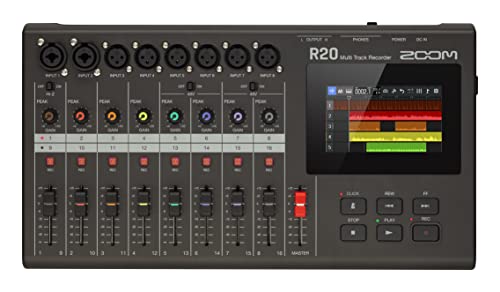
- Records up to 16 tracks, with 8 at once
- 6 XLR inputs plus 2 combo inputs
- Touchscreen editing and built-in effects
Best For: computer-free songwriting and multi-input music demos
Pocket Songwriting Studio
Tascam DP-006 6-Track Digital Pocketstudio

- Up to six tracks with two-track simultaneous recording
- Built-in stereo condenser microphones
- Battery powered and highly portable
Best For: portable songwriting and quick demo capture
Live Mixing Recorder
Zoom LiveTrak L-12 Mixer/Recorder

- Records 14 tracks simultaneously at 24-bit/96kHz
- Five separate monitor mixes with headphone outputs
- Works with SD card recording or USB to computer
Best For: bands and podcasters needing live multitrack capture and monitoring
Portable Multi-Mode Studio
Roland BR-80 Portable Digital Recorder
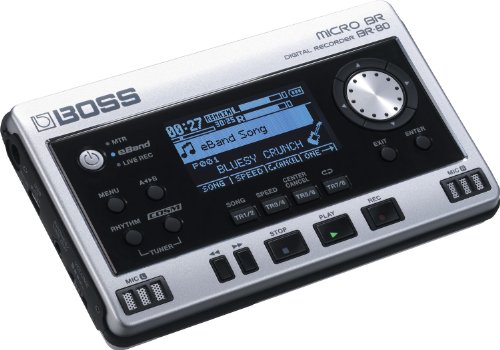
- Three modes: MTR, eBand, and Live Recorder
- Built-in stereo condenser mic and USB interface
- 64 V-Tracks with onboard effects
Best For: portable practice, songwriting, and compact multitrack recording
Podcast Multitrack Pick
Zoom PodTrak P4 for 4-Mic Interviews

- 4 XLR mic inputs with phantom power
- 4 headphone outputs with individual volume control
- Multitrack recording plus sound pads and Mix-Minus
Best For: Podcasters and remote interview setups
Classic Songwriting Pick
Boss BR-600 Portable Multitrack Recorder

- 8 simultaneous playback tracks and 64 V-Tracks
- Built-in stereo mic, effects, and drum machine
- Portable battery-powered design
Best For: Songwriters capturing ideas on the go
Modern Music Pick
Zoom R4 32-Bit Float Multitrack Recorder

- Up to 4 tracks with bounce-track workflow
- 32-bit float recording to reduce clipping risk
- 2 combo inputs plus built-in rhythm patterns
Best For: Musicians sketching songs and layering parts
Portable 8-Track Idea Station
Zoom R12 Portable Recorder for Musicians

- Up to 8 tracks with touchscreen editing
- Built-in drum loops, synths, and MIDI support
- USB-C interface plus DAW control surface
Best For: Musicians sketching songs and demos on the go
Live Mixing Recorder for Shows

- 12-track recording to SD card at 24-bit/96kHz
- Four headphone outputs with three custom mixes
- Records to SD card and computer simultaneously
Best For: Bands, podcasters, and streamers needing flexible live capture
High-Headroom Field Recorder

- Up to 6 tracks plus a stereo mix
- 32-bit float recording with look-ahead limiters
- 19.4mm mics rated up to 140 dB SPL
Best For: Filmmakers and musicians needing clean, reliable location audio
Desktop DAW Recorder – Zoom R20 Tabletop Recorder for Musicians
If you want one of the more flexible multitrack recorders for building songs without a computer, the Zoom R20 is designed for hands-on recording, editing, and mixing on the device itself. Its touchscreen workflow, multiple XLR and combo inputs, and onboard effects make it a practical all-in-one sketchpad for demos and full projects.
Best For: Musicians who want a tabletop recorder with touchscreen editing and enough inputs for serious project tracking.
Pros:
- Records up to 16 tracks, with 8 simultaneous inputs for multi-part sessions.
- Includes 6 XLR inputs plus 2 XLR/TRS combo inputs for flexible mic and line capture.
- Touchscreen editing supports drag, drop, swipe, and pinch controls right on the unit.
- Built-in effects, drum patterns, and synth sounds help with songwriting and practice.
Cons:
- Maximum sample rate is 44.1 kHz, so it is not aimed at higher-resolution recording.
- At 4.3 pounds, it is more tabletop than pocket portable.
The R20 stands out when you want a computer-free recording station with enough channels to capture layered music ideas and polish them in place. It is especially appealing if you value a DAW-like workflow in hardware form.
Pocket Songwriting Studio – Tascam DP-006 6-Track Digital Pocketstudio
The Tascam DP-006 is a compact choice among multitrack recorders if you want a simple songwriting tool that travels easily. With built-in microphones, battery power, and basic six-track recording, it is geared toward quick capture of ideas, rehearsals, and rough demos.
Best For: Songwriters who want a lightweight, battery-powered recorder for fast idea capture.
Pros:
- Records up to six tracks, with two tracks available for simultaneous recording.
- Built-in omni-directional condenser microphones make instant recording easy.
- Runs on four AA batteries, which helps for mobile use.
- Very compact at 1.8 pounds, making it easy to carry in a bag.
Cons:
- Track count is limited compared with larger desktop recorders.
- Uses a small 2.5 mm headphones jack instead of a full-size output.
This is a straightforward pocket studio for capturing ideas quickly rather than building complex productions. If portability and simplicity matter more than expansion, the DP-006 is easy to understand and easy to take anywhere.
Live Mixing Recorder – Zoom LiveTrak L-12 Mixer/Recorder
For musicians and podcasters who need one of the more practical multitrack recorders for live sessions, the Zoom LiveTrak L-12 combines recording, monitoring, and mixing in one unit. It can record directly to SD card, create separate monitor mixes, and also plug into a computer over USB when you need a DAW or streaming workflow.
Best For: Bands and podcasters that need multitrack recording plus flexible monitoring in one box.
Pros:
- Records up to 14 tracks simultaneously at 24-bit/96kHz to SD card.
- Offers five separate monitor mixes with dedicated headphone outputs.
- Includes 16 onboard effects and preamps rated at -128dBu EIN with up to +60dB gain.
- Can connect to a computer over USB for DAW recording or live streaming.
Cons:
- At 5.7 pounds, it is more transportable than pocket-sized.
- Battery operation is useful on the go, but it is still built around a mixer-style format.
The L-12 makes sense if your recording needs include monitoring multiple people at once, not just capturing tracks. It is a strong fit for rehearsals, small live setups, and podcast sessions where routing matters as much as recording.
Portable Multi-Mode Studio – Roland BR-80 Portable Digital Recorder
The Roland BR-80 is a compact option in multitrack recorders if you want recording, play-along practice, and a live capture mode in one portable unit. It records to SD or SDHC cards, includes a built-in stereo condenser mic, and also works as a USB audio interface with onboard effects.
Best For: Players who want a small recorder for multitrack ideas, practice, and portable capture.
Pros:
- Three modes give you MTR recording, eBand practice, and Live Recorder functions.
- Records to SD/SDHC cards up to 32 GB.
- Built-in stereo condenser microphone supports instant recording.
- Includes 64 V-Tracks, eight simultaneous playback tracks, and onboard effects.
Cons:
- Best suited to smaller sessions rather than large-track productions.
- Uses a 2-inch screen, so editing is more limited than on larger touchscreen units.
The BR-80 is a versatile grab-and-go recorder for players who want more than a basic mic and track capture device. Its combination of multitrack, training, and interface features makes it useful for practice and portable production.
Podcast Multitrack Pick – Zoom PodTrak P4 for 4-Mic Interviews
If you want multitrack recorders built for podcasting and remote interviews, the Zoom PodTrak P4 keeps the setup simple while still giving you separate control over each source. With four XLR mic inputs, four headphone outputs, sound pads, and multitrack recording for all inputs, it’s designed for small teams that need a compact, practical recorder.
Best For: Podcasters, interview hosts, and small remote recording setups that need four mic channels and easy monitoring.
Pros:
- 4 high-quality XLR mic inputs with phantom power
- 4 headphone outputs with individual volume control
- Multi-track recording for all inputs and sound pads
- Automatic Mix-Minus support for call-in and USB remote interviews
Cons:
- Battery life is limited to up to 3.5 hours on 2 AA batteries
- Built around podcast use rather than broader music-production features
The PodTrak P4 is a strong choice if your priority is fast, flexible podcast capture instead of a full studio workstation. Its remote-interview tools and individual headphone monitoring make it especially useful for conversational recording.
Classic Songwriting Pick – Boss BR-600 Portable Multitrack Recorder
Among multitrack recorders, the Boss BR-600 stands out as an older portable unit with a built-in stereo microphone, onboard effects, and a drum machine for sketching ideas anywhere. It offers 8 simultaneous playback tracks and 64 V-Tracks, making it useful when you want a compact recorder that can capture ideas and build arrangements without much extra gear.
Best For: Songwriters and portable recordists who want a compact, battery-powered multitrack with built-in creative tools.
Pros:
- 8 simultaneous playback tracks with 64 V-Tracks
- Built-in stereo microphone for recording on the go
- Guitar and effects processor with vocal FX and pitch corrector
- Built-in drum machine with velocity-sensitive pads
Cons:
- Uses CompactFlash media and includes only a 128MB card
- Older design with limited digital recording time listed at 2 hours and 16 minutes
- Runs on 4 9V batteries, which is less convenient than newer rechargeable options
The BR-600 is best viewed as a portable idea-capture tool with extra music-making features rather than a modern high-capacity recorder. If you value onboard drums, effects, and a built-in mic, it still covers a lot in one box.
Modern Music Pick – Zoom R4 32-Bit Float Multitrack Recorder
If you’re shopping for multitrack recorders with a modern workflow, the Zoom R4 is built around quick capture and easy layering. It records up to 4 tracks, uses 32-bit float audio to avoid clipping without gain adjustments, and adds stereo bouncing so you can keep building parts as you go.
Best For: Musicians who want a compact recorder for sketching songs, layering parts, and recording without worrying about gain staging.
Pros:
- Records up to 4 tracks with a dedicated bounce track for layering
- 32-bit float recording helps avoid clipping without gain adjustments
- 2 XLR/TS combo inputs work with microphones, instruments, and keyboards
- Built-in rhythm section with 80-plus drum patterns
Cons:
- Only 2 combo inputs, so it’s not ideal for larger multi-mic sessions
- Built to a compact workflow, not a full-featured studio console
The R4 is a practical fit if you want a portable recorder that makes it easy to capture ideas, layer parts, and bounce tracks without fiddling with levels. Its interface and battery/USB-C flexibility make it easy to keep in a bag or on a desk.
Portable 8-Track Idea Station – Zoom R12 Portable Recorder for Musicians
If you want one of the more flexible multitrack recorders for songwriting and simple production, the Zoom R12 is built around fast capture and easy onboard editing. It records up to 8 tracks, adds touchscreen control, and includes drum loops, synths, and USB-C connectivity so you can sketch ideas without opening a DAW.
Best For: Musicians who want a battery-powered multitrack recorder for writing, demoing, and lightweight editing anywhere.
Pros:
- Records up to 8 tracks with two XLR/TRS combo inputs
- Touchscreen interface with DAW-style cutting, copying, looping, and mixing
- Built-in drum loops and 18 FM synth instruments for quick songwriting
- USB-C interface and DAW control surface support
Cons:
- Only two physical inputs for tracking sources at once
- Battery life is limited to up to 5 hours on AA batteries
The R12 is a strong choice if portability and speed matter more than having lots of input channels. It gives musicians a compact way to build full ideas from scratch, then move the project into a computer workflow when needed.
Live Mixing Recorder for Shows – Zoom LiveTrak L-8
The Zoom LiveTrak L-8 stands out among multitrack recorders if you need a compact mixer that can handle both performance and capture at the same time. It records 12 tracks simultaneously to SD card at 24-bit/96kHz, while also sending audio to a computer over USB for flexible podcasting, streaming, or live-session workflows.
Best For: Bands, podcasters, and streamers who need a portable mixer-recorder with multiple monitor mixes.
Pros:
- Records 12 tracks simultaneously to SD card at 24-bit/96kHz
- Six preamps with a -121dBu noise floor and up to +54dB of gain
- Four headphone outputs with three independent custom mixes
- Records to SD card and computer at once via USB
Cons:
- More of a mixer-recorder than a dedicated field recorder
- Still compact, but larger than a simple handheld recorder
If you want a single device for small-venue capture, podcast production, or rehearsal recording, the L-8 is a practical all-in-one option. Its monitor routing and simultaneous recording features make it especially useful when multiple people need control over what they hear.
High-Headroom Field Recorder – Zoom H6 Studio Handy Recorder
For buyers comparing multitrack recorders for film, music, or location work, the Zoom H6 Studio focuses on clean capture and high dynamic range. It can record up to 6 individual tracks plus a stereo mix, uses 32-bit float recording, and includes 19.4mm mics designed to handle very loud sources without clipping.
Best For: Filmmakers, musicians, and field recordists who want reliable high-dynamic-range recording.
Pros:
- Records up to 6 individual tracks plus a stereo mix
- 32-bit float recording helps reduce distortion risk
- 19.4mm microphones handle up to 140 dB SPL
- Selectable sample rates from 44.1 kHz to 192 kHz
Cons:
- Fewer tracks than larger multitrack recorder options
- Designed more for capture than onboard mixing or editing
This is a smart pick if your priority is dependable recording in unpredictable environments. The combination of 32-bit float, look-ahead limiters, and long battery life makes it especially appealing for long sessions where clean audio matters most.
How We Picked These Multitrack Recorders
We focused on models that offer a useful mix of track count, input options, portability, and recording features for real-world use. Priority went to units that support creators who need to record vocals, instruments, interviews, or rehearsals without a steep learning curve.
We also considered power options, onboard effects, headphone monitoring, built-in mics, USB connectivity, and whether the recorder is better suited to studio-style production or mobile capture.
Quick Comparison: What Stands Out
Some Multitrack Recorders are built for songwriting and demo creation, with simple layouts and battery operation. Others are more like compact mixers, offering multiple XLR inputs and monitor mixes for podcasts, bands, and live sessions. A few prioritize ultra-portability or float recording for safer capture in dynamic environments.
If you need more hands-on mixing during recording, look at mixer-recorder hybrids. If you want the smallest footprint, pocket and handheld models are easier to carry. For podcasting, focus on the number of mic inputs and headphone outputs first.
Key Buying Factors for Multitrack Recorders
Inputs and Track Count
Make sure the recorder has enough mic or combo inputs for your current setup, plus room to grow. Track count matters too, especially if you plan to layer instruments or capture separate sources at once.
Portability and Power
Battery power is valuable for remote sessions, rehearsals, and field recording. Tabletop units usually offer more flexibility, while smaller recorders are easier to move between locations.
Monitoring and Workflow
Look for independent headphone outputs, simple gain controls, and clear transport buttons. These details can save time during live takes and remote interviews.
Recording Features
Useful extras include built-in mics, effects, sound pads, USB audio interface mode, and 32-bit float recording. The right feature set depends on whether you value convenience, safety, or creative control.
Who Should Buy Which Multitrack Recorders?
Songwriters and home producers should lean toward flexible tabletop units with multiple inputs and easy overdubbing. Podcasters should prioritize mic inputs, headphone monitoring, and phone or USB integration. Musicians who travel or record ideas on the go may prefer compact battery-powered models with built-in microphones. If you need one device for rehearsals, demos, and basic mixing, a mixer-recorder hybrid is often the most versatile choice.
In short, the best Multitrack Recorders are the ones that match your workflow, not just the highest track count. Start with your typical recording setup, then choose the model that makes capturing clean audio feel effortless.