A good patchbay puts frequently used studio connections within reach, so you can change routing without reaching behind racks or repeatedly reconnecting gear. The right choice depends less on the number of jacks alone than on what you need to connect and how you want signals to flow.
These 10 options span compact XLR panels, full-size balanced TRS bays, and models built for different patching workflows. Use the guide below to narrow them down before committing to a wiring plan.
Best 10 Patchbays for Recording Studios Picks for 2026
Modular XLR Pick
AP16 16-Channel Balanced Patchbay

- Four independent four-channel blocks
- Gold-plated XLR pins
- Reversible 19-inch rack ears
Best For: Modular XLR routing in studio racks
Flexible TRS Pick
Samson S-Patch Plus 48-Point Patch Bay

- 48 balanced patch points
- Front-panel routing mode switches
- 19-inch, 1U rack format
Best For: TRS-based studios with changing signal paths
Direct XLR Pick
Black Lion Audio PBR XLR Patchbay

- 16 XLR patch points
- 32 gold-plated XLR connectors
- Aluminum construction
Best For: Dedicated XLR signal routing
Rack Organization Pick

- 19-inch rack installation
- Fully shielded design
- Helps reduce equipment-connector wear
Best For: Organizing studio or live-sound rack cabling
Flexible TRS Routing

- 48 patch points
- 96 gold-plated TRS connectors
- Three-way mode switching
Best For: Studios seeking switchable TRS routing
Dedicated XLR Access

- 16 XLR channels
- Shielded all-steel 1U enclosure
- Reversible rack ears
Best For: Rack setups needing front-panel XLR access
LED-Label TRS Organization

- 48 patch points and 96 TRS connectors
- Customizable LED displays
- 48 three-way operation switches
Best For: TRS studios wanting customizable LED labeling
Compact Routing Pick
ART TPatch Eight-Point Balanced Patch Bay
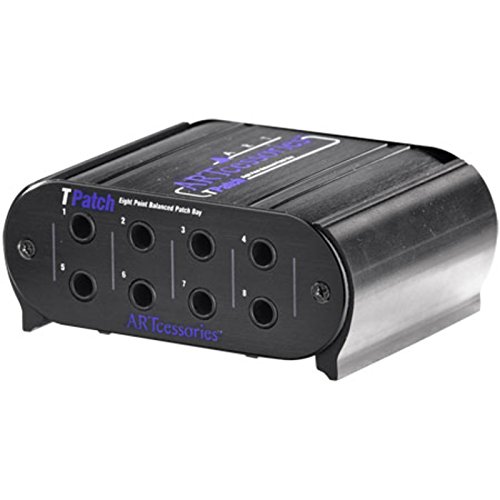
- Eight balanced direct points
- Switchable normal and half-normal modes
- 1/4-inch TRS connections
Best For: Small studios with a few balanced signal paths
Bluetooth Integration Pick
Black Lion Audio PBR TRS-BT Patchbay

- 46-point patchbay
- 94 gold-plated TRS connectors
- Bluetooth connectivity
Best For: TRS-heavy studios integrating portable devices
High-Capacity TRS Pick
Black Lion Audio PBR TRS Patchbay

- 48-point patchbay
- 96 gold-plated TRS connectors
- Black-anodized finish
Best For: Studios prioritizing TRS connection count
Modular XLR Pick – AP16 16-Channel Balanced Patchbay
Among XLR patchbays for recording studios, the AP16 stands out for its four factory-assembled, four-channel blocks. You can organize routing in 4-, 8-, 12-, or 16-channel groups without cutting a PCB.
Best For: Studios that want modular XLR routing and the option to service individual blocks.
Pros:
- Independent blocks support zone-based cable organization and individual module replacement.
- Gold-plated XLR pins and a dual-layer PCB are designed for reliable signal routing.
- Steel chassis and reversible rack ears offer mounting flexibility in a 19-inch rack.
Cons:
- Limited to 16 channels; larger setups may need another unit.
- XLR connections are less convenient if your gear primarily uses 1/4-inch TRS.
The modular layout is the practical reason to choose this one: it lets you divide a rack into manageable XLR routing zones rather than commit every connection to one fixed block.
Flexible TRS Pick – Samson S-Patch Plus 48-Point Patch Bay
Samson S-Patch Plus Balanced 48-Point 1/4" Patch Bay | 1/4 Inch Phone Connections
Check Price On AmazonFor buyers comparing 1/4-inch TRS patchbays for recording studios, the Samson S-Patch Plus puts 48 balanced patch points in a 1U rack unit. Front-panel toggle switches let you set channels to normalled, half-normalled, or thru operation.
Best For: Studios with TRS-connected equipment that need to change routing modes without accessing the rear panel.
Pros:
- Front and rear 1/4-inch connections bring rack wiring within easy reach.
- Per-channel switches offer normalled, half-normalled, and thru configurations.
- Fits a standard 19-inch rack in 1U of space.
Cons:
- XLR equipment needs suitable cabling or adapters.
- Its 48-point layout may be more than a small setup needs.
The accessible mode switches make this a strong fit when your default signal paths change. Check that your gear uses the appropriate balanced 1/4-inch connections before planning the wiring.
Direct XLR Pick – Black Lion Audio PBR XLR Patchbay
The Black Lion Audio PBR XLR is a straightforward option among XLR patchbays for recording studios. Its 16 patch points and 32 gold-plated XLR connectors bring XLR signal routing to one accessible unit.
Best For: Studios that want a dedicated XLR patching point without building a TRS-based setup.
Pros:
- Provides 16 patch points for XLR signal routing.
- Uses 32 gold-plated XLR connectors.
- Aluminum construction keeps the listed unit weight to 16 ounces.
Cons:
- Sixteen patch points may be insufficient for a larger routing setup.
- Not a direct match for gear wired with 1/4-inch TRS connectors.
Choose this model when XLR connectivity is the priority. The supplied specifications do not describe switchable routing modes, so plan your signal paths accordingly.
Rack Organization Pick – ART Pro Audio P48 Patch Bay
When shopping for patchbays for recording studios, the ART Pro Audio P48 is worth considering if cable organization is the main goal. Its supplied notes describe a fully shielded unit that installs in a 19-inch rack and reduces repeated plugging into equipment connectors.
Best For: Studio or live-sound racks where organized cabling and easier access to connections matter most.
Pros:
- Installs in a 19-inch rack.
- Fully shielded design is intended to help organize audio connections.
- Patching at the bay can reduce wear on equipment connectors.
Cons:
- The supplied notes do not specify normalled, half-normalled, or thru modes.
- Connector details in the listing are limited, so verify the required cabling before purchase.
The P48’s clearest documented advantage is tidy, accessible rack wiring. Confirm its connection layout against your equipment before committing to a full studio patch plan.
Flexible TRS Routing – Black Lion Audio PBR TRS3
Among patchbays for recording studios, the Black Lion Audio PBR TRS3 is a practical choice when you need 48 patch points and selectable routing. Its 96 gold-plated TRS connectors and three-way mode switches give you options for organizing a TRS-based setup.
Best For: Studios that want a 48-point TRS patchbay with selectable operating modes.
Pros:
- 48 patch points with 96 gold-plated TRS connectors.
- Three-way mode switching supports flexible routing.
- Includes a two-year warranty.
Cons:
- TRS connectors may not suit setups that need front-panel XLR connections.
- Confirm the connector layout fits your rack plan before buying.
Choose this model if TRS connectivity and switchable operation matter more to your workflow than an XLR patchbay.
If your search for patchbays for recording studios centers on XLR connections, the ART P16 offers a straightforward 16-channel layout. It places 16 female XLR connectors on the front and 16 male XLR connectors on the rear in a 19-inch, 1U rackmount enclosure.
Best For: Rack-based setups that need accessible XLR connections rather than TRS patch points.
Pros:
- Front female and rear male XLR connectors provide a clear connection layout.
- Fully shielded, all-steel 1U enclosure.
- Reversible rack ears add mounting flexibility.
- Includes a three-year warranty.
Cons:
- Its 16 channels offer fewer connection paths than a 48-point TRS model.
- XLR-only connectivity will not directly accommodate TRS plugs.
The P16 makes sense when XLR access and a rugged rackmount design are the priorities; check your channel count before choosing it.
For buyers comparing patchbays for recording studios, the Black Lion Audio PBR TRS3 LIT pairs 48 patch points with customizable LED displays. Its 96 TRS connectors, gold-plated construction, and 48 three-way variable-operation switches suit setups that need both routing options and visible organization.
Best For: TRS-based studios that want customizable LED displays alongside switchable patch points.
Pros:
- Customizable LED displays support visual organization.
- 48 three-way switches allow variable operation.
- 96 TRS connectors with gold-plated construction.
Cons:
- LED display customization lists macOS and Windows, so check compatibility with your computer.
- TRS connectors are not a direct match for XLR-only cabling.
This model is worth considering when on-unit visual labeling is useful; otherwise, make sure the LED feature justifies your choice over a simpler TRS patchbay.
Compact Routing Pick – ART TPatch Eight-Point Balanced Patch Bay
For smaller setups comparing patchbays for recording studios, the ART TPatch offers eight balanced direct points in a rugged extruded-aluminum case. Its four linked input/output pairs provide a manageable way to organize a few signal paths.
Best For: Small studios that need flexible routing for a limited number of balanced connections.
Pros:
- Switchable half-normal and normal modes, plus through connections.
- 1/4-inch TRS connectors for balanced signals.
- Compact eight-point layout and rugged extruded-aluminum case.
Cons:
- Eight points may be too few for a larger studio setup.
The TPatch is a focused choice when routing flexibility matters more than a high connection count.
Bluetooth Integration Pick – Black Lion Audio PBR TRS-BT Patchbay
Among patchbays for recording studios, the Black Lion Audio PBR TRS-BT stands out for combining a 46-point patchbay with Bluetooth connectivity. Its 94 gold-plated 1/4-inch TRS connectors suit setups that also want a way to integrate portable devices.
Best For: Studios that want extensive TRS patching alongside Bluetooth connectivity for portable devices.
Pros:
- 46-point layout provides substantial patching capacity.
- 94 gold-plated TRS connectors.
- Bluetooth connectivity supports portable-device integration.
Cons:
- Has two fewer patch points than the listed PBR TRS model.
Choose this version if Bluetooth integration is useful to your workflow; otherwise, consider whether you need that feature alongside the TRS connections.
High-Capacity TRS Pick – Black Lion Audio PBR TRS Patchbay
For buyers comparing patchbays for recording studios by connection count, the Black Lion Audio PBR TRS offers 48 patch points and 96 gold-plated TRS connectors. It is the straightforward TRS-focused option of the two PBR models listed here.
Best For: Studios prioritizing a high number of TRS patch points.
Pros:
- 48-point layout accommodates numerous connections.
- 96 gold-plated TRS connectors.
- Black-anodized finish.
Cons:
- No Bluetooth connectivity is listed in the supplied specifications.
- Check its listed dimensions against your available space.
If connection count is your main criterion, this model provides two more patch points than the PBR TRS-BT without relying on its Bluetooth feature.
How We Picked the Best Patchbays for Recording Studios
We selected a mix of XLR and balanced TRS patchbays, from compact eight-point units to larger 48-point models. The list covers straightforward access panels as well as bays intended for more flexible routing. We focused on practical buying distinctions: connector format, available connection points, suitability for rack installation, and how easily a unit fits an existing studio wiring plan. Features and specifications should be confirmed with the seller before purchase.
Quick Comparison: Which Format Fits?
XLR patchbays are a practical starting point when you want front-of-rack access to microphone lines or other XLR connections. The compact ART TPatch suits a small number of connections, while the ART P16, AP16, and Black Lion Audio PBR XLR offer alternatives for larger XLR layouts. Check each unit’s connector configuration and intended signal use rather than assuming every XLR panel is wired identically.
Balanced 1/4-inch TRS patchbays are commonly used to bring line-level studio connections together: interface inputs and outputs, outboard processors, and other compatible equipment. The Samson S-Patch Plus, ART P48, and Black Lion Audio PBR TRS variants are options to compare when a larger TRS layout is the goal. Choose among them based on the routing modes and access features you actually need, not just the stated point count.
Key Buying Factors for Patchbays for Recording Studios
Map the Connections First
List every signal you want on the bay, its connector type, and whether it needs permanent routing or frequent patching. Count usable input/output pairs as well as individual jacks; a “48-point” label does not mean 48 independent signal paths. Leave some spare capacity if your setup is likely to grow.
Check Routing and Normaling
On many TRS bays, normaled connections pass signal between paired rear jacks until a patch cable changes the path. Half-normal and full-normal behavior differs, so verify the available modes and how they are configured on the specific model. If you only need convenient front access, a straight-through layout may be simpler.
Match Signals, Cables, and Rack Space
Confirm balanced wiring and jack types across your gear and cables. Be especially careful with microphone signals and phantom power: do not assume a TRS line-level patchbay is appropriate for them. Also budget for rear clearance, cable management, clear labeling, and the patch cables needed to make the installation useful.
Who Should Buy Which Patchbays for Recording Studios?
For a small setup with only a few XLR lines to bring forward, start with a compact XLR option such as the ART TPatch. For more XLR connections, compare the 16-channel options and the PBR XLR against your required layout. For a studio built around line-level outboard gear, start with a full-size balanced TRS bay such as the Samson S-Patch Plus or ART P48, then compare the PBR TRS models if their particular configuration or access features suit your workflow. Buy for the routing diagram you can draw today, with enough room for the next few connections—not simply the most jacks available.