A bare window or reflective wall can make a recording space harder to work in. Heavy curtains and hanging blankets offer a flexible way to soften some reflections while also covering windows, doorways, or temporary partitions.
They are not a substitute for construction-grade sound isolation. The right choice depends on whether you want cleaner recordings inside the room, less light, or a modest reduction in sound passing through an opening.
Best 10 Soundproof Curtains for Recording Picks for 2026
Best Quilted Curtains
NICETOWN Studio Blackout Curtains

- Two 52-by-96-inch panels
- Quilted 500gsm construction
- 100% blackout; machine washable
Best For: Recording rooms that need everyday window curtains
Best Large-Coverage Blankets
850GSM Acoustic Blanket Two-Pack

- Two 96-by-80-inch blankets
- Dense recycled-cotton fill
- Nine hanging grommets each
Best For: Temporary podcast or home-studio acoustic coverage
Best Single-Panel Barrier

- One 80-by-48-inch panel
- Reduces indoor reflections
- Grommets and woven straps
Best For: Temporary door or window coverage
Best Removable Liner
RYB HOME 3-Layer Acoustic Curtains

- Two 52-by-95-inch panels
- Detachable felt liner
- 100% blackout fabric
Best For: Multipurpose recording rooms needing removable lining
Heaviest Blanket
Boxer BXR Pro Studio Sound Dampening Blanket

- 96 x 80 inches; 14 pounds
- Nine metal grommets plus sewn-in loops
- Machine washable
Best For: Temporary wall coverage in a home studio
Blackout Curtain Pair
NICETOWN Three-Layer Felt-Lined Drapes

- Two 52 x 102-inch panels
- Detachable felt sound-absorbing liner
- Blackout fabric; strong rod needed
Best For: Recording rooms needing dark window coverage
Rated Absorption Blanket
US Cargo Control 96 x 80 Sound Blanket
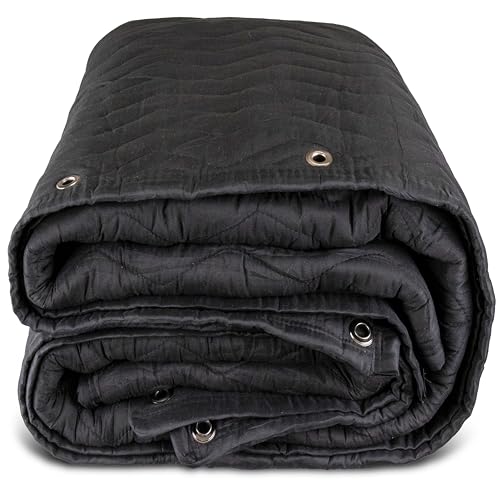
- Stated NRC rating: 0.35
- 18 grommets; hangs two ways
- Machine washable; hang to dry
Best For: Reducing echo over large surfaces
Best for Blackout Coverage
VEVOR Sound-Dampening Blankets

- Two large blankets for broad coverage
- Three-layer build dampens room echoes
- Grommets and straps ease hanging
Best For: Temporary echo control and blackout coverage
Best for Portable Setups

- Two foldable 96-by-80-inch panels
- Nine grommets and straps per blanket
- Mounting hardware not included
Best For: Removable panels for changing recording setups
Best for Included Mounting Hardware

- Two 96-by-80-inch panels
- Grommets, straps, hooks, and screws
- Padded construction dampens echoes
Best For: Large recording-area panels with supplied hardware
Best Quilted Curtains – NICETOWN Studio Blackout Curtains
For soundproof curtains for recording that also work as everyday window treatments, these NICETOWN panels pair heavy 500gsm polyester with a quilted cotton middle layer. The two 52-by-96-inch panels can help absorb ambient noise and block light, though curtains alone will not isolate a studio.
Best For: Home recordists who want noise dampening, complete blackout, and thermal insulation in one window covering.
Pros:
- Three-layer quilted construction helps absorb ambient sounds.
- Two panels provide 100% blackout and UV blocking.
- Eight grommets per panel fit rods up to 1.5 inches; panels are machine washable.
Cons:
- Designed to reduce ambient noise, not eliminate sound transmission.
- Heavy panels need a suitable curtain rod.
This is a practical pick when recording space is also a bedroom or living room: the padded construction serves acoustic, light-control, and temperature-control needs without a separate blanket setup.
Best Large-Coverage Blankets – 850GSM Acoustic Blanket Two-Pack
If you need flexible soundproof curtains for recording, this two-pack of 96-by-80-inch acoustic blankets offers substantial coverage for windows, doors, or temporary room divisions. The 850gsm recycled-cotton fill is intended to absorb echoes and reduce reverb, not provide complete soundproofing.
Best For: Podcasters and home-studio users building a temporary, large-area sound-dampening setup.
Pros:
- Two large blankets offer flexible coverage for recording spaces.
- Dense 850gsm fill helps tame indoor echoes and reverberation.
- Nine metal grommets per blanket support hanging on hooks or poles.
Cons:
- At 9.2 pounds each, the blankets call for secure mounting; hardware is not included.
- A mild unpacking odor may require 24–48 hours of airing out.
Choose these when acoustic coverage and portability matter more than a finished drapery look. Layering them with an air gap may improve results, but they should not be mistaken for a sound-isolating wall.
Best Single-Panel Barrier – VEVOR Grommeted Sound Blanket
For soundproof curtains for recording in a smaller or temporary setup, the VEVOR blanket provides one 80-by-48-inch panel with a polyester surface and recycled-cotton fill. Its three-layer construction can reduce indoor reflections, while VEVOR notes that its sound insulation is limited.
Best For: Covering a door or window to soften reflections and reduce glare during recording.
Pros:
- Three-layer design absorbs some indoor echo and sound reflections.
- Metal grommets and woven straps offer several hanging options.
- Zig-zag quilting and double-stitched binding support repeated hanging.
Cons:
- Includes one panel, so larger areas may need additional coverage.
- Provides limited sound insulation and should be kept dry.
This is a straightforward movable barrier when you need modest acoustic treatment and light blocking in the same spot. Measure the opening first: its 48-inch width may not cover a broad window on its own.
Best Removable Liner – RYB HOME 3-Layer Acoustic Curtains
These RYB HOME panels are soundproof curtains for recording spaces that need a more conventional curtain appearance. Two 52-by-95-inch panels sandwich a detachable felt liner between blackout fabric layers to absorb some noise while keeping out light.
Best For: Multipurpose rooms where recordists want blackout curtains with a removable sound-dampening liner.
Pros:
- Detachable felt middle layer adds noise absorption.
- Two panels provide 104 inches of total flat width and 100% blackout.
- Outer curtains are machine washable after removing the liner.
Cons:
- Not 100% soundproof; perceived noise reduction depends on the room.
- The felt liner must be detached before washing.
The removable liner makes these especially useful when a recording room doubles as a living space. Expect light control and some noise reduction rather than full isolation from sounds outside.
Heaviest Blanket – Boxer BXR Pro Studio Sound Dampening Blanket
If you’re comparing soundproof curtains for recording, this 14-pound quilted blanket is an alternative for covering a wall or dividing a room. Its 96-by-80-inch size gives you substantial coverage, while nine metal grommets and sewn-in loops offer hanging options.
Best For: Temporary acoustic coverage in a home studio or podcast room.
Pros:
- Large, heavyweight quilt helps reduce reflections and vibrations.
- Metal grommets and sewn-in loops provide flexible mounting options.
- Machine washable for easier upkeep.
Cons:
- At 14 pounds, it needs suitable hanging support.
- Sold as one blanket rather than a pair of curtains.
Choose it when flexible, substantial coverage matters more than a conventional drape. It is intended to dampen sound, not make a room soundproof.
For soundproof curtains for recording that also darken a room, this NICETOWN pair combines two fabric layers with a detachable felt liner. Each panel measures 52 by 102 inches; hanging them with folds can improve their noise-dampening effect.
Best For: Recording spaces that need window coverage, darkness, and some noise reduction.
Pros:
- Two panels provide a combined flat width of 104 inches.
- Detachable felt liner adds sound absorption.
- Three-layer construction blocks sunlight and provides thermal insulation.
Cons:
- Noise reducing, not noise cancelling.
- Heavy panels require a strong rod with center support.
- Felt liner must be removed before machine washing.
These are the conventional curtain choice of the three, especially if blackout performance matters alongside recording-room comfort. Allow enough width for folds rather than stretching the panels flat.
Among alternatives to soundproof curtains for recording, this 12-pound US Cargo Control blanket stands out for its stated NRC rating of 0.35. It measures 96 by 80 inches and has 18 grommets, so you can hang it from either the long or short side.
Best For: Reducing echo across a large wall, doorway, or temporary room divider.
Pros:
- Stated NRC rating of 0.35 for sound absorption.
- 18 grommets support hanging from either orientation.
- Machine-washable quilted construction with recycled cotton fill.
Cons:
- Absorbs sound but does not block sound or soundproof a room.
- Should not be left in prolonged sunlight when hung at a window.
- Must be hung to dry after washing.
Pick this blanket when managing room reflections is the priority and you want a stated absorption rating. For keeping outside noise out, its own specifications caution against treating it as a sound barrier.
Best for Blackout Coverage – VEVOR Sound-Dampening Blankets
For soundproof curtains for recording, this VEVOR two-pack is a practical way to cover a large window or doorway while reducing room echoes and light. Its three-layer construction combines a woven polyester surface with recycled cotton filling; VEVOR notes that sound insulation is limited.
Best For: Recording spaces that need broad, temporary echo control and blackout coverage.
Pros:
- Two large blankets provide coverage with fewer seams.
- Dense black material blocks light as well as dampening reflections.
- Metal grommets and woven straps offer multiple hanging options.
Cons:
- Not intended to fully soundproof a room or stop outside noise.
- Must be kept dry to avoid odor or material damage.
Choose these for a flexible recording backdrop or window covering, rather than as a substitute for structural sound isolation.
Best for Portable Setups – AMUFON Studio Blankets
If your soundproof curtains for recording need to move between a podcast setup and a home office, this AMUFON two-pack offers foldable 96-by-80-inch blankets. The padded, non-woven construction is designed to tame echoes and reverberation, and each blanket has nine grommets and straps for hanging.
Best For: Recording setups that need large, removable sound-dampening panels.
Pros:
- Large panels fold for storage or transport.
- Grommets and straps allow hanging from a pole or with separately purchased hardware.
- Reinforced edges and Z stitching help hold the padding in place.
Cons:
- Hooks, screws, and other mounting accessories are not included.
- The manufacturer advises airing the blankets after delivery to dissipate an initial smell.
These make sense when you want to reposition your acoustic coverage; expect echo reduction, not a guaranteed barrier against all outside sound.
Best for Included Mounting Hardware – Aodyow Acoustic Blankets
Among soundproof curtains for recording, this Aodyow two-pack stands out for including hooks and screws alongside the grommeted, 96-by-80-inch blankets. Dense non-woven fabric with synthetic cotton padding is intended to reduce indoor echoes, while the panels can also serve as light-blocking covers.
Best For: Recording areas where you want large hanging panels and supplied mounting hardware.
Pros:
- Two extra-large blankets cover broad wall, window, or doorway areas.
- Each panel has nine grommets and straps; the set includes 10 hooks and screws.
- Z stitching and reinforced edges secure the internal padding.
Cons:
- Heavy blanket panels may be less convenient to move frequently.
- Claims about blocking outside chatter are not backed by a stated noise-reduction rating.
This is the more ready-to-mount option of the three, but its clearest recording benefit is managing reflections inside the room rather than isolating it from external noise.
How We Picked the Best Soundproof Curtains for Recording
We focused on options that can serve common home-studio setups: conventional blackout drapes for windows and large quilted blankets for walls, doorways, and movable partitions. We considered listed dimensions, hanging hardware, coverage per pack, and whether each design is practical to install and reposition. Product names such as “soundproof” or “noise cancelling” do not establish measured acoustic performance; without comparable independent test results, we would not rank these by a claimed decibel reduction.
Quick Comparison: Drapes or Hanging Blankets?
Blackout drapes are the tidier choice for a permanent window installation. They can control light and may modestly reduce reflections near the window, but effectiveness depends on fabric, fullness, and coverage. Quilted acoustic blankets generally offer broader, more portable coverage for temporary vocal booths, exposed walls, or doorways. Their grommets or loops can make them easier to hang on hooks or a suitable support. A two-pack makes sense when one panel cannot cover the intended area or when you need an overlapping layer.
For either format, a loose panel hanging several inches past the edges of the target surface is usually more useful than one pulled tight across a small opening. Check the actual listed size before ordering: the selected blankets include both 80-by-48-inch and 96-by-80-inch formats.
Key Buying Factors for Soundproof Curtains for Recording
Know Which Problem You Are Solving
Soft, heavy fabric can reduce some high- and mid-frequency reflections reaching a microphone. It will do much less for low-frequency room problems, traffic noise, or bass escaping to neighboring spaces. True sound isolation requires attention to mass, airtight gaps, doors, windows, and structural paths. If isolation is your priority, treat curtains as a supplementary measure.
Coverage, Placement, and Mounting
Measure the full width and height you need to cover, then allow extra fabric for overlap at the sides and floor. For recording, place treatment where it addresses a nearby reflective surface rather than assuming every wall needs fabric. Check whether the product uses rod pockets, grommets, or loops, and confirm that the rod, rail, or hooks can support its weight. Avoid covering vents, heaters, or equipment that needs airflow.
Trade-Offs Beyond Acoustics
Blackout performance matters if you record video or need consistent lighting. Portability matters if you share the room or rearrange your setup. Also consider care instructions, storage space, and whether a thick panel will interfere with doors or walkways. More layers add weight and bulk, not a guaranteed level of sound isolation.
Who Should Buy Which Soundproof Curtains for Recording?
Choose a conventional blackout curtain if you primarily need a neat, everyday window covering with some reflection control. Choose a large grommeted blanket if you need temporary coverage behind a vocalist, over a reflective wall, or across an opening. Choose a two-pack when you need wider coverage or useful overlap. If your main issue is outside noise or sound reaching neighbors, start by identifying gaps and weak points in the room; Soundproof Curtains for Recording alone are unlikely to solve that problem.