A small desk leaves little room for speakers, yet monitor placement still matters. The right stands can free up workspace, bring tweeters closer to ear height, and give you more control over speaker angle.
These 10 options cover clamp-on supports, compact desktop risers, and tilted stands. Before choosing, check your speaker dimensions, desk edge, and the space you need behind each monitor.
Best 10 Studio Monitor Stands for Small Desks Picks for 2026
Best Short Clamp Stands
Vondynote Adjustable Desktop Pair

- Four height settings: 9–14 inches
- 9-by-9-inch padded plates
- Clamps desks up to 2.6 inches thick
Best For: Small desks needing modest speaker elevation
Best Under-Speaker Storage

- 5.9-inch-tall C-shaped design
- 5.5–7.5-inch depth adjustment
- 12-pound limit per stand
Best For: Lighter speakers with storage space underneath
Best Low-Profile Risers
JiffyPoint Metal Speaker Stands

- 4.12-inch fixed lift
- 6-by-6-inch top plates
- 30-pound limit per stand
Best For: Modest lift without desk-edge clamps
Best Tilt-Adjustable Clamps
Vondynote Studio Monitor Stands

- Top plates tilt from 0° to 12°
- Four heights: 10.4–15.4 inches
- 9-by-12-inch padded plates
Best For: Larger monitors needing height and tilt control
Compact Tilt Pick
Kanto S2 Desktop Speaker Stands
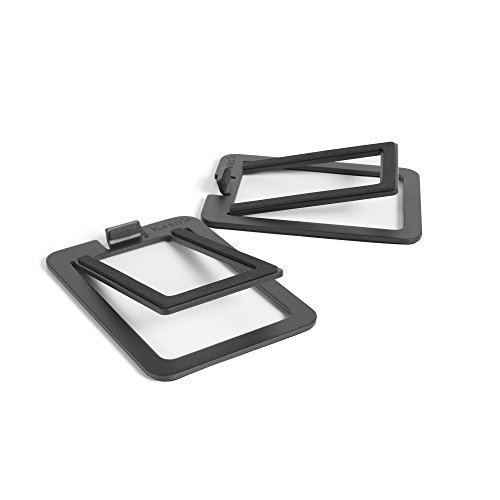
- 3.9-by-5.3-inch footprint
- Fixed 16° upward tilt
- Supports 6 lb per stand
Best For: Compact speakers needing a low-profile tilt
Desk-Space Saver
Vondynote Wall-Ready Clamp Stands

- Clamps to desks up to 2.6 inches thick
- Wall-ready mounting option
- Four heights from 9 to 14 inches
Best For: Raising monitors while preserving desktop space
Fixed-Height Platform
suptek SDM003MB Speaker Stands

- 7.9-by-6.5-inch top plates
- Fixed 6.1-inch lift
- Supports 44 lb per stand
Best For: Heavier desktop speakers needing a simple fixed lift
Best for Cable Management
Vondynote Clamp Stands with Cable Holes

- Clamp fits desktops up to 2.6 inches thick
- Four height positions from 11.3 to 15.2 inches
- Concealed cable holes and 9-inch plates
Best For: Small desks needing clamp mounting and tidier cables
Best for Tilt Adjustment
Liquid Stands MS112 Clamp-On Stands

- Tilts from 0° to 20°
- 9.5-to-13.5-inch adjustable height
- 65-pound stated capacity with padded platforms
Best For: Clamp-on setups needing adjustable speaker angle
Best for Taller Placement
Vondynote Desktop Base-Plate Stands

- Four height settings from 12 to 18 inches
- 9-inch padded top plates
- 9.4-inch bases occupy desk space
Best For: Taller speaker placement on desks with space for bases
Best Short Clamp Stands – Vondynote Adjustable Desktop Pair
For studio monitor stands for small desks, this Vondynote pair clamps to the desktop rather than resting on wide bases. Four fixed height positions from 9 to 14 inches make it a practical choice when you want to lift your speakers without giving up much work surface.
Best For: Small desks that can accommodate a clamp and need moderate speaker elevation.
Pros:
- Clamps use just 32.5 cm² of desktop surface per stand, according to the supplied specifications.
- 9-by-9-inch top plates have EVA anti-slip pads and support up to 50 pounds per stand.
- Padded clamps adjust to desktops up to 2.6 inches thick.
Cons:
- Height locks at four positions rather than adjusting continuously.
- The 14-inch maximum may be too low for some setups.
Measure your desk thickness and the height you need before choosing these; their main advantage is clearing the desktop without requiring floor space.
Best Under-Speaker Storage – PUTORSEN Cantilevered Stands
These PUTORSEN studio monitor stands for small desks use a C-shaped frame to leave room beneath your speakers for desk items. Their preset 6° tilt and adjustable depth stopper are useful if your speakers fit the specified size and weight limits.
Best For: Compact, lighter speakers when you want usable space underneath each stand.
Pros:
- C-shaped design provides 5.9 inches of height with room beneath the speakers.
- Depth stopper adjusts from 5.5 to 7.5 inches.
- Anti-slip EVA pads help keep speakers in place and protect contact surfaces.
Cons:
- Each stand is rated for only 12 pounds.
- The 6° tilt is preset rather than adjustable.
Check your speaker depth and weight carefully: this pair prioritizes accessible desk space over the higher load capacity of larger stands.
Best Low-Profile Risers – JiffyPoint Metal Speaker Stands
If you prefer freestanding studio monitor stands for small desks, this JiffyPoint pair raises speakers 4.12 inches while leaving space underneath. The steel frames and 6-inch top plates suit a setup that needs a compact riser rather than a tall adjustable mount.
Best For: Desks that need a modest speaker lift and cannot use edge clamps.
Pros:
- 6-by-6-inch top plates support up to 30 pounds per stand.
- C-shaped frames leave room below the raised speakers.
- Rubber feet and top pads help reduce slipping and protect contact surfaces.
Cons:
- Fixed height offers no vertical adjustment.
- Freestanding bases still occupy desk surface.
The product notes give conflicting incline figures, so verify the tilt if its exact angle matters to your listening position. Otherwise, these are straightforward short risers for speakers that fit the plates.
Best Tilt-Adjustable Clamps – Vondynote Studio Monitor Stands
These Vondynote studio monitor stands for small desks combine edge clamps with top plates that tilt from 0° to 12°. They also offer four height positions from 10.4 to 15.4 inches, giving you more placement flexibility than a fixed-angle desktop riser.
Best For: Larger monitors that need both height and tilt adjustment without taking up much desktop surface.
Pros:
- 0°–12° adjustable top-plate tilt helps aim speakers toward your listening position.
- 9-by-12-inch plates have EVA anti-slip pads and a stated 60-pound capacity per stand.
- Padded clamps fit desktops up to 2.6 inches thick.
Cons:
- Height is limited to four fixed positions.
- The 9-by-12-inch plates may be larger than necessary for compact speakers.
This is the more flexible Vondynote clamp option in this group, especially if speaker angle matters. Confirm your desk can accept the clamp and your preferred height matches one of its locking positions.
Compact Tilt Pick – Kanto S2 Desktop Speaker Stands
For studio monitor stands for small desks, the Kanto S2 pair is a low-profile choice for compact 2–3-inch monitors. Each metal stand occupies a 3.9-by-5.3-inch footprint and tilts its speaker 16° toward the listener.
Best For: Small speakers weighing up to 6 lb each when you want a fixed upward tilt without tall stands.
Pros:
- 16° tilt directs speakers toward your ears.
- Foam padding on top and bottom helps limit unwanted resonance.
- Low-profile metal design keeps the setup visually simple.
Cons:
- 6 lb capacity per stand limits use with heavier monitors.
- Fixed tilt and height offer no positioning adjustment.
Choose the S2 when your speakers fit its small platform and a simple tilt solves your positioning needs; larger monitors call for a roomier stand.
Desk-Space Saver – Vondynote Wall-Ready Clamp Stands
Among studio monitor stands for small desks, this Vondynote pair saves work-surface space by clamping to the desk rather than resting on it. Its alternate tube position allows installation against a wall, while the height adjusts among four fixed positions from 9 to 14 inches.
Best For: Desks up to 2.6 inches thick where you want monitors raised without occupying much desktop surface.
Pros:
- Edge-mounted tube option accommodates desks placed against a wall.
- Four height positions: 9, 10.6, 12.2, and 14 inches.
- 9-by-9-inch plates support speakers up to 50 lb; EVA pads help protect the desk and reduce slipping.
Cons:
- Requires a suitable desk edge for clamping.
- Height changes are limited to four set positions.
This is the most practical of the three when reclaiming desktop area is the priority. Check desk-edge access, thickness, and speaker dimensions before choosing it.
Fixed-Height Platform – suptek SDM003MB Speaker Stands
If you are comparing studio monitor stands for small desks but need a larger speaker platform, the suptek SDM003MB pair offers 7.9-by-6.5-inch top plates at a fixed 6.1-inch height. Each alloy-steel stand supports up to 44 lb and includes an anti-slip mat.
Best For: Desktop speakers that fit the 7.9-by-6.5-inch plates and need a straightforward 6.1-inch lift.
Pros:
- Pair of stands provides matching elevation for a stereo setup.
- 44 lb capacity per stand accommodates heavier compatible speakers.
- Anti-slip mats help keep speakers in place.
Cons:
- Fixed 6.1-inch height offers no adjustment.
- 7.9-by-6.5-inch platforms may occupy too much room on especially tight desks.
The suptek pair is a sensible option when platform size and load capacity matter more than minimizing footprint. Measure your available desk space before buying.
Best for Cable Management – Vondynote Clamp Stands with Cable Holes
For studio monitor stands for small desks, this Vondynote pair clamps to the desktop rather than occupying it with base plates. Concealed cable holes help keep speaker wiring out of sight.
Best For: Small desks where cable clutter and available desktop space are priorities.
Pros:
- Clamp fits desktops up to 2.6 inches thick and has EVA padding to protect the surface.
- Four secured height positions from 11.3 to 15.2 inches.
- Each 9-by-9-inch plate has an anti-skid pad; stated load capacity is 50 pounds.
Cons:
- Requires a suitable desk edge for clamping.
- Height is limited to four preset positions.
The metal tube collar, locking cam, and security pin make this a practical pick if you want clamp mounting and tidier cables, provided the height range suits your setup.
Best for Tilt Adjustment – Liquid Stands MS112 Clamp-On Stands
If you need studio monitor stands for small desks with adjustable speaker angle, the Liquid Stands MS112 pair combines clamp mounting with 0° to 20° of tilt. Its 9-by-12.5-inch platforms can be configured horizontally or vertically.
Best For: Desk setups that need clamp mounting, tilt adjustment, and room for larger speaker platforms.
Pros:
- Adjustable tilt from 0° to 20° and height from 9.5 to 13.5 inches.
- Stated 65-pound load capacity and 6 mm anti-slip isolation padding.
- Fits desks 0.5 to 2 inches thick and needs less than 2 inches of wall clearance.
Cons:
- The 9-by-12.5-inch platforms may be larger than some small monitors need.
- Not suited to desktops outside its stated 0.5-to-2-inch clamp range.
Choose this pair when positioning flexibility matters more than having the smallest possible platform; check your speaker dimensions and desk thickness first.
Best for Taller Placement – Vondynote Desktop Base-Plate Stands
Vondynote Set of 2 Desktop Studio Monitor Speaker Stands Bookshelf Speaker Stands
Check Price On AmazonThese Vondynote desktop stands offer a taller placement option when shopping for studio monitor stands for small desks. Unlike clamp-on models, they sit on 9.4-inch-wide base plates, so account for that footprint before buying.
Best For: Desks with room for base plates and speakers that need one of four heights up to 18 inches.
Pros:
- Four pinned height settings at 12, 14, 16, and 18 inches.
- 9-inch top plates include 2 mm EVA anti-skid pads.
- Steel construction with a stated 50-pound load capacity.
Cons:
- Each 9.4-inch base occupies desktop space.
- No tilt adjustment or cable-management feature is specified.
This pair makes sense if height is your priority and a clamp is impractical, but measure your free desk area before committing to the base-plate design.
How We Picked the Best Studio Monitor Stands for Small Desks
For this roundup, we prioritized stand designs that make sense on a crowded desk: clamp-on models that move speakers off the work surface, compact risers that are easy to position, and tilted stands for small monitors. We also considered the fit details buyers can verify before ordering, including speaker platform size, stated load limits, desk-clamp requirements, height, tilt, and cable routing. A stand is only a good space-saver if it safely fits both your speakers and your desk.
Quick Comparison: Which Stand Style Fits?
Clamp-on stands are the first place to look if your desk surface is already full. The selected Vondynote clamp models offer different placement features, including short supports, tilt, wall-adjacent positioning, and a cable-hole option. The Liquid Stands pair is another clamp-on choice with adjustable short or tall configurations. Check that your desk has a suitable edge and enough clearance for the clamp hardware.
Desktop risers avoid clamp compatibility concerns but take up surface area. Among the selected options are compact metal stands, the 6.1-inch-tall suptek pair, and Vondynote desktop stands. The Kanto S2 is a tilted option intended for small speakers and compact 2–3-inch monitors; its stated 6-pound support limit makes checking speaker weight especially important.
Key Buying Factors for Studio Monitor Stands for Small Desks
Speaker Fit and Load Capacity
Measure each speaker’s base, not just its advertised driver size. Confirm that the stand’s platform supports it securely and that the speaker is within the stated weight limit. A listed platform depth or width is more useful than a broad “universal” label.
Desk Fit and Working Space
For clamps, check tabletop thickness, underside obstructions, edge shape, and any gap between the desk and wall. A drawer, frame rail, or rear cable tray can prevent a clamp from seating properly. For desktop stands, measure the footprint and leave room for your keyboard, display, and mouse.
Height, Angle, and Stability
Aim to place tweeters near seated ear height and point both speakers toward your listening position. Tilt can help when a low stand cannot provide enough height. Look for a stable base or secure clamp, and use any included pads as directed; pads do not compensate for an overloaded or poorly fitted stand.
Cables and Speaker Clearance
Allow space for power and audio connections, rear-facing controls, and any rear port. A cable hole may make routing neater, but verify that its position works with your speakers.
Who Should Buy Which Studio Monitor Stands for Small Desks?
Choose a clamp-on pair if freeing desk space is the priority and your desk edge is compatible. Choose a compact desktop riser if you cannot clamp to the desk or want to reposition speakers easily. Choose a tilted stand when your monitors sit below ear level and you cannot raise them further. For larger or heavier speakers, start with verified platform dimensions and load ratings, then pick the placement style that fits your workspace.