Choosing the right studio monitors can make a bigger difference in your mixes than upgrading software or plugins. The best pair gives you a clearer view of balance, detail, and low-end control.
This roundup of studio monitors for home studio setups focuses on practical options for different rooms, budgets, and workflows, from compact desktop speakers to more capable nearfield monitors.
Best 10 Studio Monitors for Home Studio Picks for 2026
Best for Accurate Mixing
JBL 305P MkII 5" Powered Studio Monitors

- Wide sweet spot with precise stereo imaging
- Controlled bass from 5-inch woofer and Slip Stream port
- Boundary EQ and HF Trim for room tuning
Best For: Home producers and podcasters who need accurate nearfield monitors with flexible room adjustment.
Best for Flat, Honest Playback
Yamaha HS5 Powered Studio Monitors

- Flat, uncolored sound for accurate mix decisions
- Compact size fits small desks and nearfield setups
- XLR/TRS inputs and bi-amped power for flexible use
Best For: Home studio users who want accurate nearfield monitors for mixing and editing.
Best for Versatile Desktop Audio
Active Bookshelf Speakers 36W RMS

- 36W RMS with 5-inch woofer and silk dome tweeters
- USB, AUX, RCA, and Bluetooth 5.4 inputs
- Bass and treble controls for easy sound shaping
Best For: Home-studio beginners and desktop users who want flexible, adjustable speakers.
Best for Wide Sweet Spot
PreSonus Eris E7 XT Studio Monitor

- Wide EBM waveguide for roomy stereo imaging
- 6.55-inch woofer for fuller low-end response
- Built-in tuning controls for room correction
Best For: Home studio users who want accurate monitoring and a wide sweet spot.
Best for DSP Control
M-Audio BX5BT 5" Desktop Studio Monitors
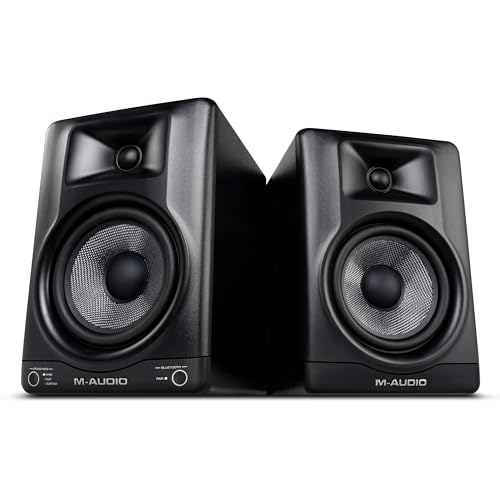
- 240W bi-amplified power in a compact 5-inch design
- DSP modes plus app EQ for easy sound tuning
- Bluetooth 5.0 adds flexible wireless playback
Best For: Creators who want compact monitors with easy tuning and wireless convenience.
Best for Connectivity
PreSonus Eris Accent BT 60W Speakers
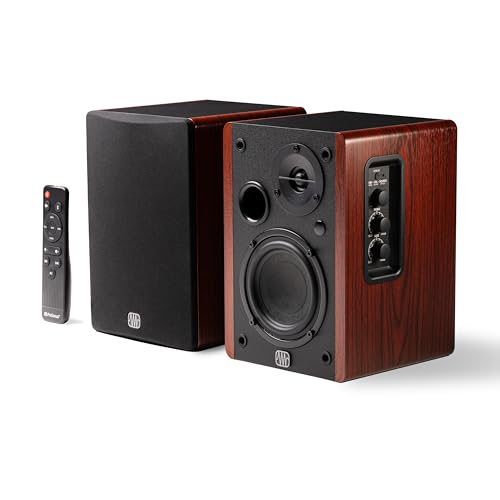
- Bluetooth 5.3 plus USB-C, optical, coax, RCA, and AUX
- Front-panel tone controls simplify quick sound tweaks
- Sub-out and remote make it easy to expand and use daily
Best For: Home studio users who need a compact, versatile speaker pair for mixed-use listening and creative work.
Best for Flexible Desktop Listening
Mackie CR3.5 Creative Reference Monitors

- Tone knob adds easy sound shaping for studio or casual use.
- Compact 3.5-inch design works well on small desks.
- TRS, RCA, and 3.5 mm inputs support many devices.
Best For: Small home studios, desktop producers, and users who want one compact speaker pair for work and play.
Best for Room Tuning
Edifier MR5 2.0 Studio Monitors

- 3-way active design with dedicated woofer, mid driver, and tweeter
- Rear knobs plus app controls for room compensation
- XLR, TRS, RCA, AUX, and Bluetooth 6.0 connectivity
Best For: Home studio users who want accurate monitoring with flexible room adjustment.
Best Budget Desktop Monitors

- Compact size fits easily on desks and small studios
- Clear, accurate sound with solid bass for the size
- TRS, RCA, and front aux inputs cover most setups
Best For: Bedroom producers and desktop users who want affordable near-field monitors with flexible connectivity.
Best for Flexible Connectivity

- TRS, USB, RCA, AUX, and Bluetooth 5.3 inputs
- Built-in 24-bit DAC for USB playback
- Compact 3.5-inch drivers suit small desks
Best For: Home producers and desktop users who want an affordable, easy-to-connect monitor pair.
Best for Accurate Mixing – JBL 305P MkII 5" Powered Studio Monitors
If you want studio monitors for home studio work that prioritize clarity over hype, the JBL 305P MkII pair is a strong fit. Their wide sweet spot, detailed imaging, and room-tuning controls make them easy to place on a desk and trust for mixing, podcast editing, and content creation.
Best For: Home producers, podcasters, and creators who need accurate nearfield monitors with flexible room adjustment.
Pros:
- Wide sweet spot and precise stereo imaging from JBL’s Image Control Waveguide
- Dual Class-D amps, 5-inch woofer, and Slip Stream port deliver punchy, controlled bass
- Boundary EQ and HF Trim help tailor the sound to your room
- XLR/TRS inputs make them easy to integrate into pro and home setups
Cons:
- Not ideal if you want deep sub-bass without a subwoofer
- Rear controls take a little tweaking to get the best result in untreated rooms
For studio monitors for home studio use, the 305P MkII stands out because it balances honest detail with enough power to fill a small room. If you need monitors that help you make better mix decisions without taking up much desk space, this pair is an easy recommendation.
Best for Flat, Honest Playback – Yamaha HS5 Powered Studio Monitors
If you want studio monitors for home studio mixing that prioritize accuracy over hype, the Yamaha HS5 is a smart, proven pick. Its compact 5-inch design, bi-amped power, and flat response make it a strong fit for nearfield listening, editing, and mix decisions in smaller rooms.
Best For: Producers and home recordists who want a reliable nearfield monitor for honest mixing and critical listening.
Pros:
- Neutral, uncolored sound helps reveal mix flaws clearly
- Compact footprint works well on desks and in small studios
- XLR and TRS inputs support balanced or unbalanced connections
- Bi-amped design delivers clean, controlled nearfield playback
Cons:
- 5-inch woofer won’t deliver deep bass without a subwoofer
- Best suited for close-range use rather than larger rooms
- Less flattering for casual listening than more colored speakers
The HS5 is a solid choice if your priority is translation: hearing your mix as it really is, not as a monitor wants it to sound. For studio monitors for home studio setups where accuracy matters more than low-end punch, it remains a dependable reference option.
Best for Versatile Desktop Audio – Active Bookshelf Speakers 36W RMS
If you want studio monitors for home studio use without paying for a full pro setup, these active bookshelf speakers are a practical pick. The 5-inch woofer, silk dome tweeters, USB digital input, and Bluetooth 5.4 make them flexible for PC audio, casual mixing, gaming, and everyday listening.
Best For: Home-studio beginners, desktop creators, and listeners who want adjustable sound with multiple input options.
Pros:
- 36W RMS with a 5-inch woofer and silk dome tweeters for clear, full sound
- USB, AUX, RCA, and Bluetooth 5.4 support for easy connection to many devices
- Bass and treble controls let you tailor the sound for music, video, or games
- Wood cabinet design and remote control add convenience for desk use
Cons:
- Not a true reference monitor, so it is better for general listening than critical mixing
- USB audio compatibility depends on the source device
- No Dolby Audio support
As a budget-friendly desktop speaker option, this model is more about flexible everyday monitoring than flat, studio-grade accuracy. For buyers shopping studio monitors for home studio setups, it makes sense if you value convenience, bass control, and broad compatibility over a strictly neutral response.
Best for Wide Sweet Spot – PreSonus Eris E7 XT Studio Monitor
PreSonus Eris E7 XT 2-Way Active Studio Monitor with EBM Waveguide (Pack of 1)
Check Price On AmazonIf you want studio monitors for home studio work with a roomy listening area and flexible tuning, the PreSonus Eris E7 XT is built to make mixing easier. Its EBM waveguide, 6.55-inch woofer, and onboard acoustic controls help it adapt to smaller rooms without sacrificing a clear, detailed presentation.
Best For: Home producers and hobbyists who want accurate nearfield monitoring, strong imaging, and easy room compensation.
Pros:
- 100° x 60° EBM waveguide creates a wide sweet spot and solid stereo imaging
- 6.55-inch woven composite woofer delivers extended low-end for a compact monitor
- Acoustic tuning controls help tailor the sound to your room
- Includes Studio One Prime and the Studio Magic plug-in suite
Cons:
- Pack of 1 means you must buy a second speaker for stereo use
- Needs careful placement and tuning to perform at its best
As studio monitors for home studio setups, the Eris E7 XT stands out for users who want flexibility and a forgiving listening zone more than flashy extras. It’s a practical pick if you need a monitor that can be dialed in to your room and still give you reliable mix decisions.
Best for DSP Control – M-Audio BX5BT 5" Desktop Studio Monitors
If you want studio monitors for home studio use with built-in tuning and modern connectivity, the M-Audio BX5BT is a practical pick. It combines a compact 5-inch design with DSP modes, app-based EQ, and Bluetooth, making it easier to adapt to different rooms and workflows.
Best For: Music creators, podcasters, video editors, and desktop setups that need accurate monitoring with flexible sound shaping.
Pros:
- 240W bi-amplified output delivers plenty of volume for a compact monitor pair
- DSP modes and app EQ make room and preference tuning straightforward
- Bluetooth 5.0 adds convenient wireless playback for reference listening
- 5" Kevlar woofer and silk dome tweeter aim for clear, detailed sound
Cons:
- 5-inch monitors will not produce deep sub-bass like larger studio speakers
- Bluetooth is handy for playback, but wired connections are still better for critical mixing
- App-based controls may be more than some buyers want for a simple setup
For buyers comparing studio monitors for home studio setups, the BX5BT stands out for balancing accuracy, customization, and convenience in one affordable desktop-friendly package. It is especially appealing if you want a monitor pair that can handle creative work without feeling overly complicated.
Best for Connectivity – PreSonus Eris Accent BT 60W Speakers
If you want studio monitors for home studio use that can also handle everyday listening, the PreSonus Eris Accent BT is a flexible pick. It combines a compact 2-way design with multiple wired inputs, Bluetooth 5.3, and tone controls, making it easy to adapt to a desk, bedroom, or small creative space.
Best For: Home studio users who want versatile connectivity, simple controls, and a speaker set that pulls double duty for music, video, and casual mixing.
Pros:
- USB-C, optical, coaxial, RCA, AUX, and Bluetooth 5.3 inputs cover most setups
- Front-panel bass, treble, volume, and source controls make tuning straightforward
- 4-inch woofer and silk dome tweeter aim for clear, balanced nearfield sound
- RCA sub-out and remote add useful upgrade and convenience options
Cons:
- Not a full replacement for larger studio monitors in more demanding mix rooms
- Small woofer size limits deep bass without a subwoofer
- Bluetooth convenience is handy, but wired playback is still the better choice for critical work
For shoppers comparing studio monitors for home studio setups, this model stands out more for flexibility than brute force. It is a smart fit if you want one compact speaker pair that can handle creative work, desk listening, and TV or turntable use without extra hassle.
Best for Flexible Desktop Listening – Mackie CR3.5 Creative Reference Monitors
If you want studio monitors for home studio work that can also pull double duty for gaming and casual listening, the Mackie CR3.5 is a versatile compact pick. Its tone knob lets you keep a flat monitoring sound or add extra bass and sparkle when you want a more fun, full-bodied presentation.
Best For: Small desk setups, beginner producers, and anyone who wants one speaker pair for music production, gaming, and everyday use.
Pros:
- Compact 3.5" design fits easily on desktops and tight spaces.
- Tone knob makes it easy to switch between neutral monitoring and more colored listening.
- Multiple inputs, including TRS, RCA, and 3.5 mm, make it easy to connect to interfaces, PCs, and consoles.
- Desktop and bookshelf modes help optimize sound for nearfield or farther listening positions.
Cons:
- 3.5" woofer size limits deep bass and overall output compared with larger studio monitors.
- Not the best choice if you need highly detailed, full-range critical mixing for larger rooms.
For compact studio monitors for home studio setups, the CR3.5 stands out as an easy-to-use, affordable all-rounder. It is especially appealing if you want nearfield monitoring with extra flexibility for everyday entertainment without adding more gear.
Best for Room Tuning – Edifier MR5 2.0 Studio Monitors
If you want studio monitors for home studio use that are easy to tailor to your room, the Edifier MR5 stands out with a 3-way active design, flexible inputs, and built-in acoustic controls. It’s a practical pick for near-field mixing, content creation, and everyday listening in compact spaces.
Best For: Home studio owners who need accurate sound plus quick room correction without a complicated setup.
Pros:
- 3-way active driver layout helps keep bass, mids, and highs clear and separated
- Rear tuning knobs and app-based room compensation make setup easier in real rooms
- Wide input selection, including XLR, TRS, RCA, AUX, and Bluetooth 6.0
- Compact 110W RMS design suits desks and smaller studio spaces
Cons:
- Not as compact as ultra-small desktop speakers
- App-based tuning may be more than casual listeners need
- Bluetooth is convenient, but wired connections are still better for critical monitoring
For buyers comparing studio monitors for home studio setups, the MR5 offers a strong mix of detail, connectivity, and room-adjustment tools in a speaker that fits comfortably on a desk or stand. It’s especially appealing if you want one monitor pair that can handle both mixing tasks and general music playback.
Best Budget Desktop Monitors – PreSonus Eris 3.5
PreSonus Eris 3.5 is a strong pick for studio monitors for home studio setups where space is tight but you still want accurate, near-field sound. They deliver a clean, balanced response with enough low end for everyday mixing, editing, and casual listening, plus flexible inputs for both pro and consumer gear.
Best For: Bedroom producers, content creators, and desktop users who need compact monitors with honest sound and easy connectivity.
Pros:
- Compact size fits easily on desks and small studio setups
- Clear, accurate sound with surprisingly solid bass for the class
- TRS, RCA, and front aux inputs make hookup simple
- Front headphone output adds convenient private listening
Cons:
- Not ideal for larger rooms or louder mixing environments
- Bass extension is good for the size, but not subwoofer-level
For studio monitors for home studio use, the Eris 3.5 stands out as an affordable, space-saving option that still aims for honest playback. If you want a practical desktop monitor pair that can handle music production, gaming, and general media without taking over your workspace, this is an easy one to consider.
Best for Flexible Connectivity – Ortizan C7 Studio Monitors
The Ortizan C7 is a practical pick if you want studio monitors for home studio use that can also pull double duty for gaming, casual listening, and desktop audio. It combines balanced TRS input, USB DAC support, RCA, AUX, and Bluetooth 5.3, so it’s easy to hook up a range of gear without extra adapters.
Best For: Home producers and desktop users who want an affordable monitor pair with lots of input options and simple wireless playback.
Pros:
- Multiple inputs, including TRS, USB, RCA, AUX, and Bluetooth 5.3
- Built-in 24-bit DAC helps keep digital audio cleaner over USB
- Compact 3.5-inch carbon fiber woofer and silk dome tweeter fit small setups
- Front headphone output makes quick monitoring easy
Cons:
- Small drivers won’t deliver deep bass like larger studio monitors
- More of a versatile budget monitor than a true reference-grade option
If you want studio monitors for home studio work with easy connectivity and a compact footprint, the C7 is a convenient all-rounder. Its tuning and input flexibility make it appealing for entry-level production spaces where simplicity matters as much as sound.
How We Picked the Best Studio Monitors for Home Studio
We focused on speakers that are practical for home recording and everyday music production: accurate enough for editing and mixing, easy to place on a desk or stands, and flexible in connectivity. We also favored models with useful features like room tuning, tone controls, Bluetooth where relevant, and sizes that match typical small studios.
Quick Comparison
The best choice depends on your room and how you work. Smaller 3.5-inch and 4-inch models are easier to place and better for compact desks, while 5-inch and 7-inch designs usually offer fuller low-end and more mix detail. For Studio Monitors for Home Studio use, the right balance is often between size, accuracy, and placement flexibility.
Key Buying Factors for Studio Monitors for Home Studio
Driver Size and Low-End Extension
Driver size affects how much bass and overall volume the monitor can produce. 3.5-inch and 4-inch speakers are convenient for close-range desktop use, but they may need a subwoofer or headphones for deeper bass checks. 5-inch monitors are the most versatile sweet spot for many home studios. Larger models can sound fuller, but they also need more space and better room treatment.
Accuracy Vs. Coloration
For mixing, look for monitors that prioritize a neutral response over boosted bass or hyped treble. A flatter presentation helps you make better EQ and balance decisions. If you also want casual listening, some models add extra warmth or feature tuning controls that make them more forgiving.
Room and Placement
Even good monitors can sound misleading in a poor setup. Keep speakers at ear level, form an equilateral triangle with your listening position, and leave some space from walls when possible. If your room is untreated, built-in room compensation or rear-panel controls can help reduce boominess or harshness.
Connectivity and Workflow
Think about the gear you already use. Balanced inputs are important for cleaner connections with audio interfaces, while USB, Bluetooth, or app control can be useful for hybrid desktop and content-creation setups. For serious mixing, wired inputs should still be the main priority.
Power and Listening Distance
Match the monitor to your room size and listening distance. Nearfield use on a desk usually does not require huge power, but enough headroom helps preserve clarity at moderate volumes. Oversized monitors in a tiny room can make bass control harder, not easier.
Who Should Buy Which Studio Monitors for Home Studio?
If you want the safest all-around pick for a home studio, a well-sized 5-inch model is usually the best starting point. If your room is small or your desk is crowded, go compact and prioritize placement flexibility. If you produce bass-heavy music or need stronger low-end judgment, consider a larger 7-inch option or plan to add a sub later. For creators who split time between production and casual listening, feature-rich models with Bluetooth and tone controls can offer the best everyday value.