The best USB condenser microphones make high-quality recording accessible without an audio interface, complicated drivers, or a studio full of equipment. They connect directly to a computer and typically combine a sensitive condenser capsule with simple controls for monitoring and level adjustment.
We selected 10 USB models for different needs, from beginner podcasting and video calls to gaming, music recording, and more demanding creator setups. Use the guide below to narrow your choices by sound control, pickup pattern, connectivity, included accessories, and budget.
Best 10 USB Condenser Microphones Picks for 2026
Versatile Streamer Pick

- Four selectable pickup patterns
- Onboard gain, mute, and headphone controls
- Blue VO!CE software with vocal effects
Best For: Streamers, podcasters, and multipurpose creators
Compact Gaming Pick
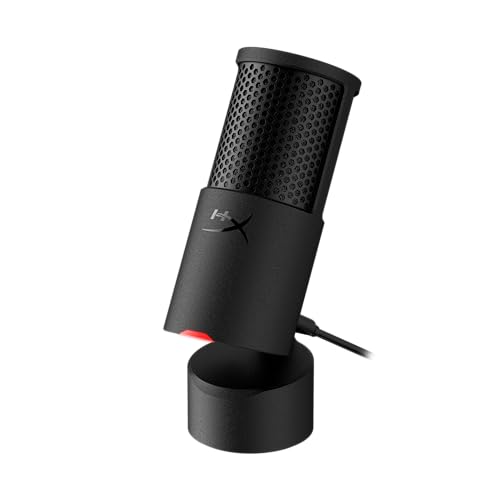
- 24-bit/96kHz recording with cardioid pickup
- Built-in pop filter and internal suspension
- Tap-to-mute control and customizable filters
Best For: Gamers and streamers with compact setups
Complete Boom-Arm Value
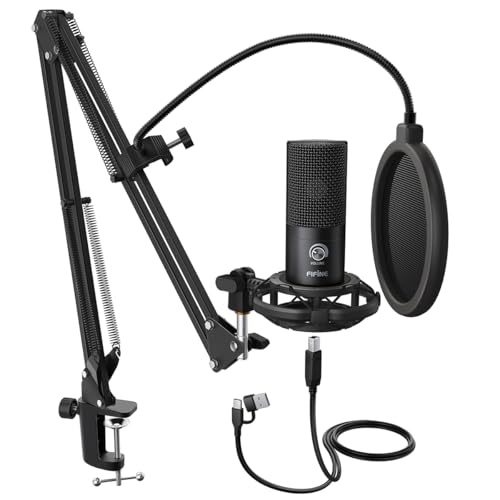
- Plug-and-play USB setup for PC and laptop
- Boom arm, shock mount, and double pop filter included
- Cardioid capsule for focused vocal capture
Best For: Home podcasting, voice-over, and streaming setups
Best Premium USB Mic

- Warm, natural voice sound
- Onboard gain, mix, and mute controls
- Includes metal body and table stand
Best For: Podcasters and streamers wanting polished desktop recording
Best Budget USB Mic

- Affordable plug-and-play setup
- Metal body with tripod stand
- Built-in volume control and cardioid pickup
Best For: Beginners, gamers, and everyday voice recording
Best Versatile USB Mic

- 24-bit/96kHz high-resolution audio
- Cardioid and omnidirectional modes
- Headphone monitoring and flexible mounting
Best For: Creators recording podcasts, streams, music, and video
Best All-in-One Kit
MAONO A04 USB Condenser Microphone

- 192kHz/24-bit chipset with a 16mm condenser capsule
- Includes arm stand, shock mount, pop filter, and windscreen
- Plug-and-play support for computers, consoles, and phones
Best For: Complete podcasting, streaming, and voice-over setups
Best Simple Desktop Pick
Amazon Basics USB Condenser Microphone

- Cardioid pickup helps reduce unwanted background sound
- 360-degree adjustable stand supports flexible positioning
- One-tap mute and plug-and-play USB setup
Best For: Simple PC and Mac streaming, calls, and podcasting
Best for Flexible Monitoring
ZealSound K66 USB Podcast Microphone

- Zero-latency headphone monitoring with volume control
- Selectable noise reduction for common background sounds
- USB-C and Lightning adapters support desktop and mobile devices
Best For: Multiplatform podcasting, streaming, and voice recording
Versatile Streamer Pick – Blue Yeti USB Microphone
The Blue Yeti is a flexible choice among USB condenser microphones for streaming, podcasting, recording, video calls, and gaming. Its plug-and-play setup, onboard controls, and four pickup patterns make it adaptable to different recording situations.
Best For: Streamers, podcasters, and creators who want multipattern recording and hands-on controls.
Pros:
- Four pickup patterns—cardioid, omnidirectional, bidirectional, and stereo—support varied recording setups.
- Onboard gain, headphone volume, pattern selection, and mute controls simplify operation.
- Blue VO!CE software adds vocal effects, modulation, and HD audio samples.
- Includes an adjustable desktop stand and supports mic stands or boom arms.
Cons:
- Its 3.5-pound weight and desktop footprint may be less convenient for compact setups.
- The feature-rich multipattern design may be more than a single-voice user needs.
Choose the Blue Yeti if you want one USB microphone that can handle solo vocals, interviews, instruments, and group-oriented recording. It is especially appealing when convenient physical controls and software effects matter.
Studio-Focused USB Pick – RØDE NT-USB+
The RØDE NT-USB+ is a studio-focused USB condenser microphone for recording, podcasting, streaming, and calls. It combines a studio-grade capsule with USB-C connectivity, zero-latency monitoring, and included desktop accessories for a ready-to-use setup.
Best For: Musicians, podcasters, and creators prioritizing detailed sound and monitoring control.
Pros:
- Studio-grade condenser capsule and premium components are designed for professional-grade recording.
- Ultra-low-noise, high-gain Revolution Preamp supports clean signal capture.
- USB-C connectivity provides 48kHz/24-bit audio and works with computers, tablets, and smartphones.
- Includes a detachable pop filter, desktop stand, and high-power headphone output with zero-latency monitoring.
Cons:
- Its unidirectional pattern is less flexible than a multipattern microphone for interviews or room recording.
- Advanced APHEX processing requires RØDE Central software.
The NT-USB+ is a strong option when recording quality and monitoring are more important than multiple pickup patterns. Its included pop filter and stand also help create a practical desktop studio without sourcing extra essentials.
Compact Gaming Pick – HyperX SoloCast 2
The HyperX SoloCast 2 is a compact USB condenser microphone designed for gaming, streaming, and focused vocal recording. It offers plug-and-play USB-C connectivity, a built-in pop filter, internal shock-mount-style suspension, and high-resolution 24-bit/96kHz recording.
Best For: Gamers and streamers who want a simple, space-conscious microphone with useful built-in features.
Pros:
- Cardioid pickup focuses on sound from the front while reducing pickup from the sides and rear.
- Built-in pop filter and internal suspension system help simplify the setup.
- Tap-to-mute control uses an LED indicator to show whether the mic is live.
- HyperX NGENUITY supports high-pass, low-pass, and voice-enhancement filters, with settings saved to the mic.
Cons:
- The unidirectional pattern is intended for focused vocal recording rather than multi-person capture.
- Advanced sound customization depends on optional software.
SoloCast 2 makes sense for users who want a tidy gaming or streaming setup without buying a separate pop filter or shock mount. Its tiltable stand and built-in 3/8-inch and 5/8-inch threads also leave room for future arm mounting.
Complete Boom-Arm Value – FIFINE T669 USB Microphone
The FIFINE T669 is a practical USB condenser microphone kit for podcasting, voice-over work, streaming, and home recording. It pairs a cardioid capsule with a boom arm, shock mount, double pop filter, and long detachable cable, making it a ready-made desktop recording package.
Best For: Home creators who want a boom-arm microphone bundle with the main accessories included.
Pros:
- Plug-and-play USB connection works with PCs and laptops without additional drivers.
- Cardioid pickup emphasizes sound from the front and helps reduce ambient noise.
- Includes a steel scissor arm, shock mount, double pop filter, and 8.2-foot USB cable.
- Arm offers adjustable positioning with a 30-inch reach and multiple mounting options.
Cons:
- It is incompatible with Xbox according to the supplied product notes.
- The included boom arm requires desk space and suitable clamp or mount placement.
- Its single cardioid pattern is less versatile for multi-directional recording.
The T669 is a sensible starting point for podcasting or voice-over work when you want more than a bare microphone. Its bundled arm and pop-filter system reduce the need to purchase core accessories separately.
Best Premium USB Mic – Sennheiser Profile
The Sennheiser Profile is a polished choice among usb condenser microphones for podcasters, streamers, and creators who want a straightforward desktop setup. Its cardioid capsule, metal housing, included stand, and onboard controls make it practical for voice-focused recording without relying heavily on software.
Best For: Podcasters, streamers, and voice-focused creators seeking warm, natural sound and hands-on controls.
Pros:
- Plug-and-play USB connection for PC and Mac.
- Warm, natural voice reproduction from a German-engineered cardioid condenser capsule.
- Convenient mute, gain, mix, and headphone-volume controls on the microphone.
- Compact table stand and durable metal enclosure are included.
Cons:
- Its cardioid pattern is less flexible than a multi-pattern microphone.
- The included 1.2 m USB-C cable may limit placement on larger desks.
The Profile is a strong pick when easy setup and tactile control matter as much as sound quality. Choose it for a refined desktop recording experience rather than multi-directional capture.
Best Budget USB Mic – FIFINE K669B
The FIFINE K669B is a practical entry point into usb condenser microphones for meetings, gaming, streaming, and voice recording. It connects directly to a computer through USB, includes a tripod stand, and offers a built-in volume knob for quick adjustments.
Best For: Budget-conscious gamers, streamers, remote workers, and beginners recording on a desktop or laptop.
Pros:
- Plug-and-play setup with an included 5.9-foot USB cable.
- Metal construction and a stable tripod stand support regular desktop use.
- Cardioid pickup focuses on the main voice source and helps reduce background noise.
- Compatible with computers and PS4/PS5, with USB-A/C cable support.
Cons:
- Not compatible with Xbox or phones according to the supplied notes.
- Uses a unidirectional pattern rather than offering multiple pickup modes.
- App settings such as automatic volume adjustment may need attention during calls.
The K669B keeps the essentials simple and affordable. It is a sensible choice for clear everyday voice capture, though advanced users may prefer more monitoring and pattern controls.
Best Versatile USB Mic – AKG Ara USB-C
The AKG Ara stands out among usb condenser microphones with high-resolution 24-bit/96kHz audio and two selectable capture modes. Its USB-C connection, headphone output, integrated stand, and flexible mounting options make it well suited to creators who may record different types of content.
Best For: Podcasters, video bloggers, musicians, gamers, and streamers who need flexible desktop or stand-mounted recording.
Pros:
- Supports 24-bit/96kHz high-resolution audio.
- Dual-capsule design provides cardioid and omnidirectional capture modes.
- Offers zero-latency headphone monitoring, volume control, gain control, and mute.
- Works with Mac, PC, and supported iOS or Android devices.
Cons:
- USB-C connectivity may require an adapter for some older equipment.
- Its omnidirectional mode can capture more surrounding sound than cardioid mode.
- The supplied cable is USB-C to USB-A, so mobile setups may need additional accessories.
The Ara is the most adaptable option in this group, especially for users who want both focused and room-oriented capture. It offers useful monitoring and mounting flexibility without requiring a complex interface.
Best All-in-One Kit – MAONO A04 USB Condenser Microphone
If you want a ready-to-use option among USB condenser microphones, the MAONO A04 combines a 16mm condenser capsule with a 192kHz/24-bit sound chipset. Its included arm stand, shock mount, pop filter, and windscreen make it practical for podcasting, voice-over work, streaming, and calls.
Best For: Creators who want a complete desktop recording setup with detailed voice capture and plug-and-play USB connectivity.
Pros:
- 192kHz/24-bit chipset and 16mm capsule support high-resolution voice recording.
- Includes an adjustable scissor arm, shock mount, pop filter, and foam windscreen.
- Plug-and-play compatibility with most computers, PS4, PS5, and mobile phones.
Cons:
- Not compatible with Xbox.
- The desk clamp fits desktops less than 2.1 inches thick.
- The AU-A04 does not work with Maono Link.
The A04 is a strong value when you need more than just the microphone. Its bundled accessories reduce setup costs, while the cardioid pattern and recommended 2- to 6-inch working distance support focused voice recording.
Best Simple Desktop Pick – Amazon Basics USB Condenser Microphone
The Amazon Basics model is a straightforward choice among USB condenser microphones for streaming, meetings, recording, and podcasting. It pairs a large 14mm diaphragm with cardioid pickup, a 360-degree adjustable stand, and a one-tap mute button for uncomplicated desktop use.
Best For: PC and Mac users who want an easy-to-operate microphone for streaming, calls, podcasts, and basic recordings.
Pros:
- Cardioid pickup pattern helps isolate background noise around the microphone.
- One-tap mute function provides convenient control during calls and streams.
- 360-degree adjustable stand and plug-and-play USB connection simplify positioning and setup.
- Can be detached for use with compatible tripods, boom arms, or stands with a standard 5/8-inch thread.
Cons:
- Designed primarily for laptop and PC compatibility in the supplied specifications.
- The microphone uses a plastic or plastic-alloy enclosure.
- It includes the microphone and cable rather than a larger accessory kit.
This is a practical pick if you value easy controls over a more elaborate recording bundle. The built-in shock absorber, silicone boot, adjustable stand, and mute button make it particularly convenient for everyday desk-based use.
Best for Flexible Monitoring – ZealSound K66 USB Podcast Microphone
The ZealSound K66 stands out among USB condenser microphones for creators who want hands-on controls and broad device compatibility. It offers cardioid pickup, selectable noise reduction, gain and echo adjustment, and zero-latency headphone monitoring for podcasts, streams, classes, and voice recording.
Best For: Multiplatform creators who need onboard audio controls, headphone monitoring, and included connections for computers, consoles, tablets, and phones.
Pros:
- Noise Reduction Mode is designed to reduce keyboard clicks, fan noise, air-conditioner hum, and background chatter.
- Built-in 3.5mm headphone jack enables real-time, zero-latency monitoring.
- Dedicated controls adjust microphone volume, monitoring volume, and echo.
- Includes USB-C and Lightning adapters for iPhone, iPad, and modern USB-C devices.
Cons:
- The supplied 46kHz sampling rate is lower than some higher-resolution USB microphone options.
- Noise reduction is a selectable mode rather than the default operating mode.
- The listed frequency response begins at 40Hz, so it is not specified for the same low-end range as some alternatives.
The K66 is especially useful when you want to monitor your recording and make adjustments without relying on separate software. Its device adapters and physical controls also make it a flexible choice for creators moving between desktop and mobile recording.
How We Picked the Best USB Condenser Microphones
We compared these microphones by looking at the features that matter most in real desktop recording setups: capsule performance, pickup pattern, connection type, monitoring controls, stand design, included accessories, and ease of use. We also considered how well each model suits its intended audience, whether that means a first microphone for calls, a flexible tool for streaming, or a more polished option for podcasting and voice work.
Specifications such as bit depth and sample rate can indicate recording capability, but they do not guarantee better sound on their own. Room acoustics, microphone placement, background noise, and the speaker’s voice all have a major effect on results.
Quick Comparison
| Best For | Look For | Models to Consider |
|---|---|---|
| Streaming and gaming | Cardioid pickup, mute control, headphone monitoring | Blue Yeti, HyperX SoloCast 2, ZealSound |
| Podcasting and voice work | Clear speech capture, gain control, stable stand | RØDE NT-USB+, Sennheiser Profile, AKG Ara |
| Beginner recording | Plug-and-play USB connection and simple controls | FIFINE K669B, Amazon Basics |
| Budget studio setups | Included accessories and adjustable recording controls | FIFINE T669, MAONO A04 |
Key Buying Factors for USB Condenser Microphones
Pickup Pattern
Cardioid microphones focus on sound from the front and help reduce noise from behind, making them a strong choice for solo streaming, podcasting, calls, and voice-over work. Multi-pattern models can capture from the front, rear, or both sides, which is useful for interviews or two-person conversations but requires more careful room control.
Controls and Monitoring
A physical mute button, gain control, and headphone output make live use easier. Zero-latency headphone monitoring is particularly useful when recording vocals or podcasts because it helps you hear placement, background noise, and clipping immediately.
Connection and Compatibility
USB-C is increasingly common, although some microphones include a USB-C-to-USB-A cable for older computers. Confirm that the cable, operating-system support, and available ports match your setup. Most plug-and-play USB models work without a separate interface.
Sound Quality and Room Conditions
Condenser capsules capture detail and nuance, but they can also pick up keyboards, fans, reflections, and nearby conversations. A cardioid pattern, close placement, a pop filter, and a quiet room often matter more than chasing the highest advertised sample rate.
Stand and Accessories
Check whether the microphone includes a desk stand, shock mount, pop filter, or boom-arm compatibility. A stable stand helps maintain consistent distance, while a shock mount can reduce vibrations from desk movement and typing.
Who Should Buy Which USB Condenser Microphones?
Choose the Blue Yeti or AKG Ara if you want flexible recording modes for streaming, content creation, or occasional multi-person recording. The RØDE NT-USB+ and Sennheiser Profile are better fits for creators who prioritize polished speech, dependable controls, and long-term use. Gamers who want a compact plug-and-play setup should consider the HyperX SoloCast 2.
The FIFINE K669B and Amazon Basics model are sensible starting points for calls, basic streaming, and beginner voice recording. The FIFINE T669 and MAONO A04 are appealing when an included kit and adjustable setup provide better value. Choose the ZealSound if quick access to gain, volume, mute, monitoring, and voice-focused controls is more important than a minimal design.