In 2025, finding the right wireless in-ear monitor kit can greatly enhance your performance. You need a system that combines sound quality with mobility, and there are several top contenders to take into account. From the Shure PSM 300 to the Phenyx Pro models, each offers unique features tailored for musicians. Let’s explore the standout options that could transform your on-stage experience and guarantee you never miss a beat.
Phenyx Pro UHF Wireless In-Ear Monitor System for Musicians
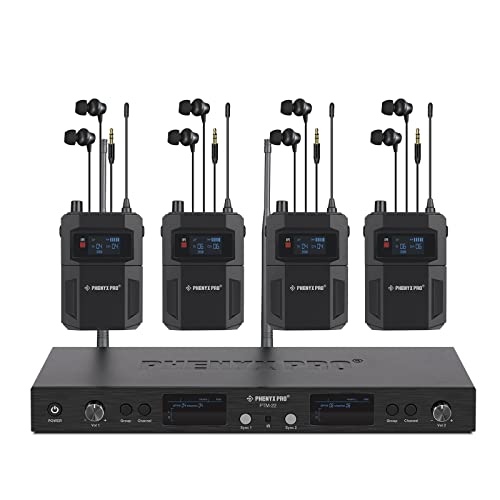
If you’re a live performer or a conference host looking for crystal-clear audio without the hassle of cables, the Phenyx Pro UHF Wireless In-Ear Monitor System is an excellent choice for you. With a robust 164 ft operating range and 2×50 selectable frequencies, you’ll experience reliable performance. This system features balanced armature drivers, ensuring minimal white noise and exceptional sound quality. Its smart design allows for easy installation and daisy chaining with other channels. Plus, with a 4.5-star rating from users, you’ll appreciate the excellent price-to-quality ratio and the flexibility it offers for various events and performances.
Best For: Live performers, conference hosts, and broadcasters seeking high-quality audio monitoring without the constraints of cables.
Pros:
- Excellent price-to-quality ratio, making it accessible for various budgets.
- Easy setup with flexible mono/stereo input options for different events.
- Minimal signal dropouts and reliable performance within the operating range.
Cons:
- Performance can be affected by line of sight and distance.
- Occasional dropouts reported at greater distances from the transmitter.
- Requires batteries, which may need regular replacement for extended use.
Xvive U4 Wireless in-Ear Monitor System

The Xvive U4 Wireless In-Ear Monitor System is an excellent choice for musicians seeking reliable audio performance during studio sessions, band rehearsals, or live performances. Operating on the 2.4GHz band, it delivers uncompressed signals with less than 5ms latency. You’ll enjoy a high-resolution 24-bit audio experience, boasting a signal-to-noise ratio of 107 dB. The system’s rechargeable battery lasts up to 5 hours, ensuring you stay powered throughout your gig. Built with durable metal housing, it’s easy to set up and includes everything you need: the U4 system, a charging cable, and user manual for seamless use.
Best For: Musicians and performers seeking a reliable and high-quality in-ear monitoring solution for live events, rehearsals, and studio recordings.
Pros:
- Uncompressed audio transmission with low latency (less than 5ms) for real-time performance.
- High-resolution audio quality with 24-bit/48kbps and a signal-to-noise ratio of 107 dB.
- Durable metal housing and simple setup process make it user-friendly and reliable.
Cons:
- Battery life of 5 hours may require frequent recharging for longer events.
- Limited to operation on the 2.4GHz band, which may be crowded in some environments.
- May not be suitable for larger setups requiring more than 6 simultaneous broadcasts.
Phenyx Pro Quad-Channel Wireless In Ear Monitor System (PTM-33-4B)

For musicians looking to enhance their performance with a reliable monitoring solution, the Phenyx Pro Quad-Channel Wireless In Ear Monitor System (PTM-33-4B) stands out with its exceptional sound quality and ease of use. This mono IEM system features four bodypacks and utilizes 4×25 UHF frequencies, ensuring minimal interference within a range of 140-164 ft. The integrated monitor station allows for seamless daisy chaining, while the quick setup process takes just five minutes. Users rave about the clear sound quality and improved bass response, making it a highly recommended choice for bands and venues seeking affordable, reliable IEM systems.
Best For: Musicians and bands looking for an affordable, reliable in-ear monitoring solution with excellent sound quality.
Pros:
- Exceptional sound quality with clear mid and low frequencies, enhancing monitoring experience.
- Quick and easy setup process, allowing for efficient use during performances.
- No dropouts or interference reported, ensuring reliable performance throughout events.
Cons:
- Build quality concerns due to plastic body and fragile antennas compared to metal alternatives.
- Included earpieces may be less effective; personal IEM earpieces are recommended for optimal sound.
- Limited range of external antenna options for improved signal strength.
Phenyx Pro Wireless in-Ear Monitor System
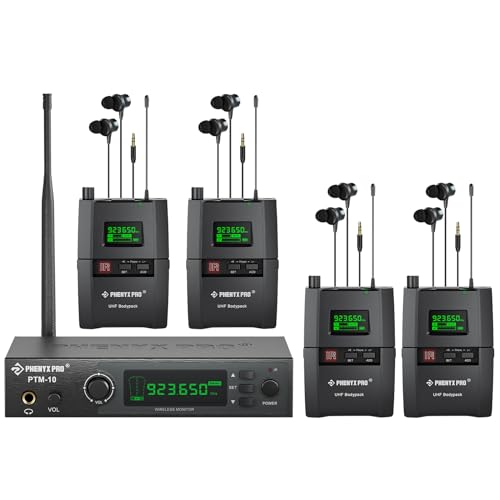
Musicians seeking reliable and high-quality audio transmission will find the Phenyx Pro Wireless In-Ear Monitor System to be an excellent choice. Operating on the 900MHz frequency band, it minimizes congestion and latency, ensuring a stable connection up to 164ft. With 89 tunable frequencies, you can run up to five systems simultaneously. The true stereo sound offers dynamic clarity, while features like EQ adjustments and a limiter function enhance your experience. Its durable design includes a carrying case for easy transport, making it perfect for practice and live performances. Just remember, using high-quality earbuds will elevate your sound even more.
Best For: Musicians and audio professionals seeking a reliable and high-quality wireless in-ear monitoring solution for practice and live performances.
Pros:
- Stable connection with a range of up to 164ft and 89 tunable frequencies for simultaneous use of multiple systems.
- Dynamic, crystal-clear stereo sound quality with EQ adjustments and limiter functions for enhanced audio performance.
- Durable design with a carrying case for portability, making it convenient for transport to gigs and rehearsals.
Cons:
- Controls may not be intuitive, and visibility can be challenging in bright lighting conditions.
- Optimal performance requires high-quality earbuds to fully appreciate the system’s capabilities.
- Slight distortion may occur at low input levels, which is common at this price point.
Shure PSM 300 Twin Pack Pro Wireless In-Ear Monitor Kit

If you’re seeking professional-grade sound quality and reliability during performances, the Shure PSM 300 Twin Pack Pro Wireless In-Ear Monitor Kit stands out as an excellent choice. It features the P3T Transmitter and two P3RA Receivers, delivering exceptional audio clarity with the SE215 earphones’ dynamic MicroDriver. You’ll enjoy a detailed soundstage, and with multiple sizes of flex and foam sleeves, achieving a comfortable fit is easy. The reliable wireless signal reaches up to 300 feet, minimizing dropouts. Additionally, rugged components guarantee durability, while providing up to 37 dB of noise reduction, helping you focus solely on your performance.
Best For: Musicians and performers seeking high-quality wireless in-ear monitors for professional sound during live events.
Pros:
- Exceptional audio clarity with dynamic MicroDriver for detailed soundstage.
- Comfortable fit with multiple ear sleeve sizes for optimal noise isolation.
- Reliable wireless performance with a transmission range of up to 300 feet.
Cons:
- May require additional setup time for optimal performance in complex environments.
- Price point may be higher compared to entry-level in-ear monitoring systems.
- Limited frequency range options may not suit all regions or performance settings.
LEKATO Wireless in Ear Monitor System MS-02

The LEKATO Wireless In-Ear Monitor System MS-02 is perfect for performers who need reliable sound without the hassle of wires. This upgraded 2.4G stereo IEM system offers ultra-low latency under 4.5ms and a 24bit/48KHz sampling rate, ensuring exceptional sound quality. You can connect one transmitter to multiple receivers, making it easy to pair devices. With 6-8 hours of battery life, LED indicators for battery level, and a 5-level volume adjustment, you’ll enjoy personalized sound. Its compact design clips on for portability, while a 100-foot wireless range gives you the freedom to move around on stage.
Best For: Musicians, performers, and educators seeking a reliable and high-quality wireless in-ear monitoring solution.
Pros:
- Ultra-low latency of less than 4.5ms for real-time sound feedback.
- Easy connectivity with the ability to connect one transmitter to multiple receivers.
- Long battery life of 6-8 hours, ensuring extended use during performances.
Cons:
- Limited wireless range of 100 feet, which may not cover larger venues.
- Requires careful pairing of devices to avoid connectivity issues.
- Compact design may be less durable for heavy stage use.
Xvive U45 Wireless in-Ear Monitor System

For performers who crave mobility without sacrificing sound quality, the Xvive U45 Wireless In-Ear Monitor System stands out as an ideal choice. Operating on a stable 5.8GHz frequency, it guarantees minimal interference while delivering clean audio with less than 5ms latency. You’ll appreciate the 100ft wireless range, allowing freedom to move on stage. With a battery life of up to 5 hours and a compact design, this system is perfect for gigs and rehearsals. Users rave about its performance and affordability, making it a must-have for musicians seeking reliable in-ear monitoring solutions.
Best For: Musicians and performers looking for an affordable and reliable wireless in-ear monitoring solution that offers excellent sound quality and mobility.
Pros:
- Compact design makes it easy to transport and use during gigs.
- Stable 5.8GHz frequency reduces interference for clean audio.
- Long wireless range of up to 100ft allows for freedom of movement on stage.
Cons:
- Some users experienced occasional pops on the default channel.
- Requires line-level input for adequate volume, which may necessitate additional equipment like a mic preamp.
- Sound quality can be perceived as flat, depending on the earphones used.
LEKATO Wireless In Ear Monitor System (MS-1)
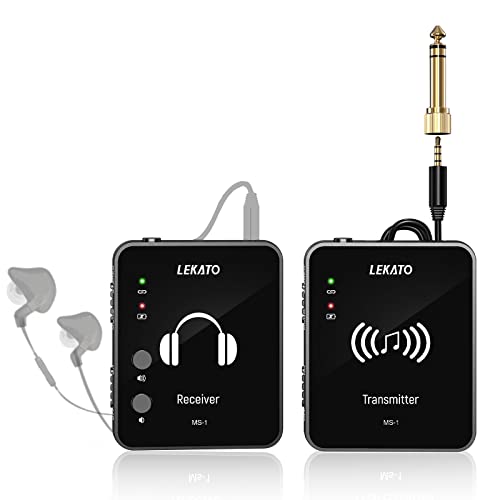
Designed with musicians in mind, the LEKATO Wireless In Ear Monitor System (MS-1) stands out for its ability to pair one transmitter with up to six receivers, making it perfect for band rehearsals and small gigs. Operating on a 2.4GHz frequency, it guarantees lossless sound quality with low latency under 12ms. The auto-pairing feature simplifies setup, while the stereo transmission option allows for flexibility in sound. With a compact design and a wireless range of 90 feet, you’ll enjoy mobility without cumbersome equipment. Just keep an eye on the battery life during longer events for peak performance.
Best For: Musicians and performers looking for a reliable and portable in-ear monitoring solution for small to medium gigs and rehearsals.
Pros:
- Supports pairing one transmitter with up to six receivers, enhancing collaborative performances.
- Offers high-resolution audio quality with low latency, ensuring a seamless listening experience.
- Compact and lightweight design, allowing for easy mobility on stage.
Cons:
- Some users reported reliability issues, including sudden failures during performances.
- Battery life may be a concern during extended events, requiring careful monitoring.
- A faint sound hum was noted by several users, which could affect performance quality.
Stereo Wireless In Ear Monitor System (M6S)

Musicians seeking crystal-clear sound and reliability will find the Stereo Wireless In Ear Monitor System (M6S) an ideal choice. Operating on a 2.4GHz band, it delivers low noise and delay with a 24-bit/48KHz audio processor for high-quality sound. You’ll appreciate the convenient one-button switch for mono or stereo input and the clear sound quality with impressive bass. With built-in rechargeable batteries lasting up to 10 hours, it supports multiple receivers paired with one transmitter for seamless stage performances. Each kit includes essential components, and you’ll enjoy peace of mind with a one-year warranty and dedicated support from the Voxfull team.
Best For: Musicians seeking high-quality sound and reliable wireless performance during live stage performances or band practices.
Pros:
- Convenient one-button switch for easy toggling between mono and stereo input.
- Long battery life of up to 10 hours on a single charge, ideal for extended performances.
- Supports multiple receivers (up to 6) paired with one transmitter for versatile use in group settings.
Cons:
- Limited to 2.4GHz band, which may be prone to interference in crowded wireless environments.
- In-ear headphones included may not suit everyone’s comfort or sound preference.
- One-year warranty may be shorter compared to some competitors offering extended coverage.
Phenyx Pro UHF Mono Wireless in-Ear Monitor System (PTM-11)

Whether you’re performing in a band, leading a church service, or delivering a conference presentation, the Phenyx Pro UHF Mono Wireless In-Ear Monitor System (PTM-11) stands out as an ideal choice. This metal wireless IEM system operates on the UHF 900MHz band, offering 50 adjustable frequencies and a 164 ft range. Enjoy clear, focused sound with mono monitoring, while separate inputs allow for personal mixing. It supports up to five systems simultaneously, minimizing stage clutter. With a durable design and included carrying case, this reliable system guarantees you stay connected and sound great, no matter the setting.
Best For: Musicians, speakers, and presenters seeking a reliable wireless in-ear monitoring solution for live performances and events.
Pros:
- Clear mono sound output eliminates phase issues common in stereo systems.
- Supports up to five systems simultaneously for minimal stage clutter.
- Durable metal design with a carrying case for portability and protection.
Cons:
- Limited to mono monitoring, which may not suit all users’ preferences.
- Operating range can be affected by physical obstructions like walls and metal.
- Requires AA batteries for the bodypack receiver, which may need frequent replacements.
Factors to Consider When Choosing Wireless in Ear Monitor Kits
When choosing a wireless in-ear monitor kit, you need to take into account several key factors. Audio quality, wireless range, and battery life are essential for guaranteeing a reliable performance. Additionally, think about the setup process and the build quality to make sure your kit lasts through every gig.
Audio Quality Assurance
Choosing the right wireless in-ear monitor kit hinges on several essential audio quality factors that can greatly impact your performance. First, look for systems with a high signal-to-noise ratio, ideally up to 107 dB, for clear audio and minimal background noise. A broad frequency response range, from 20Hz to 20kHz, guarantees you experience a full spectrum of sound. Advanced audio processing technology, like a 24-bit/48kHz sampling rate, delivers high-resolution audio crucial for professional monitoring. Pay attention to the type of drivers used; balanced armature drivers excel in producing crystal-clear audio with minimal distortion. Finally, built-in limiters can prevent distortion and overload, keeping your audio clean and focused, even at higher input levels.
Wireless Range and Stability
To guarantee your performance runs smoothly, understanding wireless range and stability is vital when selecting in-ear monitor kits. Most systems offer a range between 100 to 300 feet, with ideal performance typically around 164 feet in clear conditions. When considering stability, look for UHF systems, as they generally provide better reliability and less interference than 2.4GHz options. Choosing systems with multiple selectable frequencies—ideally 50 or more—can help you avoid congestion and enhance stability. Features like auto channel scanning are also beneficial, as they automatically select the best frequency for connection. Remember, positioning is essential; line-of-sight obstructions like walls or metal objects can greatly limit your effective range and stability, so plan your setup accordingly.
Battery Life Considerations
Battery life is an essential factor that can make or break your performance, especially during long sets or events. Most wireless in-ear monitor systems offer between 5 to 10 hours of continuous operation on a full charge, so think about how long you’ll be performing. Look for models with rechargeable lithium batteries for convenience and sustainability. Quick charging capabilities can be a game-changer, ensuring your gear is ready for multiple shows without delay. Additionally, systems with LED indicators let you monitor battery levels, helping you avoid unexpected shutdowns. Remember, battery life can be affected by wireless range and the number of simultaneous connections, so evaluate your specific needs before making a decision.
Setup and Usability
When you’re gearing up for a performance, the last thing you want is a complicated setup process. Look for wireless in-ear monitor systems that offer quick and easy setup, ideally taking around 5 minutes. Auto-pairing features are a game changer, simplifying the connection between the transmitter and receiver. Make sure the receiver has clear volume control options for rapid adjustments during use. If you’re playing in a band, consider models that support multiple receivers connecting to a single transmitter, providing flexibility for group settings. Systems with IR sync can also streamline linking receivers, enhancing your overall experience. Ultimately, prioritize ease of setup to keep your focus on delivering an incredible performance.
Build Quality and Durability
While you might be focused on sound quality and performance features, the build quality and durability of wireless in-ear monitor kits are just as essential. Look for systems made with robust materials like metal housings, as they can withstand the rigors of touring and live performances. Systems featuring rugged components, such as reinforced antennas, enhance reliability and reduce the risk of damage during use. Although lightweight plastic designs may seem portable, they often lack the durability needed for professional environments. A solid construction protects internal components from environmental factors, ensuring consistent performance. Finally, consider the system’s weight; heavier units may offer sturdier build quality but could lead to discomfort during extended wear.
Compatibility With Devices
Choosing the right wireless in-ear monitor kit is essential for seamless integration with your existing audio setup. First, verify the kit’s connectivity options, like XLR or 1/4-inch inputs, are compatible with your mixers or amplifiers. If you’re performing with multiple musicians, look for systems that support multiple receivers, allowing for daisy chaining or simultaneous use. Assess the frequency range to avoid interference with other wireless devices. Systems with adjustable frequencies or auto-channel scan features can enhance performance in crowded environments. Finally, consider battery life and charging options to match your performance duration and portability needs. By keeping these factors in mind, you’ll find a kit that fits perfectly into your workflow.