BUBOS 6-Pack Acoustic Panels review is best understood as a design-first acoustic treatment rather than a simple foam tile set.
If you want cleaner mid-to-high frequency control without turning a room into a studio cave, this product is aimed at that middle ground.
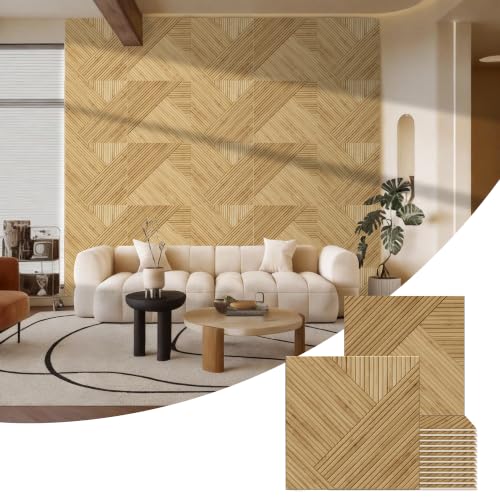
BUBOS Acoustic Panels Review Summary
BUBOS’s 6-pack acoustic panels make the most sense for buyers who care about both sound and appearance.
The listing positions them as high-density polyester fiber panels with a wood-grain finish, which puts them in a useful niche for home offices, content rooms, gaming setups, and living spaces where plain foam would look out of place.
Verdict: this is a strong fit for someone who wants moderate acoustic improvement plus a decorative wall treatment.
It is less compelling if you need serious low-frequency isolation or a fully technical studio build.
Review Scorecard
| Category | Score | Editorial rationale |
|---|---|---|
| Acoustic usefulness | 8/10 | Targeted at mid-to-high frequency reflections and flutter echoes, which is exactly where panels like this typically help most. |
| Design and decor fit | 9/10 | The wood-grain print gives it a more finished, room-friendly look than standard acoustic foam. |
| Coverage efficiency | 8/10 | The 23.62-inch square format covers more wall area per panel than small tiles and reduces visible seams. |
| Installation flexibility | 8/10 | Peel-and-stick backing plus a wall-nail option gives more setup paths than many decorative panels. |
| Durability and materials | 8/10 | Polyester fiber is positioned as odorless, impact-resistant, and less fragile than foam. |
| Buyer specificity | 9/10 | Best for remote work, light studio use, and style-conscious rooms rather than isolation-heavy projects. |
Key Features and Specifications of BUBOS Acoustic Panels
The core specification is straightforward: this is a 6-pack of large acoustic wall panels sized at 23.6 x 23.6 inches.
The listing says each panel uses 100% high-density polyester fiber, with a Light Diamond Weave wood print that is meant to mimic the look of wooden slats without the cost, weight, or maintenance of real wood.
The most important practical detail is the size.
At nearly two feet square, each panel covers a meaningful section of wall and should create a more continuous visual field than tiny tiles.
That matters in a home office or media room, where buyers often want something that looks deliberate rather than obviously technical.
Key listed features:
- Six-panel bundle for broader wall coverage
- 23.6 x 23.6 inch panel size
- High-density polyester fiber construction
- Wood-grain decorative finish
- Peel-and-stick installation
- Secondary wall-friendly nail option
- Designed for mid-to-high frequency reflection control
The listing also emphasizes that these panels are intended to reduce flutter echoes and help with sound clarity.
That language is important: it suggests a product focused on room treatment, not soundproofing.
Buyers should treat it as a way to make a room feel less reflective and more controlled, not as a barrier against outside noise.
Pros and Cons of BUBOS Acoustic Panels
Pros
- Looks more like decor than equipment. The wood-grain styling helps it blend into modern rooms.
- Large-format coverage. Fewer seams and a cleaner layout than small acoustic tiles.
- Material choice is more practical than foam. Polyester fiber is described as odorless and less prone to crumbling.
- Flexible mounting options. Peel-and-stick is convenient, while the nail method helps on surfaces where adhesive is less ideal.
- Useful for common home audio problems. It targets reflections, chatter, and flutter echo, which are frequent issues in small rooms.
Cons
- Not a soundproofing solution. It will not block meaningful external noise.
- Best results are frequency-specific. The listing focuses on mid-to-high frequencies, so buyers expecting deep bass control should look elsewhere.
- Style is a strength and a limitation. The faux-wood look is attractive, but not everyone wants a decorative finish on an acoustic product.
- Adhesive installation may still be surface-dependent. Even with multiple mounting options, textured or delicate walls can complicate setup.
Who Should Buy BUBOS Acoustic Panels?
This product is a good fit for people who want a room to sound cleaner without looking like it has been converted into a studio.
That includes remote workers who spend a lot of time on calls, creators recording voice or dialogue in a home room, gamers who want less slap echo, and homeowners who want a more polished wall treatment in a media space.
It is also sensible for buyers who need a practical compromise between acoustic function and interior design.
The wood-grain print is the main differentiator here, and it matters if your space is visible to clients, family, or guests.
You should probably skip it if your priority is:
- True sound isolation
- Bass trapping
- A fully acoustic-looking studio build
- Cheap utility tiles you do not care about visually
In other words, this is for the buyer who wants a room to sound and look better at the same time.
How BUBOS Acoustic Panels Fit Real Rooms
Home Office Clarity
In a call-heavy workspace, the main benefit of panels like this is reducing room reflections that make speech feel harsher or more hollow.
The listing specifically calls out executive Zoom calls, and that matches the product’s likely strength: making a small room less lively and easier to listen to.
Studio and Voice Use
For voice recording, the combination of large panel size and polyester fiber construction is appealing because it can help tame early reflections on nearby walls.
That said, buyers should keep expectations realistic.
This is a treatment panel, not a complete studio isolation system, so it works best as part of a broader room setup.
Living Spaces and Media Rooms
The decorative wood-grain surface is the reason many buyers will consider it in the first place.
In a living room or media room, plain foam often looks temporary or unfinished.
These panels aim to solve that by making acoustic treatment feel like intentional wall design.
Installation and Coverage Strategy
The 23.62-inch size changes the installation calculus.
Fewer panels can cover a visible section of wall, which makes layout simpler and reduces the busy patchwork effect that smaller tiles sometimes create.
The dual-mount approach also gives practical flexibility if the wall surface is not ideal for adhesive alone.
Alternatives to BUBOS Acoustic Panels
If you want a more traditional studio look, consider Auralex Studiofoam panels.
They are a familiar choice for dedicated recording spaces, though they are visually less subtle.
If you prefer decorative slat-style treatment, look at Sound Assured acoustic panels or similar wood-finish wall panels.
Those can appeal to the same buyer who wants appearance to matter as much as acoustics.
If you need broader room treatment options rather than a decorative wall set, search for Moondream acoustic panels.
Products in that lane may fit buyers focused more on room correction than on style matching.
If you want a lower-cost, utility-first approach, simple acoustic foam tiles remain the easiest comparison point.
They usually sacrifice appearance, but they can be enough for people who only care about basic echo control.
Is BUBOS Acoustic Panels Worth It?
Yes, if you want a decorative acoustic panel that improves room feel without looking industrial. The BUBOS 6-pack is worth considering for buyers who need moderate echo control, broader wall coverage, and a more finished visual style in a home office, studio corner, or media room.
No, if you need isolation or deep acoustic correction. The product is designed to manage reflections and improve clarity, not to block noise or solve bass problems.
For the right room and the right expectation, though, it is a sensible buy because it balances function, size, and appearance better than plain foam.