If you restring often, this Electric 3-in-1 Automatic String Winder review is about whether a compact powered tool actually removes friction from the job.
The appeal is simple: one device handles winding, cutting, and bridge pin pulling.
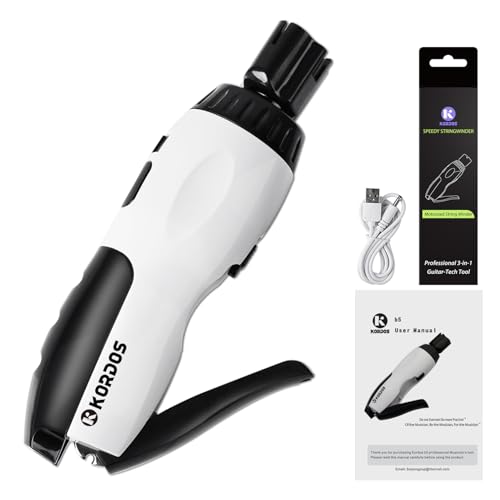
Electric 3-in-1 Automatic String Winder Review Summary
This Electric 3-in-1 Automatic String Winder is aimed at players who want faster, cleaner restring sessions without carrying three separate tools.
The listing leans heavily on convenience: a 220 RPM motor, claimed 3-minute full-string changes, a cutter designed to contain clippings, and a bridge pin puller shaped for non-marring removal.
That combination makes sense for guitarists, bass players, and mandolin players who value speed and packing efficiency more than a traditional hand tool.
Best fit: frequent string changers, gigging musicians, and anyone who keeps a travel kit or repair pouch in a small space.
Less compelling for: players who rarely restring, want a purely manual backup, or prefer simple tools with no battery to manage.
Review Scorecard
| Category | Score | Why it matters |
|---|---|---|
| String-changing speed | 9/10 | The 220 RPM motor and 3-minute change claim point to a real time-saving focus. |
| Convenience | 9/10 | Winding, cutting, and pin pulling are combined in one tool. |
| Portability | 8/10 | The body is described as lightweight, compact, and gig-bag friendly. |
| Versatility | 8/10 | The design is intended for guitar, bass, and mandolin tuning posts. |
| Battery practicality | 8/10 | USB-C charging and up to 4 hours of runtime suit repeated use. |
| Build confidence | 7/10 | The listing emphasizes hardened cutter steel and rugged ABS construction. |
| Low-fuss ownership | 7/10 | Rechargeable convenience is strong, but battery tools need charging discipline. |
Key Features and Specifications of Electric 3-in-1 Automatic String Winder
The core appeal of the Electric 3-in-1 Automatic String Winder is that it replaces multiple small accessories with one powered unit.
According to the listing, it combines electric winding, a cutter, and a bridge pin puller.
That matters because restringing usually breaks into three separate chores, and this tool tries to compress them into a single workflow.
The motor specification is listed at 220 RPM with 2.5 lb-in of torque.
For a buyer, that reads as an emphasis on steady winding force rather than decorative extra power.
The brand also claims the tool can handle tuning posts across a wide range of instruments, from mandolins to basses, which is useful if you own more than one stringed instrument or help other players with setups.
Other listed details are straightforward but relevant:
- Battery: 800mAh
- Runtime: up to 4 hours, or about 50 full restrings
- Charging: USB Type-C
- Charge time: about 1.5 hours
- Weight: about 150 grams
- Material: military-grade ABS plastic body
- Cutter: hardened alloy-steel cutter for 0.04-0.06 inch strings
- Pin puller: non-marring bridge pin puller with a contour-adapting shape
What stands out is not just the parts list, but how the parts fit together.
A cutter built into the same body as the winder reduces the odds of leaving tools behind.
A shaped pin puller matters for acoustic players, because bridge pin removal is one of those small tasks that can become annoying if the tool slips or feels awkward.
Pros and Cons of Electric 3-in-1 Automatic String Winder
Pros
- One tool for three jobs. The integrated winding, cutting, and pin-pulling setup is the strongest reason to consider it.
- Fast restringing focus. The listed 220 RPM motor and 3-minute change claim make this clearly speed-oriented.
- Travel-friendly size. A 150-gram body and compact format should be easy to keep in a case or bag.
- Broad instrument coverage. It is presented as usable on guitar, bass, and mandolin.
- Modern charging. USB-C and a 1.5-hour recharge window fit current habits.
Cons
- Battery dependency. A powered tool is only convenient if it is charged when needed.
- Not ideal for minimalists. If you already like a hand crank and separate cutters, the extra mechanism may feel unnecessary.
- Listing-driven confidence. The main evidence is product claims rather than long-form technical detail.
- Specialized utility. Its value rises with frequent restringing and drops if you only change strings occasionally.
Who Should Buy Electric 3-in-1 Automatic String Winder?
The Electric 3-in-1 Automatic String Winder makes the most sense for players who treat restringing as a recurring chore, not a rare event.
If you manage multiple instruments, perform your own maintenance, or value a compact kit for shows and rehearsals, the convenience package is compelling.
The tool is also attractive for beginners who do not want to juggle a separate winder, string cutter, and pin puller while learning a consistent restring routine.
It is less compelling for players who change strings only a few times a year.
In that case, a manual winder and basic cutter may already solve the problem without battery management.
It is also a weaker fit for anyone who prefers ultra-simple tools with fewer failure points.
The tradeoff is clear: more speed and consolidation in exchange for charging, electronics, and a slightly more specialized purchase.
If you work on acoustic instruments often, the bridge pin puller is a meaningful bonus.
If you mostly play electric guitar and rarely touch acoustic bridge pins, that part of the tool matters less, but the winding and cutting functions still carry the value.
How the Electric 3-in-1 Automatic String Winder Fits Real Restring Work
Faster Setup, Fewer Interruptions
The main promise here is less time spent switching between tasks.
Instead of setting down the winder to reach for cutters and then hunting for a pin puller, the workflow stays inside one tool.
That kind of consolidation is most useful when restringing several instruments or when you want the job done quickly before a rehearsal or show.
Portability and Case Readiness
The listing repeatedly emphasizes compactness, low weight, and road-ready construction.
That matters because string tools often live in cases, drawers, or gig bags and get used in uneven settings.
A 150-gram device is easier to keep on hand than a bulkier maintenance kit, and the Type-C charging port makes it less awkward to top up before a trip.
Battery Life for Repeated Use
The quoted 4-hour runtime and approximate 50 restring figure suggest the battery is sized for practical workshop or gigging use, not just one emergency session.
That does not remove the need to charge it, but it does mean the product is positioned for multiple uses between charges.
For a musician who restrings regularly, that is more useful than a tool that only survives a short burst.
What the Build Details Suggest
The hardened alloy-steel cutter and ABS body tell you what the listing wants to emphasize: durability where it matters and lightweight handling everywhere else.
The cutter spec is especially relevant because clean string trimming is not just cosmetic.
It affects how tidy the post-change cleanup feels, and a cutter that is integrated into the same tool can make the end of the job faster and safer.
Alternatives to Electric 3-in-1 Automatic String Winder
If you want a different approach, a few established Amazon search options are worth comparing:
- D’Addario Pro-Winder for a trusted manual all-in-one winder/cutter style.
- Ernie Ball Power Peg if you want a powered winding tool from a known instrument brand.
- MusicNomad GRIP Winder for a manual option with a strong reputation among maintenance-minded players.
- Fender String Winder if you want a simple, familiar backup tool instead of an electric model.
These alternatives are useful because they separate the core decision: do you want a battery-powered shortcut, or do you just want a dependable hand tool?
The Electric model wins on consolidation and speed, while the manual options win on simplicity and fewer things to charge.
Is Electric 3-in-1 Automatic String Winder Worth It?
For the right buyer, yes.
The Electric 3-in-1 Automatic String Winder is worth it if you restring often, want to save time, and like the idea of carrying one compact tool instead of three.
Its strongest selling points are the integrated workflow, the rechargeable design, and the broad instrument compatibility.
If you only restring occasionally, the value drops.
In that case, a manual winder and cutter may be enough.
But if you want a faster, cleaner, more travel-ready way to handle routine string changes, this is a sensible buy and an easy one to justify.