Building a cleaner pedalboard starts with better connections. The right patch bay for guitar pedals can reduce cable clutter, simplify signal routing, and make swaps or troubleshooting much faster.
Below, we’ve rounded up 10 practical options for different setups, from simple pedal-to-pedal couplers to balanced rack-style patch bays for more advanced rigs.
Best 10 Patch Bay for Guitar Pedals Picks for 2026
Compact Pedal Coupler

- Gold-plated copper construction
- Z-type design saves pedalboard space
- 4 connectors for multiple pedal links
Best For: Pedalboards with similarly aligned jacks and tight spacing
Modular Studio Patchbay

- 8-point modular 1/4-inch TRS patchbay
- Steel enclosure for durability
- Works with compatible mixers and outboard gear
Best For: TRS routing setups with compatible studio or rack gear
Mixed-Style Pedal Connectors

- Includes straight and offset connectors
- Solid copper with nickel coating
- Helps fit pedals with different jack heights
Best For: Boards that need flexible connector styles in one pack
All-in-One Routing Bay

- 4 TRS thru points plus USB, MIDI, and AC passthroughs
- Centralizes multiple rig connections
- Built for organized pedalboard setups
Best For: Advanced pedalboard rigs that need audio, MIDI, USB, and power routing
Passive 4-Channel Junction Box

- Passive 4-channel TRS routing
- True bypass, no power needed
- Helps organize and save space
Best For: Compact pedalboards and simple signal organization
Low-Noise Pedal Patch Leads
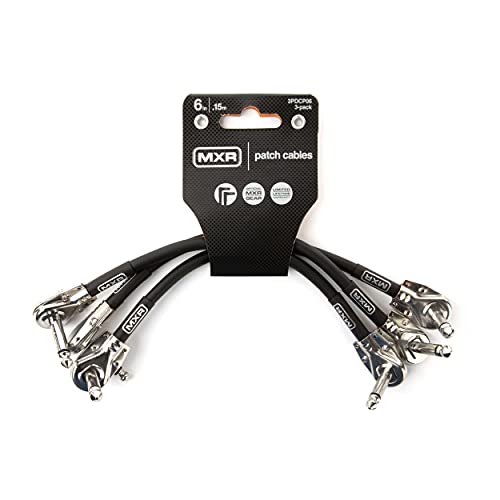
- 20-AWG oxygen-free copper wire
- Shielding helps reduce pedalboard noise
- Short 6-inch size for tight layouts
Best For: Short pedal-to-pedal connections on crowded boards
Eight-Point Balanced TPatch
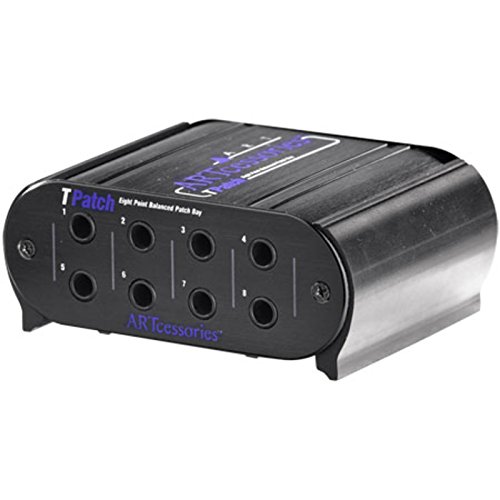
- Eight balanced TRS patch points
- Half-normal and normal modes
- Rugged aluminum rack-style case
Best For: Structured TRS signal routing in studio or rack setups
Flat Ribbon Cable Pedalboard Pack
Ernie Ball Flat Ribbon Patch Cable Multi-Pack

- Flat ribbon shape helps with tight pedal spacing.
- Low-profile metal connectors reduce cable clutter.
- Includes 3, 6, 12, and 24 inch cable lengths.
Best For: Compact pedalboards that need tidy, flexible patch cable runs.
Rackmount Signal Organizer
ART Pro Audio P48-48 Balanced Patch Bay

- 19-inch rackmount format for organized signal routing.
- Fully shielded to help protect connectors and cabling.
- Works across studios, PA, AV, and live sound setups.
Best For: Rack-mounted recording or live-sound rigs that need organized routing.
Ultra-Compact Flat Patch Cables
Gold-Plated Kevlar-Reinforced 4-Pack
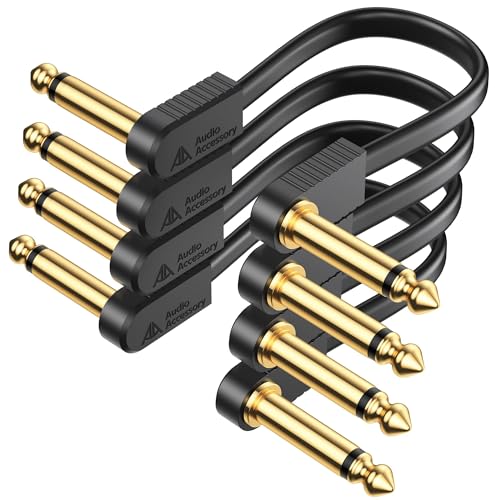
- Ultra-compact plugs fit very tight pedal spacing.
- Kevlar-reinforced cable adds built-to-last durability.
- Quad-layer shielding and gold plating aim to reduce noise.
Best For: Tightly packed pedalboards that need short, durable, low-noise patch cables.
Compact Pedal Coupler – OTraki Z Type 4-Pack
If you want a simple patch bay for guitar pedals alternative that saves space between tightly packed effects, this OTraki Z-type coupler is built for the job. It connects two pedals with similar height and helps shorten your signal chain while keeping the board neat.
Best For: Pedalboards with similarly aligned jacks where you want a compact, low-noise connection.
Pros:
- Gold-plated copper construction for solid, durable use
- Designed to reduce signal chain length and help keep noise and attenuation low
- Compact Z-type layout can save pedalboard space
- 4-pack is practical for multiple connections
Cons:
- Best suited to pedals with similar height jack placement
- Only works as a direct male-to-male connector, not a full routing panel
For a straightforward, space-saving pedalboard connector, this is a practical pick when your pedals line up well. It is less about flexibility and more about keeping short runs tidy and efficient.
Modular Studio Patchbay – Hosa MHB-350 8-Point
If you need a patch bay for guitar pedals setup that leans more toward studio-style routing, the Hosa MHB-350 is an 8-point modular 1/4-inch TRS patchbay. It is designed for use with mixers, recorders, and outboard gear that use compatible connectors.
Best For: Players and studio users who want a compact TRS patchbay for organized routing with compatible gear.
Pros:
- 8-point modular 1/4-inch TRS patchbay format
- Compatible with mixers, recorders, and outboard gear that use matching connectors
- Steel enclosure for a sturdy build
- Limited lifetime warranty adds long-term value
Cons:
- TRS format may not suit every guitar pedalboard signal chain
- More of a general patchbay module than a pedal-to-pedal coupler
This is a better fit when you want organized, centralized routing rather than a pair of simple pedal couplers. It makes the most sense in setups that already rely on TRS-compatible hardware.
Mixed-Style Pedal Connectors – Rayzm 4-Pack S+Z
For a patch bay for guitar pedals approach that needs a little more flexibility, this Rayzm 4-pack gives you both straight and offset connectors. The mixed design helps you choose the right fit for pedals with matching jack height or different jack placement.
Best For: Pedalboards that need both straight and Z-type options in one small accessory pack.
Pros:
- Includes 2 straight and 2 offset Z-type 1/4-inch connectors
- Helps keep pedals closer together and the board tidier
- Solid copper build with nickel coating on the surface
- Useful for pedals with same-height or different-height jacks
Cons:
- Still limited to direct pedal-to-pedal connections
- Not as comprehensive as a full routing patch panel
This is a versatile middle-ground option if your board includes pedals with mixed jack layouts. Having both connector styles in one pack makes it easier to adapt without buying separate parts.
All-in-One Routing Bay – ROCKBOARD RBO B MOD 2 V2
If you want a more complete patch bay for guitar pedals, the ROCKBOARD RBO B MOD 2 V2 brings several connections into one place. It includes multiple 1/4-inch mono TRS thru points, plus USB, MIDI, and AC IEC passthroughs for a more organized setup.
Best For: Players building a centralized pedalboard or rig hub with audio, MIDI, USB, and power passthroughs.
Pros:
- 4 x 1/4-inch mono TRS thru connections
- Includes USB thru, 2 MIDI thru, and AC IEC thru
- Helps manage all connections in one place
- Designed for organized effector setups
Cons:
- More specialized than simple pedal couplers
- May be more than needed for basic two-pedal connections
This is the most feature-rich option in the group and makes sense when you want a single hub for several types of connections. It is best for more advanced boards where organization and routing matter as much as space savings.
Passive 4-Channel Junction Box – Compact TRS Pedalboard Router
If you need a patch bay for guitar pedals that helps clean up routing without adding another powered device, this passive 4-channel junction box is built for straightforward signal organization. Its TRS stereo connections, true bypass design, and plug-and-play operation make it a practical fit for simplified pedalboard layouts and custom line-routing needs.
Best For: Players who want a compact, passive way to organize pedalboard connections and save space.
Pros:
- Passive 4-channel design with TRS stereo connectivity
- True bypass helps preserve the original signal path
- No power supply required for operation
- Compact format helps organize lines and reduce pedalboard clutter
Cons:
- Limited to 4 channels
- Passive design may not suit setups needing active routing features
- Focused on organization rather than added signal processing
This is a simple, space-saving option for players who mainly want tidy routing and flexible mono or stereo compatibility. If your goal is to keep a pedalboard neat while avoiding unnecessary extras, it delivers that utility directly.
Low-Noise Pedal Patch Leads – 6-Inch 3-Pack Patch Cables
For a patch bay for guitar pedals setup, short patch leads matter as much as the board itself, and this MXR 6-inch 3-pack is designed for clean pedal-to-pedal connections. The oxygen-free copper conductors, shielding against noise, and sturdy metal ends make these a practical choice when you want a short cable that stays out of the way and keeps your signal clear.
Best For: Pedalboard builds that need short, dependable patch cables with good noise control.
Pros:
- 20-AWG oxygen-free copper wire for clear signal transfer
- Noise-reducing shielding helps block RFI, EMI, and handling noise
- 6-inch length is well suited for tight pedalboard layouts
- Metal ends and strain relief add durability for frequent pedal changes
Cons:
- Only available in a short 6-inch format
- Designed as patch cables, not a routing hub or switcher
- May be too short for more spread-out pedalboard layouts
If your board needs short, reliable links between pedals, this set keeps things tidy and focused on signal quality. It’s a straightforward accessory rather than a routing solution, but it fits well into clean pedalboard wiring.
Eight-Point Balanced TPatch – Rackable TRS Patch Bay
If you’re looking for a patch bay for guitar pedals in a broader routing setup, this eight-point balanced patch bay offers a more studio-style approach to signal management. With linked input/output pairs, switchable half-normal and normal modes, and TRS phone jacks, it’s designed for organized direct signal routing in a rugged rack-style enclosure.
Best For: Players or studios that want a balanced TRS patch bay for organized signal routing.
Pros:
- Eight balanced points with linked input/output pairs
- Switchable half-normal and normal operating modes
- 1/4-inch TRS phone jack connectors
- Rugged extruded aluminum case
Cons:
- Primarily a studio-style patch bay, not a pedal-specific board accessory
- Balanced TRS design may not match every guitar pedal setup
- Best suited to more structured routing than simple stompbox chains
This is the most fully featured routing option in the group, but it makes the most sense when you want a structured patching solution rather than a basic pedalboard helper. For TRS-based signal management, it’s built for durability and flexibility.
Flat Ribbon Cable Pedalboard Pack – Ernie Ball Flat Ribbon Patch Cable Multi-Pack
If you need a patch bay for guitar pedals-style clean routing on a pedalboard, this Ernie Ball flat ribbon multi-pack is built to keep connections tidy and flexible. The low-profile plugs and flat cable shape make it easier to position pedals closely while reducing cable clutter and helping preserve signal integrity.
Best For: Players who want compact, easy-to-route patch cables for a neat, space-saving pedalboard layout.
Pros:
- Flat ribbon design makes pedal placement and cable routing easier.
- Low-profile metal connectors help minimize clutter on crowded boards.
- Oxygen-free copper and shielding are designed to resist corrosion and reduce handling noise.
- Multi-pack includes multiple short and longer lengths for flexible board layouts.
Cons:
- These are patch cables, not an actual rack-style patch bay.
- The pack is limited to black cables only.
This is a practical choice if your main goal is a cleaner, more manageable pedalboard with dependable short runs between pedals. The mix of included lengths makes it easier to wire different board sizes without extra guesswork.
Rackmount Signal Organizer – ART Pro Audio P48-48 Balanced Patch Bay
For players building a studio or integrated rig, this patch bay for guitar pedals is really a rack-mounted cable organizer rather than a pedalboard cable set. The ART Pro Audio P48-48 is fully shielded and designed to reduce wear on equipment connectors while keeping audio lines organized in one 19-inch rack unit.
Best For: Rack-based studios and live-sound setups that need cleaner cable management across multiple audio devices.
Pros:
- 19-inch rack format fits standard rack installations.
- Fully shielded design helps organize cables and protect connectors from wear.
- Works with a wide range of gear, including mixers, amps, guitars, bass, keyboards, mics, and DJ equipment.
- Suitable for professional or home recording studios, PA, AV, and home theater use.
Cons:
- XLR-based patch bay, so it is not a direct pedalboard patch cable solution.
- More suitable for rack systems than compact pedalboard layouts.
This model makes the most sense when you want a centralized, rack-mounted way to manage multiple audio connections. If your setup is based around pedals alone, it is less relevant than a low-profile patch cable pack.
Ultra-Compact Flat Patch Cables – Gold-Plated Kevlar-Reinforced 4-Pack
If you want a patch bay for guitar pedals approach that prioritizes tight spacing and clean signal runs, these flat ribbon patch cables are built for densely packed boards. The low-profile gold-plated plugs, flat cable profile, and quad-layer shielding are aimed at fitting close pedal layouts while keeping noise under control.
Best For: Pedalboards with very tight jack spacing that need compact, durable patch cables.
Pros:
- Smallest plug design is made to fit closely spaced pedal jacks.
- Flat ultra-compact cable helps save space and route around crowded boards.
- Kevlar-reinforced core and double-layer shell are built for durability.
- Quad-layer shielding and gold-plated connectors are designed for low-noise performance.
Cons:
- Only includes 6-inch cables, so it is less flexible for longer runs.
- Sold as a 4-pack, which may not suit larger boards needing more lengths.
This is a strong pick for players fighting for every millimeter on the pedalboard. The combination of compact connectors, reinforced construction, and shielding makes it a focused solution for tight, noise-sensitive rigs.
How We Picked the Best Patch Bay for Guitar Pedals
We focused on products that solve real pedalboard problems: keeping layouts tidy, reducing strain on jacks, supporting reliable signal transfer, and fitting different board sizes and routing needs. We also considered whether a model is best for direct pedal connections, stereo/dual-path rigs, or balanced studio-style patching.
Quick Comparison
Not every Patch Bay for Guitar Pedals serves the same purpose. Simple couplers and short flat cables are best for tight boards, while multi-point balanced bays are better for players who want centralized routing. Junction boxes sit in the middle, giving you a practical way to manage multiple sends, returns, or stereo connections without overcomplicating the setup.
Key Buying Factors for a Patch Bay for Guitar Pedals
Connection Type
Check whether you need TS instrument connections, TRS balanced connections, or stereo compatibility. Matching the connector type to your signal path is essential for avoiding noise and mismatches.
Layout and Space
Flat ribbon cables and low-profile couplers are ideal for crowded pedalboards. If you’re mounting a bay in a rack or pedalboard frame, make sure the format and orientation fit your enclosure.
Build Quality
Look for solid plugs, secure housings, and shielding that can handle regular plugging and unplugging. For pedalboards that travel often, durability matters as much as size.
Signal Needs
If you only need to link two pedals, a compact coupler may be enough. If you run multiple loops, external effects, or longer signal paths, a more structured patch bay can make your rig easier to manage.
Who Should Buy Which Patch Bay for Guitar Pedals?
Players with small boards usually benefit most from compact patch cables or couplers that save space and keep the top row accessible. Gigging musicians who frequently reconfigure their rigs should consider modular or multi-point options for faster setup changes. Studio users, multi-effects rig builders, and players with complex routing will get more value from balanced bays or junction boxes that centralize connections and improve organization.
If your main goal is a cleaner board with less cable mess, start with simple low-profile solutions. If your goal is routing control and scalability, choose a bay that matches your system now and leaves room for future expansion.