If your studio is starting to feel cluttered, a patch bay can make routing faster, cleaner, and much easier to manage. The right setup helps you swap gear, troubleshoot signal paths, and keep your desk accessible.
This roundup covers the best patch bays for home studios in 2026, along with a few essential cables and panel options that help tie the whole system together.
Best 10 Patch Bays for Home Studios Picks for 2026
Studio Routing Workhorse
Behringer Ultrapatch Pro PX3000

- 48-point balanced TRS patchbay
- Four selectable operating modes
- Rugged build helps reduce clutter
Best For: Home studios needing flexible balanced routing
Flexible Rack Organizer
Jadaol 24 Port Shielded Blank Patch Panel

- 24-slot shielded keystone patch panel
- Supports audio, HDMI, USB, and network modules
- 1U rack design with labels and support bar
Best For: Mixed home studio racks needing customizable connections
Compact Modular Option
Hosa MHB-350 8-Point TRS Patchbay

- Compact 8-point modular TRS patchbay
- Works with mixers, recorders, and outboard gear
- Steel enclosure with limited lifetime warranty
Best For: Small home studios that need basic balanced routing
Rack-Mount Connector Hub
1U Hinged 16 D-Series Patch Panel
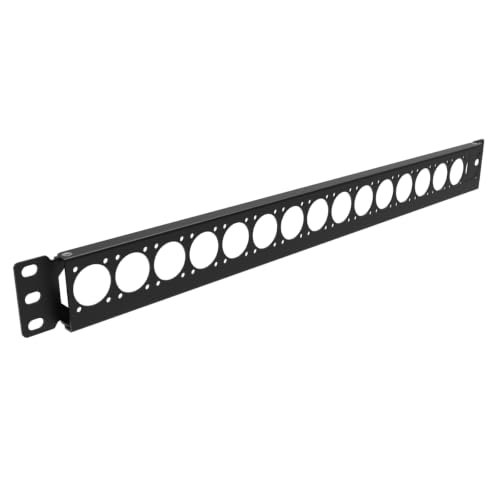
- 1U hinged rack panel for D-Series modules
- Fits XLR, HDMI, USB, RCA, and more
- Cold rolled steel build with easy access
Best For: Custom rack setups needing a modular front panel
Premium TRS Routing
Black Lion Audio PBR TRS Patchbay

- 48-point patchbay with 96 gold-plated TRS connectors
- Normal and half-normal output modes
- Stainless steel enclosure with 2-year warranty
Best For: Home studios needing durable balanced TRS routing
Shielded Balanced Bay
ART Pro Audio P48 48-Point Patch Bay

- 48-point balanced patch bay in a 19-inch rack format
- Fully shielded for installed audio setups
- Helps organize cables and reduce connector wear
Best For: Home studios needing simple shielded cable organization
Color-Coded Patch Leads
AxcessAbles 1/4 TS Multi-Color 6-Pack

- 6-pack of 5-foot 1/4-inch TS patch cables
- Multi-color design for easier cable tracking
- Nickel-plated plugs with OFC conductors and spiral shields
Best For: Home studios needing organized TS patch cables for outboard gear
Color-Coded Short Patch Set
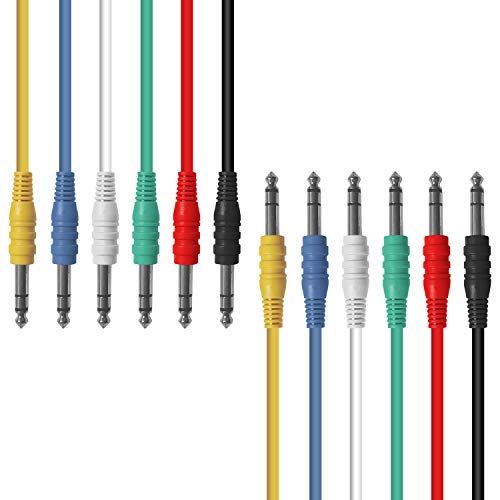
- 3-foot balanced TRS cables for patch bay routing
- Multicolor design helps organize outboard connections
- OFC conductors and spiral shields support signal clarity
Best For: Home or professional studios needing short, color-coded patch cables
Ultra-Short Patchbay Cable Pack
- 1.5-foot length is ideal for tight patch bay layouts
- Multicolor set helps keep routing easy to follow
- OFC conductors and spiral shields aim for clean signal transfer
Best For: Compact home studios needing very short patchbay connections
Extended-Reach Patch Cable Bundle

- 5-foot cables add reach for broader patch bay layouts
- Balanced TRS design fits outboard and patchbay use
- Multicolor, shielded construction supports organized routing
Best For: Home studios that need longer balanced patch cables for flexible routing
Studio Routing Workhorse – Behringer Ultrapatch Pro PX3000
Behringer ULTRAPATCH PRO PX3000 Multi-Functional 48-Point 3-Mode Balanced Patchbay
Check Price On AmazonIf you’re building patch bays for home studios, the Behringer Ultrapatch Pro PX3000 is a practical way to reduce cable clutter while keeping your routing flexible. Its 48-point balanced TRS layout and selectable operating modes make it easier to organize outboard gear, mixers, and other studio connections without constantly repatching at the rear of your rack.
Best For: Home studio users who want a flexible, balanced patchbay with multiple routing modes.
Pros:
- 48-point balanced TRS design for organized studio routing
- Selectable Parallel, Half-normalled, Normalled, and Open modes
- Rugged construction and high-quality jack connectors
- Helps eliminate cable clutter and improve rack clarity
Cons:
- Requires understanding of patchbay operating modes
- May be more capacity than very small setups need
For a home studio that needs serious routing control, the PX3000 stands out as a flexible and durable choice. It is especially appealing if you want one patchbay that can adapt as your setup grows and your signal flow changes.
Flexible Rack Organizer – Jadaol 24 Port Shielded Blank Patch Panel
For patch bays for home studios that need broader connectivity than audio alone, the Jadaol 24 Port Shielded Blank Patch Panel gives you a clean way to mount keystone jacks in a 1U rack space. Its universal keystone support makes it useful for audio, HDMI, USB, coax, and network-related runs when you want everything centralized and clearly labeled.
Best For: Home studio and media-rack setups that combine audio, video, and network connections.
Pros:
- Supports 24 standard-size keystone jacks
- Shielded metal frame with integrated ground wire
- 1U 19-inch format fits racks, cabinets, or wall mounts
- Numbered ports and writable labels aid organization
Cons:
- Requires separate keystone modules to populate the panel
- Not a dedicated audio TRS patchbay out of the box
If your home studio doubles as a structured cabling or media hub, this panel is a tidy and adaptable option. It is less specialized than a traditional audio patchbay, but that flexibility is exactly what makes it useful in mixed setups.
Compact Modular Option – Hosa MHB-350 8-Point TRS Patchbay
If you want a compact solution for patch bays for home studios, the Hosa MHB-350 keeps things simple with an 8-point modular TRS design. It is a straightforward choice for smaller rigs where you mainly need balanced 1/4-inch connections for mixers, recorders, or outboard gear.
Best For: Smaller home studios that need a basic balanced patchbay with a compact footprint.
Pros:
- 8-point modular 1/4-inch TRS patchbay
- Compatible with mixers, recorders, and outboard gear
- Steel enclosure for added durability
- Limited lifetime warranty
Cons:
- Only 8 points, so expansion is limited
- Less flexible than larger multi-mode patchbays
This is a sensible pick if your setup is small and you mainly want reliable balanced routing without extra complexity. It gives you the core patchbay function in a compact format that is easier to integrate into a modest studio rack.
Rack-Mount Connector Hub – 1U Hinged 16 D-Series Patch Panel
For patch bays for home studios that rely on a rack-mounted front panel, this 1U hinged 16 D-Series patch panel is a flexible way to organize XLR, HDMI, Ethercon, USB, RCA, and similar pass-through connectors. The punch-out D-series layout lets you arrange connectors to suit your workflow, while the hinged sides make future changes and cable access easier.
Best For: Studio racks that need a customizable front-panel connector layout with easy access.
Pros:
- Fits standard 19-inch rack systems in 1U
- Supports a wide range of D-Series connectors
- Hinged design improves maintenance and access
- Heavy-duty cold rolled steel construction
Cons:
- Not a pre-wired audio patchbay
- Requires your own compatible D-series modules
This panel is a strong fit when you want a neat, serviceable rack face rather than a fixed routing device. It is best treated as a customizable connector hub that helps keep a studio or AV rack looking organized and accessible.
Premium TRS Routing – Black Lion Audio PBR TRS Patchbay
If you’re wiring patch bays for home studios, the Black Lion Audio PBR TRS Patchbay is built for clean, organized TRS routing in a compact 48-point format. With 96 gold-plated TRS connectors and support for normal and half-normal operation, it’s aimed at setups where you want flexible signal flow without constant repatching at the back of your rack.
Best For: Home studio owners who want a sturdy 48-point TRS patchbay with normal and half-normal options.
Pros:
- 48-point layout with 96 gold-plated TRS connectors
- Supports normal and half-normal audio output modes
- Stainless steel enclosure for a rugged rack-ready build
- Compatible with all devices listed in the supplied notes
Cons:
- TRS-only design may not fit workflows centered on other connector types
- Heavier at 4.3 pounds than some simpler patch solutions
Overall, this is a practical choice if your studio is built around balanced TRS connections and you want a durable patch point that can live in the rack long term. The 2-year warranty adds a bit more confidence for regular studio use.
Shielded Balanced Bay – ART Pro Audio P48 48-Point Patch Bay
For patch bays for home studios that need straightforward organization, the ART Pro Audio P48 is a 48-point balanced patch bay designed to keep cable runs tidy and reduce wear on equipment connectors. It’s a rack-mountable, fully shielded option that also fits professional recording, PA, AV, home theatre, and live sound applications.
Best For: Studio users who want a fully shielded 48-point patch bay for balanced routing and cable management.
Pros:
- 48-point balanced patch bay in a 19-inch rack format
- Fully shielded design for installed audio setups
- Helps organize cables and reduce connector wear
- Suitable for home studios, pro studios, PA, AV, and live sound
Cons:
- Supplied notes list XLR connector type, so it may not match TRS-based patching workflows
- Very basic feature set compared with more specialized studio patchbays
If your priority is simple, shielded signal organization rather than advanced routing features, the P48 is a solid utility pick. Its rack-friendly format and broad application list make it easy to place in a variety of recording and installed-audio systems.
Color-Coded Patch Leads – AxcessAbles 1/4 TS Multi-Color 6-Pack
When you’re shopping for patch bays for home studios, the cables you use matter just as much as the bay itself, and this AxcessAbles 6-pack is built for outboard gear and patchbay connections. These 5-foot, 1/4-inch TS mono patch cables use nickel-plated plugs, oxygen-free copper conductors, and spiral shielding to support clean routing between effects and studio hardware.
Best For: Home studio users who need a multi-color set of TS patch cables for outboard gear and patchbay connections.
Pros:
- 6-pack of 5-foot 1/4-inch TS patch cables
- Multi-color design helps with fast visual cable tracking
- Nickel-plated plugs and OFC conductors for durable signal transfer
- Spiral shields help with EMI and RFI rejection
Cons:
- Unbalanced mono design won’t suit balanced TRS patching needs
- Only 5 feet long, so longer runs will need different cables
This is a useful add-on if your patchbay workflow involves compressors, delays, reverbs, preamps, or other outboard effects. The color coding and sturdy build make it easier to keep a home studio patch system readable and manageable.
Color-Coded Short Patch Set – 3ft Balanced TRS 6-Pack
If you are wiring patch bays for home studios, this 3-foot AxcessAbles TRS-to-TRS set is a practical option for keeping outboard gear tidy and easy to route. The multicolor design helps you identify connections quickly, while the balanced TRS format, OFC conductors, and spiral shielding are aimed at clean signal transfer with reduced EMI/RFI interference.
Best For: Home or professional studios that need short, color-coded balanced patch cables for patch bays and outboard gear.
Pros:
- 3-foot length fits common patch bay and rack connections
- Multicolor cables make routing easier to track
- Nickel-plated plugs and OFC conductors support durability and signal clarity
- Spiral shielding is designed for EMI/RFI rejection and flexibility
Cons:
- 3-foot length may be too long for some tightly packed patching needs
- Sold as a 6-pack, which may be more than needed for very small setups
This set makes sense if you want a dependable, short balanced cable bundle for patchbay-heavy setups without overcomplicating your wiring. It is built around the basics that matter in a studio: clear labeling, rugged plugs, and flexible construction.
Ultra-Short Patchbay Cable Pack – 1.5ft Balanced TRS 6-Pack
For patch bays for home studios where space is tight, this 1.5-foot AxcessAbles TRS cable pack is built for short, direct runs between outboard gear and bay points. The multicolor layout makes it easier to follow signal paths, and the balanced TRS design with OFC conductors and spiral shielding is intended to keep routing clean and practical.
Best For: Compact home or project studios that want very short balanced patch cables for tight patchbay setups.
Pros:
- 1.5-foot length is well suited to short patch bay connections
- Multicolor cables make channel and gear identification easier
- Nickel-plated plugs are built for rugged use
- OFC conductors and spiral shields are designed for clarity and EMI/RFI rejection
Cons:
- Very short length may not suit gear spaced farther apart
- Best for patching, not general-purpose longer studio runs
This is the most compact option in the group, so it is the one to consider when you want minimal cable slack around the bay. It is a straightforward fit for short, organized studio patching where neatness matters.
Extended-Reach Patch Cable Bundle – 5ft Balanced TRS 6-Pack
If your patch bays for home studios sit a little farther from your outboard gear, this 5-foot AxcessAbles TRS-to-TRS pack gives you extra reach without changing to an unbalanced connection. It keeps the same multicolor, balanced, OFC-conductor, spiral-shield design as the shorter versions, but the added length makes it easier to bridge wider rack layouts or less compact setups.
Best For: Home studios with patch bays and outboard gear that need more cable length for flexible routing.
Pros:
- 5-foot length adds reach for wider studio layouts
- Balanced TRS construction suits patch bay and outboard gear use
- Multicolor cables can help organize more complex routing
- Nickel-plated plugs, OFC conductors, and spiral shielding support durability and signal quality
Cons:
- Longer length may create extra slack in compact racks
- Less ideal than shorter cables when space around the bay is limited
This pack is the best fit when short patch cords are not enough to reach your gear cleanly. It is a sensible choice for studio users who want the same patch-bay-friendly construction but need more freedom in how they route connections.
How We Picked the Best Patch Bays for Home Studios
We focused on practicality first: balanced and unbalanced compatibility, channel count, build quality, and how well each option fits real home-studio workflows. We also considered whether a product is best for audio routing, rack integration, or general studio I/O management.
Quick Comparison
Not every studio needs the same hardware. Some setups benefit from a traditional 48-point balanced bay, while smaller rooms may prefer an 8-point module, a simple panel, or even the right patch cables for a less permanent routing job. That mix matters when choosing Patch Bays for Home Studios because flexibility often beats sheer size.
Key Buying Factors for Patch Bays for Home Studios
Channel Count and Layout
Choose a bay that matches the amount of outboard gear, interfaces, and monitors you actually patch. A larger bay is useful only if you have enough sources and destinations to justify it.
Balanced Vs. Unbalanced Signal Paths
TRS balanced routing is the safer default for longer runs and cleaner noise performance. TS unbalanced connections still matter for certain instruments, pedals, and vintage gear, so make sure your bay and cables match the equipment you own.
Normalization and Routing Mode
Look for routing options that fit your workflow, such as full-normal, half-normal, or straight-through operation. These settings determine how signals flow when nothing is patched in, which can save time and reduce mistakes.
Build Quality and Labeling
Clear labeling, solid jacks, and sturdy mounting all improve daily usability. If your rack lives in a busy room, durability is not optional.
Cables and Compatibility
The best bay is only as good as the cables feeding it. Use the right TRS or TS patch cables, keep runs short where possible, and choose color-coded options if you want easier visual organization.
Who Should Buy Which Patch Bays for Home Studios?
Choose a full-size balanced patch bay if you have multiple rack effects, preamps, compressors, or monitors and want fast access from the front panel. Pick a smaller module or panel if you are building a compact setup, adding extra I/O, or need flexible connectivity for a hybrid studio. If your main issue is messy wiring rather than signal routing, quality patch cables and a well-planned panel may be the smartest first upgrade.