Clean routing matters when every second counts on stage. The right patch bay can make live sound setups faster, tidier, and far easier to troubleshoot.
Below, we’ve focused on balanced, practical options that suit real-world live rigs, from compact stage racks to larger console workflows.
Best 10 Patch Bays for Live Sound Picks for 2026
Rack-Ready XLR Routing

- 32 XLR connectors for balanced routing
- 1U steel rack design with shielded enclosure
- Reversible rack ears and 3-year warranty
Best For: Live sound racks that need tidy XLR patching
Hybrid Studio Linking
Black Lion Audio PBR TRS-BT Patchbay

- 46-point TRS patchbay with gold-plated connectors
- Bluetooth support for phones, laptops, and tablets
- Built for professional studio and production workflows
Best For: TRS patching with Bluetooth device integration
Short Balanced Links
6 Inch Self-Locking XLR Patch Cables

- 6-inch balanced XLR cables for rack patching
- Double-shielded OFC build for noise rejection
- Self-locking connectors help prevent disconnects
Best For: Short balanced connections between patch bays and rack gear
Flexible Routing Control
Behringer Ultrapatch Pro PX3000

- 48-point balanced patchbay with selectable modes
- Parallel, half-normalled, normalled, and open options
- Built to reduce cable clutter in rack setups
Best For: Balanced TRS patching setups that need selectable routing modes
XLR Gender Changer
2-Pack Female-to-Female Couplers

- Joins two male XLR ends
- Zinc alloy housings with strain relief
- OFC conductors with dual shielding
Best For: Extending balanced XLR runs and quick stage cable fixes
Rack-Ready Patch Bay

- 16-point bay with 32 gold-plated XLR connectors
- Designed for audio signal routing in live sound
- Aluminum build with 2-year warranty
Best For: Rack-mounted XLR routing in recording and live sound systems
Balanced Routing Bay
ART Pro Audio P48 48-Point Patch Bay

- 48-point balanced patch bay
- Fully shielded 19-inch rack design
- Helps organize cables and reduce connector wear
Best For: Large rack-mounted balanced routing in live sound and installed systems
Modular XLR Patch Panel
AA AUDIO ACCESSORY AP16 16-Channel XLR Balanced Patch Panel

- 4 modular blocks with no PCB cutting
- 24K gold-plated XLR pins
- Steel chassis with reversible rack ears
Best For: Live sound racks and modular signal routing
Balanced TRS Bay
ART Pro Audio TPatch Eight-Point Balanced Patch Bay
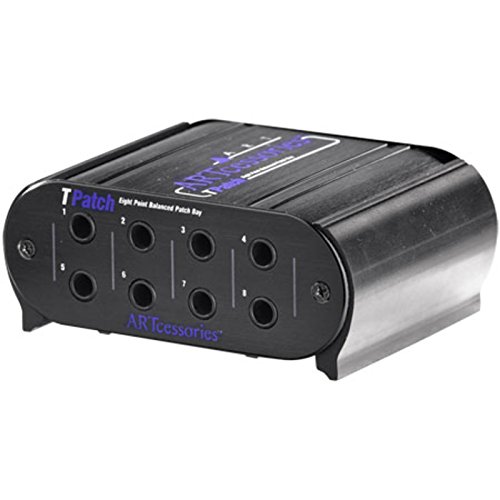
- Eight balanced points in a compact unit
- Half-normal and normal mode switching
- Rugged extruded aluminum case
Best For: Compact balanced routing and small rack setups
Eight-Channel XLR Snake
GEARit 10ft 8 Channel XLR Snake

- 8-channel balanced XLR multicore
- 10-foot cable for short runs
- Numbered labels and metal connectors
Best For: Short multi-channel XLR runs in live sound and studios
Rack-Ready XLR Routing – ART P16 XLR Balanced Patchbay
If you want a simple way to organize patch bays for live sound, the ART P16 keeps XLR connections tidy in a 1U rack format. Its all-steel, fully shielded enclosure and PCB wiring make it a straightforward choice when you need dependable balanced routing in a compact rack.
Best For: Live sound racks that need a clean, dedicated XLR patching solution.
Pros:
- 32 XLR connectors with 16 female on the front and 16 male on the rear
- 19-inch 1U rack mount design with reversible rack ears
- Rugged, fully shielded black all-steel enclosure
- Backed by a 3-year warranty
Cons:
- XLR-only design may not suit TRS-heavy setups
- PCB wiring is fixed rather than configurable
This is a practical option if your workflow centers on XLR patching and you value durability over feature complexity. It is best suited to users who want a solid, no-fuss rack unit for organized live sound connectivity.
Hybrid Studio Linking – Black Lion Audio PBR TRS-BT Patchbay
For patch bays for live sound and flexible audio setups, the Black Lion Audio PBR TRS-BT adds TRS connectivity plus Bluetooth integration. With 46 points and 94 gold-plated TRS connectors, it is aimed at users who want a more versatile patching hub for professional audio workflows.
Best For: Studios and live rigs that need TRS patching with Bluetooth device integration.
Pros:
- 46-point patchbay with 94 gold-plated TRS connectors
- Bluetooth connectivity for smartphones, laptops, and tablets
- Designed for professional audio production and studio setup workflows
- Aluminum outer material and 2-year warranty
Cons:
- TRS-focused layout may not replace dedicated XLR patching
- Bluetooth adds convenience, but it is not a substitute for wired signal paths
This is a strong choice if your rack needs both analog patching and a way to bring portable devices into the workflow. It makes the most sense when flexibility matters more than a single-purpose patch panel.
Short Balanced Links – 6 Inch Self-Locking XLR Patch Cables
When patch bays for live sound need short, reliable jumpers, these 6-inch balanced XLR cables are built for close-proximity rack use. The double-shielded OFC design and self-locking connectors are aimed at reducing noise and accidental disconnects in busy audio rigs.
Best For: Short balanced connections between patch bays, mixers, preamps, and rack gear.
Pros:
- Double-shielded OFC conductors for EMI/RFI rejection
- Self-locking male-to-female XLR connectors help prevent accidental unplugging
- 6-inch length works well for equipment racks and patch bay layouts
- Compatible with mixers, preamps, speaker systems, and DMX lighting
Cons:
- Only useful for short-distance patching
- Sold as a 2-pack, so larger setups may need multiple sets
These cables are a practical accessory when you want short, clean signal paths without excess slack. They are especially handy for rack gear where secure balanced connections matter more than cable length.
Flexible Routing Control – Behringer Ultrapatch Pro PX3000
Behringer ULTRAPATCH PRO PX3000 Multi-Functional 48-Point 3-Mode Balanced Patchbay
Check Price On AmazonFor live sound users who need configurable patch bays, the Behringer Ultrapatch Pro PX3000 offers three operating modes to help organize signal flow. Its 48-point balanced layout and selectable normalled options make it a useful control center when you want more routing flexibility than a fixed patch panel.
Best For: Balanced TRS patching setups that need selectable routing modes.
Pros:
- 48-point balanced patchbay with selectable operating modes
- Each channel can be set to Parallel, Half-normalled, Normalled, or Open
- High-quality jack connectors and rugged construction
- Designed to reduce cable clutter in studio or rack setups
Cons:
- TRS-focused design may not fit XLR-only workflows
- More routing options can take extra setup time
This model makes sense when you want a patchbay that can adapt as your setup changes. It is a practical pick for users who prefer configurable balanced routing over a fixed connection scheme.
XLR Gender Changer – 2-Pack Female-to-Female Couplers
If you need practical patch bays for live sound, this 2-pack of XLR female-to-female couplers is a simple way to join two male XLR ends, extend mic cables, or keep balanced runs moving on stage or in the studio. The zinc alloy housings and strain relief are built for road use, while the OFC conductors and dual copper shield help keep signal clean in crowded setups.
Best For: Extending balanced XLR cable runs and solving quick gender-change needs in live sound rigs.
Pros:
- Female-to-female XLR coupler for extending or joining balanced cable runs
- Zinc alloy die-cast housing with rubber boots and tri-grip strain relief
- OFC conductors with dual copper shield to help reject EMI and RFI
- 2-pack gives you a spare for stage bags or rack kits
Cons:
- Only works with 3-pin XLR connections
- Not a full patchbay or routing panel
- Female-to-female design means it is not a mic-to-mixer cable by itself
For fast, low-fuss live sound patching, this is more of a utility connector than a routing solution, but that is exactly what makes it useful. It is a solid pick when you need a compact, durable gender changer to keep XLR lines connected without adding much bulk.
Rack-Ready Patch Bay – Black Lion Audio PBR XLR
Among patch bays for live sound, the Black Lion Audio PBR XLR stands out as a dedicated 16-point XLR patchbay with 32 gold-plated connectors. If you want cleaner signal routing in a studio or live sound setup, this rack-friendly unit is designed to make patching easier while keeping XLR connections organized.
Best For: Rack-mounted XLR signal routing in recording rooms and live sound systems.
Pros:
- 16-point patchbay with 32 gold-plated XLR connectors
- Built for audio signal routing in recording or live sound studios
- Easy patch design helps simplify connection changes
- Aluminum construction with a 2-year warranty
Cons:
- Limited to XLR connections rather than a mixed-format bay
- Not intended for outdoor use
- More of a fixed rack solution than a portable stage accessory
This is a focused choice if your live sound workflow centers on XLR routing and you want something built for a rack. It is less about flexibility across connector types and more about giving you a straightforward, high-quality XLR patch point.
Balanced Routing Bay – ART Pro Audio P48 48-Point Patch Bay
If you are comparing patch bays for live sound, the ART Pro Audio P48 is a full 48-point balanced patch bay meant to organize cables and reduce wear on connector hardware. Its fully shielded, rack-installable design makes sense for professional or home studios, as well as PA, AV, home theater, and live sound installations.
Best For: Large balanced patching setups that need organized, rack-mounted signal routing.
Pros:
- 48-point balanced patch bay for extensive routing needs
- Fully shielded and rack-installable 19-inch format
- Helps organize cables and reduce wear on equipment connectors
- Suitable for live sound, PA, AV, and studio use
Cons:
- Designed for indoor installed systems rather than portable use
- Uses a female-to-female XLR format only
- May be more bay capacity than smaller live rigs need
For users building a more permanent live sound rack, this ART bay offers the most connection points in this group. It is a practical choice when cable organization and connector protection matter as much as fast patch access.
Modular XLR Patch Panel – AA AUDIO ACCESSORY AP16 16-Channel XLR Balanced Patch Panel
If you need patch bays for live sound that are built for flexible routing and fast maintenance, this 16-channel XLR patch panel is designed around modular blocks instead of risky PCB cutting. The steel chassis, gold-plated pins, and reversible rack ears make it a practical choice for organized stage or rack setups where reliability matters.
Best For: Live sound racks, modular signal routing, and users who want easy zone-based patch management.
Pros:
- Factory-assembled as 4 modular blocks with no cutting required
- Each 4-channel block can be assigned or removed independently
- 24K gold-plated XLR pins for corrosion resistance and stable transmission
- Full-steel chassis and reversible rack ears suit demanding rack installs
Cons:
- XLR-only layout may not suit setups built around TRS connections
- 16 channels may be more than small rigs need
- Best fit is for rack-based workflows rather than quick standalone use
For live sound applications, this patch bay stands out for its modular design and straightforward maintenance. It favors installers and engineers who want clean signal management without modifying the unit.
Balanced TRS Bay – ART Pro Audio TPatch Eight-Point Balanced Patch Bay
For patch bays for live sound that rely on balanced line-level routing, this eight-point patch bay keeps the setup simple with TRS connections and switchable operating modes. Its linked input/output pairs and rugged aluminum case make it a compact option for small racks, studio tie-ins, or console interfacing where balanced signal flow is the priority.
Best For: Compact balanced routing, linked I/O pairs, and small rack or console setups.
Pros:
- Eight balanced direct signal points in a compact format
- Switchable half-normal and normal modes for flexible routing
- Four linked input/output pairs simplify patching
- Rugged extruded aluminum case
Cons:
- Only eight points, so larger systems may outgrow it quickly
- Uses 1/4-inch TRS connectors instead of XLR
- Designed around balanced line signals rather than full multichannel snake routing
This is a straightforward balanced patch bay for users who need dependable TRS routing without extra complexity. It makes the most sense in smaller live or hybrid setups where clean signal organization matters more than channel count.
Eight-Channel XLR Snake – GEARit 10ft 8 Channel XLR Snake
When patch bays for live sound need a clean way to move multiple XLR lines, this 8-channel snake is built for short runs between a mixing console, patch bay, or stage gear. The numbered labels, metal connectors, and OFC conductors make it useful anywhere you want organized multi-channel signal handling in a compact 10-foot cable.
Best For: Short-distance multi-channel XLR runs for studios, venues, and live performance rigs.
Pros:
- 8-channel balanced XLR multicore in a 10-foot length
- Metal XLR connectors with numbered labels for easier identification
- OFC conductors support pro audio use
- Suitable for studios, mixing consoles, patch bays, and stage monitors
Cons:
- Only 10 feet long, so it is not meant for long cable runs
- Not a patch bay itself, but a cable snake for connecting gear
- XLR format may not fit workflows that need TRS or other connector types
This is best treated as a practical signal-transport tool rather than a routing hub. For compact live sound setups, it helps keep eight XLR channels organized and easy to trace.
How We Picked the Best Patch Bays for Live Sound
For Patch Bays for Live Sound, we prioritized balanced connectivity, rugged build quality, clear labeling, and layouts that make rapid repatching practical in busy venues. We also looked at how well each option fits common live workflows, including insert routing, outboard gear access, and stage-to-FOH signal management.
Quick Comparison
Smaller XLR patch bays and short patch leads are best when you need simple, fast connections with minimal complexity. Larger 48-point TRS-style units offer more routing flexibility for racks and consoles, while snake-style cabling is better when you need to bridge distance cleanly. The best choice depends on whether your priority is compactness, channel count, or flexible signal routing.
Key Buying Factors for Patch Bays for Live Sound
Connector Type
Match the bay to your system. XLR is common for microphone and balanced line connections, while TRS patching is useful in rack-based signal chains. Choose the format that matches your existing gear to avoid unnecessary adapters.
Build and Reliability
Live environments are demanding, so look for sturdy metal chassis, secure sockets, and dependable strain relief. Good contact quality matters more than flashy features when signals need to stay clean under heavy use.
Channel Count and Layout
Think about how many inputs and outputs you actually patch during a show or changeover. A compact 8- or 16-point setup may be enough for small rigs, while larger systems benefit from 48-point flexibility.
Workflow and Access
The best patch bays save time by making signal changes obvious and easy. Front-panel access, clear numbering, and sensible channel grouping can reduce mistakes during load-in and live troubleshooting.
Balanced Signal Integrity
For live sound, balanced connections help reject noise over longer cable runs. That makes them especially important when routing microphones, stage boxes, and line-level sources across a venue.
Who Should Buy Which Patch Bays for Live Sound?
Choose a compact XLR patch bay if you want simple stage or rack routing without much complexity. Pick a 48-point unit if your live setup includes outboard processing, inserts, or more advanced patching needs. If your priority is distance and signal distribution rather than patching flexibility, a multicore snake may be the better fit. For most buyers comparing Patch Bays for Live Sound, the best option is the one that matches your existing connector standard and your daily setup speed.