For small bands, a good patch bay can make rehearsals, recording sessions, and quick setup changes far easier. Instead of crawling behind racks and mixers, you can route gear cleanly from one accessible point.
This roundup highlights the best patch bays for small bands in 2026, focusing on balanced connections, practical channel counts, and options that fit compact studio and live-band workflows.
Best 10 Patch Bays for Small Bands Picks for 2026
Balanced Rack Hub

- 48 balanced TRS points in a 1U rack
- Switchable normal, half-normal, and thru modes
- Metal build helps cut rack clutter
Best For: small bands needing a simple balanced patching center
Gold-Contact Router

- 48-point patchbay with 96 gold-plated TRS connectors
- 3-way mode switch for flexible routing
- Aims for clean, organized studio connections
Best For: small bands wanting a premium TRS patchbay
Flexible Studio Switcher
Behringer Ultrapatch Pro PX3000

- 48-point balanced patchbay with 3 operating modes
- Each channel can be set to parallel, half-normalled, normalled, or open
- Built to reduce cable clutter and improve organization
Best For: small bands that need maximum routing flexibility
Bluetooth Bridge Bay

- 46-point patchbay with 94 gold-plated TRS connectors
- Bluetooth adds support for portable devices
- Aluminum build suits studio workflows
Best For: small bands blending analog patching with Bluetooth devices
Rackmount XLR Organizer

- 32 XLR connectors in a 1U rack space
- Fully shielded all-steel enclosure
- Reversible rack ears for flexible mounting
Best For: Small bands needing a compact balanced XLR patch point
High-Density Studio Patch
Switchcraft Studio Patch 6425 64-Point TT - DB25 Patchbay

- 64-point TT to DB-25 routing
- Stainless steel enclosure
- Portable packaging for studio or remote use
Best For: Small bands needing dense professional routing for studio or remote recording
All-Purpose Balanced Patch
Art Pro Audio P48-48 Point Balanced Patch Bay

- 48-point balanced XLR routing
- 1U fully shielded steel design
- Helps organize cables and cut connector wear
Best For: Small bands needing a simple balanced patch bay for studio or live use
Compact 8-Point TRS Patchbay

- 8-point modular 1/4-inch TRS balanced patchbay
- Steel enclosure with a compact footprint
- Limited lifetime warranty
Best For: Small bands needing simple balanced rack routing
Switchable Balanced 8-Channel Bay
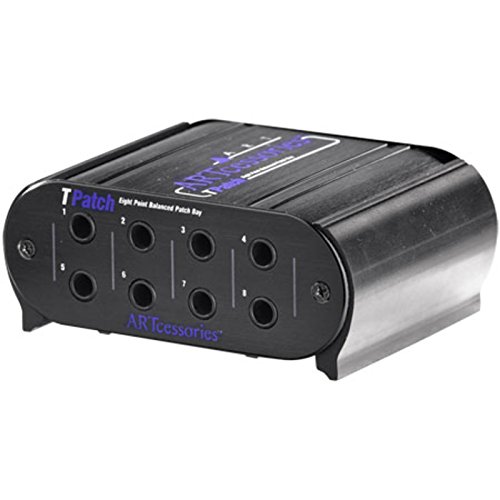
- Eight balanced points with linked input/output pairs
- Switchable half-normal and normal modes
- Rugged extruded aluminum case
Best For: Small bands wanting flexible TRS routing
Modular 16-Channel XLR Patch Panel

- 16 balanced XLR channels in modular blocks
- No-cut factory-assembled design
- Steel chassis with reversible rack ears
Best For: Small bands with XLR gear and modular routing needs
Balanced Rack Hub – Samson S-Patch Plus
Samson S-Patch Plus Balanced 48-Point 1/4" Patch Bay | 1/4 Inch Phone Connections
Check Price On AmazonFor patch bays for small bands, the Samson S-Patch Plus gives you a clean central point for routing outboard gear, mixer connections, and rack wiring without constantly reaching behind your setup. Its 48-point, fully balanced TRS design and front-panel toggle switches make it easy to choose normalled, half-normalled, or thru operation as your rig changes.
Best For: Small bands that want a straightforward, balanced 1U patch bay for cleaner signal routing.
Pros:
- 48-point, fully balanced 1/4-inch TRS patchbay
- Front-panel switches for normalled, half-normalled, or thru modes
- Solid metal construction with a 19-inch, 1U rack-mount design
- Helps reduce back-of-rack cable reaching and clutter
Cons:
- TRS-only setup may not suit every mixed-format rig
- Mode changes rely on miniature toggle switches rather than a simpler fixed layout
The S-Patch Plus is a practical choice if you want a reliable, easy-to-manage patchbay that keeps a small band’s studio or rehearsal rack organized. It focuses on clean balanced routing and flexible normaling without adding unnecessary complexity.
Gold-Contact Router – Black Lion Audio PBR TRS3
If you are comparing patch bays for small bands, the Black Lion Audio PBR TRS3 stands out with 48 points and 96 gold-plated TRS connectors for a clean, durable signal path. Its 3-way mode switch gives you useful routing flexibility while keeping the setup focused on standard 1/4-inch TRS connections.
Best For: Small bands that want a premium-feeling TRS patchbay with gold-plated connectors and simple routing modes.
Pros:
- 48-point patchbay with 96 gold-plated TRS connectors
- 3-way mode switch for routing flexibility
- Compatible with a range of studio devices listed in the notes
- Built for a clean, organized studio setup
Cons:
- No detailed panel-layout or rack-height information in the supplied notes
- Primarily centered on TRS connectivity, so it is less versatile for non-TRS routing needs
This model makes sense when you want a tidy patchbay with a more premium connector treatment and broad studio compatibility. For a small band rack, it offers a straightforward way to route gear without overcomplicating the front panel.
Flexible Studio Switcher – Behringer Ultrapatch Pro PX3000
Behringer ULTRAPATCH PRO PX3000 Multi-Functional 48-Point 3-Mode Balanced Patchbay
Check Price On AmazonFor patch bays for small bands, the Behringer Ultrapatch Pro PX3000 is built around flexibility, with each channel switchable between parallel, half-normalled, normalled, and open operation. It is designed to reduce cable clutter and bring order to a studio or rehearsal rack, while its rugged construction and high-quality jack connectors aim for dependable everyday use.
Best For: Small bands that need a highly configurable patchbay for changing studio routing needs.
Pros:
- 48-point balanced patchbay with 3 operating modes
- Each channel can be set to parallel, half-normalled, normalled, or open
- Designed to eliminate cable clutter and improve studio organization
- Rugged build with high-quality jack connectors
Cons:
- More configuration options may take a little more setup time
- Heavier than some simpler patchbay designs at 3.9 pounds
The PX3000 is a strong fit if your small band’s setup changes often and you want a patchbay that can adapt with you. It emphasizes routing flexibility and practical studio tidiness over extra features.
Bluetooth Bridge Bay – Black Lion Audio PBR-TRS BT
Among patch bays for small bands, the Black Lion Audio PBR-TRS-BT is the unusual pick because it adds Bluetooth connectivity alongside 94 gold-plated TRS connectors. That makes it useful when you want to integrate smartphones, laptops, or tablets into a professional audio workflow without abandoning a traditional patchbay layout.
Best For: Small bands that want to blend traditional TRS patching with Bluetooth device integration.
Pros:
- 46-point patchbay with 94 gold-plated TRS connectors
- Bluetooth connectivity for portable device integration
- Compatible with smartphones, laptops, and tablets
- Aluminum construction in a compact studio-friendly format
Cons:
- Bluetooth feature may be unnecessary for bands that only need standard analog routing
- Fewer points than 48-point competitors in this roundup
This is the most specialized option here, and that can be a plus if your band regularly brings in phones or laptops for playback and production tasks. It is best viewed as a hybrid routing tool rather than a purely traditional patchbay.
Rackmount XLR Organizer – ART P16 XLR Balanced Patchbay
For patch bays for small bands, the ART P16 gives you a straightforward way to centralize 16 XLR sends and returns in a single 1U rack space. Its fully shielded steel enclosure and PCB wiring make it a practical choice when you want cleaner stage-to-rack routing without adding extra complexity.
Best For: Small bands that need a simple, rackmount XLR patch point for balanced mic and line connections.
Pros:
- 32 XLR connectors total, with 16 female on the front and 16 male on the rear
- 19-inch, 1U rackmount format saves space in small rigs
- Fully shielded black all-steel enclosure helps protect connections
- Reversible rack ears add installation flexibility
Cons:
- XLR-only design is less flexible than multi-format patchbays
- Not aimed at TT or DB25 studio workflows
Overall, this is a no-frills balanced patchbay built for keeping XLR routing organized and protected. If your band’s setup revolves around microphones, mixers, and other XLR gear, it offers an efficient and durable way to simplify the rack.
High-Density Studio Patch – Switchcraft Studio Patch 6425 64-Point TT – DB25 Patchbay
Among patch bays for small bands, the Switchcraft 6425 is the most studio-oriented option here, built around a 64-point TT-to-DB-25 layout. It makes the most sense when your setup is moving toward a more permanent, professional rack and you want dense routing in a compact footprint.
Best For: Small bands that need a high-density patchbay for pro audio production or mobile/remote recording.
Pros:
- 64-point TT to DB-25 patchbay for dense routing
- Portable packaging and a desktop/laptop-friendly use case
- Stainless steel enclosure for a more robust build
- Includes DB-25 cable and Ethernet cables in the package
Cons:
- TT/DB-25 format is more specialized than simple XLR patching
- Likely more than casual small-band rigs need
This is the most specialized unit in the group, so it fits best when your band is already working in a more structured studio or remote-recording environment. If you need a dense, professional patch point and understand TT/DB-25 workflows, it brings a lot of capability.
All-Purpose Balanced Patch – Art Pro Audio P48-48 Point Balanced Patch Bay
If you want patch bays for small bands with a simple balanced setup, the Art Pro Audio P48 offers a 48-point XLR patch bay in a single 19-inch rack space. It is designed to keep cables organized and reduce wear on your equipment connections, which is especially helpful in rehearsal rooms and compact live rigs.
Best For: Small bands looking for a space-saving, balanced XLR patch bay for studio, PA, or live sound use.
Pros:
- 48-point balanced XLR patch bay in a 1U rackmount format
- Fully shielded steel construction
- Helps organize cables and reduce connector wear
- Suitable for professional or home recording, PA, AV, home theatre, and live sound
Cons:
- XLR format limits it to balanced audio connections
- Basic design may not suit more advanced studio patching needs
For small-band use, this is the most straightforward all-around option here: compact, shielded, and built around standard XLR routing. It is a sensible pick if you want one patch panel that can cover rehearsal, recording, and small live applications.
Compact 8-Point TRS Patchbay – Hosa MHB-350
If you need patch bays for small bands, the Hosa MHB-350 is a straightforward 8-point TRS balanced module for routing mixer, recorder, and outboard gear. Its modular 1/4-inch layout keeps the setup compact and focused on balanced connections without adding extra complexity.
Best For: Small bands that want a simple, compact balanced patchbay for basic rack routing.
Pros:
- 8-point modular 1/4-inch TRS balanced design
- Compatible with mixers, recorders, and outboard gear using matching connectors
- Steel enclosure for a sturdy feel
- Limited lifetime warranty
Cons:
- Single-line operation only
- Limited to 8 points, so it may feel small as a rig grows
Overall, this is a practical no-frills choice if your band just needs reliable balanced patching in a small rack space. It keeps things simple and durable, which makes it a good fit for lean live or project-studio setups.
Switchable Balanced 8-Channel Bay – ART Pro Audio TPatch
For patch bays for small bands that need flexible routing, the ART Pro Audio TPatch offers eight balanced points with switchable half-normal and normal modes. The linked input/output pairs make it a useful step up when you want more control over how signals flow through a compact rack.
Best For: Small bands that want configurable balanced patching for a DAW or rack setup.
Pros:
- Eight balanced points for direct signal routing
- Switchable half-normal and normal modes for flexible operation
- Four linked input/output pairs
- Rugged extruded aluminum case
Cons:
- Only 8 channels, so larger rigs may outgrow it
- Designed around TRS connections, so it may not suit XLR-heavy setups
In practice, this is a solid choice if your band wants a compact bay with more routing options than a basic fixed patch panel. The switchable modes give it useful flexibility without making the unit bulky.
Modular 16-Channel XLR Patch Panel – AA AUDIO ACCESSORY AP16
If your search for patch bays for small bands includes XLR-heavy rigs, the AA AUDIO ACCESSORY AP16 is built around 16 balanced XLR channels with a modular 4-block design. It is aimed at clean routing, easier maintenance, and flexible rack integration rather than a tiny bare-bones setup.
Best For: Small bands with XLR-based gear that want a modular, serviceable patch panel.
Pros:
- 16-channel balanced XLR patch panel
- Factory-assembled modular blocks with no cutting required
- 24K gold-plated pins for corrosion resistance
- Full-steel chassis with reversible rack ears
Cons:
- Larger and more feature-rich than a basic 8-point bay
- Focused on XLR routing, so it is less universal than TRS models
This is the most robust option in the group, especially if you want a patchbay that can be configured in sections and maintained without modifying the PCB. For small bands with growing XLR routing needs, it offers more room to expand than the simpler alternatives.
How We Picked These Patch Bays for Small Bands
We prioritized models that make sense for compact setups: enough I/O to handle a modest band rig, balanced signal options for cleaner audio, and layouts that are simple to wire and maintain. We also looked at build quality, connector type, and how well each unit supports real-world patching between interfaces, outboard gear, mixers, pedals, and stage racks.
Quick Comparison
In a small-band workflow, the main decision is usually connector format. 1/4-inch TRS patch bays are common and versatile, XLR patch bays are useful when your rig already runs on mic-level or stage connections, and TT/DB25 options are better for more permanent, higher-density studio installs. Smaller modules can work well for limited gear, while 48-point and 64-point bays are better if you expect the setup to grow.
Key Buying Factors for Patch Bays for Small Bands
Channel Count and Growth
Choose a count that covers your current gear with a little headroom. If your band only needs a few line-level routes, an 8- or 16-point bay may be enough. If you are patching interfaces, preamps, processors, and monitors, 48-point or larger is usually more practical.
Balanced Vs. Unbalanced Routing
Balanced patch bays are usually the safest choice for small bands because they help reduce noise over longer cable runs. That matters in rehearsal rooms, home studios, and shared spaces where interference can creep in.
Connector Standard
Match the bay to the rest of your system. TRS works well for balanced line-level gear, XLR is ideal for microphone-style patching, and TT/DB25 makes sense if you want a compact, semi-permanent studio workflow.
Normaling Options
Look for full-normal, half-normal, or multi-mode designs if you want signals to pass through by default and only patch when needed. This can simplify signal flow and reduce cable clutter.
Who Should Buy Which Patch Bays for Small Bands?
If you need a simple, flexible solution for a rehearsal space or small home studio, a balanced TRS bay is often the best starting point. Bands building a more permanent control-room setup may prefer higher-density TT or DB25 models. If your gear is already wired in XLR, an XLR patch panel can be the cleanest fit. For smaller, modular rigs, compact patch bays can be a smart low-cost way to improve organization without overbuying.
In short, the best Patch Bays for Small Bands are the ones that match your connector format, give you room to expand, and make signal routing faster and less error-prone.