Fast external storage can make a major difference when editing 4K, 6K, or 8K footage. The right enclosure helps you turn an NVMe or SATA drive into a portable scratch disk, project drive, or backup solution without introducing unnecessary bottlenecks.
We selected 10 SSD enclosures for video editing across several use cases, including high-speed Thunderbolt and USB4 workflows, compact travel setups, SATA compatibility, active cooling, and dual-drive flexibility. The guide below explains what separates them and how to choose the right match for your editing system.
Best 10 SSD Enclosures for Video Editing Picks for 2026
Best Active-Cooling Pick

- Built-in fan for sustained workloads
- Up to 40Gbps connectivity
- Supports four M.2 drive sizes
Best For: Editors needing active cooling for large file transfers
Best Silent Portable Option
OWC Express 1M2 NVMe Enclosure

- Up to 3836MB/s real-world performance
- Silent heat-dissipating design
- Bus-powered and palm-sized
Best For: Portable editing setups that need quiet external storage
Best SATA Value
UGREEN USB-C 2.5-Inch Enclosure
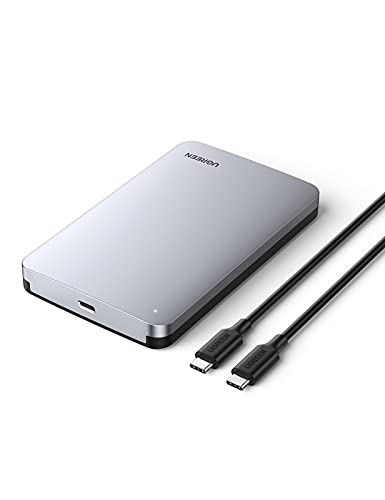
- Supports 2.5-inch SATA SSDs and HDDs
- Up to 6Gbps SATA transfer rate
- Tool-free installation with passive cooling
Best For: Repurposing an existing 2.5-inch SATA SSD
Best Future-Ready Speed

- 80Gbps TB5 and USB4 V2 support
- Up to 6000 MB/s advertised speeds
- 60W PD and intelligent fan cooling
Best For: High-end editing systems with Thunderbolt 5 or USB4 V2
Fast 40Gbps Pick
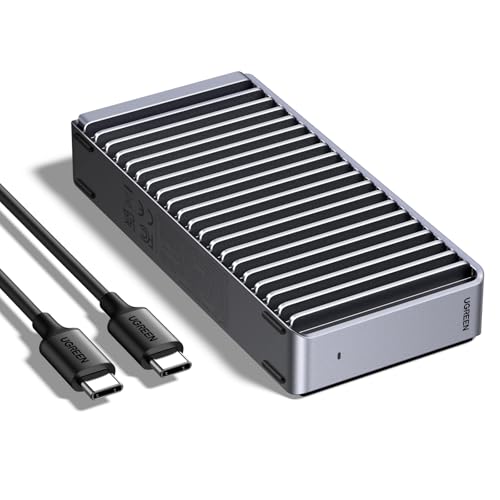
- Up to 3600MB/s with compatible Thunderbolt 4 equipment
- Fits 2230–2280 NVMe drives up to 8TB
- Fanless aluminum cooling design
Best For: Editors with USB4 or Thunderbolt hardware
Flexible Value Option
SABRENT Tool-Free M.2 Enclosure
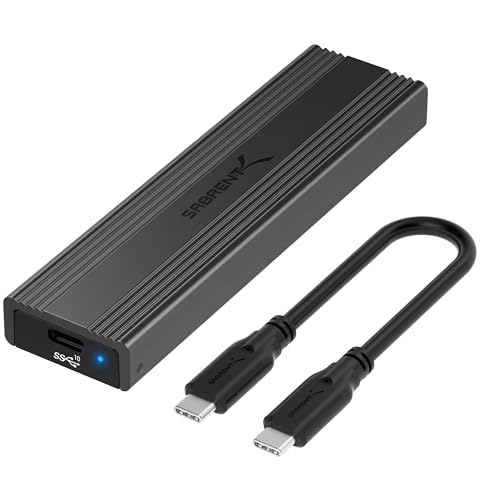
- Accepts both NVMe and SATA M.2 drives
- Tool-free installation and removal
- 10Gbps USB-C with up to 1000MB/s real transfers
Best For: Creators swapping multiple M.2 drive types
Extreme-Speed Choice

- Up to 7000MB/s with dual-chip design
- 3D aluminum cooling helps manage sustained heat
- Supports 2230–2280 NVMe drives up to 8TB
Best For: High-performance editing systems with compatible Thunderbolt or USB4
Fastest Single-Drive Pick
Yottamaster 40Gbps NVMe Enclosure

- Thunderbolt 4 and USB4 connectivity
- Active cooling for sustained workloads
- Tool-free support for M.2 drives up to 8TB
Best For: 4K editing with one high-speed NVMe drive
Most Versatile Compact Pick
ASUS ROG Strix Aiolos Dual M.2 Enclosure

- Supports NVMe PCIe and SATA M.2 drives
- USB-C transfer rates up to 20Gbps
- Tool-free design with thermal management
Best For: Mixed-drive editing setups and mobile workflows
Best for Multi-Drive Workflows
ORICO 40Gbps Four-Bay NVMe Dock

- Four M.2 NVMe bays with up to 32TB total support
- 40Gbps USB 4.0 interface
- Aluminum cooling design with built-in fan
Best For: High-capacity production and DIT media storage
Best Active-Cooling Pick – ACASIS 40Gbps NVMe Enclosure
For video editors choosing among ssd enclosures for video editing, sustained speed and heat control matter as much as peak transfer rates. This ACASIS enclosure combines a 40Gbps connection with a built-in fan, aluminum construction, and support for multiple M.2 NVMe sizes.
Best For: Video editors moving large projects from an M.2 NVMe drive, especially Mac users with compatible M1, M2, or M3 systems.
Pros:
- Built-in cooling fan and heat-dissipation openings help manage sustained workloads.
- 40Gbps connectivity with reported read/write speeds up to 2805/2734 MB/s in testing.
- Supports Thunderbolt 4, Thunderbolt 3, USB4, and USB 3.x connections.
- Fits M.2 2280, 2260, 2242, and 2230 drives.
Cons:
- The fan must be activated with its switch.
- Actual speeds depend on the installed SSD and host connection.
This is a practical choice for editors who regularly transfer or work from large files and want active cooling in a compact enclosure. Its broad compatibility also makes it easier to reuse across supported Mac and PC setups.
Best Silent Portable Option – OWC Express 1M2 NVMe Enclosure
The OWC Express 1M2 is a compact option for editors who want fast external storage without a manually controlled fan. Its heat-dissipating enclosure is designed to keep an installed NVMe SSD cool while supporting USB4, Thunderbolt, and USB-C devices.
Best For: Mobile video editors who need a bus-powered, palm-sized enclosure for compatible M.2 SSDs.
Pros:
- Reported real-world performance reaches up to 3836MB/s.
- Patented heat-dissipating design cools the drive silently.
- Supports M.2 2280, 2242, and 2230 NVMe SSDs.
- Includes a 40Gbps USB-C cable and screwdriver.
Cons:
- Performance depends on the installed SSD and connected computer.
- It is limited to the supported M.2 NVMe formats.
With bus-powered operation, a metal enclosure, and broad host compatibility, the Express 1M2 fits editing kits that prioritize portability and quiet operation. The included accessories also make a DIY SSD installation straightforward.
Best SATA Value – UGREEN USB-C 2.5-Inch Enclosure
Editors with an existing 2.5-inch SATA SSD can use this UGREEN enclosure as a straightforward, budget-conscious addition to a video workflow. It supports USB 3.1 Gen 2 and SATA III, with tool-free installation and an aluminum shell for passive heat dissipation.
Best For: Video editors repurposing a 2.5-inch SATA SSD for project storage, backups, or file transfers.
Pros:
- Supports up to 6Gbps SATA transfer speeds with UASP.
- Tool-free, plug-and-play installation requires no drivers.
- Aluminum construction provides passive heat dissipation without a fan.
- Works with Windows, Mac, Linux, and several consoles and smart devices.
Cons:
- SATA performance is substantially below the 40Gbps NVMe options in this roundup.
- Designed for 2.5-inch SATA drives rather than M.2 NVMe SSDs.
- USB-A-only devices require a separate USB-C-to-USB-A cable.
This enclosure makes sense when you already own a 2.5-inch SATA drive and want inexpensive, portable access to it. It is better suited to storage, backups, and general editing media management than the fastest high-bitrate editing workloads.
Best Future-Ready Speed – ACASIS 80Gbps NVMe Enclosure
For demanding video editing workflows, this ACASIS enclosure targets the newest high-speed systems with 80Gbps connectivity, PCIe 5.0 SSD support, and intelligent fan cooling. It also adds up to 60W power delivery for compatible laptop setups that need storage and charging through one connection.
Best For: Professional editors with Thunderbolt 5 or USB4 V2 systems who want a high-performance, upgrade-ready NVMe enclosure.
Pros:
- Supports up to 80Gbps through Thunderbolt 5 and USB4 V2.0.
- Advertised read/write speeds reach up to 6000 MB/s with a suitable PCIe 4.0 x4 or newer SSD.
- Intelligent cooling fan adjusts to SSD temperature.
- Supports up to 60W PD charging and includes an 80Gbps cable.
Cons:
- Not compatible with Thunderbolt 3 devices.
- Maximum speeds require compatible host hardware and SSD.
- The enclosure may become warm during sustained high-load transfers.
This is the most forward-looking option here for editors building around newer Thunderbolt 5 or USB4 V2 hardware. Its speed and charging features are compelling, but older systems may not benefit fully from the enclosure’s capabilities.
Fast 40Gbps Pick – UGREEN NVMe Enclosure
For editors choosing among ssd enclosures for video editing, the UGREEN 40Gbps enclosure is built for fast NVMe workflows. Its ASM2464PD chip supports speeds up to 3600MB/s when paired with compatible Thunderbolt 4 cables and devices, while the fin-based aluminum cooling design works without a fan.
Best For: Video editors using an M.2 NVMe drive with USB4 or Thunderbolt 3/4 hardware who want high transfer speeds in a portable enclosure.
Pros:
- Supports up to 3600MB/s with compatible Thunderbolt 4 equipment.
- Fits M.2 2230, 2242, 2260, and 2280 NVMe drives.
- Fanless double-sided fins and three-dimensional cooling help manage heat quietly.
- Supports drives up to 8TB and includes a USB-C cable, cooling pad, and disassembly kit.
Cons:
- SSD is not included.
- Does not support SATA NGFF or mSATA drives.
- Thicker SSDs may require a thinner thermal pad for proper fit.
This is a strong choice when your computer and cable can take advantage of 40Gbps connectivity. If your setup is limited to slower USB ports, its headline speed will not be fully realized.
Flexible Value Option – SABRENT Tool-Free M.2 Enclosure
The SABRENT EC-SNVE is a practical option for video editors who want one enclosure that accepts both NVMe and SATA M.2 drives. Its tool-free design makes drive swaps quick, while USB 3.2 Type-C provides up to 10Gbps connectivity without external power.
Best For: Editors and creators who reuse different M.2 NVMe or SATA drives and prefer simple, tool-free installation over maximum transfer speed.
Pros:
- Supports both M.2 PCIe NVMe and M.2 SATA drives.
- Tool-free installation and removal take only seconds.
- USB 3.2 Type-C supports up to 10Gbps and up to 1000MB/s in real transfers.
- Slim aluminum-and-ABS construction includes a thermal pad and an 8-inch Type-C cable.
Cons:
- SSD is not included.
- Does not fit 2.5-inch SATA, mSATA, or drives with pre-installed heatsinks.
- Its 10Gbps interface is slower than the 40Gbps and 80Gbps alternatives.
Choose this enclosure if compatibility and easy drive changes matter most. It is well suited to proxy files, project transfers, and general editing storage, but high-bitrate workflows may benefit from a faster interface.
Extreme-Speed Choice – UGREEN 80Gbps NVMe Enclosure
For demanding video editing setups, the UGREEN 80Gbps enclosure targets exceptionally fast NVMe transfers. Its Intel JHL9480 and JMicron JMS583 dual-chip design is rated up to 7000MB/s, and the aluminum three-dimensional cooling structure is designed to help sustain performance during heavy file work.
Best For: Editors with compatible Thunderbolt or USB4 systems who need very fast transfers from an M.2 NVMe drive.
Pros:
- Dual-chip architecture supports speeds up to 7000MB/s.
- Three-dimensional aluminum cooling design improves heat dissipation without a fan.
- Fits M.2 2230, 2242, 2260, and 2280 NVMe drives up to 8TB.
- Compact design is suitable for portable editing storage.
Cons:
- SSD is not included.
- Does not support SATA NGFF, mSATA, or SSDs with pre-installed heatsinks.
- Thicker drives may need a thinner thermal pad to fit correctly.
This enclosure makes the most sense for a modern workstation capable of exploiting its 80Gbps-class connection. Before buying, verify your computer, cable, and SSD combination because older USB hardware will limit performance.
Fastest Single-Drive Pick – Yottamaster 40Gbps NVMe Enclosure
For editors building one fast external scratch or project drive, this Yottamaster enclosure is a strong option among SSD enclosures for video editing. Its USB4/Thunderbolt 4 support, active cooling, and tool-free installation are designed for demanding transfers and sustained workflows.
Best For: 4K video editors who need a portable, high-speed enclosure for one M.2 NVMe SSD.
Pros:
- Up to 40Gbps connectivity with Thunderbolt 4 and USB4 hosts.
- Typical real-world sustained speeds are listed at 2800–3200 MB/s, depending on the setup.
- Active cooling fan and ASM2464PD controller support stable performance under heavy loads.
- Tool-free design supports M.2 2230, 2242, 2260, and 2280 drives up to 8TB.
Cons:
- Full performance requires a compatible Thunderbolt 3/4 or USB4 host and a 40Gbps-rated cable.
- It supports one SSD rather than multiple drives.
This is a focused, performance-oriented enclosure for editors who value speed and simple installation. The transparent cover and activity indicators add visibility, while the cooling system suits sustained video work.
Most Versatile Compact Pick – ASUS ROG Strix Aiolos Dual M.2 Enclosure
The ASUS ROG Strix Aiolos stands out among SSD enclosures for video editing if you want broad drive compatibility in a compact, travel-friendly design. It supports both NVMe PCIe and SATA M.2 SSDs, with thermal management and monitoring features for everyday editing transfers.
Best For: Editors who rotate between M.2 NVMe and SATA drives and want a rugged, tool-free enclosure.
Pros:
- USB-C 3.2 Gen 2×2 provides transfer rates up to 20Gbps.
- Dual M.2 interface supports PCIe NVMe and SATA drives in 2242, 2260, and 2280 sizes.
- Tool-free push-to-open design makes drive installation and removal quick.
- Thermal pad, heat-resistant coating, and ROG SSD Dashboard support cooler, monitored operation.
Cons:
- Its 20Gbps interface is slower than the 40Gbps options in this roundup.
- Operating-system support listed in the notes includes Windows 10/11 and macOS 14.4 or later.
Choose this model when flexibility matters more than maximum interface speed. Its compatibility with both major M.2 formats and its included monitoring software make it a practical choice for mixed-drive workflows.
Best for Multi-Drive Workflows – ORICO 40Gbps Four-Bay NVMe Dock
For productions handling multiple projects, this ORICO docking station offers a larger-scale alternative to single-drive SSD enclosures for video editing. Its four M.2 NVMe bays, 40Gbps USB 4.0 interface, and aluminum cooling design are aimed at high-capacity storage and ongoing media transfers.
Best For: Film, music, and DIT workflows that need up to four M.2 NVMe drives in one desktop enclosure.
Pros:
- Four bays support M-Key NVMe drives in 2230, 2242, 2260, and 2280 sizes.
- Supports up to 8TB per drive and 32TB total capacity, with SSDs installed separately.
- 40Gbps USB 4.0 connectivity is designed for high-speed data transfer.
- Aluminum housing, cooling fan, and front and rear vents support sustained operation.
Cons:
- Single-disk read/write speed is listed at up to 10Gbps, and four-disk operation divides bandwidth across drives.
- It is a larger desktop docking station rather than a pocket-sized enclosure.
- SSDs are not included.
This ORICO model makes the most sense when capacity and organization outweigh minimal size. It can consolidate several NVMe drives for editing assets, backups, or transfers while its fan-assisted aluminum design helps manage continuous workloads.
How We Picked the Best SSD Enclosures for Video Editing
We focused on the features that matter most in real editing workflows: interface bandwidth, sustained performance, thermal management, drive compatibility, installation convenience, and portability. Models supporting USB4, Thunderbolt, or 40Gbps USB-C connections can provide excellent performance with compatible computers, while 80Gbps options are aimed at newer systems that can take advantage of the additional bandwidth.
We also considered whether each enclosure includes active cooling, supports NVMe or SATA drives, requires tools, and offers useful extras such as power delivery, monitoring software, or dual-drive support. Because the enclosure cannot outperform the installed SSD, compatibility and heat control are just as important as headline speed.
Quick Comparison
| Best For | Recommended Type | Key Advantage |
|---|---|---|
| Most high-speed editing setups | 40Gbps NVMe enclosure | Strong balance of speed, compatibility, and cost |
| Newest USB4 or Thunderbolt systems | 80Gbps NVMe enclosure | Higher potential bandwidth |
| Long renders and sustained transfers | Fan-cooled enclosure | Better thermal control |
| Existing 2.5-inch SSDs or hard drives | SATA enclosure | Broad drive compatibility |
| Multiple drive formats | Dual-interface or dual-M.2 model | More flexibility for storage setups |
Key Buying Factors for SSD Enclosures for Video Editing
Interface and Real-World Speed
Check both the enclosure rating and your computer’s port standard. A 40Gbps enclosure is a strong choice for many current USB4 and Thunderbolt systems, but actual transfer rates depend on the SSD, host controller, cable, operating system, and file workload. An 80Gbps enclosure only delivers its full advantage when the computer and cable support the standard.
Thermal Management
Video transfers and editing caches can keep an SSD busy for long periods. Look for a substantial metal body, thermal pads, or an integrated fan if you expect sustained writes. Cooling can help prevent thermal throttling, although a fan may add noise and consume more power.
Drive Compatibility and Installation
Confirm whether the enclosure accepts M.2 NVMe drives, SATA M.2 drives, 2.5-inch SATA devices, or more than one format. Check supported drive lengths, such as 2230, 2242, 2260, or 2280. Tool-free designs are convenient in the field, while secure retention is especially important for mobile editing kits.
Power, Cable, and Portability
USB-C power is usually sufficient for a single NVMe drive, but power delivery features can be useful when connecting demanding peripherals. Use the supplied or a certified high-bandwidth cable, and consider enclosure size, weight, connector placement, and included accessories before building a travel workflow.
Who Should Buy Which SSD Enclosures for Video Editing?
Choose a 40Gbps NVMe enclosure if you want a practical, fast scratch disk for most modern editing computers. Pick an 80Gbps model if your workstation has compatible USB4 V2 or newer connectivity and you regularly move very large media libraries. A fan-cooled option makes more sense for long exports, frequent ingest, or sustained cache use than for occasional file transfers.
If you already own 2.5-inch SATA drives, a SATA enclosure avoids replacing usable storage. Editors managing different drive types should consider a flexible or dual-drive design, while mobile creators may prefer a compact, tool-free model. Finally, verify your computer’s port capabilities before paying for performance it cannot use.