The best hard drive docking stations under $100 make it easier to read, clone, back up, and repurpose bare SATA drives without installing them in a computer. The lineup includes single- and dual-bay models, USB-A and USB-C connectivity, offline cloning, and options that also support M.2 NVMe SSDs.
Use the comparisons below to match bay count, drive compatibility, transfer speed, and workflow features to the way you manage storage. Pay close attention to whether a dock supports independent drive access or offline cloning, since those functions are not interchangeable.
Best 10 Hard Drive Docking Stations Under 100 Picks for 2026
Simple SATA Access
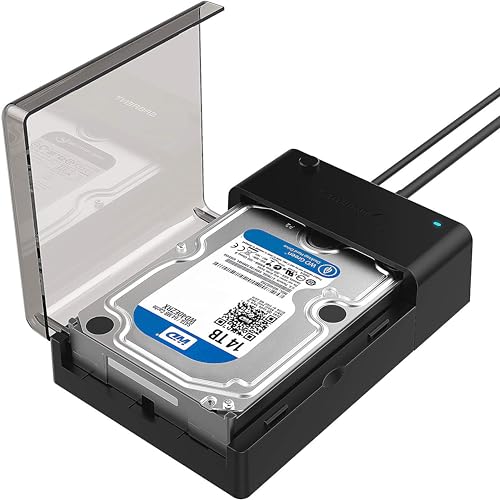
- Tool-free dock for one 2.5- or 3.5-inch SATA drive
- Includes 12V adapter for 3.5-inch HDDs
- USB-A connection; not compatible with M.2 or IDE drives
Best For: Affordable single-drive SATA access on USB-A computers
Clone and Expand

- Offline clone function works without a computer
- Two bays support 2.5- and 3.5-inch SATA drives
- Adds three USB 3.0 Type-A hub ports
Best For: Drive cloning, backups, and two-drive SATA workflows
Fast USB-C Choice

- USB-C interface rated up to 10Gbps
- Includes USB-A and USB-C-compatible cables
- Tool-free support for 2.5- and 3.5-inch SATA drives
Best For: Fast SATA access from USB-C computers
Dual-Bay Backup Tool

- Two bays support simultaneous 2.5- and 3.5-inch drive use
- Offline cloning requires no computer
- USB-C connection with UASP and 18-month warranty
Best For: Dual-drive backups, migrations, and cloning
Best Compact SATA Pick

- Supports 2.5-inch and 3.5-inch SATA drives up to 20TB
- UASP-enabled transfers up to 5Gbps
- Includes USB-C/USB-A cable and power adapter
Best For: Single-drive SATA backups and data access
Best Multi-Format Pick

- Supports 3.5-inch, 2.5-inch, and M.2 NVMe drives
- USB 3.2 Gen 2 speeds up to 10Gbps
- Works with Windows, macOS, Linux, and Android
Best For: Mixed SATA and NVMe drive access
Best Dual-Bay Pick

- Two bays support SATA drives up to 22TB each
- Offline cloning works without a computer
- Includes USB-C/USB-A cable and 36W power adapter
Best For: Dual-drive access and offline SATA cloning
Best Dual-Bay Clone Value

- Dual-bay support for 2.5- and 3.5-inch SATA drives
- Offline cloning without a computer
- USB 3.0 speeds up to 5Gbps
Best For: Affordable SATA drive access and offline cloning
Best Protected Dual-Bay Design

- Fixed bezels help stabilize inserted drives
- Offline cloning without a computer
- UASP and USB 3.0 support
Best For: Dual-bay backups with added drive stability
Best High-Capacity USB-C Option

- Supports 2.5- and 3.5-inch SATA drives
- Handles capacities up to approximately 30TB
- Tool-free USB 3.0 plug-and-play design
Best For: Large-capacity storage access and frequent drive swapping
Simple SATA Access – Single-Bay USB 3.0 Dock
If you need one of the more straightforward hard drive docking stations under 100, the SABRENT EC-DFLT provides a tool-free way to access a bare 2.5- or 3.5-inch SATA drive. Its USB 3.0 Type-A connection supports plug-and-play use, while the included 12V adapter supplies the power required by 3.5-inch drives.
Best For: Users who need an affordable single-drive dock for SATA HDDs or SSDs and have a USB-A computer port.
Pros:
- Supports both 2.5- and 3.5-inch SATA I/II/III drives.
- Tool-free, hot-swappable design with power and activity LED.
- Includes the required 12V adapter for 3.5-inch drives.
- Works with Windows 10/11, macOS, and Linux without drivers.
Cons:
- Only supports SATA drives; it does not support IDE/PATA, M.2, or SAS.
- Uses a USB Type-A host cable, so USB-C-only computers need an adapter.
- Does not pass S.M.A.R.T. diagnostics through the USB bridge.
This is a practical choice for occasional drive transfers, backups, and data recovery work, provided your drives are bare SATA models and your computer has USB-A. It is less suitable for mixed-interface storage or USB-C-first setups.
Clone and Expand – MAIWO Dual-Bay SATA Cloner
Among hard drive docking stations under 100, the MAIWO dual-bay model stands out for offline cloning and added connectivity. It accepts two 2.5- or 3.5-inch SATA drives, supports up to 48TB total according to the product description, and includes three USB 3.0 Type-A hub ports for peripherals or flash storage.
Best For: Users who regularly clone, back up, or work with two SATA drives without needing a computer connected for offline duplication.
Pros:
- Dual bays support 2.5- and 3.5-inch SATA HDDs and SSDs.
- Offline cloning works without computer drivers or a PC connection.
- Three USB 3.0 Type-A hub ports add convenient expansion.
- Includes a 12V/3A power supply for stable operation.
Cons:
- Designed for SATA drives and does not indicate support for IDE or M.2 formats.
- Uses USB Type-A rather than USB-C for the host connection.
- The two-bay design is larger and heavier than a basic single-drive dock.
The MAIWO is a strong fit for migration and backup workflows where two drives are involved. Its offline clone feature and USB hub make it more versatile than a basic reader, while the USB-A interface may require an adapter on newer computers.
Fast USB-C Choice – SABRENT 10Gbps SATA Dock
For shoppers comparing hard drive docking stations under 100 with newer computers, the SABRENT DS-UC1B offers a USB-C connection rated up to 10Gbps. It handles bare 2.5- and 3.5-inch SATA HDDs and SSDs, includes both USB-C and USB-A-compatible cables, and provides a power adapter for 3.5-inch drives.
Best For: USB-C laptop and desktop users who want a fast, tool-free dock for swapping SATA drives.
Pros:
- 10Gbps USB 3.2 Gen 2×1 interface can provide more bandwidth than USB 3.0 docks.
- Includes both USB-A and USB-C to USB-C cables.
- Supports 2.5- and 3.5-inch SATA I-and-newer drives up to 20TB and larger.
- Tool-free, hot-swappable design works with Windows, macOS, and Linux.
Cons:
- Supports SATA drives only, not M.2, IDE/PATA, or other interfaces.
- Actual transfer speeds depend on the drive and host computer.
- A 3.5-inch drive requires the included external power adapter.
This is the most convenient option here for a modern USB-C setup, especially when pairing the dock with a fast SATA SSD. Its 10Gbps interface is useful headroom, although mechanical hard drives will remain limited by their own performance.
Dual-Bay Backup Tool – BENFEI USB-C Clone Dock
The BENFEI dual-bay dock is a useful contender among hard drive docking stations under 100 for users who want both computer-connected transfers and offline cloning. It supports two 2.5- or 3.5-inch HDDs or SSDs, uses a USB-C connection rated up to 5Gbps, and includes dedicated power for running two drives.
Best For: Home users and technicians who need to copy, migrate, or manage two SATA drives with a USB-C host connection.
Pros:
- Two bays allow simultaneous use of 2.5- and 3.5-inch HDDs or SSDs.
- One-button offline cloning does not require a computer.
- 12V/2.5A adapter supports stable operation with two 3.5-inch drives.
- Includes UASP support and an 18-month warranty.
Cons:
- For offline cloning, the target drive must have greater capacity than the source.
- USB 3.2 Gen 1 speeds are rated up to 5Gbps, below the 10Gbps SABRENT model.
- The product details do not specify support for non-SATA drive formats.
BENFEI makes sense when dual-bay functionality and cloning matter more than maximum USB bandwidth. The protected power setup is helpful for two larger drives, and the USB-C host connection suits newer computers.
Best Compact SATA Pick – Aluminum One-Bay Dock
For shoppers comparing hard drive docking stations under 100, the dockteck one-bay model is a straightforward option for reading or backing up a single 2.5-inch or 3.5-inch SATA drive. It supports capacities up to 20TB, UASP transfers up to 5Gbps, and includes both USB-C and USB-A connectivity through its supplied cable.
Best For: Users who need a compact, single-drive SATA dock for Windows, macOS, Linux, or Ubuntu systems.
Pros:
- Supports 2.5-inch and 3.5-inch SATA HDDs and SSDs up to 20TB.
- UASP support enables transfer speeds up to 5Gbps on compatible systems.
- Aluminum vertical design includes heat dissipation, a dust-proof socket baffle, and a silicone anti-skid pad.
- Includes a USB-C/USB-A to Micro USB 3.0 cable and 12V/2A power adapter.
Cons:
- Only supports one drive at a time.
- Designed for SATA drives and does not list M.2 or NVMe support.
This dock is a practical fit when you want simple single-drive access without an enclosure. Its broad operating-system compatibility and dual-host cable make it flexible, while the 5Gbps ceiling is best suited to routine backups and file transfers rather than the fastest current storage workflows.
Best Multi-Format Pick – ICY BOX NVMe and SATA Dock
Among hard drive docking stations under 100, the ICY BOX stands out for combining support for 3.5-inch HDDs, 2.5-inch SSDs, and M.2 NVMe SSDs in one single-bay reader. Its USB 3.2 Gen 2 interface is rated for up to 10Gbps, making it a versatile choice for mixed-drive work.
Best For: Users who regularly work with both traditional SATA drives and M.2 NVMe SSDs across Windows, macOS, Linux, and Android devices.
Pros:
- Reads 3.5-inch HDDs, 2.5-inch SSDs, and M.2 NVMe SSDs.
- USB 3.2 Gen 2 and JMS581DL chipset support speeds up to 10Gbps.
- Screwless open-vertical design allows quick drive swaps and airflow around the drive.
- Includes an 80cm USB-C-to-C+A cable for USB-C and USB-A hosts.
Cons:
- It is a single-bay dock, so it cannot operate two drives simultaneously.
- The supplied notes do not specify a maximum supported storage capacity.
The ICY BOX is the most flexible option here if your drive collection spans multiple formats. Its 10Gbps interface can reduce transfer bottlenecks with compatible hardware, while the tool-free design keeps occasional drive testing and upgrades convenient.
Best Dual-Bay Pick – RSHTECH Offline Clone Dock
If you need more capacity and drive-to-drive flexibility, the RSHTECH is a strong contender among hard drive docking stations under 100. Its dual bays accept 2.5-inch and 3.5-inch SATA HDDs or SSDs up to 22TB each, and its offline clone function can duplicate a drive without a computer.
Best For: Users who need to access two SATA drives or clone an existing drive independently of a computer.
Pros:
- Dual bays support 2.5-inch and 3.5-inch SATA drives up to 22TB.
- Offline cloning can copy one drive to another without a computer connection.
- Includes a detachable 3.3-foot USB-A/USB-C cable for compatible hosts.
- Aluminum housing, semi-open construction, and a 36W power adapter support durability, cooling, and stable operation.
Cons:
- Offline cloning is for compatible SATA drives and requires a suitable target drive.
- Its listed transfer performance depends on UASP support from the connected devices.
- It is larger and heavier than a basic one-bay dock.
This model is the practical choice when one bay is not enough. Dual-drive access and offline cloning add useful backup and upgrade capabilities, while the USB-C/USB-A cable helps it connect to newer and older computers, consoles, and other supported hosts.
Best Dual-Bay Clone Value – FIDECO SATA Hard Drive Dock
For shoppers comparing hard drive docking stations under 100, the FIDECO dual-bay dock is a practical choice for accessing two 2.5- or 3.5-inch SATA drives. It combines USB 3.0 transfer speeds with a computer-free offline cloning function.
Best For: Users who need an affordable dual-bay SATA dock for drive access, backups, or offline cloning.
Pros:
- Supports two 2.5- or 3.5-inch SATA HDDs or SSDs simultaneously.
- Offline cloning works without a computer.
- USB 3.0 supports transfer rates up to 5Gbps.
- Plug-and-play compatibility with Windows, macOS, and Linux.
Cons:
- Supports SATA drives only.
- New drives may need initialization before the computer recognizes them.
The FIDECO stands out when dual-drive access and offline cloning matter more than broad interface support. Its included power adapter and USB cable make it a ready-to-use option for routine storage tasks.
Best Protected Dual-Bay Design – WAVLINK SATA Drive Dock
Among hard drive docking stations under 100, the WAVLINK dual-bay model offers a stable way to access and duplicate 2.5- and 3.5-inch SATA drives. Its fixed bezels help protect and steady inserted drives while USB 3.0 and UASP support efficient transfers.
Best For: Users who want dual-bay storage access with fixed drive bezels and offline cloning.
Pros:
- Supports SATA I, II, and III 2.5- and 3.5-inch HDDs and SSDs.
- Offline cloning operates without a computer.
- UASP support is designed to improve USB 3.0 transfer performance.
- Works with Windows, macOS, Chrome OS, Linux, and compatible Android devices.
Cons:
- Offline cloning requires the target drive to have capacity equal to or greater than the source.
- Compatibility is limited to SATA interfaces.
The WAVLINK is a well-rounded pick for backup workflows that benefit from two bays and added drive stability. Its included USB-C adapter also provides flexibility for newer computers.
Best High-Capacity USB-C Option – ICY BOX Dual-Bay Dock
For those comparing hard drive docking stations under 100, the ICY BOX dual-bay dock is aimed at flexible, high-capacity storage access. It accepts 2.5- and 3.5-inch SATA drives, supports USB 3.0 with UASP, and provides tool-free offline cloning.
Best For: Users handling multiple SATA drive formats, large storage volumes, and frequent plug-and-play access.
Pros:
- Works with both 2.5- and 3.5-inch SATA HDDs and SSDs.
- Supports large-capacity drives up to approximately 30TB.
- Tool-free design requires no screws or drivers.
- Compatible with Windows, macOS, and Linux.
Cons:
- Its stated 5Gbps USB 3.0 performance may be below the maximum SATA III interface rate.
- The supplied notes do not specify included accessories or a warranty.
The ICY BOX is especially appealing for users who rotate drives often or manage large media and backup libraries. Its broad operating-system support and tool-free design keep everyday access straightforward.
How We Picked the Best Hard Drive Docking Stations Under 100
We focused on docks priced below $100 that support common 2.5-inch and 3.5-inch SATA hard drives or SSDs. We also considered connection type, advertised USB speed, UASP support, dual-bay flexibility, offline cloning, power requirements, and compatibility with modern computers. Models with unusual extras, such as M.2 NVMe support or integrated USB hubs, were included when those features add practical value.
Specifications can vary by computer, cable, drive, and operating system. A USB 3.x label does not guarantee maximum throughput, and offline cloning generally requires compatible source and destination drives with no computer-based file management during the clone.
Quick Comparison
| Best For | Look For | Typical Advantage |
|---|---|---|
| Basic drive access | Single-bay SATA dock | Lower cost and simpler setup |
| Cloning or drive-to-drive work | Dual bays with offline clone | Fewer cables and no cloning software required |
| Newer laptops | USB-C and UASP | Convenient connection and better queue handling |
| Mixed storage projects | SATA plus M.2 NVMe support | One dock for more drive formats |
Key Buying Factors for Hard Drive Docking Stations Under 100
Drive Compatibility
Confirm the dock accepts both the physical size and interface of your drives. Most models here handle 2.5-inch and 3.5-inch SATA drives, while M.2 support is limited to specific NVMe or SATA formats. M.2 keying and protocol compatibility matter, so check the manufacturer’s details before buying.
Bay Count and Cloning
A single bay is adequate for occasional file transfers or drive recovery. Choose a dual-bay dock if you regularly copy between drives, compare disks, or clone an existing system. Offline cloning is convenient, but it usually copies the source drive to the destination rather than selectively moving files.
Connection Speed and Ports
USB 3.0 or USB 3.2 Gen 1 is suitable for many hard drives, while 10Gbps USB-C models can better serve SATA SSDs. The slowest component—the drive, dock, cable, or host port—sets real-world performance. UASP support can improve transfer efficiency when the computer and operating system also support it.
Power and Capacity
3.5-inch desktop drives typically require an external power adapter; portable 2.5-inch drives may also benefit from stable powered docking. Advertised capacity limits are worth checking when using high-capacity disks or multiple drives, although compatibility can depend on firmware and the host system.
Who Should Buy Which Hard Drive Docking Stations Under 100?
Choose a compact single-bay SATA dock for occasional backups, data recovery, or accessing spare drives. A dual-bay model is the better fit for home technicians, PC builders, and anyone who clones or migrates drives frequently. USB-C models make the most sense for newer laptops, while USB-A options remain practical for desktops and older systems. If your storage collection includes both M.2 NVMe and standard SATA drives, an all-in-one compatible dock can reduce accessory clutter—provided its M.2 protocol and size support match your SSDs.