Photographers often need a faster way to access archived drives, copy a full photo library, or move images between SATA HDDs and SSDs without installing them inside a computer. A hard drive docking station can turn loose internal drives into convenient external storage.
These 10 options cover dual-bay docks, five-bay enclosures, offline cloning models, USB-C connectivity, and useful extras such as integrated USB hubs. The right choice depends on your drive collection, transfer workflow, and backup habits.
Best 10 Hard Drive Docking Stations for Photo Storage Picks for 2026
Flexible Clone-and-Store Pick
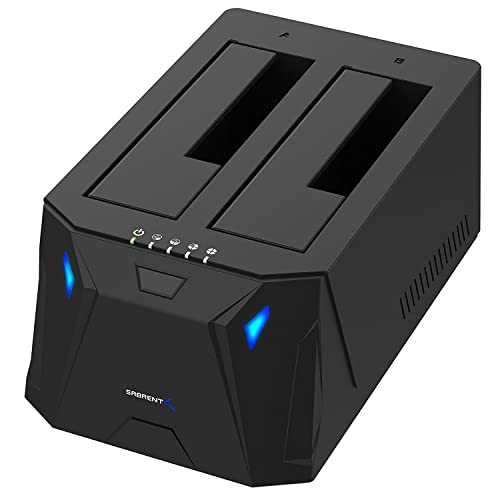
- Dual bays for 2.5-inch and 3.5-inch SATA drives
- Offline cloning without a computer
- USB 3.0 connectivity up to 5Gbps
Best For: Photographers rotating two SATA drives or cloning a photo backup
High-Capacity Archive Choice
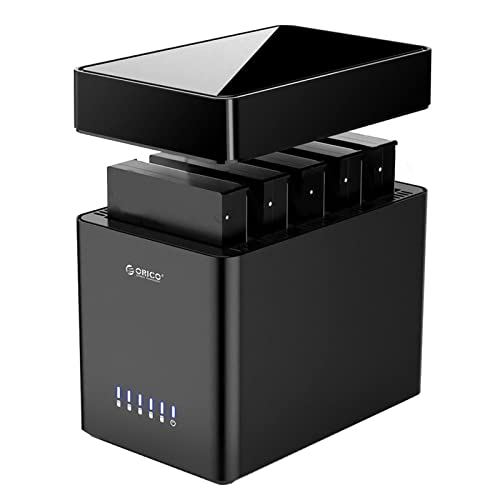
- Five bays support up to 110TB total
- Tool-free magnetic cover
- Fan-assisted cooling and data protections
Best For: Large desktop photo archives and multi-drive backups
Simple Single-Drive Option
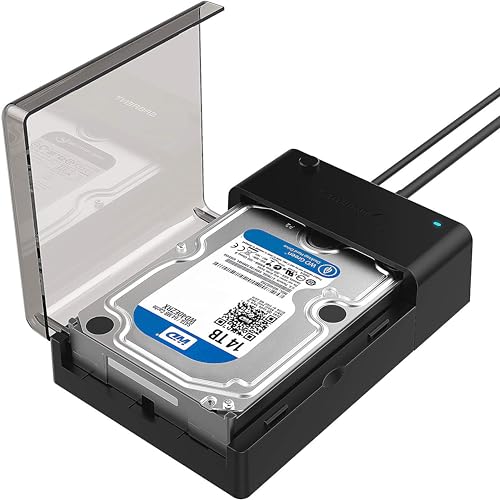
- Tool-free access to one SATA drive
- Supports 2.5-inch and 3.5-inch formats
- Plug-and-play with hot swapping
Best For: Single-drive photo transfers and basic SATA drive access
Versatile Cloning Pick

- Offline cloning with a dedicated button
- Supports up to 44TB across two SATA drives
- UASP and USB 3.0 connectivity
Best For: Drive duplication, photo backups, and cross-device transfers
Best Dual-Bay Value

- Dual-bay access for 2.5- and 3.5-inch SATA drives
- USB 3.0 speeds up to 5Gbps with UASP
- Offline cloning without a computer
Best For: Affordable dual-drive photo storage workflows
Best USB-C Workflow

- Two drives mount separately over USB-C
- Tool-free support for 2.5- and 3.5-inch SATA media
- Offline cloning with no computer required
Best For: USB-C photo transfers and drive duplication
Best High-Capacity Setup

- Five bays for simultaneous SATA drive access
- Stated support for up to 120TB of expansion
- Offline clone progress display with audible alerts
Best For: Large photo archives and multi-drive desktop workflows
Best Dual-Bay Clone Dock

- Two bays support 2.5-inch and 3.5-inch SATA drives
- Offline cloning requires no computer
- USB 3.0 with UASP and included USB-C adapter
Best For: Photographers needing straightforward dual-drive backups and cloning
Best High-Capacity Hub Dock

- Supports up to 48TB across two SATA bays
- Includes offline cloning with progress LEDs
- Adds three USB 3.0 hub ports
Best For: Large photo archives and setups needing extra USB ports
Best Professional Hot-Swap Dock

- Supports SATA HDDs and SSDs of any capacity
- Independent power controls simplify hot swapping
- Backed by a two-year warranty and technical support
Best For: Frequent drive rotation and professional backup workflows
Flexible Clone-and-Store Pick – SABRENT Dual Bay Dock
For photographers who need flexible hard drive docking stations for photo storage, the SABRENT EC-HD2B provides two bays for bare 2.5-inch or 3.5-inch SATA drives and SSDs. It supports plug-and-play access, USB 3.0 transfer speeds up to 5Gbps, and offline cloning without requiring a computer.
Best For: Photographers who rotate two SATA drives or want a straightforward offline cloning option.
Pros:
- Accepts both 2.5-inch and 3.5-inch SATA HDDs and SSDs.
- Supports up to 10TB per drive and 20TB total storage capacity.
- Offers offline cloning and plug-and-play operation without drivers.
Cons:
- Supports SATA drives, so it is not a universal dock for every drive type.
- Offline cloning is rated at up to 60Mbps, slower than its USB 3.0 interface maximum.
The dual-bay design makes this a useful choice for moving photo libraries between bare drives or creating a duplicate. Its combination of broad SATA form-factor support and cloning features adds versatility for home storage workflows.
High-Capacity Archive Choice – ORICO 5-Bay Enclosure
For large photo libraries, the ORICO 5-bay enclosure is among the more expansive hard drive docking stations for photo storage. It holds up to five 2.5-inch or 3.5-inch SATA drives, supports up to 110TB total capacity, and adds active cooling for drives running during extended transfers.
Best For: Photographers building a high-capacity desktop archive for photos, videos, and backups.
Pros:
- Supports five SATA HDDs or SSDs, with up to 110TB total capacity.
- Tool-free magnetic cover enables quick drive installation.
- Includes a 60mm fan, ventilation openings, and multiple protection features.
Cons:
- Its larger five-bay enclosure takes more desk space than a single-drive dock.
- On Linux, the supplied notes state that only one hard drive can be read at a time.
- Uses USB 3.0, so connected drives share the enclosure’s interface bandwidth.
This enclosure is best suited to a stationary storage setup rather than quick, occasional drive swapping. Its five bays and 110TB capacity make it a practical foundation for consolidating a growing photo archive.
Simple Single-Drive Option – SABRENT EC-DFLT Dock
The SABRENT EC-DFLT is a compact choice among hard drive docking stations for photo storage when you only need to access one bare SATA drive at a time. Its tool-free lay-flat bay supports 2.5-inch and 3.5-inch SATA HDDs and SSDs, with plug-and-play operation and hot swapping.
Best For: Photographers who need an uncomplicated reader for one bare SATA drive at a time.
Pros:
- Works with SATA I, II, and III 2.5-inch and 3.5-inch drives.
- Tool-free design supports quick drive swaps without rebooting.
- Includes a 12V/2A adapter required for stable 3.5-inch drive operation.
Cons:
- Only supports one drive at a time.
- Uses a USB Type-A host cable; USB-C-only computers require an adapter.
- Does not support IDE/PATA, M.2 NVMe, M.2 SATA, or SAS drives.
This dock keeps the workflow simple for importing, reviewing, or backing up photos from a bare SATA drive. Confirm your drive connector and computer ports before buying, especially if your computer has only USB-C connections.
Versatile Cloning Pick – ORICO Dual-Bay Dock
The ORICO dual-bay dock combines quick access to bare SATA drives with an offline cloning function, making it a versatile option among hard drive docking stations for photo storage. It supports 2.5-inch and 3.5-inch drives up to 22TB each, UASP, and USB 3.0 transfer rates up to 5Gbps.
Best For: Photographers who want to duplicate a photo drive without connecting the dock to a computer.
Pros:
- Supports two 2.5-inch or 3.5-inch SATA drives with up to 44TB total capacity.
- Offline cloning is started with a dedicated button and requires no computer.
- Supports UASP, tool-free hot swapping, and multiple operating systems.
Cons:
- The target disk must be larger than the source disk for offline cloning.
- It requires an inserted hard drive to power on, according to the supplied notes.
- Its included cable is USB-A, which may require an adapter for USB-C-only computers.
This model is a strong fit for photographers who regularly duplicate drives for backup or migration. The independent power supply and dual-bay layout also make routine transfers more convenient, while the cloning size requirement should be checked before starting a duplicate.
Best Dual-Bay Value – FIDECO SATA HDD Dock
For photographers building a flexible workflow around hard drive docking stations for photo storage, the FIDECO dual-bay dock provides a straightforward way to connect two bare 2.5-inch or 3.5-inch SATA drives. USB 3.0, UASP, plug-and-play operation, and offline cloning make it useful for moving or duplicating photo libraries without installing drives in an enclosure.
Best For: Photographers who need an affordable dual-bay SATA dock for reading two drives or cloning one drive to another.
Pros:
- Supports two 2.5-inch or 3.5-inch SATA HDDs or SSDs simultaneously.
- Offers USB 3.0 transfer speeds up to 5Gbps and UASP support.
- Performs offline drive cloning without a computer.
- Works with Windows, Mac OS, and Linux, with no driver required.
Cons:
- Supports SATA drives only; IDE/PATA and other interfaces are not supported.
- New drives may need to be initialized before the computer recognizes them.
The FIDECO is a practical choice when two-bay access and simple offline cloning matter more than advanced connectivity. Confirm that your photo-storage drives are SATA before ordering.
Best USB-C Workflow – SABRENT Dual-Bay Drive Dock
The SABRENT EC-CH2B is a useful pick among hard drive docking stations for photo storage if your computer has USB-C. Its two bays appear as separate drives, allowing you to move files between them or work from both, while the offline cloner handles one-to-one duplication without a connected computer.
Best For: USB-C laptop and desktop users who regularly transfer photo files between two bare SATA drives or create drive copies.
Pros:
- Reads and writes two drives at once as separate volumes when connected to a computer.
- Supports tool-free, hot-swappable 2.5-inch and 3.5-inch SATA HDDs and SSDs.
- Includes a USB-C cable and offers plug-and-play operation on Windows and Mac.
- Provides offline cloning at up to 60MBps without a computer.
Cons:
- Requires a computer with USB-C unless you supply a USB-C-to-USB-A cable.
- Does not support IDE/PATA, M.2, NVMe, or drives with 4-pin Molex power connectors.
- Actual file-transfer performance depends on the installed drives.
Choose this dock for a clean USB-C-based photo workflow and convenient two-drive access. Its compatibility limits are clear, so verify both your host port and drive interface first.
Best High-Capacity Setup – MAIWO 5-Bay SATA Dock
For large photo archives, the MAIWO five-bay dock is designed for a multi-drive desktop workflow. It can read and write five 2.5-inch or 3.5-inch SATA drives simultaneously, supports up to 120TB of expansion according to the product notes, and includes offline cloning with a visible progress display.
Best For: Photographers, studios, and archival workflows that need to manage several bare SATA drives from one station.
Pros:
- Five bays support simultaneous reading and writing across multiple SATA HDDs or SSDs.
- Supports up to 120TB of stated storage expansion across five drives.
- Provides USB 3.0 speeds up to 5Gbps with UASP support.
- Offline cloning includes a 0%-100% digital progress display and completion alerts.
Cons:
- Its five-bay design is substantially larger than a two-bay dock.
- Supports SATA I, II, and III drives only; other drive formats are not listed as compatible.
- Cloning and multi-drive use require the included 12V/6.5A power adapter.
The MAIWO makes the most sense when a growing image archive justifies multiple drive slots and a larger desktop footprint. It is overkill for occasional single-drive transfers but compelling for organized, high-volume storage work.
Best Dual-Bay Clone Dock – WAVLINK Dual-Bay SATA Dock
The WAVLINK dual-bay dock is a practical choice among hard drive docking stations for photo storage when you need to access two SATA drives and occasionally clone one drive to another without a computer. Its USB 3.0 connection, UASP support, and protective fixed bezels suit routine backups and file transfers.
Best For: Photographers and home users who want dual-drive access plus offline cloning for backup workflows.
Pros:
- Supports two 2.5-inch or 3.5-inch SATA HDDs or SSDs, up to 20TB per bay.
- Offline clone function works without connecting to a computer.
- USB 3.0 with UASP supports up to 5Gbps transfer rates and includes a USB-C adapter.
- Tool-free, hot-swappable design works with Windows, Mac, Chrome OS, Linux, and Android devices with OTG.
Cons:
- The target drive must have capacity equal to or greater than the source for offline cloning.
- It supports SATA drives only; an IDE adapter is not listed.
Choose this model if simple two-drive backup and standalone cloning matter more than extra USB hub ports. The fixed bezels also add stability when working with bare drives.
Best High-Capacity Hub Dock – MAIWO 48TB SATA Cloner
The MAIWO dock combines two SATA drive bays with three USB 3.0 hub ports, making it one of the more versatile hard drive docking stations for photo storage. It is designed for large-capacity drives, offline cloning, and convenient access to connected peripherals.
Best For: Users managing large photo archives who also want built-in USB expansion for flash drives and other accessories.
Pros:
- Supports 2.5-inch and 3.5-inch SATA drives up to 24TB per bay, for 48TB total.
- Offline cloning operates without drivers or a computer, with LED progress indicators.
- Three USB 3.0 Type-A hub ports add connectivity for flash drives and other devices.
- Includes an independent 12V/3A power supply for stable operation.
Cons:
- USB transfer bandwidth is rated at up to 5Gbps rather than a faster USB standard.
- The product uses USB Type-A host connectivity, which may require an adapter for some newer computers.
This is a strong fit for expanding a desktop photo-storage setup without adding a separate USB hub. Its high stated capacity and clone indicators are useful for planned archive migrations.
Best Professional Hot-Swap Dock – StarTech Dual-Bay SATA Dock
The StarTech dual-bay dock is a durable, straightforward option among hard drive docking stations for photo storage, offering quick access to bare 2.5-inch and 3.5-inch SATA drives. Independent bay power controls and tool-less hot swapping make it useful for organized backup, imaging, and transfer tasks.
Best For: IT-conscious photographers and professionals who regularly rotate SATA drives or manage multiple backup disks.
Pros:
- Supports 2.5-inch and 3.5-inch SATA I/II/III HDDs and SSDs of any capacity.
- Independent power buttons allow an idle drive to be swapped while the other bay remains in use.
- Tool-less, tray-less bays provide convenient hot swapping and eject buttons.
- Includes a two-year warranty and lifetime 24/5 multilingual technical assistance.
Cons:
- USB 3.2 Gen 1 host connectivity is limited to 5Gbps.
- IDE drives require a separately sold adapter.
- The supplied connection is USB-A, which may need an adapter with newer USB-C-only computers.
For frequent drive rotation, this StarTech model emphasizes control and durability rather than extra hub features. Its broad SATA compatibility and independent bay controls make it a dependable choice for structured photo-backup routines.
How We Picked the Best Hard Drive Docking Stations for Photo Storage
We focused on practical features for photographers and content creators: compatibility with 2.5-inch and 3.5-inch SATA drives, the number of bays, connection type, cloning support, capacity considerations, and ease of swapping drives. The selection includes simple single-bay docks, dual-bay models for working and backup drives, and five-bay options for larger archives.
We also considered useful workflow features such as offline cloning, USB hub expansion, fixed drive bezels, and support for both HDDs and SSDs. A dock should make drive access more convenient without adding unnecessary complexity to a photo-storage setup.
Quick Comparison
| Best For | Recommended Type | Why It Matters |
|---|---|---|
| Occasional drive access | Single-bay dock | Simple, compact, and usually the least expensive option |
| Active photo workflows | Dual-bay dock | Lets you access multiple drives or clone one drive to another |
| Large archives | Five-bay enclosure or dock | Provides room for multiple SATA drives in one setup |
| Fast modern laptops | USB-C model | Matches newer computers and compatible ports |
| Drive-to-drive backups | Offline cloner | Can copy a source drive without a computer |
Key Buying Factors for Hard Drive Docking Stations for Photo Storage
Drive Compatibility and Bay Count
Confirm that the dock supports the drives you own. Most models here accept SATA 2.5-inch laptop drives and 3.5-inch desktop drives, but bay layouts differ. Dual-bay docks suit photographers who rotate a working drive and backup drive, while five-bay models are better for extensive archives.
Connection Speed and Computer Ports
USB 3.0 is adequate for many hard drives and offers a straightforward connection to older computers. USB-C can be more convenient for newer laptops, but check whether the dock’s actual data standard and included cable match your computer. The connector shape alone does not guarantee faster transfers.
Cloning and Backup Workflow
Offline cloning is useful when you want a direct drive-to-drive copy, but it is not a substitute for a complete backup strategy. Cloning generally requires a destination drive at least as large as the source, and the destination’s existing data may be erased. Always verify the source and target before starting.
Power, Cooling, and Capacity
3.5-inch desktop drives require more power than 2.5-inch drives, so use the supplied adapter and place multi-bay units where airflow is unobstructed. Check the manufacturer’s stated capacity support if you plan to use high-capacity archive drives.
Who Should Buy Which Hard Drive Docking Stations for Photo Storage?
Choose a single-bay model if you occasionally retrieve photos from bare drives and want the simplest setup. A dual-bay dock is the better all-around choice for photographers who regularly copy, compare, or clone drives. Pick a USB-C version when your primary computer relies on USB-C connections. For a growing archive spread across several drives, a five-bay model can reduce cable clutter and make drive organization easier. If you need convenient direct backups, prioritize an offline cloner, then pair it with a separate backup kept away from the primary workspace.