When it comes to music production, the right AD/DA converter can make all the difference in your sound quality. You might think that any converter will do, but the specifics matter. From budget options to high-end gear, each converter brings unique features to the table. Let’s explore some of the top choices on the market and discover which one will elevate your audio setup to new heights.
Behringer ADA8200 Audiophile ADAT Audio Interface

The Behringer ADA8200 Audiophile ADAT Audio Interface is an excellent choice for musicians and producers seeking high-quality audio conversion without breaking the bank. With eight channels of microphone preamplification and Midas mic preamps, it delivers impressive sound clarity. The 24-bit AD/DA converter guarantees your recordings maintain pristine quality, supporting 44.1 and 48kHz sampling rates. Plus, the ADAT optical output allows for seamless integration with your existing setup. Weighing only 6.39 pounds and measuring 21.06 x 12.20 x 4.53 inches, it’s portable enough for any studio. Elevate your sound quality and enhance your music production experience with the ADA8200.
Best For: Musicians and producers seeking high-quality audio conversion at an affordable price.
Pros:
- Delivers impressive sound clarity with Midas mic preamps.
- Supports 24-bit AD/DA conversion and common sampling rates (44.1/48kHz).
- Portable design, making it suitable for both studio and on-the-go use.
Cons:
- Limited to ADAT optical output, which may not suit all setups.
- No built-in effects or processing capabilities.
- May require additional equipment for optimal performance in larger setups.
Solid State Logic Alpha 8 High-Performance AD and DA Converter

If you’re a music producer looking for high-quality audio conversion, the Solid State Logic Alpha 8 High-Performance AD and DA Converter stands out with its impressive 32-bit, 192 kHz converters. This 8 x 8 converter supports analogue, ADAT, and USB I/O, enhancing your audio interface capabilities. You’ll appreciate the dynamic range of 120 dB input and 123 dB output, ensuring pristine sound. With adjustable operating levels and superior signal integrity, it maximizes headroom for your devices. Compatible with macOS and Windows, the Alpha 8 is a solid investment for any serious producer aiming to elevate their sound quality.
Best For: Music producers seeking high-quality audio conversion with advanced features and flexibility.
Pros:
- Exceptional Conversion Quality: Utilizes 32-bit and 192 kHz converters for superior audio fidelity.
- Flexible Connectivity: Supports analogue, ADAT, and USB I/O, allowing for versatile integration with various setups.
- High Dynamic Range: Offers a dynamic range of 120 dB input and 123 dB output, ensuring clear and detailed sound reproduction.
Cons:
- Weight: At 12.74 pounds, it may be less portable compared to lighter alternatives.
- Price Point: Potentially higher cost may not fit all budgets, especially for entry-level users.
- Limited Compatibility: Requires macOS 13 or later or Windows 10 or later, which may exclude some older systems.
RME AD Converter (ADI2DAC)

For musicians and audio engineers seeking top-tier sound quality, the RME AD Converter (ADI2DAC) stands out with its high-end DA conversion capabilities. Its adapted analog output stage greatly reduces noise and distortion, ensuring pristine audio clarity. With a lock range of 28 kHz to 200 kHz and jitter suppression exceeding 50 dB, you’ll experience exceptional performance metrics. Plus, it accepts both consumer and professional formats, making it versatile for any setup. The dual headphone IEM outputs cater to diverse listening needs, while the included remote control adds convenience. Elevate your sound quality with this remarkable converter!
Best For: Musicians and audio engineers seeking high-end sound quality and versatile listening options.
Pros:
- Exceptional audio performance with reduced noise and distortion.
- Wide compatibility with both consumer and professional audio formats.
- Convenient remote control and dual headphone outputs for flexible listening.
Cons:
- Higher price point relative to standard converters.
- May require additional setup for optimal performance in certain configurations.
- Limited availability in some regions, potentially affecting accessibility.
Scosche LOC2SL Line Output Converter for Car Audio
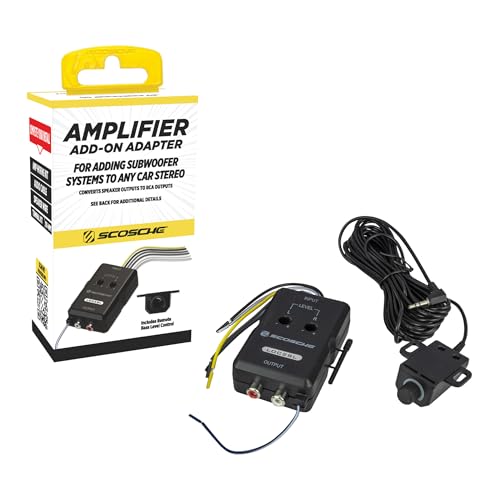
Looking to elevate your car audio experience? The Scosche LOC2SL Line Output Converter is a game-changer. This compact, durable unit connects your factory stereo to aftermarket amplifiers seamlessly, preserving sound quality while delivering robust bass. With its easy installation, you’ll save time and effort, making it ideal for tight spaces. Users rave about the crisp sound and the remote control knob for quick bass adjustments. Although some faced minor battery drainage issues, modifications can resolve that. Overall, it’s a trusted choice for audiophiles wanting high-fidelity sound in their vehicles. Upgrade your ride’s audio performance effortlessly!
Best For: Audiophiles and car audio enthusiasts seeking a high-fidelity sound upgrade without replacing the entire system.
Pros:
- Seamless integration with factory stereos for enhanced sound quality.
- Compact design allows for easy installation in tight spaces.
- Remote control knob provides convenient bass adjustments on-the-fly.
Cons:
- Some users reported battery drainage issues linked to the device.
- Installation experiences can vary, with some users finding it challenging.
- Specific wiring modifications may be necessary to prevent potential problems.
Prism Sound Lyra 2 2 x 4 USB Audio Interface
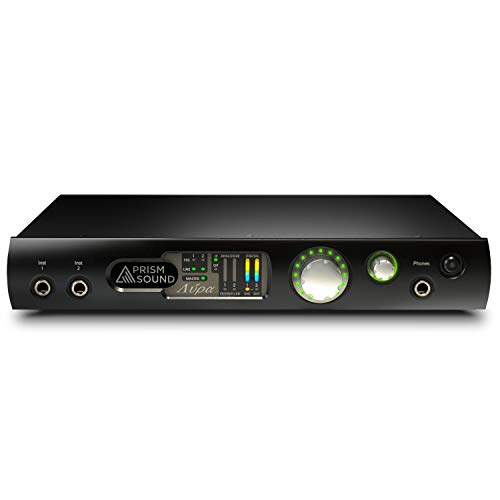
The Prism Sound Lyra 2 2 x 4 USB Audio Interface stands out as an excellent choice for musicians and producers who demand exceptional audio quality in a compact design. With its reference-grade AD/DA converters, you’ll experience pristine digital audio, perfect for vocal sessions and overdubs. It features two mic/line/instrument preamps, a headphone output, and S/PIDF and ADAT I/O for flexible connectivity. The ultra-stable clocking guarantees high fidelity, while the intuitive software control offers advanced features like M/S functions and soft clipping. Renowned in the industry, Prism Sound assures you’re investing in first-rate digital audio technology.
Best For: Musicians and producers seeking high-quality audio performance in a portable interface.
Pros:
- Pristine audio quality with reference-grade AD/DA converters for superior sound fidelity.
- Compact and portable design makes it ideal for small project studios and traveling producers.
- Intuitive software control with advanced features like M/S functions and soft clipping for enhanced recording options.
Cons:
- Limited number of inputs/outputs (2-in/4-out) may not meet the needs of larger setups.
- Higher price point compared to some entry-level audio interfaces.
- Potential learning curve for users unfamiliar with advanced features and software control.
DigitalLife USB 2.0 Audio Capture Card Grabber

Designed specifically for music enthusiasts and content creators, the DigitalLife USB 2.0 Audio Capture Card Grabber offers a seamless way to convert analog audio into digital format. With dual input options, you can easily connect your turntables or mixers using RCA or a 3.5mm plug. Just remember, only one input can be active at a time. It’s compatible with popular audio software like Audacity, making it perfect for digitizing vinyl records or cassette tapes. Plus, it works on various operating systems, ensuring you’ve got support when you need it, including 24/7 customer service for two years after purchase.
Best For: Music enthusiasts, content creators, and educators looking to digitize analog audio.
Pros:
- Versatile Input Options: Connects to turntables and mixers via RCA or 3.5mm plug for flexible audio capture.
- Wide Software Compatibility: Works seamlessly with popular audio editing software like Audacity for quality digitization.
- Excellent Customer Support: Comes with 2 years of after-sales service and 24/7 customer support for peace of mind.
Cons:
- Single Input Limitation: Only one input can be used at a time, which may require switching connections frequently.
- Not Compatible with ChromeOS or GarageBand: Limits usability for users relying on these platforms.
- Microphone Access Required on macOS: Additional setup needed for proper functionality on macOS systems.
Audio Converter – Easy Audio Editing Software for Windows
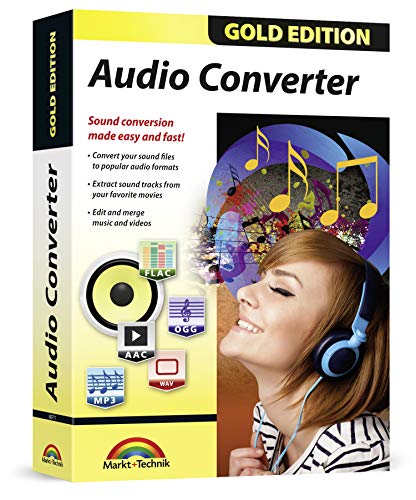
For musicians and audio enthusiasts needing a straightforward solution to edit and convert sound files, Audio Converter stands out with its compatibility across various Windows versions. You can easily convert audio or video files into nearly any format, whether it’s MP3, WAV, or AAC. The software allows you to trim, merge, and adjust sample rates effortlessly. Plus, it supports a wide range of input formats, ensuring flexibility in your projects. With its user-friendly interface and free tech support, you’ll find that this tool enhances your audio editing experience, making it a valuable addition to your music production toolkit.
Best For: Musicians and audio enthusiasts seeking a straightforward solution for editing and converting sound files across various Windows platforms.
Pros:
- User-friendly interface makes audio editing accessible for all skill levels.
- Supports a wide range of input formats, providing flexibility for diverse projects.
- Free tech support available to assist users with any issues.
Cons:
- Limited to Windows operating systems, excluding Mac and Linux users.
- Some advanced features may be lacking compared to professional audio editing software.
- May experience slower performance with larger audio or video files.
2 Pcs High to Low Speaker Impedance Converter Audio Signal Adapter

If you’re looking to connect high-impedance speakers to low-impedance audio systems, the 2 Pcs High to Low Speaker Impedance Converter Audio Signal Adapter is an ideal choice. This adapter seamlessly integrates high-impedance speakers with low-impedance audio setups, ensuring compatibility and enhancing your sound experience. It maintains the integrity of audio signals, minimizing distortion while preserving clarity for a rich, balanced output. Installation is a breeze, allowing you to quickly upgrade your existing audio systems. Plus, its universal compatibility works with various audio devices, making it a flexible solution for both home and automotive applications. Enjoy peak performance effortlessly!
Best For: Audiophiles and users looking to connect high-impedance speakers to low-impedance audio systems for enhanced sound quality.
Pros:
- Seamless integration allows high-impedance speakers to connect effortlessly to low-impedance audio systems.
- Minimizes distortion and preserves audio clarity for a balanced and rich sound experience.
- Universal compatibility with various audio devices makes it ideal for both home and automotive applications.
Cons:
- No specific matching model means users need to verify compatibility based on wiring, size, or shape.
- Some users may find the installation process challenging if they are not familiar with audio equipment.
- Limited documentation may leave some users seeking additional guidance for optimal setup.
PROZOR Digital to Analog Audio Converter and Bluetooth Adapter

The PROZOR Digital to Analog Audio Converter and Bluetooth Adapter is perfect for anyone looking to bridge the gap between modern digital devices and traditional audio equipment. It converts optical, coaxial, and Bluetooth signals into stereo RCA and 3.5mm audio outputs, making it ideal for connecting to legacy amplifiers. With its built-in Bluetooth 5.0, you can enjoy lossless wireless audio within a 50-65ft range. The high-performance DAC chip supports 192K/24bit sampling, ensuring excellent sound quality. Plus, its user-friendly design features plug-and-play functionality and an automatic Bluetooth switch, making setup a breeze for various audio applications.
Best For: Anyone looking to connect modern digital audio devices to legacy amplifiers for high-quality sound experiences.
Pros:
- High-quality audio performance with 192K/24bit sampling rate for excellent sound clarity.
- Built-in Bluetooth 5.0 allows for stable wireless connections to mobile devices within a 50-65ft range.
- User-friendly design with plug-and-play functionality and automatic Bluetooth mode switching for easy setup.
Cons:
- Limited input options with only one optical and one coaxial input available.
- Bluetooth range may be affected by physical obstructions in indoor environments.
- Requires power source for operation, which may limit placement options.
Bullz Audio (BLC08) Line Output Convertor

Designed for musicians and audio engineers seeking reliable sound conversion, the Bullz Audio (BLC08) Line Output Converter stands out with its gain control feature. Weighing just 2.85 ounces and measuring 8 x 3.75 x 1.75 inches, it’s compact and easy to integrate into any setup. Although it has an average rating of 2.2 stars, its functionality as a recording signal converter is notable. The BLC08 is available through Amazon with a 30-day return policy, allowing you to try it risk-free. Elevate your sound quality today by considering the Bullz Audio BLC08 for your audio needs.
Best For: Musicians and audio engineers seeking a compact and reliable line output converter with gain control for their audio setups.
Pros:
- Compact and lightweight design makes it easy to integrate into various audio setups.
- Gain control feature allows for better sound customization and management.
- 30-day return policy gives customers the option to try the product risk-free.
Cons:
- Average rating of 2.2 stars indicates mixed customer satisfaction and potential performance issues.
- Limited customer feedback may raise concerns about reliability and quality.
- Not the best seller in its category, suggesting competition with more highly-rated alternatives.
Factors to Consider When Choosing Ad Da Converters for Music Production
When you’re choosing AD/DA converters for music production, several key factors come into play. You’ll want to contemplate conversion quality, device compatibility, and the options for input and output configurations. Don’t forget to take into account dynamic range, latency, and jitter performance to guarantee your setup meets your needs.
Conversion Quality and Precision
Choosing the right AD/DA converters for music production hinges on understanding various factors that influence conversion quality and precision. First, consider the bit depth and sample rate; higher values like 24-bit and 192 kHz enhance dynamic range and fidelity. Look for a dynamic range around 120 dB, which guarantees your converter accurately processes both quiet and loud sounds. Pay attention to Total Harmonic Distortion plus Noise (THD+N); lower values, such as -110 dB, signify cleaner audio. The analog output stage also plays a vital role in minimizing distortion and enhancing sound performance. Finally, prioritize jitter suppression; effective converters maintain levels greater than 50 dB, guaranteeing stable signal processing and preserving audio integrity throughout the conversion process.
Compatibility With Devices
Understanding conversion quality and precision sets the foundation for selecting the right AD/DA converters. To maximize compatibility with various audio devices, make certain your converter supports multiple input/output formats like analog, ADAT, and USB. It’s also essential to check that the converter is compatible with your operating system, as specific OS requirements can affect functionality. Look for converters that boast a wide dynamic range and bit depth; this will enhance compatibility with high-quality audio equipment. Additionally, consider how many channels the converter supports, as this determines how many devices you can connect simultaneously for recording or playback. Finally, verify any additional software or drivers needed for installation, making certain of a smoother setup with your existing audio software.
Input/Output Configuration Options
As you explore the world of AD/DA converters for music production, the input/output configuration options play an essential role in determining how well your setup meets your needs. First, consider the number of input and output channels you require—ranging from simple 2-in/2-out to complex 8-in/8-out setups for larger projects. Look for converters with both analog and digital I/O options, like ADAT and USB, to expand connectivity. Evaluate gain level flexibility on each channel to optimize signal integrity. Verify the converter supports your desired sample rates and bit depths, aiming for at least 192 kHz and 24-bit audio. Finally, check for additional features like S/PIDF and optical inputs/outputs for even more integration possibilities.
Dynamic Range Specifications
When evaluating AD/DA converters for music production, dynamic range specifications are essential because they determine how well the converter can handle both quiet and loud signals. Dynamic range refers to the difference between the smallest and largest signal levels, measured in decibels (dB). A higher dynamic range means better signal clarity and detail, allowing you to capture subtle audio nuances without distortion. Professional-grade converters usually offer dynamic ranges exceeding 110 dB, ensuring high fidelity during recording, mixing, and mastering. If you opt for converters with a lower dynamic range, you risk introducing noise and losing the effectiveness of quiet sound sources. Consequently, always consider dynamic range to meet the demands of your specific audio applications.
Latency and Jitter Performance
While dynamic range specifications play an essential role in audio quality, latency and jitter performance are equally important for a seamless music production experience. Latency refers to the delay between input and output, and low-latency converters are vital for real-time performance, ensuring your music flows without interruptions. Jitter, which involves timing variations in digital audio signals, can distort your sound and compromise audio quality. Look for converters with high jitter suppression capabilities—greater than 50 dB—to maintain signal integrity. High-end AD/DA converters often feature advanced clocking mechanisms that minimize jitter, allowing for precise audio reproduction. When choosing your converter, prioritize these factors to enhance your overall production experience and elevate your sound quality.
Build Quality and Durability
Choosing the right AD/DA converter for music production goes beyond specifications; the build quality and durability are vital factors that can influence your entire workflow. A robust design using durable materials guarantees your converter can withstand regular studio use. High-quality models often feature advanced circuitry, enhancing durability while minimizing noise and distortion, which is essential for audio fidelity. A solid metal chassis offers better shielding against electromagnetic interference, maintaining signal integrity. Pay attention to warranties; longer ones indicate a manufacturer’s confidence in their product’s longevity. Additionally, consider the weight of the unit—heavier converters often have more substantial components, providing better thermal management and extending the device’s lifespan. Prioritizing these aspects will elevate your music production experience.
Price and Budget Considerations
Establishing a budget for your AD/DA converter is essential to ensuring you get the quality and features you need for your music production projects. When you’re selecting converters, consider that high-end models with advanced specifications—like 32-bit depth and 192 kHz sampling rates—come with higher price tags. Entry-level options start around $100, while professional-grade units can exceed $2,000. It’s crucial to balance cost with performance based on your specific needs. Don’t forget to factor in additional costs, such as cables and potential software, which can add up. Investing in a quality converter now might save you money in the long run by reducing the need for future replacements or upgrades as your production needs grow.
Software and Support Availability
When selecting AD/DA converters for music production, considering software compatibility is essential to guarantee the device integrates seamlessly with your existing setup. Look for converters that support popular audio software to optimize their functionality. Intuitive software control panels can make accessing advanced features like M/S functions and soft clipping much easier. Also, verify that the converter works across various operating systems to ascertain compatibility with your setup. It’s important to check for available firmware updates and manufacturer support, as these can improve performance and adaptability to new software versions. Additionally, some converters come with bundled software packages that enhance usability and overall value, making your music production experience even better.