Choosing the right preamp can make a bigger difference than many mics themselves. The best solid state microphone preamps add clean gain, low noise, and dependable headroom without coloring your source more than you want.
Below, we focus on versatile options for home studios, project rooms, and pro setups, from inline gain boosters to full channel strips and multi-channel interface preamps.
Best 10 Solid State Microphone Preamps Picks for 2026
Best Mic Activator
Cloudlifter CL-1 Mic Activator

- Adds up to +25 dB of clean gain
- Works well with passive ribbons and dynamic mics
- Great for podcasts, streaming, and studio recording
Best For: Creators who need cleaner gain from passive mics without changing their tone.
Best for Harmonic Shaping
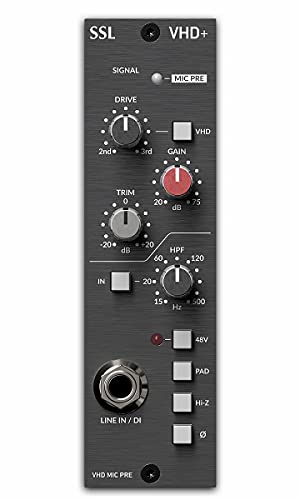
- Clean SSL SuperAnalogue tone
- Adjustable 2nd/3rd-order harmonic drive
- 48V phantom, hi-Z, and HP filter
Best For: Engineers and home studios that want a versatile 500 Series preamp with clean sound and variable saturation.
Best Hybrid Color Pick
Universal Audio 710 Twin-Finity Preamp

- Blendable tube and solid-state signal paths
- Dual gain stages for clean or crunchy tones
- Hi-Z instrument DI with ultra-high impedance
Best For: Engineers and home-studio users who want flexible tone shaping in a single preamp.
Best for Feature-Rich Tracking
SSL PureDrive Octo 8-Channel Mic Pre

- Eight channels in a single rack unit
- PURE, DRIVE, and Asymmetric DRIVE modes
- Four impedance options for tonal matching
Best For: Engineers who need flexible, multi-channel preamps for clean recording or added harmonic color.
Best Inline Gain Booster
sE Electronics DM1 Dynamite Preamp

- +28dB clean gain for dynamic and ribbon mics
- Transparent inline design keeps tone natural
- Durable metal build with gold-plated XLR
Best For: Podcasters and live sound users who need a simple inline boost for low-output passive mics.
Best for Clean Desktop Recording
SSL 2 MKII 2x2 USB Audio Interface

- Two SSL mic preamps with clean, low-noise gain
- 32-bit / 192 kHz conversion and Legacy 4K mode
- Loopback, MIDI I/O, and dual headphone outs
Best For: Podcasters, singer-songwriters, and home studios that need dependable solid state microphone preamps in a compact interface.
Best for Ribbon and Dynamic Mics
sE Electronics DM2 TNT Inline Preamp

- Adds +15dB or +30dB of clean gain
- Eight impedance settings for tonal matching
- Compact metal build with secure XLR connections
Best For: Users who want transparent inline gain for ribbon and dynamic microphones.
Best with Extra Features
SSL PureDrive Quad 4-Channel Mic Pre

- Four channels with Clean, Classic Drive, and Asymmetric Drive modes
- 31-step trim and 4 impedance options for precise tone shaping
- Front-panel DI inputs, phantom power, polarity invert, and hi-pass filter
Best For: Engineers who want a flexible 4-channel preamp for tracking with clean or driven tones.
Best for Dual Headphone Monitoring
SSL 2 Plus MKII USB Audio Interface
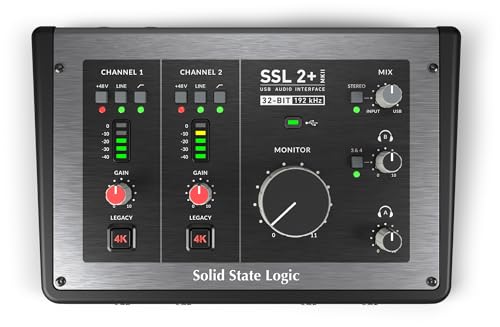
- Two SSL mic preamps with 48V phantom power
- Dual headphone outputs and four balanced line outs
- 32-bit/192 kHz conversion with zero-latency monitoring
Best For: Producers, podcasters, and musicians who want clean preamps and flexible monitoring.
Best for Console-Style Control
SSL SiX CH 500 Series Channel Strip
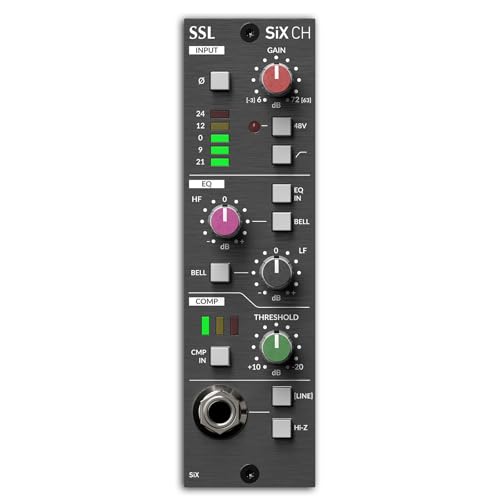
- SuperAnalogue mic pre with ultra-low noise
- Switchable shelf/bell EQ adds flexibility
- One-knob compressor and Hi-Z line input
Best For: Engineers who want SSL-style channel strip control in a single 500 Series slot.
Best Mic Activator – Cloudlifter CL-1 Mic Activator
If you need more clean level from passive microphones without changing their character, the Cloud Microphones Cloudlifter CL-1 is a smart add-on for solid state microphone preamps. It gives quiet sources extra gain before the preamp stage, which can help reduce hiss, improve clarity, and make demanding mics easier to use for recording and live work.
Best For: Podcasters, streamers, home studios, and live sound users who want cleaner gain for passive mics, especially ribbons and low-output dynamics.
Pros:
- Provides up to +25 dB of clean gain from phantom power
- Helps improve clarity and reduce noise with low-output microphones
- Safe for passive ribbons and compatible with many studio setups
- Useful for podcasting, broadcasting, streaming, and recording
Cons:
- Does not function as a standalone preamp or audio interface
- Requires phantom power from the mixer or preamp
- Best suited to passive mics, so it may be unnecessary for hotter sources
For buyers comparing solid state microphone preamps, the CL-1 is less about coloration and more about giving your existing chain a cleaner, stronger starting signal. That makes it especially appealing if your current preamp needs help handling quiet microphones without adding extra noise.
Best for Harmonic Shaping – SSL 500 Series VHD+ Pre
The Solid State Logic VHD+ Pre stands out among solid state microphone preamps because it combines SSL’s clean SuperAnalogue path with Variable Harmonic Drive, giving you everything from transparent capture to controllable color. It’s a smart pick if you want one 500 Series preamp that can move from polished and pristine to gritty and saturated without leaving the rack.
Best For: Engineers and home studios that want a versatile 500 Series preamp with both clean gain and adjustable character.
Pros:
- Ultra-clean SSL sound when you want transparent recordings
- Variable Harmonic Drive adds 2nd- and 3rd-order saturation
- 48V phantom power, hi-Z input, and high-pass filter included
- Useful for vocals, instruments, and creative overdrive tones
Cons:
- Requires a 500 Series rack
- More expensive than basic single-purpose mic pres
For buyers comparing solid state microphone preamps, this SSL model is compelling because it does more than stay clean: it lets you dial in harmonic texture when a track needs attitude. That flexibility makes it especially strong for users who want one preamp to cover everyday recording and more experimental sound design.
Best Hybrid Color Pick – Universal Audio 710 Twin-Finity Preamp
The Universal Audio 710 Twin-Finity is a smart pick if you want one channel strip-style preamp that can move between clean control and gritty harmonic color. For buyers comparing solid state microphone preamps, its blendable solid-state and tube paths make it a flexible option when you need either transparency or a more saturated front end.
Best For: Engineers and home-studio users who want a versatile preamp with both clean solid-state clarity and tube character in one box.
Pros:
- Blendable tube and solid-state circuitry for a wide range of tones
- Dual gain stages let you go from clean to driven sounds
- Hi-Z instrument DI with very high input impedance
- Good fit for tracking vocals, bass, and instruments with added color
Cons:
- Not the most transparent choice if you want ultra-clean gain only
- Single-channel design limits larger multi-mic setups
- Can be more preamp than some beginners need
This is a strong choice if you want solid state microphone preamps that still let you dial in character instead of committing to one fixed sound. The Twin-Finity concept makes it especially useful for users who record a variety of sources and want one preamp to cover clean tracking and tasteful saturation.
Best for Feature-Rich Tracking – SSL PureDrive Octo 8-Channel Mic Pre
If you want solid state microphone preamps that can do more than just clean gain, the Solid State Logic PureDrive Octo brings a lot to the table: eight channels, multiple impedance options, selectable drive modes, and onboard digital connectivity for modern studio workflows. It’s a strong fit when you need flexible coloration, precise control, and enough channels for multi-mic sessions.
Best For: Producers and engineers who want a versatile 8-channel preamp with clean-to-driven tones, detailed control, and rack-ready connectivity.
Pros:
- Eight channels of high-performance SSL preamps in one rack unit
- PURE, DRIVE, and Asymmetric DRIVE modes for flexible tone shaping
- Four input impedance options to better match different microphones
- Useful studio tools like phantom power, polarity invert, and high-pass filtering
Cons:
- Likely overkill if you only need one or two mic channels
- More advanced than a simple no-frills preamp setup
For studios that want polished, configurable solid state microphone preamps, the PureDrive Octo stands out by blending classic SSL character with modern routing and drive options. It’s especially compelling if you record ensembles, drum kits, or multiple sources and want one unit that can cover clean capture and tasteful saturation.
Best Inline Gain Booster – sE Electronics DM1 Dynamite Preamp
If your dynamic or ribbon mic needs more level without extra hiss, the sE Electronics DM1 is a practical add-on for solid state microphone preamps and compact recording chains. It delivers a fixed +28dB of clean, transparent gain, so you can get healthier signal levels from low-output mics without changing the mic’s natural character.
Best For: Podcasters, streamers, and live sound users who need an easy way to boost passive mics before an interface or mixer.
Pros:
- +28dB gain helps low-output dynamic and ribbon mics reach usable levels fast
- Transparent Class-A, transformerless design keeps the signal clean and natural
- Inline XLR format is simple to add to studio, podcast, and stage setups
- All-metal build with gold-plated connectors for reliable daily use
Cons:
- Requires phantom power to operate, so it is not a passive inline accessory
- Only offers fixed gain, with no adjustable boost or tone shaping
For buyers comparing solid state microphone preamps, the DM1 stands out as a small, targeted solution rather than a full-featured preamp. It is a strong fit when you only need cleaner gain and stable signal integrity from a ribbon or dynamic mic.
Best for Clean Desktop Recording – SSL 2 MKII 2×2 USB Audio Interface
If you want solid state microphone preamps with a clean, low-noise sound and a simple 2-in/2-out workflow, the SSL 2 MKII is a strong compact pick. It adds practical recording features like 32-bit/192 kHz conversion, zero-latency monitoring, loopback, and MIDI I/O without overcomplicating the setup.
Best For: Podcasters, singer-songwriters, and home studios that need reliable solid state microphone preamps in an easy desktop interface.
Pros:
- Two SSL mic preamps for clean, straightforward vocal and instrument recording
- 32-bit / 192 kHz converters plus Legacy 4K analog enhancement
- Useful extras like stereo loopback, high-pass filters, and MIDI I/O
- Bus-powered design with dual headphone outputs for flexible monitoring
Cons:
- Only two mic inputs, so it is not ideal for larger multi-source sessions
- No onboard mixing or advanced DSP effects
- Best suited to desktop rigs rather than portable field recording
The SSL 2 MKII stands out if you care more about solid state microphone preamps, clean conversion, and practical studio features than about flashy extras. It is a sensible upgrade for creators who want dependable sound and a workflow that stays simple.
Best for Ribbon and Dynamic Mics – sE Electronics DM2 TNT Inline Preamp
If you need a cleaner, stronger signal from passive mics, the sE Electronics DM2 TNT is a smart choice among solid state microphone preamps. It adds selectable gain and lets you adjust impedance, so you can optimize ribbon and dynamic microphones without changing their natural tone.
Best For: Podcasters, home recordists, and live sound users who want transparent gain for ribbon or dynamic microphones.
Pros:
- Selectable +15dB or +30dB gain for extra headroom
- Eight impedance settings help tailor the mic’s response
- Compact inline design is easy to add to any XLR chain
- Metal housing and gold-plated connectors suit studio or stage use
Cons:
- Only useful for microphones that need active gain help
- Requires phantom power from the interface or mixer
For buyers comparing solid state microphone preamps, the DM2 TNT stands out because it focuses on transparent boost and impedance matching rather than coloration. That makes it especially useful when you want more usable level from passive mics without complicating the rest of your setup.
Best with Extra Features – SSL PureDrive Quad 4-Channel Mic Pre
If you want solid state microphone preamps that go beyond clean gain, the Solid State Logic PureDrive Quad gives you four channels of serious flexibility in a single rack unit. It combines SSL’s PURE and DRIVE modes with extra impedance choices, front-panel DI inputs, and onboard USB/digital connectivity, making it a strong fit for modern project and hybrid studios.
Best For: Engineers and producers who want a versatile 4-channel preamp with clean-to-driven tones, easy recall, and plenty of front-panel control.
Pros:
- Four mic preamps with Clean, Classic Drive, and Asymmetric Drive modes
- 31-step trim control with 1 dB increments for precise gain staging
- Four impedance settings plus +48V phantom power, polarity invert, and hi-pass filtering
- Front-panel Hi-Z/DI inputs with automatic detection for quick instrument tracking
Cons:
- Likely overkill if you only need a simple transparent single-channel preamp
- Feature set and pricing are aimed more at serious studios than entry-level buyers
This is one of the more capable solid state microphone preamps for users who want both utility and tonal shaping in the same box. The combination of recall-friendly controls, multiple impedance options, and drive modes makes it especially appealing for tracking vocals, drums, and instruments with options to stay clean or add character.
Best for Dual Headphone Monitoring – SSL 2 Plus MKII USB Audio Interface
The Solid State Logic SSL 2 Plus MKII is a smart pick if you want solid state microphone preamps with studio-friendly monitoring and flexible I/O in a compact, bus-powered interface. It gives you two mic inputs, dual headphone outs, and balanced outputs, making it a practical choice for recording, podcasting, and small music setups.
Best For: Producers, podcasters, and live-studio musicians who need clean preamps, easy monitoring, and extra output options.
Pros:
- Two SSL mic preamps with 48V phantom power for mics and hybrid recording setups
- Dual headphone outputs plus four balanced line outputs for flexible monitoring
- 32-bit/192 kHz conversion, zero-latency monitoring, and stereo loopback
- Legacy 4K analog enhancement adds useful presence when you want more character
Cons:
- Only two mic preamps, so it may be limiting for larger sessions
- Feature set is strong, but some users may not need all the routing extras
- Best value depends on whether you’ll use the dual headphone and MIDI features
This interface stands out for users who want dependable solid state microphone preamps plus expanded monitoring in a portable design. If your workflow values clean gain, straightforward recording, and multiple ways to connect headphones and speakers, the SSL 2 Plus MKII is an easy one to shortlist.
Best for Console-Style Control – SSL SiX CH 500 Series Channel Strip
If you want solid state microphone preamps with a clean, fast response and real studio flexibility, the SSL SiX CH brings a lot into a single 500 Series slot. It combines a SuperAnalogue mic pre, broad-stroke EQ, and a one-knob compressor, so it works well as a front-end channel strip for tracking vocals, instruments, and utility sources.
Best For: Engineers and home-studio users who want SSL-style channel processing in a compact 500 Series format.
Pros:
- SuperAnalogue mic pre is clean, low-noise, and quick
- EQ bands switch between shelf and bell for more shaping options
- Built-in compressor adds simple, useful dynamic control
- Front-panel line input and Hi-Z mode make it easy to patch in instruments
Cons:
- Requires a 500 Series rack, so it is not a standalone preamp
- Single-channel design may be limiting for multi-mic setups
- More expensive than basic preamp-only options
For buyers comparing solid state microphone preamps, this is a strong choice if you want more than just gain: it gives you SSL character, onboard EQ, and compression in one disciplined channel strip. The result is a polished tracking path that stays practical without adding unnecessary complexity.
How We Picked These Solid State Microphone Preamps
We prioritized sound quality, gain range, noise performance, build quality, and real-world flexibility. Because Solid State Microphone Preamps are used in very different setups, we also weighed format: inline boosters for low-output dynamics and ribbons, channel strips for tracking chains, multi-channel preamps for expanding a studio, and audio interfaces with strong onboard preamps.
Quick Comparison
For the cleanest and simplest gain lift, inline models are the fastest fix for quiet dynamic or ribbon mics. If you want more tonal control, standalone and 500-series units offer more shaping, saturation, and routing options. Interface-based picks are best when you need an all-in-one recording solution with solid preamp performance.
Key Buying Factors for Solid State Microphone Preamps
Gain and Noise Floor
Look for enough clean gain to avoid overdriving your interface or pushing your mic amp into hiss. This matters most with low-output ribbons, broadcast dynamics, and quiet vocal sources.
Headroom and Tone
Some solid state designs aim for transparent capture, while others add subtle harmonics or drive. Decide whether you want a pristine front end or a preamp that can add character before the converter.
Channel Count and Workflow
Choose one channel if you mainly record one source at a time. Go multi-channel if you track drums, ensembles, or full sessions and need consistent gain across several inputs.
Connectivity and Form Factor
Inline boosters, 500-series modules, rack units, and USB interfaces all solve different problems. The best choice depends on whether you need portability, expansion, or an integrated recording path.
Who Should Buy Which Solid State Microphone Preamps?
Singers, podcasters, and solo creators often do well with a clean inline gain solution or a compact interface with strong preamps. Engineers who want more control or color should look at standalone and 500-series Solid State Microphone Preamps. Studios tracking multiple sources should favor multi-channel options for efficiency, while users building a streamlined desktop rig may prefer a premium USB interface with dependable onboard gain.
If your main goal is clarity and consistency, start with the least complicated option that gives you enough gain and the right inputs for your microphone type. That keeps your signal chain simple while still getting the benefits of solid state performance.