Choosing the right stage box can simplify your entire live rig, reduce cable clutter, and improve signal management from stage to mixer.
Below, we focus on practical options for different venues, workflows, and networking standards so you can match the box to your console and production needs.
Best 10 16 Channel Digital Stage Boxes Picks for 2026
Best Value Digital Snake
Behringer S16 16-Channel Digital Snake

- 16 MIDAS-designed remote preamps
- 8 balanced XLR outputs
- AES50 and ULTRANET networking
Best For: Bands, churches, and small venues needing an affordable digital stage box.
Best for Stage I/O Expansion

- 16 Midas PRO preamps with phantom power
- 8 balanced outputs for monitor or return feeds
- Dual AES50, ULTRANET, and ADAT connectivity
Best For: Digital live sound setups that need scalable stage input expansion and simple cabling.
Best for Straightforward Multi-Channel Runs
PRORECK 16-Channel XLR Snake Cable
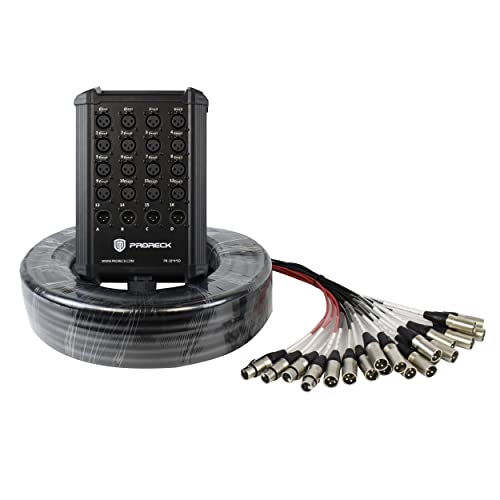
- 16 numbered channels simplify patching and setup
- 50-foot run suits stage-to-console routing
- Circuit-board connection helps reduce noise
Best For: Bands and small venues needing a simple 16-channel snake for live or studio routing.
Best for Remote-Control Preamps
Behringer SD16 16-In/8-Out Stage Box

- 16 Midas-designed remote-controlled mic preamps
- 8 balanced XLR outputs plus AES50 networking
- ULTRANET hub for personal monitoring mixers
Best For: Bands, churches, and small venues needing affordable digital snake flexibility with remote preamp control.
Best for AVB Flexibility
PreSonus NSB32.16 AVB Stage Box

- 32 remote-controllable XMAX preamps
- 16 locking XLR line outputs
- Dual AVB ports for networked workflows
Best For: Bands, churches, and venues needing a rackmount AVB stage box with lots of inputs.
Best for Multi-Device Splits
16-Channel Digital Distribution Module

- 1 input to 8 outputs for simple expansion
- 16-channel digital audio distribution
- 24-bit support for stage and studio use
Best For: Bands and studios needing a simple digital splitter for multiple devices.
Best for Midas Preamps
Behringer SD16 16-Input Stage Box

- 16 remote-controllable Midas-designed mic preamps
- AES50 networking with a single digital stage link
- 8 outputs plus ULTRANET for monitor distribution
Best For: Bands, churches, and small venues that want flexible remote preamps and easy AES50 expansion.
Best for Yamaha Consoles
Yamaha Tio1608-D2 Dante Stage Box

- 16 in / 8 out in a compact 3U rack
- 96kHz Dante-ready performance
- Recallable D-PRE pres and QUICK CONFIG support
Best For: Yamaha DM3 and TF users who want fast Dante stage box integration.
Best for AES50 Routing
Behringer S32 32-Channel Stage Box

- 32 Midas-designed programmable preamps
- 16 balanced XLR outputs for flexible routing
- AES50, Ultranet, and AES/EBU connectivity
Best For: Bands and venues that need a versatile digital stage box with low-latency networking and strong expansion options.
Best for Live Input Expansion

- 32 Midas PRO preamps for clean, high-quality input capture
- 16 balanced outputs for flexible live routing
- Dual AES50 ports simplify cascading more stageboxes
Best For: Bands, venues, and engineers needing a high-input digital stage box with strong preamps and easy expansion.
Best Value Digital Snake – Behringer S16 16-Channel Digital Snake
If you need one of the most practical 16 channel digital stage boxes for live sound or project studios, the Behringer S16 delivers a simple remote I/O solution with 16 MIDAS-designed preamps, 8 balanced outputs, and AES50 networking. It’s a strong fit when you want to move mic inputs offstage without adding a lot of extra cabling or rack complexity.
Best For: Bands, churches, and small venues that want affordable remote stage I/O with solid preamps and easy integration into an AES50-based system.
Pros:
- 16 remote-controllable MIDAS-designed mic preamps
- 8 balanced XLR outputs for monitor or line routing
- AES50 and ULTRANET support for flexible digital workflows
- Good value for setups already using compatible Behringer or KLARK TEKNIK gear
Cons:
- Best performance depends on an AES50-compatible mixer or network
- Not as feature-rich as higher-end stage box options
Overall, the S16 is a smart budget-conscious choice among 16 channel digital stage boxes, especially if you want dependable remote inputs, monitor outputs, and straightforward networked audio without overpaying for extra bells and whistles.
Best for Stage I/O Expansion – Midas DL16 16×8 Stage Box
If you need one of the most practical 16 channel digital stage boxes for live sound, the Midas DL16 delivers a lot of I/O in a compact, rack-friendly format. It gives you 16 high-quality mic preamps, 8 analog outputs, and digital connectivity that helps keep stage cabling short, clean, and fast to deploy.
Best For: Bands, venues, and FOH engineers who want dependable stage inputs plus ULTRANET monitoring and ADAT integration in a single box.
Pros:
- 16 Midas PRO preamps with switchable 48V phantom power
- 8 balanced outputs for monitors or stage returns
- Dual AES50 ports make cascading additional stage boxes easy
- ULTRANET and dual ADAT outputs add flexible system integration
Cons:
- No local mixing controls on the unit itself
- Best suited to digital console workflows, not analog rigs
- May be more I/O than small solo or duo setups need
The DL16 is a strong fit when you want a reliable, networked stage box that can scale with larger shows. Among 16 channel digital stage boxes, it stands out for combining Midas preamps, digital expansion options, and straightforward single-cable stage deployment.
Best for Straightforward Multi-Channel Runs – PRORECK 16-Channel XLR Snake Cable
If you need one of the more practical 16 channel digital stage boxes alternatives for live sound or studio routing, this PRORECK 16-channel snake cable keeps the setup simple. The 50-foot run, numbered connectors, and circuit-board connection design make it easier to patch multiple sources without adding clutter.
Best For: Bands, small venues, and recording setups that want a straightforward 16-channel snake with clear labeling and a compact stage footprint.
Pros:
- 16-channel layout with numbered connectors for faster setup and troubleshooting
- Circuit board design helps maintain a solid connection and reduce noise
- 50-foot length gives you flexibility for stage-to-console runs
- Works with analog or digital consoles without needing converters
Cons:
- Not a powered digital stage box or audio interface
- Low-profile build may not suit heavy-duty touring rigs
- Requires matching XLR routing, so it’s less plug-and-play than networked systems
For buyers comparing 16 channel digital stage boxes, this is a cable-based solution that prioritizes clarity, labeling, and easy routing over advanced digital features. It’s a smart fit when you want dependable multi-channel stage connectivity without extra conversion gear.
Best for Remote-Control Preamps – Behringer SD16 16-In/8-Out Stage Box
If you need one of the more practical 16 channel digital stage boxes for live sound or installed rigs, the Behringer SD16 gives you remote-controlled mic preamps, AES50 networking, and plenty of I/O in a compact stagebox format. It is designed to keep analog runs short while moving audio and control over a single network cable.
Best For: Bands, churches, and small venues that want affordable digital snake functionality with remote preamp control and personal monitoring support.
Pros:
- 16 Midas-designed preamps with remote control for flexible gain staging
- 8 servo-balanced XLR outputs for monitors, fills, or other sends
- AES50 networking keeps setup streamlined with low-latency digital audio
- Built-in ULTRANET hub supports personal monitoring mixers
Cons:
- Requires compatible AES50 mixers or systems to get full value
- Not the most feature-rich option for larger touring productions
Overall, the SD16 is a strong fit when you want reliable stagebox functionality without overpaying for extras. For buyers comparing 16 channel digital stage boxes, it stands out for remote preamp control and monitor-network flexibility rather than flashy advanced routing.
Best for AVB Flexibility – PreSonus NSB32.16 AVB Stage Box
If you need one of the more capable 16 channel digital stage boxes for a larger live rig, the PreSonus NSB32.16 gives you serious I/O headroom and networked AVB flexibility. It pairs 32 remote-controllable XMAX preamps with 16 locking XLR line outputs, making it a strong fit for distributed systems, monitor setups, and mixer networks.
Best For: Bands, churches, and venues that need a rackmount AVB stage box with lots of inputs and flexible remote control.
Pros:
- 32 combo mic/line inputs with remote-controllable XMAX preamps
- 16 locking XLR line outputs for clean system integration
- Dual AVB ports and gain compensation support multi-mixer workflows
- Rugged 3U rack design with flexible mounting options
Cons:
- More capability than smaller setups really need
- Requires an AVB-compatible system to take full advantage of it
For buyers comparing 16 channel digital stage boxes, this model stands out less for minimal size and more for scalability, remote gain control, and networked routing. If your priority is expanding a live audio system without sacrificing flexibility, it’s a very practical choice.
Best for Multi-Device Splits – 16-Channel Digital Distribution Module
If you need one source fed cleanly to several destinations, this 16-channel digital distribution module is a straightforward option for 16 channel digital stage boxes. It offers a 1-in, 8-out layout, making it useful for stage racks, rehearsal rooms, and small studio signal distribution where stable 24-bit digital audio matters.
Best For: Band and studio setups that need a simple multi-output splitter for digital audio distribution.
Pros:
- 16-channel digital audio distribution from one input
- 1 input to 8 outputs supports multiple connected devices
- 24-bit audio support for stable digital performance
- Fits stage, rehearsal, and recording setups
Cons:
- No detailed control or advanced routing features listed
- More of a distribution module than a full-featured stage box
- Best suited to users who already know their digital audio format
Overall, this unit makes sense for buyers who want a simple way to expand digital connections without adding unnecessary complexity. For 16 channel digital stage boxes, it stands out more for straightforward routing than for premium features.
Best for Midas Preamps – Behringer SD16 16-Input Stage Box
If you need one of the most affordable 16 channel digital stage boxes with real remote-control flexibility, the Behringer SD16 is built to expand a mixer via AES50 while keeping cable runs simple. It gives you 16 Midas-designed mic preamps, 8 outputs, and ULTRANET support for personal monitoring, making it a practical stage-box solution for bands, worship rigs, and small venues.
Best For: Bands, churches, and live sound setups that want remote-controllable preamps, monitor distribution, and simple AES50 expansion.
Pros:
- 16 remote-controllable Midas-designed mic preamps for flexible gain staging
- AES50 networking makes it easy to place the box on stage and run one digital link
- 8 outputs plus ULTRANET integration support monitor and routing needs
Cons:
- Not a full-featured console, so it depends on a compatible AES50 mixer
- More basic than higher-end stage boxes in build and advanced routing features
For buyers comparing 16 channel digital stage boxes, this model stands out for giving you usable pro-level connectivity without pushing into premium pricing. It is especially appealing when remote preamps and straightforward stage-to-FOH networking matter more than extra onboard extras.
Best for Yamaha Consoles – Yamaha Tio1608-D2 Dante Stage Box
If you need one of the more polished 16 channel digital stage boxes for Yamaha workflows, the Tio1608-D2 is a strong fit. It combines 16 recallable mic/line inputs, 8 outputs, and Dante networking in a compact 3U rack, with a 96kHz sample rate that keeps it ready for serious live sound and installed systems.
Best For: Yamaha DM3 and TF series users who want a Dante stage box with quick setup and reliable remote I/O.
Pros:
- 16 inputs and 8 outputs in a space-saving 3U chassis
- 96kHz operation for high-quality digital audio performance
- Recallable D-PRE preamps support consistent gain staging
- QUICK CONFIG Mode helps speed up DM3 and TF integration
Cons:
- Best suited to Yamaha ecosystems rather than universal setups
- Requires Dante-compatible workflow to get full value
For buyers comparing 16 channel digital stage boxes, this Yamaha stands out more for clean integration and dependable sound quality than for raw feature count. It is a practical choice when you want a proven Dante stage box that plays nicely with compatible Yamaha consoles.
Best for AES50 Routing – Behringer S32 32-Channel Stage Box
If you need one of the more flexible 16 channel digital stage boxes for live sound, the Behringer S32 stands out for its 32 Midas-designed preamps, AES50 networking, and built-in Ultranet support. It’s built to move mic and monitor signals over a single cable run while keeping latency low and setup relatively straightforward.
Best For: Bands, worship teams, and small venues that want a reliable digital stage box with plenty of I/O and personal monitoring options.
Pros:
- 32 fully programmable Midas-designed mic preamps for clean, consistent input gain
- 16 analog, servo-balanced XLR outputs for flexible stage and monitor routing
- AES50 SuperMAC networking helps keep jitter and latency very low
- Ultranet and AES/EBU connectivity add useful integration options
Cons:
- Overkill if you only need a basic 16-channel stage box
- Depends on compatible digital mixing hardware and network workflow
For buyers comparing 16 channel digital stage boxes, the S32 is a strong choice when you want more headroom, more outputs, and deeper digital routing without stepping into a much larger system. It’s especially appealing if you expect your rig to grow.
Best for Live Input Expansion – Midas DL32 32×16 Stage Box
If you need one of the most capable 16 channel digital stage boxes for larger mixers and multi-input live rigs, the Midas DL32 is built for serious channel count and clean signal management. With 32 Midas mic preamps, 16 line outputs, and AES50 networking, it’s a strong fit when you want reliable remote I/O without adding a lot of complexity.
Best For: Bands, venues, and engineers who need a high-input digital stage box with excellent preamps and simple expansion.
Pros:
- 32 Midas PRO microphone preamps deliver strong gain and proven live-sound quality
- 16 electronically balanced outputs support monitors, sends, and routing flexibility
- Dual AES50 ports make cascading additional stageboxes straightforward
- ULTRANET and ADAT support add useful integration options
Cons:
- More box than some smaller rigs need
- Requires compatible digital mixer/networking gear to use properly
- Not the simplest choice for beginners
For productions that need dependable remote I/O and room to grow, the DL32 stands out as a practical choice among 16 channel digital stage boxes. It’s especially compelling if you value Midas preamp quality and want an easy path to adding more stage inputs later.
How We Picked the Best 16 Channel Digital Stage Boxes
Our selections favor dependable build quality, stable digital networking, preamp quality, and real-world flexibility. For 16 Channel Digital Stage Boxes, we looked closely at how well each unit fits common live-sound and recording setups, including compatibility with popular ecosystems such as AES50, Dante, and AVB.
We also considered output count, remote preamp control, monitoring features, rack footprint, and whether the unit supports easy expansion for larger shows. In practice, the best choice is the one that matches your mixer, transport protocol, and channel needs without forcing unnecessary workarounds.
Quick Comparison
If you need a straightforward stage-side I/O solution, a compact 16-channel box is often the most efficient starting point. If your productions regularly grow beyond basic input counts, a 32-channel model may be the better long-term investment. The key is to balance channel headroom against portability and system compatibility.
Key Buying Factors for 16 Channel Digital Stage Boxes
Network Protocol Compatibility
Make sure the stage box speaks the same language as your mixer. AES50, Dante, and AVB are not interchangeable, so the wrong protocol can limit setup flexibility or require additional hardware.
Preamp Quality and Remote Control
Remote-controlled microphone preamps are a major advantage in live mixing because they let you set gain from the console or software. Clean gain staging matters more than flashy features, especially for vocal-heavy shows and small recording sessions.
I/O Count and Output Needs
Although 16 inputs may be the headline spec, confirm how many outputs you actually need for wedges, in-ears, or external processing. A box with extra outputs can save you from adding separate splitters later.
Physical Layout and Deployment
Rack-mount size, front-panel visibility, and cable placement all affect speed during load-in and troubleshooting. Low-profile units can be easier to place on stage, while larger units may offer better expansion for complex rigs.
Who Should Buy Which 16 Channel Digital Stage Boxes?
Small clubs, houses of worship, and mobile engineers often do best with a compact 16 Channel Digital Stage Boxes model that keeps setup simple and transport light. Touring acts and higher-channel-count venues may want a 32-channel option for more futureproofing, especially if the show already runs multiple monitor mixes or additional stage inputs.
If you are choosing between similar models, prioritize the ecosystem you already own, then look at preamp control, output flexibility, and stage placement. That approach will usually lead to the most reliable and cost-effective purchase.