Choosing the right rackmount interface can simplify recording, improve routing, and keep your studio or live rig tidy. The best options balance I/O count, low-latency performance, and the connections your workflow actually needs.
Below, we focus on 16 channel rackmount audio interfaces and closely related expansion gear that help you build a cleaner, more flexible setup without overbuying features you will not use.
Best 8 16 Channel Rackmount Audio Interfaces Picks for 2026
Best for Lots of Inputs
Tascam US-16x08 16-Input Rackmount Interface
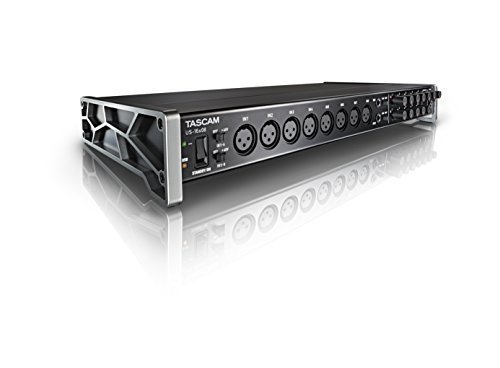
- 16 total inputs for bigger recording sessions
- Eight clean Ultra-HDDA mic preamps
- DSP mixer with EQ and compression for monitoring
Best For: Home studios and project rooms that need a straightforward rackmount interface with plenty of inputs.
Best for Wireless Control
Mackie DL16SE 16-Channel Digital Rack Mixer

- 16 Onyx+ preamps with 8 XLR and 8 combo inputs
- Wireless app control from mobile, desktop, and tablet
- 16x16 USB recording plus onboard DSP and FX
Best For: Bands and engineers who need a rackmount digital mixer with remote control and multitrack recording.
Best for Hybrid Studios
Fender Quantum LT 16 USB-C Audio Interface

- Eight MAX-HD mic preamps with +75 dB gain
- 14 line inputs plus DC-coupled outputs and MIDI
- Standalone mixer and mic preamp modes
Best For: Hybrid studios and hardware-based producers who need lots of I/O in one rack unit.
Best for Stage Expansion
Behringer S16 16-Channel Digital Snake

- 16 MIDAS-designed preamps with remote control
- 8 balanced XLR outputs for flexible routing
- AES50 and ULTRANET for digital system integration
Best For: Live sound users who need a rackmount digital snake for stage-to-console expansion.
Best ADAT Expansion Pick
Behringer ADA8200 8x8 ADAT Interface

- 8 mic preamps for affordable channel expansion
- ADAT optical out for easy system integration
- Rack-friendly design for studio or live use
Best For: Engineers who need a budget-friendly ADAT expander with mic preamps.
Best for Multi-Performer Monitoring
StudioMan HPA1800 8-Channel Headphone Amp

- 8 headphone outputs with per-channel stereo/mono switching
- 1U rackmount metal build with shielding for studio or stage use
- 16–600Ω support and XLR/1/4" inputs for broad compatibility
Best For: Studios and live setups that need dependable headphone monitoring for several performers.
Best Multi-User Monitoring Rack Amp
Bolanle PH8000 8-Channel Headphone Amp

- 8 independent headphone outputs
- Powerful enough for 32Ω to 600Ω headphones
- 1U rackmount design for permanent installs
Best For: Studios and broadcast teams needing shared headphone monitoring from one source.
Best for Multi-Headphone Monitoring
8-Channel Rackmount Headphone Amp

- Up to 16 headphone outputs from a 1U rack unit
- Independent level control for each channel
- Stereo/mono switching with LED level meters
Best For: Studio and live-sound teams that need simple, reliable headphone distribution.
Best for Lots of Inputs – Tascam US-16×08 16-Input Rackmount Interface
If you need one of the most practical 16 channel rackmount audio interfaces for tracking full bands, drums, or multi-source sessions, the Tascam US-16×08 keeps the focus on input count and straightforward operation. It combines eight clean mic preamps with eight additional line inputs, plus onboard DSP mixing to help you build usable monitor mixes with low latency.
Best For: Home studios, rehearsal rooms, and project studios that need plenty of simultaneous inputs in a 1U rack format.
Pros:
- 16 total inputs with 8 XLR mic preamps and 8 line inputs
- Eight Ultra-HDDA preamps deliver clean gain for recording
- Built-in DSP mixer supports EQ and compression for monitoring
- Eight balanced outputs add flexible routing and monitor control
Cons:
- Not as feature-rich as higher-end studio interfaces
- Two outputs only have front-panel level control
- Best suited to rack setups rather than portable use
For buyers comparing 16 channel rackmount audio interfaces, this Tascam stands out as a value-friendly way to capture larger sessions without overcomplicating the workflow. It is especially appealing if your priority is lots of usable I/O, solid preamps, and simple monitor mixing in a rackmount unit.
Best for Wireless Control – Mackie DL16SE 16-Channel Digital Rack Mixer
If you want one of the most flexible 16 channel rackmount audio interfaces for live sound or compact studio work, the Mackie DL16SE stands out for its app-based control, rack-ready design, and built-in multitrack recording. It combines 16 Onyx+ mic preamps with 8 line outputs, so you can wire a full band or stage setup and manage everything remotely from a phone, tablet, or computer.
Best For: Bands, venues, and engineers who want a rackmount digital mixer with wireless control and multitrack USB recording.
Pros:
- 16 inputs with 8 XLR and 8 combo jacks, plus 2 Hi-Z inputs for instruments
- Wireless control via Master Fader SE on iOS, Android, Mac, and Windows
- Built-in 16×16 USB interface for recording, playback, and virtual soundcheck
- Full DSP tools include EQ, compression, filters, RTA, and 4 stereo FX processors
Cons:
- Requires a compatible wireless router for remote control
- Less plug-and-play than a simple analog mixer
For buyers comparing 16 channel rackmount audio interfaces, the DL16SE is especially appealing if you care more about remote mixing, onboard processing, and recording flexibility than about a barebones physical control surface.
Best for Hybrid Studios – Fender Quantum LT 16 USB-C Audio Interface
Built for high-input-count sessions, the Fender Quantum LT 16 stands out among 16 channel rackmount audio interfaces with 16-in/8-out USB-C connectivity, eight clean mic preamps, and plenty of line-level expansion for synths, drums, and outboard gear. It’s a practical choice if you want a single rack unit that can handle tracking, monitoring, and hardware integration without feeling cramped.
Best For: Hybrid studios, drum recording, and producers who need lots of analog I/O plus standalone flexibility.
Pros:
- Eight MAX-HD mic preamps with up to +75 dB gain for demanding sources
- 14 total line inputs with front combo jacks and rear TRS expansion
- DC-coupled outputs and 5-pin MIDI I/O for modular and hardware setups
- Standalone mixer and mic pre modes add extra versatility
Cons:
- May be more interface than casual solo recordists need
- Best value depends on whether you’ll use the Fender software bundle
- Rackmount format is less portable than desktop interfaces
For buyers comparing 16 channel rackmount audio interfaces, this model’s appeal is its blend of clean preamps, broad line input count, and standalone operation. It’s especially compelling if your studio is centered around hardware, multitracking, or a flexible live-and-record workflow.
Best for Stage Expansion – Behringer S16 16-Channel Digital Snake
If you need a practical way to move 16 inputs and 8 outputs over a single network link, the Behringer S16 is a strong fit for live rigs and install jobs that need reliable 16 channel rackmount audio interfaces performance without a bulky analog multicore.
Best For: Bands, houses of worship, and live sound setups that want remote preamps, digital stage routing, and easy expansion via AES50.
Pros:
- 16 MIDAS-designed mic preamps deliver flexible remote input control
- 8 servo-balanced XLR outputs handle monitor and line-level routing
- AES50 and ULTRANET support simplify digital stagebox integration
Cons:
- Not a traditional USB recording interface for direct computer use
- Requires compatible digital mixer or network ecosystem to get full value
For buyers comparing 16 channel rackmount audio interfaces, the S16 stands out more as a stagebox and digital snake than a standalone studio interface, but that makes it especially useful when clean cabling, low latency, and fast setup matter.
Best ADAT Expansion Pick – Behringer ADA8200 8×8 ADAT Interface
Behringer ADA8200 Audiophile 8 In/8 Out ADAT Audio Interface with Midas Mic Preamplifiers
Check Price On AmazonIf you need to add a clean, affordable I/O bank to one of the more flexible 16 channel rackmount audio interfaces, the Behringer ADA8200 is a practical way to expand your setup over ADAT. It gives you 8 microphone inputs, 8 outputs, and 24-bit A/D and D/A conversion, making it a straightforward fit for project studios, live rigs, and hybrid recording systems.
Best For: Engineers who want low-cost ADAT expansion with usable mic preamps for an existing digital interface or mixer.
Pros:
- 8-channel mic preamp section adds a lot of input count for the price
- ADAT optical output makes integration with compatible gear simple
- Midas mic preamps offer a solid step up from basic entry-level expansion units
- Compact rack-friendly format suits studio and live use
Cons:
- Limited to 44.1/48 kHz operation, so it is not for high-sample-rate workflows
- Requires an ADAT-capable host device to be useful
- Not a full standalone mixer or interface replacement
For buyers comparing 16 channel rackmount audio interfaces, the ADA8200 stands out less as a main interface and more as a value-driven expansion box that can quickly grow your input count. If your priority is getting more channels into an existing ADAT-based system without spending much, it is an easy recommendation.
Best for Multi-Performer Monitoring – StudioMan HPA1800 8-Channel Headphone Amp
If you need one of the more practical 16 channel rackmount audio interfaces for headphone distribution and monitor control, the StudioMan HPA1800 is built for sessions where multiple performers need their own feed fast. It gives you 8 independently controlled headphone outputs, per-channel stereo/mono switching, and a rackmount chassis that fits cleanly into studio or live-sound setups.
Best For: Studios, rehearsal rooms, and live rigs that need reliable multi-headphone monitoring with simple rack integration.
Pros:
- 8 independent headphone channels with stereo/mono switching per output
- 1U rackmount metal chassis with EMI/RFI shielding for pro installs
- Wide 16–600Ω compatibility works with most studio and consumer headphones
- XLR and 1/4" inputs make it easy to feed from mixers, interfaces, or DAWs
Cons:
- Not a full audio interface; it’s a headphone amplifier/distribution unit
- Limited to 8 headphone outputs rather than a true 16-output monitor system
- Best suited to monitoring workflows, not recording I/O expansion
For buyers comparing 16 channel rackmount audio interfaces, this model stands out more for straightforward monitoring than for conversion or recording features. It’s a solid pick when you want durable rack hardware, flexible headphone support, and easy control over a shared mix.
Best Multi-User Monitoring Rack Amp – Bolanle PH8000 8-Channel Headphone Amp
If you need a practical monitoring hub rather than one of the 16 channel rackmount audio interfaces in your rack, the Bolanle PH8000 is built for shared headphone listening in studios, rehearsal rooms, and broadcast setups. It takes a single stereo source and splits it into eight independently controlled headphone outputs, so multiple performers can monitor from one central unit without stacking extra amps.
Best For: Studios, podcasts, live rooms, and broadcast teams that need reliable multi-headphone monitoring from one source.
Pros:
- Eight independent headphone channels with separate volume control
- Handles anything from low-impedance IEMs to 600Ω studio headphones
- Rackmount 1U metal chassis suits permanent installations
- Dual signal and peak LEDs help manage levels quickly
Cons:
- Not a full audio interface, so it won’t replace recording I/O
- Only one main stereo source, with no multi-mix routing
- Best suited to monitoring distribution rather than source mixing
For buyers comparing 16 channel rackmount audio interfaces, this is the kind of accessory that fills a different but important role: clean, high-power headphone distribution for teams that already have their interface or mixer sorted. It’s a strong fit when the priority is dependable shared monitoring instead of recording inputs.
Best for Multi-Headphone Monitoring – 8-Channel Rackmount Headphone Amp
If you need one of the more practical 16 channel rackmount audio interfaces for headphone distribution rather than recording I/O, this 8-channel rackmount amp is built for exactly that job. It gives each channel its own control, supports stereo and mono operation, and lets you feed up to 16 headphones from a clean 1U rack unit.
Best For: Studio control rooms, live-sound monitoring, and rehearsal setups that need flexible multi-headphone distribution in a compact rackmount form.
Pros:
- Up to 16 headphone outputs with front and rear 1/4″ jacks
- Independent channel controls plus stereo/mono input switching
- LED meters and overload protection help with safe level management
- 1U rackmount design fits easily into studio or live racks
Cons:
- Designed for headphone distribution, not full audio interface recording
- Single-purpose routing may be more than casual users need
- No advanced digital features or networked monitoring options
This is a strong fit if your priority is reliable headphone monitoring, not a full-featured interface. For buyers comparing 16 channel rackmount audio interfaces, it stands out as a straightforward, rack-ready distribution amp that keeps monitoring organized and easy to control.
How We Picked These 16 Channel Rackmount Audio Interfaces
We prioritized real-world usability: dependable I/O, sensible rack-friendly layouts, solid driver and software support, and formats that fit common recording and live-sound workflows. For this category, the best choices are not always the most feature-packed; they are the ones that integrate smoothly with your computer, mixers, ADAT chain, or stage snake.
Quick Comparison
If you need direct computer recording, a USB or USB-C interface is the most straightforward choice. If you need stage-to-FOH signal transport, a digital snake or rack mixer may be the better fit. If you already have an interface and just need more inputs, an ADAT expander is often the most cost-effective upgrade. For headphone-heavy studios, a rackmount distribution amp can be just as important as the interface itself.
Key Buying Factors for 16 Channel Rackmount Audio Interfaces
Input and Output Count
Check whether you need 16 simultaneous analog inputs, 16 total channels of routing, or a mix of analog and digital expansion. Some products advertise “16 channels” but function as snakes, mixers, or headphone systems rather than a traditional interface.
Connectivity and Expansion
USB, USB-C, and ADAT each serve different purposes. USB and USB-C connect directly to a computer. ADAT is best for expanding an existing interface. Digital snakes fit larger live systems where long cable runs and stage routing matter more than direct DAW recording.
Preamps, Latency, and Monitoring
Good preamps and low-latency monitoring make a bigger difference than marketing claims. For tracking bands, pay attention to how easily you can hear live inputs without distracting delay.
Rack Fit and Workflow
A true 1U or 2U rackmount design saves space and makes cable management easier. Front-panel control, clear metering, and software control can also speed up setup in busy environments.
Who Should Buy Which 16 Channel Rackmount Audio Interfaces?
Choose a USB or USB-C rack interface if you want to record directly into a DAW with minimal setup. Choose a digital snake or rack mixer if you are building a live rig or managing multiple stage inputs. Choose an ADAT expander if your existing interface is running out of inputs but still has room to grow. And if your main issue is monitoring multiple musicians, a rackmount headphone amp may deliver more value than another interface.
In short, the best 16 Channel Rackmount Audio Interfaces are the ones that match your signal path, not just your channel count.