The best audio compressors under $200 can tighten dynamics, add sustain, protect recording levels, and give vocals, instruments, and mixes a more polished sound without requiring a premium budget.
This roundup covers studio processors, channel-style compressors, inline microphone tools, and compact pedals so you can match the compressor’s controls, connectivity, and compression character to your setup.
Best 10 Audio Compressors Under 200 Picks for 2026
Classic Studio Stompbox
Universal Audio 1176 Compressor Limiter Pedal

- 1176LN-inspired analog pedal design
- Single, Dual, and Sustain modes
- Parallel compression and bypass options
Best For: Guitarists wanting classic 1176-style compression in a compact pedal
Rack Utility Compressor
Behringer Composer Pro-XL MDX2600

- 2-channel compressor, limiter, and gate
- Includes de-esser functionality
- Designed for production, mixing, and mastering
Best For: Studio users needing versatile two-channel dynamics processing
Low-End Shaping Pedal
Walrus Audio Deep Six Compressor V3
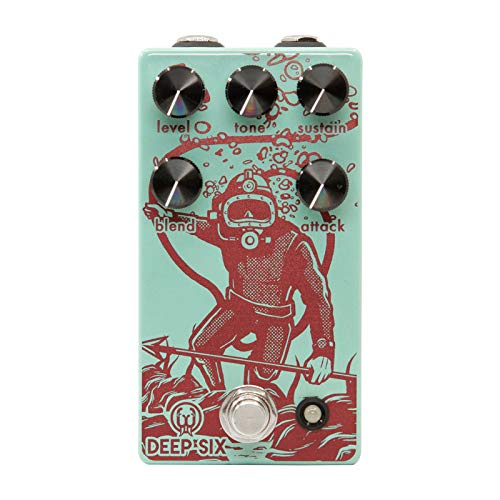
- Studio-grade analog compressor pedal
- Tone knob adds bass-cut control
- Soft-switch bypass and top-mounted jacks
Best For: Guitarists wanting compression with adjustable low-end shaping
Dual-Channel Rack Processor
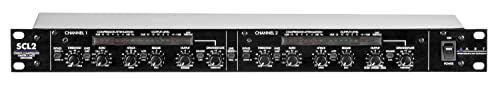
- Dual-channel or linked-stereo operation
- Compression, limiting, expansion, and gating
- Balanced TRS/XLR inputs and LED meters
Best For: Studios needing flexible stereo dynamics processing
Versatile Pedal Compression

- Six compression types
- Auto makeup gain
- Dual compressors
Best For: Guitarists wanting flexible pedal-based compression
Classic FET-Style Dynamics

- Discrete FET-style signal path
- Class-A output amplifier
- Four selectable ratios
Best For: Studio users seeking vintage-inspired rack compression
Dual-Channel Rack Compression
Professional Dynamic Processor

- Dual-channel VCA compression
- Noise gate and sidechain insert
- XLR/TRS connectivity
Best For: Studio, live, and streaming signal processing
Warm Analog Value
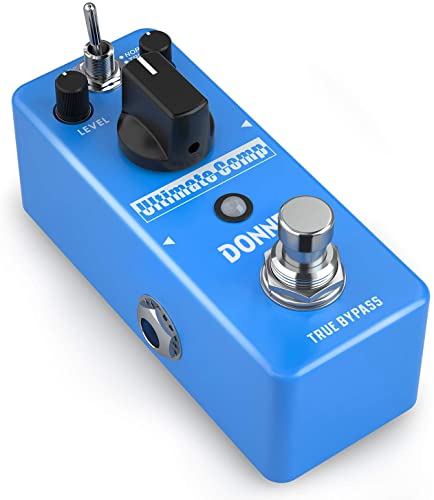
- Analog compression for guitar and bass
- NORMAL and TREBLE modes
- True bypass; adapter not included
Best For: Players wanting warm, adjustable pedal compression
Compact Mic Control
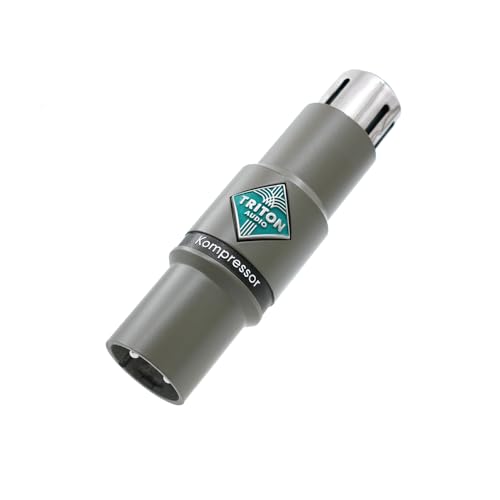
- In-line XLR compressor and preamp
- Provides 25 dB gain for low-output mics
- One-knob control; requires 48V phantom power
Best For: Dynamic and ribbon microphone recording
Flexible Sustain Pedal
Behringer CS400 Compressor Sustainer

- Compression and sustain in one pedal
- Separate Level, Tone, Attack, and Sustain controls
- Blue status LED for effect and battery check
Best For: Guitarists wanting adjustable sustain and dynamics
Classic Studio Stompbox – Universal Audio 1176 Compressor Limiter Pedal
For guitarists comparing audio compressors under 200, the Universal Audio 1176 Compressor Limiter Pedal brings an authentic 1176LN-style design into a compact analog stompbox. Its dedicated controls and multiple compression modes make it practical for shaping classic guitar dynamics and textures.
Best For: Guitarists seeking 1176-inspired compression, parallel compression, and squashed “all buttons in” tones in a pedal format.
Pros:
- Authentic emulation of the 1176LN Limiting Amplifier.
- Single, Dual, and Sustain modes cover several classic compression effects.
- Offers parallel compression plus true or buffered bypass.
Cons:
- Designed as a guitar stompbox rather than a dual-channel rack compressor.
- Requires a 9-volt DC power source.
With familiar 1176-style controls, an “all buttons in” ratio mode, and a compact enclosure, this is a focused choice for players who want recognizable studio compression character on a pedalboard.
Rack Utility Compressor – Behringer Composer Pro-XL MDX2600
Among audio compressors under 200, the Behringer Composer Pro-XL MDX2600 stands out as a practical 2-channel rack-style processor for production, mixing, and mastering setups. It combines compression, limiting, gating, and de-essing functions in one unit.
Best For: Home studios and rack-based systems needing two-channel dynamics processing with compressor, limiter, gate, and de-esser functionality.
Pros:
- Provides two channels of compression, limiting, and gating.
- Includes de-esser functionality.
- Suitable for audio production, mixing, and mastering applications.
Cons:
- The supplied notes do not specify detailed attack, release, or ratio controls.
- Uses corded electric power rather than pedal-style operation.
The MDX2600 is a versatile option when you want several dynamics tools in a single 2-channel unit, particularly for studio workflows that benefit from rack-based processing.
Low-End Shaping Pedal – Walrus Audio Deep Six Compressor V3
For players shopping for audio compressors under 200, the Walrus Audio Deep Six Compressor V3 offers studio-grade compression in an analog stompbox. Its added tone control lets you shape the low end while the soft-switch relay bypass is designed for smoother operation.
Best For: Guitarists who want pedal-format compression with low-end shaping, true bypass, and top-mounted connections.
Pros:
- Studio-grade compressor in a compact stompbox format.
- Added tone knob provides bass-cut control for shaping the guitar signal.
- Includes soft-switch relay bypass and top-mounted input and output jacks.
Cons:
- Focused on compression rather than broader rack-style dynamics processing.
- Requires a 9-volt power source.
The Deep Six V3 is a focused pedal for guitarists who want compression plus control over low-end emphasis. Its practical bypass and jack layout also suit streamlined pedalboard setups.
Dual-Channel Rack Processor – ART SCL2 Compressor/Limiter
For buyers comparing audio compressors under 200, the ART SCL2 is a flexible rack-style processor with dual-channel or linked-stereo operation. Balanced 1/4-inch TRS and XLR inputs, selectable attack and release modes, and LED level meters support practical studio signal management.
Best For: Studio users who need dual-channel or linked-stereo compression, limiting, expansion, and gating with balanced connectivity.
Pros:
- Supports dual-channel or linked-stereo operation.
- Combines compression, limiting, expansion, and gating.
- Offers balanced TRS and XLR inputs, auto/manual attack and release, and LED meters.
Cons:
- Its 19-inch rack-style dimensions require more space than a pedal compressor.
- The supplied notes specify a 240-volt power requirement.
The SCL2 is a strong fit for users who need routing flexibility and several dynamics functions in one rack unit. Its stereo linking and balanced connections make it especially practical for studio signal chains.
Versatile Pedal Compression – Atlas Compressor
For guitarists seeking audio compressors under 200, the Source Audio Atlas Compressor offers six compression types in a compact pedal format. Auto makeup gain and dual compressors provide flexible control for shaping dynamics.
Best For: Guitarists who want multiple compression styles and pedalboard-friendly controls.
Pros:
- Six compression types offer varied tonal options.
- Auto makeup gain simplifies level balancing.
- Dual compressors expand sound-shaping flexibility.
Cons:
- Its pedal format may not suit rack-based studio setups.
- The supplied notes do not specify detailed input, output, or control layouts.
The Atlas Compressor is a flexible choice when you want several compression approaches in one pedal. Its 9-volt operation and compact design make it practical for pedalboard use.
Classic FET-Style Dynamics – Klark Teknik 76-KT
Among audio compressors under 200, the Klark Teknik 76-KT stands out for its classic FET-style design and discrete signal path. It combines selectable compression ratios with a Class-A output amplifier and MIDAS transformers.
Best For: Professional audio users seeking vintage-inspired FET compression in a rackmount unit.
Pros:
- Classic FET-style circuit modeled after the 1176LN.
- Discrete signal path and Class-A line-level output amplifier.
- Push-button 4:1, 8:1, 12:1, and 20:1 compression ratios.
- Adjustable attack and release times plus an all-button mode.
Cons:
- Its 19-inch rack format is less convenient for portable setups.
- The supplied listing contains inconsistent accessory and specification fields.
The 76-KT is aimed at users who value a vintage-style workflow, transformer-based connectivity, and hands-on ratio, attack, and release controls. Its corded rackmount design is best suited to fixed studio or professional audio systems.
Dual-Channel Rack Compression – Professional Dynamic Processor
For shoppers comparing audio compressors under 200, this dual-channel 1U rackmount processor offers practical routing and monitoring features. It includes Overeasy compression, automatic attack and release, a noise gate, and a sidechain insert.
Best For: Studio, live-sound, and streaming setups handling vocals, instruments, or multiple sound sources.
Pros:
- Two channels provide control over separate sound sources.
- XLR and 1/4-inch TRS inputs and outputs support flexible integration.
- LED indicators show gain reduction, compression, and gate thresholds.
- Noise gate and sidechain insert add useful processing options.
Cons:
- It requires corded 110-volt power and rack space.
- The supplied notes do not identify the manufacturer or detailed control ranges.
This processor is a practical fit when you need dual-channel dynamics control with visible metering and flexible connections. The sidechain insert is particularly useful for targeted frequency control on bass or kick drums.
Warm Analog Value – Donner Ultimate Comp
If you need audio compressors under 200 for guitar or bass, the Donner Ultimate Comp offers straightforward analog compression in a compact pedal. Its COMP, TONE, and LEVEL controls make it practical for balancing dynamics while shaping brightness and output.
Best For: Guitarists and bassists seeking warm, adjustable compression with true bypass.
Pros:
- Two modes—NORMAL and TREBLE—support different playing needs.
- Dedicated COMP, TONE, and LEVEL knobs provide useful sound shaping.
- True bypass is designed to preserve the signal when disengaged.
- Compact 8.8-ounce analog pedal with a two-year manufacturer warranty.
Cons:
- Power adapter is not included.
- Designed for 1/4-inch instrument connections rather than XLR microphone use.
The Ultimate Comp is a practical pick when warm, balanced compression and simple pedalboard integration matter more than extensive controls.
Compact Mic Control – Triton Audio Kompressor
Among audio compressors under 200, the Triton Audio Kompressor stands out for microphone setups rather than pedalboards. This compact XLR unit combines one-knob FET-OPTO compression with a 25 dB preamp boost for dynamic and ribbon microphones.
Best For: Podcasters, vocalists, and recordists using low-output dynamic or ribbon microphones.
Pros:
- Combines compression and up to 25 dB of clean gain in one XLR barrel.
- One-knob control keeps compression adjustment simple.
- Designed to improve sensitivity and transient control with dynamic and ribbon microphones.
- Blocks phantom power from reaching the microphone while requiring 48V phantom power to operate.
Cons:
- Requires 48V phantom power.
- Single-knob operation offers less detailed control than multi-control compressors.
- Its XLR format is not intended for guitar pedalboard connections.
The Kompressor is a focused solution for controlling microphone dynamics directly at the source, especially when a low-output mic also needs additional gain.
Flexible Sustain Pedal – Behringer CS400 Compressor Sustainer
For players comparing audio compressors under 200, the Behringer CS400 adds both compression and sustain in a familiar stompbox format. Separate Level, Tone, Attack, and Sustain controls provide more hands-on adjustment than a one-knob design.
Best For: Guitarists who want adjustable compression, sustain, attack, and tone from one pedal.
Pros:
- Combines compression and sustain for longer, smoother notes.
- Dedicated Level, Tone, Attack, and Sustain controls enable detailed shaping.
- Blue status LED indicates effect operation and battery-check status.
- Uses a standard 1/4-inch audio interface and 9-volt power specification.
Cons:
- The supplied notes do not specify whether a power adapter is included.
- At 11.2 ounces, it is heavier than the Donner pedal listed here.
- Its larger 2.8-by-2.1-by-4.8-inch footprint may require more pedalboard space.
The CS400 suits players who want compression with extra sustain and tactile control over attack and tone, rather than a minimal control layout.
How We Picked the Best Audio Compressors Under 200
We selected these models based on compression control, intended use, connectivity, signal quality, and overall practicality at this price. The list includes FET-, VCA-, and opto-style designs, as well as compressor pedals and rack units, because the right choice depends heavily on whether you are recording, performing live, mixing, or shaping an instrument’s sustain.
We also considered useful features such as sidechain inserts, de-essing, expanders, gates, transformer-coupled inputs, microphone gain, true bypass, stereo operation, and dual-channel layouts. A compressor with more controls is not automatically better; it should offer the connections and response characteristics your system actually needs.
Quick Comparison
- For guitar or bass pedals: Consider the Universal Audio 1176, Walrus Audio Deep Six, Source Audio Atlas, Donner Ultimate Comp, or Behringer CS400.
- For studio rack processing: The Behringer Composer Pro-XL, ART SCL2, Klark Teknik 76-KT, and dual-channel dynamic processor offer broader routing and control.
- For microphones and streaming: The Triton Audio Kompressor is a compact inline option, while rack units provide more comprehensive channel processing.
- For FET-style character: Look at the 1176-inspired Universal Audio and Klark Teknik designs.
Key Buying Factors for Audio Compressors Under $200
Format and Connections
Pedals are designed for instrument-level signals and easy footswitch operation. Rack compressors generally use balanced line-level connections and may be better suited to mixers, interfaces, outboard inserts, or live racks. An inline microphone compressor is more specialized and should be checked for phantom-power compatibility, gain requirements, and microphone type.
Controls and Compression Behavior
Look for threshold, ratio, attack, release, and makeup gain when you want precise control. Faster attack and release settings can create obvious punch or aggressive effects, while slower settings often sound more natural. Opto-style compression is commonly chosen for smooth leveling; FET-style designs are popular for fast, assertive character.
Extra Dynamics Tools
A gate or expander can reduce room noise and bleed, while a de-esser helps control vocal sibilance. A sidechain insert is valuable when you need external EQ or another processor to determine how compression responds. These additions matter more in studio and live systems than on a simple pedalboard.
Power, Headroom, and Workflow
Confirm power requirements, available rack or pedalboard space, and whether the unit supports mono, dual-mono, or stereo operation. Adequate headroom and level matching are especially important when connecting hardware between an interface and powered monitors or using a compressor in a mixer’s insert loop.
Who Should Buy Which Audio Compressors Under 200?
Guitarists and bassists should prioritize a pedal with the desired sustain, attack response, bypass behavior, and simple stage controls. Home-recording users may benefit most from a versatile rack unit or FET-style processor with clear metering and flexible routing. Vocalists, streamers, and mobile recordists should consider compact microphone-focused solutions or a processor with straightforward level control. Live engineers and project studios will likely get more value from dual-channel designs with gates, expanders, de-essing, or sidechain access.
Before buying, identify where the compressor will sit in your signal chain and whether you need transparent leveling or audible coloration. That decision will narrow the field faster than choosing by feature count alone.