Choosing the right crossover can make a three-way speaker sound clearer, smoother, and more cohesive. The models in this roundup cover compact home-audio builds, replacement projects, and higher-power systems with different impedance and wattage requirements.
Before buying, match the crossover points, speaker impedance, power handling, and wiring layout to your woofer, midrange, and tweeter. A close technical match matters more than a large wattage number alone.
Best 10 Audio Crossovers for Three Way Speakers Picks for 2026
Balanced DIY Choice

- 500 Hz and 4,000 Hz crossover points
- Metallized polyester film capacitors
- Works with 4- or 8-ohm woofers
Best For: DIY three-way speakers with compatible drivers
PA Power Pick
Eminence PXB33K5 3-Way Crossover
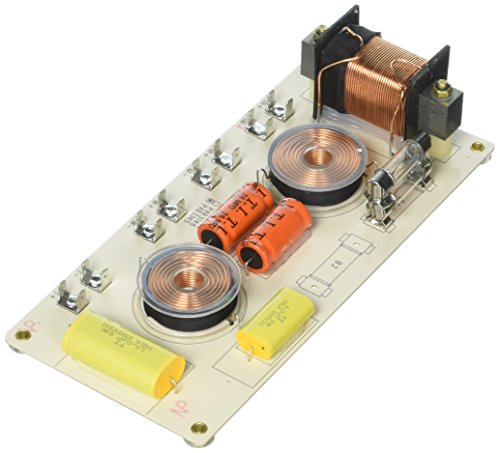
- Handles up to 400 watts
- 500 Hz and 3.5 kHz crossover points
- 8-ohm board-only design
Best For: High-wattage PA and installed sound cabinets
Easy Two-Pack Upgrade
HiQltyla PUV-W3 3-Way Crossover

- Two crossover boards included
- Screw terminals simplify installation
- 4- to 8-ohm, 200-watt peak design
Best For: Paired car or home speaker upgrades
Adjustable Installation Option
2pcs 400W Adjustable 3-Way Crossover

- 400-watt, 4- to 8-ohm compatibility
- Treble and bass adjustment switches
- Eight solderless connection terminals
Best For: DIY builds requiring simple wiring and voicing controls
Adjustable 350W Pick
HiQltyla WEAH-3509A 3-Way Crossover

- 350W peak output for 4–8 ohm systems
- Adjustable midrange and tweeter settings
- Screw terminals and 40Hz–22kHz range
Best For: Flexible DIY car or home audio tuning
High-Power DIY Option
800W 3-Way HiFi Frequency Divider

- 800W maximum output specification
- Designed for 10–15 inch speakers
- Through-hole board supports DIY customization
Best For: Large-speaker home audio projects
Compact 300W Choice
HiQltyla WEAH-3505B Adjustable Crossover

- 300W peak rating for 4–8 ohm systems
- 3dB tweeter adjustment switch
- Designed for systems with a 4-inch midrange horn
Best For: Compact three-way car or home audio builds
High-Current HIFI Pick

- Two-piece 350W crossover set
- Large inductors and metal-film capacitors
- Self-resetting fuse for overcurrent protection
Best For: DIY speaker builders seeking durable paired crossover boards
Adjustable Setup Pick

- Supports 4-8 ohm speaker systems
- Adjustable 2550-2600Hz crossover points
- Eight solderless connection terminals
Best For: Users wanting easy installation and treble/bass adjustment
Paired Budget Build
Two 120W 8-Ohm Crossover Boards

- Two 120W three-way boards
- Designed for 8-ohm systems
- Polypropylene capacitors and high-temperature inductors
Best For: Stereo DIY speaker projects using 8-ohm drivers
Balanced DIY Choice – Dayton Audio XO3W-500/4K
The Dayton Audio XO3W-500/4K is a practical option when comparing audio crossovers for three way speakers in a DIY or replacement project. Its 500 Hz and 4,000 Hz crossover points create a three-octave spread, while the low-pass section supports either 4- or 8-ohm woofers.
Best For: DIY three-way speakers using 4- or 8-ohm woofers.
Pros:
- 500 Hz and 4,000 Hz crossover points provide a three-octave spread.
- Uses metallized polyester film capacitors in the midrange and tweeter paths.
- Supports 4- or 8-ohm woofers in the low-pass section.
Cons:
- Its crossover points may not suit every driver combination.
- The supplied notes do not specify a maximum power rating.
Choose this model when the 500/4,000 Hz layout matches your drivers and you want a straightforward crossover with specified capacitor construction in key signal paths.
PA Power Pick – Eminence PXB33K5 3-Way Crossover
The Eminence PXB33K5 is aimed at high-wattage PA cabinets and professional sound reinforcement. For audio crossovers for three way speakers, it offers 500 Hz and 3.5 kHz points, an 8-ohm design, and a stated capacity of up to 400 watts.
Best For: 8-ohm PA cabinets, live sound, and installed audio projects.
Pros:
- Designed for three-way systems handling up to 400 watts.
- Uses 12 dB low-pass, 6 dB mid-pass, and 18 dB high-pass slopes.
- Provides 500 Hz and 3.5 kHz crossover points for low, mid, and high separation.
- Board-only format allows flexibility for custom installations.
Cons:
- Designed for 8-ohm systems rather than a broad impedance range.
- Sold as a board only, without cabinet mounting hardware.
This is the strongest fit of the group for a high-power PA build, provided your cabinet uses 8-ohm drivers and you are prepared to handle the board installation yourself.
Easy Two-Pack Upgrade – HiQltyla PUV-W3 3-Way Crossover
The HiQltyla PUV-W3 is a convenient two-pack for car or home audio projects. Among audio crossovers for three way speakers, it stands out for screw terminals, 4- to 8-ohm compatibility, and a 45 Hz to 25 kHz stated frequency range.
Best For: Pair-based car or home speaker upgrades with compatible 4.5-inch-plus midrange drivers.
Pros:
- Includes two crossover boards for a stereo or paired-speaker setup.
- Screw terminals simplify installation without welding.
- Supports 4- to 8-ohm systems and lists 200 watts peak output.
- Uses 860 Hz and 6,000 Hz division points.
Cons:
- The supplied compatibility guidance calls for a midrange speaker larger than 4.5 inches.
- The 860 Hz and 6,000 Hz points may not match every three-way driver set.
Its two-board package and screw-terminal layout make it appealing for a simple paired installation, but confirm driver size, impedance, and crossover points before buying.
Adjustable Installation Option – 2pcs 400W Adjustable 3-Way Crossover
This two-piece crossover set is designed for listeners who want more adjustment than a fixed network. When comparing audio crossovers for three way speakers, its 4- to 8-ohm compatibility, 400-watt rating, treble and bass switches, and solderless terminals make installation and tuning approachable.
Best For: DIY HiFi builds needing adjustable voicing and simple connections.
Pros:
- Rated for 400 watts and compatible with 4- to 8-ohm systems.
- Includes dedicated treble and bass adjustment switches.
- Eight solderless connection terminals help simplify installation.
- Includes two crossover boards.
Cons:
- The stated adjustable crossover range is narrow, at 2,550 to 2,600 Hz.
- The supplied notes do not specify separate low, mid, and high crossover points.
This set is worth considering when user-adjustable bass and treble are priorities. Verify that its stated crossover range suits your drivers before committing to the build.
Adjustable 350W Pick – HiQltyla WEAH-3509A 3-Way Crossover
For shoppers comparing audio crossovers for three way speakers, the HiQltyla WEAH-3509A offers a practical combination of screw-terminal installation, adjustable midrange and tweeter settings, and support for 4–8 ohm systems. It is specified for car or home audio and covers 40Hz–22kHz.
Best For: DIY car or home audio systems needing flexible three-way frequency adjustment.
Pros:
- Screw terminals simplify installation without welding.
- 350-watt peak rating with 4–8 ohm compatibility.
- Adjustable midrange and tweeter division settings.
- Includes a tweeter protector and multiple listed audio components.
Cons:
- The 350-watt figure is a peak rating, not a continuous-power specification.
- Its 12-volt electrical specification may require careful system matching.
With more midrange adjustment points than the companion WEAH-3505B, this crossover is the more flexible choice when speaker matching and tuning options matter.
High-Power DIY Option – 800W 3-Way HiFi Frequency Divider
Among audio crossovers for three way speakers, this 800W frequency-divider board is aimed at DIY builders who want to separate treble, alto, and bass signals. Its through-hole circuit-board design is intended for welding and is described as suitable for 10–15 inch speakers.
Best For: DIY home speaker projects using larger 10–15 inch speaker units.
Pros:
- 800-watt maximum output specification.
- Separates audio into treble, alto, and bass paths.
- Wire-wound ceramic resistors and metal-film capacitors are specified for durability.
- Circuit-board openings and traces support customization.
Cons:
- The board is designed for welding, so installation is less convenient than screw-terminal models.
- Compatibility guidance focuses on 10–15 inch speakers rather than a broad range of speaker sizes.
This is the strongest fit for builders prioritizing a high stated power rating and DIY customization, provided the speaker size and installation method match the project.
Compact 300W Choice – HiQltyla WEAH-3505B Adjustable Crossover
For audio crossovers for three way speakers in a compact car or home setup, the HiQltyla WEAH-3505B provides screw-terminal installation, 4–8 ohm compatibility, and a 300-watt peak rating. Its design is specifically noted for systems using a midrange horn up to 4 inches.
Best For: Three-way systems built around a 4-inch midrange horn.
Pros:
- Screw terminals make installation straightforward.
- 300-watt peak handling for 4–8 ohm systems.
- 3dB tweeter adjustment switch offers output control.
- Compact 5.9 x 5.3 x 1.4-inch form factor.
Cons:
- Its stated midrange compatibility is limited to a 4-inch horn for the best experience.
- It offers fewer adjustable division points than the WEAH-3509A.
- Frequency response is specified to 20kHz, below the WEAH-3509A’s 22kHz range.
The WEAH-3505B is a focused option rather than a universal one: choose it when its 4-inch midrange requirement and fixed 850Hz crossover point fit your speaker design.
High-Current HIFI Pick – 350W 3-Way Crossover Module
For shoppers comparing audio crossovers for three way speakers, this two-piece 350W module emphasizes durable components and current handling. It uses a large bass inductance, a rectangular hollow-core midrange inductor, porcelain resistance for high frequencies, and metal-film capacitors for a HIFI-oriented design.
Best For: DIY speaker builders who need a matched pair of three-way crossover boards with overcurrent protection.
Pros:
- Two crossover boards are included.
- Uses large inductors, metal-film capacitors, and a self-resetting fuse.
- A rear tin wire is designed to help large currents pass with less loss.
- Construction is intended to reduce heat and support long service life.
Cons:
- The supplied notes do not specify crossover frequencies or supported impedance.
- Installation details and terminals are not provided.
This is a component-focused option for builders prioritizing robust materials and current capacity. Confirm its frequency and impedance requirements before pairing it with specific drivers.
Adjustable Setup Pick – 400W 4-8 Ohm 3-Way Crossover
Among audio crossovers for three way speakers, this 400W DriSentri model stands out for adjustable controls and broad impedance compatibility. It is designed for 4-8 ohm systems, offers crossover adjustment between 2550Hz and 2600Hz, and includes separate treble and bass adjustment switches.
Best For: Home audio, home theater, or car-audio users who want a solderless, tunable three-way crossover.
Pros:
- Supports speaker systems rated from 4 to 8 ohms.
- Handles up to 400 watts according to the supplied specifications.
- Provides adjustable crossover points from 2550Hz to 2600Hz.
- Eight solderless connection terminals simplify installation.
Cons:
- The adjustment range is relatively narrow.
- Only one crossover is included.
- It is not waterproof.
Choose this model when installation convenience and basic tonal adjustment matter more than a fixed, highly specialized crossover design. Its 4-8 ohm range should still be checked against the complete speaker system.
Paired Budget Build – Two 120W 8-Ohm Crossover Boards
This two-piece 120W set is a practical choice for audio crossovers for three way speakers in an 8-ohm build. The boards use polypropylene-film crossover capacitors, high-temperature inductors, a fire-resistant PCB base, thick copper layers, and overcurrent protection.
Best For: DIY stereo speaker projects requiring two compact three-way frequency-divider boards for 8-ohm systems.
Pros:
- Includes two crossover boards rated at 120 watts each.
- Designed for 8-ohm speaker systems.
- Uses polypropylene-film capacitors and high-temperature inductors.
- Fire-resistant board material and thick copper support durability and current handling.
Cons:
- The supplied specifications do not list crossover frequencies.
- There is no warranty according to the provided details.
- The notes do not specify connection-terminal or mounting information.
Its matched two-board format makes this set convenient for stereo projects, while the component choices support a durable build. Verify the 8-ohm requirement and 120W rating before installation.
How We Picked the Best Audio Crossovers for Three Way Speakers
We selected these 10 models based on the specifications most likely to affect a real speaker build: crossover configuration, stated power handling, impedance compatibility, adjustability, package quantity, and intended use. The list includes established component-style options such as the Dayton Audio and Eminence boards, alongside affordable modules designed for DIY and replacement applications.
Because passive crossover ratings and frequency curves can vary by manufacturer, treat published wattage as a starting point rather than a guarantee. Your drivers’ sensitivity, impedance curve, enclosure, and amplifier output all influence the final result.
Quick Comparison
| What to Compare | Best For | What to Check |
|---|---|---|
| Fixed crossover points | Predictable driver matching | Whether the listed frequencies suit your drivers |
| Adjustable models | Experimenting with different components | Adjustment range, markings, and connection layout |
| Higher power ratings | Larger or louder systems | Continuous versus peak power claims |
| Two-piece packs | Stereo pairs or dual-speaker projects | Whether both boards have identical specifications |
| Compact boards | Space-constrained cabinets | Board dimensions, terminals, and mounting clearance |
Key Buying Factors for Audio Crossovers for Three-Way Speakers
Crossover Frequencies
A three-way network divides the signal among the woofer, midrange, and tweeter. The Dayton Audio XO3W-500/4K, for example, uses 500 Hz and 4,000 Hz points. Those values may work well with some driver combinations but not others. Compare the crossover points with each driver’s usable frequency range and manufacturer recommendations.
Impedance Compatibility
Many listed modules are intended for 4- to 8-ohm systems, but the nominal impedance must match the drivers connected to each section. Using the wrong load can shift the crossover frequency and alter the tonal balance. Do not assume a board labeled “4–8 ohms” will behave identically with every driver.
Power Handling
Ratings from 120W to 800W appear in this selection, but these figures are not always measured under the same conditions. Pay particular attention to the tweeter’s protection and the amount of low-frequency energy reaching each section. Leave headroom and avoid clipping your amplifier.
Build and Installation
Check terminal labeling, board size, mounting holes, component quality, and whether the unit is supplied individually or as a pair. Secure the board inside the cabinet, keep wiring organized, and follow the input and driver polarity markings. Incorrect polarity can cause cancellations around the crossover regions.
Who Should Buy Which Audio Crossovers for Three Way Speakers?
Choose the Dayton Audio XO3W-500/4K if you want clearly specified fixed crossover points from a recognizable audio-component brand. Consider the Eminence PXB33K5 for a more established board-style solution suited to planned driver matching.
Choose an adjustable 4–8-ohm model if you are tuning a DIY design or are not yet certain which driver combination you will use. Choose a two-pack when building a stereo pair and you want matching boards in one purchase. The 120W options are better suited to modest home-audio projects, while the higher-rated 300W–800W listings may appeal to larger builds—provided their specifications genuinely match your drivers and amplifier.