The right crossover can make a two-way or three-way speaker system sound cleaner by directing bass, midrange, and treble to the drivers designed to handle them.
We selected 10 passive audio crossovers for car audio, home Hi-Fi, DIY builds, and higher-power applications, covering two-way, three-way, and four-way designs.
Best 10 Passive Audio Crossovers Picks for 2026
Compact Car Audio Upgrade
Audiopipe CRX-203 2-Way Crossover

- Two-way tweeter and woofer filtering
- 150W RMS / 300W peak handling
- Gold-plated terminals and compact ABS housing
Best For: Car systems using a tweeter and mid/woofer
Adjustable HiFi Tuning
400W 3-Way Adjustable Speaker Crossover

- Three-way high, mid-bass, and low division
- Supports 4–8 ohm speaker systems
- Treble and bass adjustment switches
Best For: Configurable HiFi speaker projects
Hands-On Tone Control
Coliao 400W Adjustable 2-Way Crossover

- 400W two-way frequency divider
- Adjustable treble and bass controls
- Copper construction with pure-copper winding
Best For: DIY two-way, 2.1, and compatible car speaker setups
DIY HiFi Board Pick

- 3-way treble, alto, and bass separation
- Compatible with 4–8 ohm systems
- Through-hole board for DIY customization
Best For: Custom 10- to 15-inch speaker builds
Four-Way Installation Pick

- Four-way design for two bass, midrange, and tweeter
- Screw terminals simplify installation
- Supports 4–8 ohm systems at 400W peak
Best For: Matched car- or home-audio four-driver systems
High-Power Stage Pick
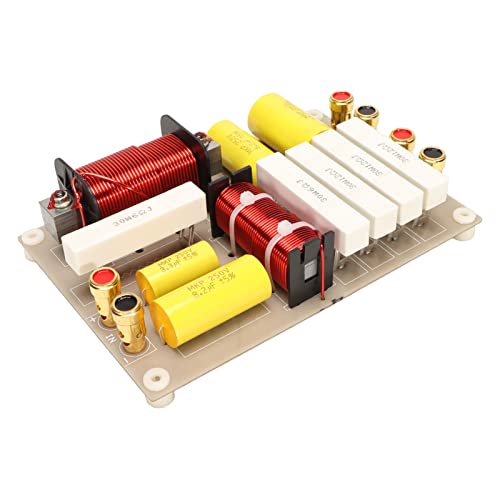
- Rated for high-power audio applications up to 800W
- Works with 10- to 18-inch professional speakers
- Uses durable components and simple installation
Best For: Conference and stage speaker systems
HiFi Home Audio Value

- Two boards for bass, midrange, and treble separation
- Rated up to 200W for 4- to 8-ohm systems
- Screw terminals support no-solder installation
Best For: DIY home, bookshelf, and car audio
Adjustable DIY Choice
2-Way Adjustable Crossover Pair

- Four-step high- and low-frequency adjustment
- Suitable for home or car audio projects
- Includes two crossover units
Best For: DIY two-way audio tuning
Compact Car Audio Upgrade – Audiopipe CRX-203 2-Way Crossover
300 Watts 2 Way Crossover - (2 Pack) Passive Car Audio Speaker Tweeter Mids and Highs CRX-203
Check Price On AmazonThe Audiopipe CRX-203 is a practical two-way option for car-audio systems using a tweeter and mid/woofer. These passive audio crossovers use high-grade polymer capacitors, gold-plated screw terminals, and a compact ABS enclosure to divide frequencies without requiring a separate crossover channel for each driver.
Best For: Car-audio installations pairing a 1-inch tweeter with a 6.5-inch woofer or midrange speaker.
Pros:
- Two-way design covers tweeter and woofer frequency ranges.
- Handles 150 watts RMS and 300 watts peak.
- Gold-plated screw terminals support straightforward wired installation.
- Compact ABS enclosure is suitable for flush mounting.
Cons:
- Designed for car audio rather than general-purpose home speaker systems.
- It is not waterproof.
- The supplied specifications do not identify adjustable crossover points.
With a two-piece package and compact dimensions, the CRX-203 is a sensible choice when you want simple frequency separation in a car system. Its fixed two-way configuration is best suited to straightforward tweeter-and-woofer setups.
Adjustable HiFi Tuning – 400W 3-Way Adjustable Speaker Crossover
This pair of three-way passive audio crossovers is built for systems that need separate high, mid-bass, and low-frequency paths. The 400-watt design supports 4–8 ohm speakers and adds treble and bass adjustment switches for more control during system setup.
Best For: HiFi speaker projects requiring three-way frequency division, adjustable tone controls, and broad 4–8 ohm compatibility.
Pros:
- Three-way design separates high, mid-bass, and low frequencies.
- Supports speakers rated from 4 to 8 ohms.
- Treble and bass switches allow system-level adjustment.
- Eight solderless terminals simplify connections.
Cons:
- The listed crossover-point range is narrowly specified at 2550–2600Hz.
- At 2.22 pounds, it is less lightweight than simpler crossover boards.
- The notes do not provide detailed low-frequency crossover specifications.
This model stands out for flexible installation and user adjustment rather than minimal size. If your speakers fit its impedance and power requirements, its three-way layout and accessible controls make it useful for a configurable HiFi build.
High-Power Car Filtering – DS18 PRO-CFX 2-Way Crossover
The DS18 PRO-CFX is a two-way passive crossover for car systems combining tweeters and mid-range speakers. Rated for up to 300 watts RMS, it filters unwanted frequencies while allowing two speakers to operate from one amplifier channel, making it a practical choice for upgrading a compact car-audio setup.
Best For: High-output car-audio systems using a tweeter and mid-range speaker on a shared amplifier channel.
Pros:
- Supports up to 300 watts RMS of power handling.
- Designed specifically for tweeter and mid-range integration.
- Can use one amplifier channel for two speakers.
- Compact 6.3 x 3.5 x 1.5-inch dimensions ease installation.
Cons:
- It is a two-way design, not a three-way solution.
- The supplied notes do not list adjustable crossover points.
- It is intended for car audio rather than broad home-audio applications.
Choose the PRO-CFX when power handling and simple integration matter more than extensive tuning. Its compact format and shared-channel design can streamline a car-audio installation while keeping frequency distribution targeted.
Hands-On Tone Control – Coliao 400W Adjustable 2-Way Crossover
The Coliao 400W crossover pair provides adjustable treble and bass filtering for two-way speaker systems. Its copper enclosure, pure-copper-wound inductance, and user-controlled tuning make these passive audio crossovers suitable for satellite speakers, 2.1 systems, and selected automotive applications.
Best For: DIY two-way or 2.1 speaker setups where accessible treble and bass adjustment is useful.
Pros:
- Rated for up to 400 watts.
- Adjustable treble and bass controls support hands-on tuning.
- Pure-copper wire and anaerobic copper-wound inductance are specified.
- Can be used with two-way, 2.1 satellite, and automotive speaker applications.
Cons:
- The listed impedance is 16 ohms, limiting compatibility with some systems.
- It is not waterproof.
- The supplied specifications include several connection formats, so the intended wiring should be confirmed before installation.
This is a flexible budget-oriented option for builders who want to adjust the tonal balance manually. Verify the 16-ohm specification and speaker compatibility first, especially when integrating it into an existing amplifier system.
Car Audio 3-Way Pick – CRX-303 Passive Crossover
The CRX-303 is a practical option for car-audio builds that need passive audio crossovers to divide signal between woofer, midrange, and tweeter drivers. This two-pack uses a 4-ohm design with a stated 300-watt maximum power rating and separate frequency ranges for each section.
Best For: 4-ohm car-audio systems using dedicated woofer, midrange, and tweeter drivers.
Pros:
- Two crossovers included in the pack.
- Supports 300 watts maximum power.
- Uses high-grade polymer capacitors plus ferrite and air-cooled spools.
- Provides separate woofer, midrange, and tweeter frequency ranges.
Cons:
- Designed for 4-ohm systems rather than a broad impedance range.
- Its listed specifications are oriented toward car audio, limiting its fit for some home applications.
- No waterproofing is provided.
With its two-unit package and clearly listed driver bands, the CRX-303 is a straightforward choice for a multi-driver car-audio installation. Confirm the 4-ohm impedance and power requirements before ordering.
DIY HiFi Board Pick – 800W 3-Way Speaker Crossover
This 3-way board is aimed at DIY builders looking for passive audio crossovers that separate a mixed signal into treble, alto, and bass. Its 4–8 ohm compatibility, 800-watt stated output rating, and through-hole design make it suited to custom speaker projects.
Best For: DIY home-speaker builds using compatible 10- to 15-inch speaker systems.
Pros:
- Divides audio into treble, alto, and bass sections.
- Supports 4–8 ohm speaker systems.
- Rated for up to 800 watts maximum output power.
- Through-hole circuit-board layout is suitable for welding and customization.
Cons:
- Requires DIY assembly or soldering.
- Only one crossover board is included.
- Its stated speaker compatibility is focused on 10- to 15-inch drivers.
The B0FQM3T56F makes the most sense when you want to customize a 3-way speaker system rather than install a ready-wired crossover. Check driver sizes, impedance, and enclosure requirements before integrating it.
Four-Way Installation Pick – RCEDA-406 400W Crossover
The RCEDA-406 is a four-way passive audio crossover for systems combining two bass drivers, one midrange, and one tweeter. Screw terminals simplify installation, while the 4–8 ohm design and 400-watt peak rating suit selected car- or home-audio setups.
Best For: 4–8 ohm systems with two bass drivers, one midrange, and one tweeter.
Pros:
- Four-way design supports two bass, one midrange, and one tweeter driver.
- Screw terminals avoid the need for welding during installation.
- Includes a 66mm dual bass inductor, 66mm midrange inductor, and dedicated capacitors.
- Includes four shockproof foot pads.
Cons:
- 400 watts is specified as peak power, not continuous power.
- Its frequency division points are fixed at 750Hz and 5200Hz.
- The product is a single crossover unit.
For a properly matched four-driver arrangement, the RCEDA-406 offers convenient terminals and a clearly defined layout. Verify that your drivers match its 4–8 ohm range and 750Hz/5200Hz crossover points.
High-Power Stage Pick – 2-Way 800W Passive Crossover
For professional conference and stage setups, this 2-way passive crossover separates frequency bands and routes them to the appropriate speakers. Its high-power components and compatibility with 10- to 18-inch speakers make it a practical choice when shopping for passive audio crossovers for larger systems.
Best For: Professional conference, stage, and other 10- to 18-inch speaker applications.
Pros:
- Designed for high-power audio applications up to 800W.
- Uses large capacitors, high-power inductors, and aluminum film resistors.
- Supports separate treble handling for clear, bright sound.
- Premium PCBA construction and straightforward installation.
Cons:
- Its professional focus may be more than needed for compact home speakers.
- The supplied notes do not specify impedance or crossover frequency points.
This is the most purpose-built option here for high-output professional speakers. Confirm your speaker size and system requirements before installation.
HiFi Home Audio Value – 3-Way 200W Crossover 2-Pack
This two-pack of 3-way passive audio crossovers is aimed at home, bookshelf, and car audio projects that need bass, midrange, and treble separation. With screw terminals, defined crossover points, and 4- to 8-ohm compatibility, it offers useful specifications for planning a passive audio crossover installation.
Best For: DIY home, bookshelf, or car audio systems using 4- to 8-ohm speakers.
Pros:
- Includes two 3-way crossover boards.
- Supports up to 200W and 4- to 8-ohm impedance.
- Uses 860Hz and 6000Hz frequency division points.
- Screw terminals simplify installation without soldering.
Cons:
- The midrange speaker is specified as greater than 4.5 inches for the intended experience.
- The listed 12V DC supply specification may require careful system matching.
With clear electrical parameters and two included boards, this is a convenient option for multi-driver builds. Check speaker impedance, driver size, and power handling before connecting it.
Adjustable DIY Choice – 2-Way Adjustable Crossover Pair
These adjustable 2-way passive audio crossovers provide four-step high- and low-frequency adjustment for DIY home or car audio projects. The two-piece set is designed to refine bass and treble distribution, making it a flexible option when you want to tune a system rather than use a fixed crossover setting.
Best For: DIY builders tuning two-way home or car audio systems.
Pros:
- Four adjustment steps for high and low frequencies.
- Designed for both home audio and car audio use.
- Two crossover units are included.
- Compact plastic enclosure with stereo output mode.
Cons:
- The supplied notes do not list power, impedance, or crossover frequency values.
- It is not waterproof.
- Adjustment and installation may require DIY system-matching experience.
This pair stands out for tunability, especially in projects where a fixed frequency split is less suitable. Verify electrical specifications with the seller or product documentation before integrating it into a higher-power system.
How We Picked These Passive Audio Crossovers
We compared the listed models by crossover configuration, stated power handling, supported impedance, adjustability, intended installation, and pack size. The selection includes compact two-way filters for tweeter-and-woofer systems, three-way units for separate bass, midrange, and treble drivers, and a four-way option for more specialized builds.
Because manufacturer specifications can describe peak, maximum, or nominal power differently, treat wattage as a screening figure rather than a guarantee of continuous performance. Your amplifier, speakers, enclosure, and installation quality all affect the final result.
Quick Comparison
| Best For | Recommended Type | What to Check First |
|---|---|---|
| Car tweeter and midrange systems | Two-way, 4-ohm crossover | Speaker impedance and amplifier power |
| Home two-way Hi-Fi speakers | Adjustable two-way model | Frequency range and terminal layout |
| Separate bass, midrange, and treble drivers | Three-way crossover | Driver sensitivity and crossover points |
| Complex multi-driver systems | Four-way crossover | Exact band assignments and enclosure design |
| High-output or stage-style systems | High-power passive model | Continuous power rating and cooling |
Key Buying Factors for Passive Audio Crossovers
Two-Way or Three-Way Design
A two-way crossover splits the signal between a low-frequency driver and a tweeter or midrange driver. A three-way model adds another band, which can improve control when the speaker system uses dedicated bass, midrange, and high-frequency drivers. Do not use a three-way unit simply because it has a higher advertised wattage; it must match the number and type of drivers in your design.
Impedance Compatibility
Check whether the crossover is designed for 4-ohm, 8-ohm, or a stated 4-to-8-ohm range. Impedance affects the actual crossover frequency, so pairing a 4-ohm network with an 8-ohm driver can shift the handoff between drivers and change the tonal balance.
Power Handling
Choose a crossover whose realistic continuous capacity meets or exceeds the system’s expected power. Leave headroom, and remember that clipping, excessive bass boost, and incorrect wiring can damage drivers even when the printed wattage appears suitable.
Crossover Frequency and Adjustability
The crossover point determines where one driver hands off to another. Fixed networks are simpler, while adjustable models offer more flexibility for different drivers and installations. Adjustability is useful only when you can measure or carefully listen for a balanced transition.
Physical Installation
Confirm the terminal type, enclosure space, mounting holes, and wire gauge before buying. Keep passive networks secure, dry, and away from sources of vibration. Follow polarity markings carefully; reversing one driver can cause cancellation around the crossover region.
Who Should Buy Which Passive Audio Crossovers?
Choose a compact two-way model for a conventional car speaker or home bookshelf build using one woofer and one tweeter. Select an adjustable two-way crossover when driver specifications are uncertain or you expect to tune the system. A three-way model is the better fit for a dedicated woofer, midrange, and tweeter arrangement. Consider the four-way option only for a carefully planned multi-driver system with known crossover targets. For conference, stage, or other high-output setups, prioritize credible continuous ratings, secure terminals, and robust installation over the largest advertised peak number.