Finding effective soundproofing mats for renters can be difficult when you cannot drill into walls, replace flooring, or make permanent changes. The options in this roundup focus on removable materials that can help reduce floor vibration, echo, and equipment noise in apartments and rental rooms.
Because mats, foam panels, and mass-loaded vinyl solve different acoustic problems, the best choice depends on where the noise starts and whether you need absorption, isolation, or both.
Best 10 Soundproofing Mats for Renters Picks for 2026
Mass-Loaded Barrier
TroyStudio MLV Soundproofing Sheet

- 0.65 lb/sqft dense, flexible barrier
- Stated STC rating of 28
- Cuttable for walls, doors, floors, and equipment
Best For: Blocking noise and reducing vibration across multiple surfaces
Echo Control Panels
54-Pack Acoustic Foam Wall Panels

- 54 lightweight one-foot-square panels
- Wedge surface helps reduce echo and reverb
- Includes tool-free adhesive-pad mounting
Best For: Quick, renter-friendly room acoustic treatment
Interlocking Floor Pads
Aodyow Sound-Absorbing Felt Mats
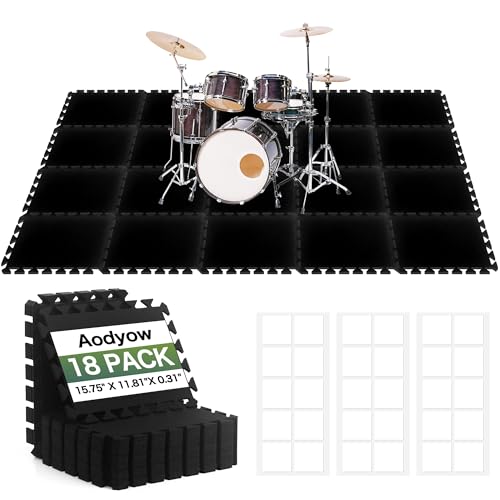
- 18 interlocking 0.3-inch felt pads
- Damps vibration and equipment impacts
- Cuttable, removable, and stackable for storage
Best For: Reducing floor noise from drums, pianos, treadmills, and equipment
Fiber Acoustic Panels
BXI High-Density Absorption Panels

- NRC 0.95 for sound absorption
- Six cuttable polyester-fiber panels
- Odorless, non-toxic, and flame-retardant
Best For: Reducing echo in studios, offices, gaming rooms, and theaters
Peel-and-Stick Wall Treatment
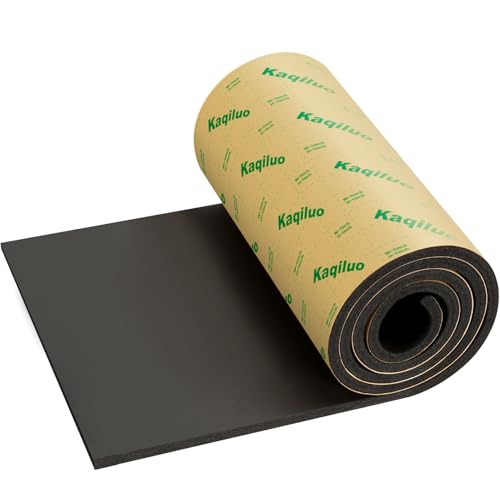
- Reduces echo, reverberation, and reflections
- Self-adhesive backing simplifies installation
- Cuttable 5.8-square-foot foam sheet
Best For: Targeted wall and room-acoustic treatment
Compact Felt Floor Tiles
TroyStudio 16-Piece Soundproof Mats

- 16 interlocking 11-by-11-inch felt panels
- NRC 0.87 for echo and sound absorption
- Cuttable, removable, and tape-secured
Best For: Targeted coverage under instruments, equipment, or furniture
Flexible Coverage Pick
20-Piece Interlocking Felt Soundproof Mats

- Covers up to 17 square feet
- Expandable puzzle-piece design
- Includes removable stability tape
Best For: Larger, changeable rental spaces and multi-purpose rooms
Expanded Absorption Set
TroyStudio 20-Piece Soundproof Mats

- 20 dense polyester felt panels
- NRC 0.87 and 0.78 average absorption
- Interlocking, cuttable, and removable
Best For: Home studios and larger instrument or equipment zones
Mass-Loaded Barrier – TroyStudio MLV Soundproofing Sheet
For renters searching for soundproofing mats for renters, this TroyStudio mass-loaded vinyl sheet is a flexible barrier designed to add density to walls, ceilings, floors, doors, and other surfaces. Its thin 0.08-inch profile can help conserve space while supporting noise reduction and vibration control.
Best For: Renters who need a cuttable, multipurpose barrier for walls, doors, floors, HVAC areas, or equipment-related vibration.
Pros:
- High-density 0.65 lb/sqft construction with a stated STC rating of 28.
- Flexible, waterproof, flame-retardant, and suitable for indoor or outdoor use.
- Can be cut with a utility knife and installed with adhesive, nails, or screws.
Cons:
- Installation guidance calls for adhesive, fasteners, and sealed seams, which may be less convenient in a rental.
- The single sheet covers 10.8 square feet, so larger projects require additional material.
This is the strongest choice here for blocking and damping sound rather than simply reducing room echo. Renters should plan the attachment method carefully, especially where permanent fasteners are not allowed.
Echo Control Panels – 54-Pack Acoustic Foam Wall Panels
These lightweight foam panels are a practical option for renters seeking soundproofing mats for renters to improve room acoustics without drilling. Their wedge-cut surfaces are intended to reduce echoes and reverberation, while the included adhesive pads support quick, tool-free mounting.
Best For: Renters treating echo in bedrooms, offices, recording spaces, gaming rooms, or home theaters.
Pros:
- Includes 54 one-foot-square panels for flexible wall or ceiling arrangements.
- Lightweight polyurethane foam helps dampen echoes and reverberation.
- Included adhesive pads allow quick installation without tools or drilling.
Cons:
- Adhesive pads are recommended only for clean, dry, smooth surfaces.
- They are acoustic treatment panels, so the supplied notes focus on echo control rather than blocking sound transmission.
Choose these when the main problem is a lively, echo-prone room and easy installation matters. Check the wall condition first, since dusty, uneven, damp, or peeling surfaces may need a different mounting approach.
Interlocking Floor Pads – Aodyow Sound-Absorbing Felt Mats
For renters who need soundproofing mats for renters under instruments or exercise equipment, this interlocking felt set provides a removable floor-based solution. The dense 0.3-inch pads are designed to absorb impacts, damp vibration, and help keep drum kits, pedals, and other equipment from sliding.
Best For: Drum kits, pianos, speakers, treadmills, home gyms, studio equipment, and protecting hard floors from equipment movement.
Pros:
- Interlocking design creates a flat, configurable floor covering.
- High-density felt is designed for sound absorption, impact reduction, and vibration damping.
- Panels can be cut, stacked for storage, and used with 50 removable double-sided adhesive strips.
- Non-toxic, odorless, and stain-resistant material is suitable for several indoor spaces.
Cons:
- Each panel is relatively small at 15.7 by 11.8 inches, so larger areas require assembly.
- The product is primarily a floor pad for equipment and impact noise, not a wall or ceiling barrier.
This is a particularly practical renter option for localized vibration and impact problems because the pieces interlock, can be customized, and can be stored when needed. It is best suited to the area directly beneath noisy equipment.
Fiber Acoustic Panels – BXI High-Density Absorption Panels
These polyester-fiber panels suit renters looking for soundproofing mats for renters that can improve room sound while remaining lightweight and cuttable. They are designed to absorb sound energy, reduce reverb and echo, and mount to walls or ceilings with construction adhesive or separately purchased double-sided tape.
Best For: Home studios, podcast spaces, gaming rooms, offices, vocal booths, and home theaters where echo reduction is the priority.
Pros:
- High-density 200 kg/m3 polyester fiber with a stated NRC of 0.95.
- Six panels cover approximately 7.7 square feet and can be cut for custom layouts.
- Odorless, non-toxic, formaldehyde-free, and Class B1 flame-retardant construction.
- Suitable for wall or ceiling acoustic treatment.
Cons:
- The six-pack provides less coverage than larger panel sets.
- Construction adhesive or 3M VHB tape is needed and is not included.
- The notes emphasize absorption of echo and mid-to-high frequencies rather than complete sound blocking.
This is a good fit when you want a more finished fiber-panel approach to controlling reflections. For rental use, removable mounting tape may be preferable, but it must be purchased separately and matched to the surface.
Apartment-Friendly Floor Control – Interlocking Felt Sound Mats
These interlocking felt mats are a practical option when you need soundproofing mats for renters who practice music, exercise, or use vibration-producing equipment. The 0.4-inch high-density felt helps absorb impacts and reduce room echo, while the puzzle design can be assembled, trimmed, and stored without a permanent installation.
Best For: Renters with drums, pianos, treadmills, subwoofers, or home gym equipment on hard floors.
Pros:
- High-density felt helps absorb instrument and exercise impacts before they travel through the floor.
- Interlocking, non-slip design helps keep equipment and pedals in place.
- Can be cut to fit corners, stacked for storage, and used with removable double-sided strips.
- Stain-resistant, non-toxic, odorless material protects floors while reducing echo.
Cons:
- The 20-piece set is best suited to smaller equipment zones rather than full-room coverage.
- Additional strips may be needed for stronger hold on some hard floors.
For renters who need a removable floor solution, this set combines vibration cushioning, floor protection, and flexible placement. It is especially useful when you want to quiet a specific activity area without making permanent changes.
Peel-and-Stick Wall Treatment – Self-Adhesive Acoustic Foam
This self-adhesive foam is designed for renters seeking soundproofing mats for walls, rooms, studios, or vehicles. Its 0.4-inch closed-cell construction helps reduce flutter echo, reverberation, and reflections, while the 5.8-square-foot roll can be cut into shapes for targeted coverage.
Best For: Renters treating wall reflections and room echo in apartments, studios, classrooms, or vehicles.
Pros:
- Self-adhesive backing allows one-person installation without separate mounting materials.
- Closed-cell foam helps reduce reverberation, reflections, and flutter echo.
- Waterproof and moisture-resistant construction suits varied environments.
- Flexible 12-by-71-inch sheet can be cut to match different applications.
Cons:
- One package covers 5.8 square feet, so larger rooms may require multiple packs.
- Self-adhesive installation is less temporary than loose-laid floor mats.
This is a better fit for renters focused on improving room acoustics or reducing reflected sound from walls than for isolating heavy floor impacts. Measure the treatment area first, since the included coverage is limited.
Compact Practice-Zone Coverage – 24-Piece Felt Floor Mats
For renters comparing soundproofing mats for renters, this 24-piece felt set offers a removable way to cushion instruments, furniture, and activity areas. The interlocking 0.3-inch mats create a flat surface of up to 20.5 square feet and can be separated and stacked when the space needs to return to normal.
Best For: Renters creating a dedicated practice, office, playroom, or home-gym zone.
Pros:
- High-density felt cushions hard floors and helps dampen instrument vibration.
- Interlocking edges create a smooth, wrinkle-free surface when assembled correctly.
- Provides up to 20.5 square feet of modular coverage.
- Detaches for compact storage and includes removable double-sided tape for added grip.
Cons:
- At 0.3 inches thick, it provides slightly less cushioning than thicker felt alternatives.
- The maximum coverage is still limited for full-room applications.
This set balances coverage and portability for renters who want to protect floors and soften vibration around a specific setup. Its modular format makes it easy to expand or reduce the covered area as your room changes.
Compact Felt Floor Tiles – TroyStudio 16-Piece Soundproof Mats
For renters searching for soundproofing mats for renters, this 16-piece TroyStudio set offers a removable way to soften room echo, cushion hard floors, and dampen vibration from instruments or exercise equipment. Its interlocking felt panels can be cut to fit smaller areas and secured with the included removable tape.
Best For: Small music, office, exercise, or play areas where flexible coverage matters.
Pros:
- High-density polyester felt is rated with an NRC of 0.87 and an average absorption coefficient of 0.78.
- Interlocking 11-by-11-inch panels create a flat, slip-resistant surface.
- Can be cut with a knife and installed with removable double-sided tape.
- Suitable for drums, pianos, speakers, treadmills, home gyms, and playrooms.
Cons:
- The 16-panel pack covers less area than the larger 20-piece options.
- At 0.4 inches thick, it is primarily an absorption and vibration-dampening layer rather than a complete sound barrier.
This is a practical renter-friendly choice when you need targeted floor coverage without a permanent installation. The compact pack is especially useful beneath an instrument, treadmill, or workstation.
Flexible Coverage Pick – 20-Piece Interlocking Felt Soundproof Mats
These soundproofing mats for renters use lightweight puzzle-style felt panels to create a removable floor covering. The 20-piece set can cover up to 17 square feet, helping cushion hard floors, reduce reverb and echo, and protect surfaces from scratches, knocks, sweat, and other fluids.
Best For: Renters who want broader, expandable coverage for living rooms, playrooms, gyms, or music spaces.
Pros:
- Includes 20 interlocking 11.8-by-11.8-inch panels with 0.4-inch thickness.
- Provides up to 17 square feet of coverage and can be expanded with additional sets.
- Lightweight pieces assemble and disassemble easily without a permanent installation.
- Includes 48 pieces of removable double-sided tape for added stability.
Cons:
- The product notes do not provide a specific NRC or absorption coefficient.
- Its maximum stated coverage is smaller than a full-room floor covering.
- The black finish may be less suitable if you want a lighter-colored floor treatment.
Choose this set when coverage and easy rearrangement are higher priorities than a compact under-equipment pad. Its expandable puzzle format suits changing rental layouts and multi-purpose rooms.
Expanded Absorption Set – TroyStudio 20-Piece Soundproof Mats
For renters needing soundproofing mats for renters with a defined absorption rating, this TroyStudio 20-piece set combines dense polyester felt with interlocking installation. The panels are designed to reduce echo and reverb while helping isolate vibration from drums, pianos, speakers, treadmills, and other equipment.
Best For: Home studios and larger targeted floor zones where measured sound absorption and extra panels are useful.
Pros:
- Includes 20 high-density 11-by-11-inch panels, each 0.4 inches thick.
- Lists an NRC of 0.87 and an average absorption coefficient of 0.78.
- Interlocking construction provides a seamless, wrinkle-free, slip-resistant surface.
- Felt is described as odorless, non-toxic, formaldehyde-free, dirt-resistant, and easy to clean.
Cons:
- The panels provide targeted floor coverage rather than full-room sound isolation.
- Installation requires cutting or using the included removable tape for added stability.
- Its 0.4-inch thickness may not replace a dedicated heavy-duty vibration-isolation platform.
This is the strongest fit of the three when you want the larger pack and a clearly stated absorption rating. It offers a renter-friendly setup for a studio corner or equipment area without committing to permanent flooring changes.
How We Picked These Soundproofing Mats for Renters
We selected products based on renter-friendly installation, portability, surface coverage, material density, thickness, and the type of noise each design is intended to address. The list includes interlocking floor mats for equipment and impact noise, acoustic foam for reflected sound, closed-cell foam for targeted insulation, and mass-loaded vinyl for adding a dense barrier layer.
These products should be viewed as noise-control tools rather than complete room soundproofing systems. Results depend on the floor, walls, gaps, furniture, and the source of the noise.
Quick Comparison
| Best For | Recommended Type | Why It Helps |
|---|---|---|
| Drums, keyboards, exercise equipment | Interlocking floor mats | Reduce vibration and protect the floor |
| Echo in a room | Acoustic foam panels | Absorb reflected mid- and high-frequency sound |
| Adding a dense barrier | Mass-loaded vinyl | Adds mass to limit airborne sound transmission |
| Small targeted areas | Self-adhesive closed-cell foam | Useful for lining surfaces and reducing rattles |
Key Buying Factors for Soundproofing Mats for Renters
Match the Material to the Noise
Floor mats are most useful for structure-borne vibration from instruments, speakers, appliances, or workout equipment. Foam wall panels mainly control echo inside the room; they do not block conversations or traffic noise by themselves. Dense MLV is better suited to barrier-building, but it is heavier and may require careful temporary installation.
Check Coverage and Thickness
Compare the total square footage, not just the piece count. Thicker, denser mats generally offer better cushioning and vibration control, while thinner products are easier to cut, store, and reposition. Measure the target area first and allow extra coverage for seams and edges.
Prioritize Removability
Interlocking panels are usually the safest renter option because they can be installed without adhesive and moved when needed. Self-adhesive products may be convenient, but test them on an inconspicuous area and review the lease before applying them to painted walls, flooring, or trim.
Consider Surface Safety
Look for non-slip backing or textured surfaces if the mat will support equipment. Felt and foam can compress under heavy loads, so confirm that the product is suitable for the equipment’s weight. Keep mats dry and inspect edges regularly to prevent curling or trip hazards.
Who Should Buy Which Soundproofing Mats for Renters?
Choose interlocking floor mats if your main concern is vibration from drums, instruments, exercise machines, or speakers. Select acoustic foam panels when the room sounds harsh or echoey and your goal is better sound control inside the space. Consider closed-cell foam for small surfaces, cabinets, or equipment areas where a lightweight liner is more practical. Choose mass-loaded vinyl when you need a denser barrier layer and can safely accommodate its weight.
For many renters, the most effective setup combines a removable floor mat beneath the noise source with soft furnishings, rugs, curtains, and strategically placed acoustic panels. Start with the source of the noise, treat the largest practical area, and avoid permanent installation unless your landlord approves it.