Choosing the right multi-effects unit can make Sunday setup faster, your tones more consistent, and your stage rig far easier to manage. For church players, the best options balance clean sounds, worship-friendly ambience, and simple preset switching.
This roundup focuses on guitar effects processors for church musicians that are practical for live use, home practice, and direct-to-PA setups.
Best 10 Guitar Effects Processors for Church Musicians Picks for 2026
Budget-friendly starter pick
Zoom G1X Four with looper and expression pedal

- 71 effects and 13 amp models
- 30-second looper and 68 rhythms
- Aux input plus headphone practice
Best For: church musicians who want an easy, affordable multi-effects pedal for practice and simple live use
Compact pro-grade option
BOSS GX-10 compact processor with touch display

- GX-100 core sound engine
- 32 amp types and 170 effects
- Color touch display with expression pedal
Best For: church musicians who need compact, high-quality tones and flexible live control
Simple, flexible all-rounder
Line 6 POD Go with large display and HX models

- Large color display and simple interface
- 270+ HX and legacy models
- Third-party IR loading and stereo loop
Best For: church musicians who want a straightforward, portable unit with lots of model choices
Deep-editing flagship pick
BOSS GX-100 with touch display and 15-block routing

- 32 amp types and 170+ effects
- 15 assignable blocks for routing
- Computer editing with Tone Studio
Best For: church musicians who want advanced tone shaping and flexible live routing
Compact Modeling Powerhouse
Line 6 HX Stomp for flexible church rigs

- Same HX Modeling as Helix
- 300+ effects and models
- Up to 6 simultaneous blocks
Best For: Players who want Helix-style tones in a small pedalboard format
Hands-On All-In-One
BOSS ME-90 for easy worship control
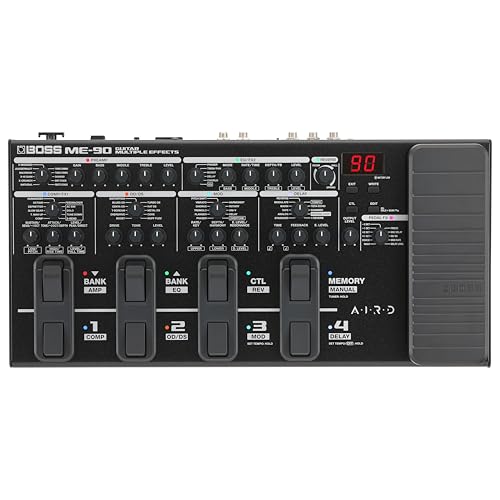
- Knob-based stompbox-style interface
- 11 AIRD amp models and 60 effects
- 8 footswitches plus expression pedal
Best For: Players who want quick, intuitive control with plenty of BOSS tones
Touchscreen Workstation
Fender Tone Master Pro for setlist-based worship

- 7-inch touchscreen interface
- Song/set list mode for live use
- Amp modeling plus IR manager
Best For: Guitarists who want an organized, touchscreen-driven live rig
Stage-Ready All-Rounder
Valeton GP-200 Multi-Effects Processor

- 240+ effects and 140+ amp/cab models
- 256 presets with 20 user IR slots
- USB-C audio interface and built-in looper
Best For: church players who need a full-featured live processor
Compact Acoustic Companion
LEKATO Acoustic Multi Effects Pedal

- 9 amp models and 8 IR cab bodies
- Built-in battery with 6-8 hour runtime
- Bluetooth playback and phone/PC recording
Best For: acoustic guitar players who want a portable processor
Flexible Footswitch Performer
MOOER GE150 Pro Multi Effects Processor

- 200 presets with 170 effects and 55 amp models
- Four footswitches plus expression pedal control
- USB OTG recording, looper, and drum rhythms
Best For: worship guitarists who want performance control and modern recording connectivity
Budget-friendly starter pick – Zoom G1X Four with looper and expression pedal
If you want one of the more approachable guitar effects processors for church musicians, the Zoom G1X Four keeps things simple while still giving you plenty of tonal options. With 71 effects, 13 amp models, a 30-second looper, and 68 rhythm patterns, it works well for building usable worship tones, practicing transitions, and rehearsing with a steady pulse.
Best For: Players who want an affordable, easy-to-explore processor for practice, songwriting, and basic live worship use.
Pros:
- 71 built-in effects and 13 amp models for a wide range of clean and driven sounds
- 30-second looper helps with practice, layering ideas, and live experimentation
- 68 rhythm patterns make solo practice more structured and musical
- Aux input and headphone support are useful for quiet rehearsal anywhere
Cons:
- More focused on practice and entry-level flexibility than deep stage routing
- Sound editing requires the Zoom Guitar Lab app on Mac or Windows
This is a practical grab-and-go option for church players who need variety without a steep learning curve. It is especially appealing if you want built-in tools for practice and tone shaping in one compact pedal.
Compact pro-grade option – BOSS GX-10 compact processor with touch display
The BOSS GX-10 is a strong choice if you want guitar effects processors for church musicians that feel compact but still seriously capable. It packs the GX-100 core sound engine, 32 amplifier types, 170 BOSS effects, flexible routing, and a color touch display into a travel-ready format that suits players who need dependable tone control on stage.
Best For: Worship players who want pro-level sound quality in a smaller, road-friendly processor with flexible control.
Pros:
- GX-100 core technology in a compact, portable chassis
- 32 amp types and 170 BOSS effects for broad tonal coverage
- 24-bit AD/32-bit DA conversion and 32-bit floating-point processing for high audio quality
- Integrated expression pedal and three footswitches support hands-on control
Cons:
- Smaller layout may feel less spacious than larger floor units
- Advanced features can take time to dial in if you want complex routing
For church guitarists who value portability without giving up serious sound design options, the GX-10 is a compelling middle ground. It should fit well for players who need a refined tone platform that is still easy to bring to rehearsal and services.
Simple, flexible all-rounder – Line 6 POD Go with large display and HX models
The Line 6 POD Go is a practical fit for church musicians who want a straightforward multi-effects workflow with plenty of modern modeling options. Its large color display, simple interface, 270+ HX and legacy amp and effects models, stereo effects loop, and expression pedal support make it a strong all-around choice for players who want quick access to usable tones.
Best For: Players who want an easy-to-navigate processor with a large model library and a compact stage footprint.
Pros:
- Simple interface with a large color display makes navigation easy
- 270+ HX and legacy amp/effects models provide a wide tone palette
- Third-party IR loading adds extra speaker cab flexibility
- Stereo effects loop and expression pedal input support practical live setups
Cons:
- Uses a corded power source rather than battery operation
- May be more workflow-focused than feature-heavy flagship units
For worship players who value speed, clarity, and a proven model library, the POD Go remains an easy recommendation. It gives you enough depth for stage use while staying approachable during busy rehearsal schedules.
Deep-editing flagship pick – BOSS GX-100 with touch display and 15-block routing
If you are shopping for guitar effects processors for church musicians and want something that leans toward flagship-level flexibility, the BOSS GX-100 stands out. It combines 32 amp types, more than 170 BOSS effects, AIRD-based tube amp tone, a color touch display, and deep routing options for players who need precise control over their worship sound.
Best For: Worship guitarists who want advanced editing, broad effect coverage, and flexible routing for live or programmed tones.
Pros:
- 32 amplifier types and over 170 BOSS effects derived from the flagship GT-1000
- Ultra-flexible routing with 15 assignable blocks for custom signal chains
- Color touch display and rugged metal chassis support modern live use
- Computer editing via BOSS Tone Studio and Liveset sharing through Tone Exchange
Cons:
- Larger and heavier than compact floor units
- Advanced control options may be more than casual players need
The GX-100 is best for players who want a deeper editing environment and a more expansive performance toolset. For churches with multiple tones, organized setlists, and players who like fine-tuning, it offers a lot of room to grow.
Compact Modeling Powerhouse – Line 6 HX Stomp for flexible church rigs
The Line 6 HX Stomp is a strong fit for church musicians who want one of the more flexible guitar effects processors for church musicians without carrying a full-size board. It uses the same HX Modeling found in Helix, gives you more than 300 effects and models, and can run up to 6 simultaneous amp, cab, and effect blocks. That makes it useful for building worship-ready presets with plenty of room for ambient delays, reverbs, drives, and utility processing.
Best For: Players who want Helix-level modeling in a compact pedalboard-friendly format.
Pros:
- Uses the same HX Modeling as Helix for deep tone-building options
- More than 300 effects and models from Helix, M-Series, and legacy Line 6 products
- Up to 6 simultaneous blocks, including looper support and IR loading
- Three capacitive-sensing footswitches with color-coded LED rings help with quick editing
Cons:
- Only 3 footswitches, so bigger setlists may need external control
- TRS dual expression pedal/footswitch input is an add-on style control path
- Compact size may require more menu-based editing than larger workstations
Overall, the HX Stomp is best when portability matters but you still want serious modeling depth. For church settings that rely on presets, IRs, and fast tone changes, it offers a practical balance of power and size.
Hands-On All-In-One – BOSS ME-90 for easy worship control
The BOSS ME-90 is built for church musicians who want a straightforward, hands-on take on guitar effects processors for church musicians. Its knob-based interface makes it easy to shape tones quickly, while the 11 AIRD amp models, 60 effects, and IR loading give you enough range for clean, ambient, and driven worship sounds. With eight multi-function footswitches and an expression pedal, it also offers more direct control on stage.
Best For: Players who prefer fast, knob-driven editing and a compact all-in-one processor.
Pros:
- Intuitive stompbox-style layout with knob-based control
- 11 flagship-grade AIRD amp models and 60 effects from the GT-1000 family
- Eight multi-function footswitches plus a redesigned expression pedal with toe switch
- 36 preset patches and 36 user patches for storing custom setups
Cons:
- Advanced editing may still benefit from BOSS Tone Studio software
- Optional Bluetooth adaptor is needed for wireless audio/MIDI features
- Battery-powered design is convenient, but stage use may still favor a power supply
For church players who want familiar BOSS operation and a broad effects library, the ME-90 is easy to live with. It blends quick access, flexible amp modeling, and practical patch storage in one compact unit.
Touchscreen Workstation – Fender Tone Master Pro for setlist-based worship
The Fender Tone Master Pro is a full-featured option for church musicians looking at guitar effects processors for church musicians with a more workstation-style workflow. Its 7-inch touchscreen, amp modeling, effect modeling, IR manager, and song/set list mode are designed to make larger live rigs easier to organize. With USB connectivity and corded power, it feels aimed at players who want a centralized platform for building and calling up polished worship tones.
Best For: Guitarists who want a touchscreen-based workstation for organized live setlists.
Pros:
- 7-inch touchscreen makes navigation and editing straightforward
- Song/set list mode is useful for structured church set changes
- Includes amp modeling, effect modeling, and an IR manager
- USB hardware interface supports a modern workstation-style setup
Cons:
- Larger footprint than compact floor processors
- Requires corded electric power rather than battery operation
- More workstation-like design may be more than some simple rigs need
If you want a more organized, screen-first approach to live guitar processing, the Tone Master Pro stands out. It suits players who build setlist-based presets and want quick access to modeling and IR management in one unit.
Stage-Ready All-Rounder – Valeton GP-200 Multi-Effects Processor
If you want one of the most flexible guitar effects processors for church musicians, the Valeton GP-200 is built for live service use with a fast interface, extensive amp and effects modeling, and enough routing options to cover modern worship tones. It also adds practical tools like an expression pedal, looper, drum machine, and USB audio interface support for rehearsal and recording.
Best For: Church players who need a full-featured live processor with strong modeling, preset capacity, and dependable connectivity.
Pros:
- Over 240 effects plus 140+ guitar, bass, and acoustic amp/cab models
- 256 patch slots and support for 20 user cabinet IRs
- Built-in looper, drum patterns, chromatic tuner, and expression pedal
- USB-C audio interface with loopback and re-amping support
Cons:
- More complex than a simple pedalboard for players who only need a few core sounds
- Best value is tied to using the full feature set
The GP-200 is a strong fit when you need one device to handle church-stage versatility, practice, and direct recording without sacrificing control. Its rugged metal build and included gig bag make it especially appealing for regular transport.
Compact Acoustic Companion – LEKATO Acoustic Multi Effects Pedal
For church musicians who play acoustic guitar, this LEKATO unit is a compact option among guitar effects processors for church musicians, especially if you want basic tone shaping, preset switching, and easy practice/recording features. It combines acoustic-focused amp models, IR loading, Bluetooth playback, and a built-in battery in a small pedal that is easy to move between home, rehearsal, and service setups.
Best For: Acoustic guitar players who want a portable processor with simple preset control and battery power.
Pros:
- 9 amp models and 8 IR cab bodies with IR loading/deleting support
- Preset, edit, and live modes for quick switching and customization
- Built-in battery with 6-8 hour runtime and charging while working
- Bluetooth playback plus PC/mobile recording support
Cons:
- Effect selection is narrower than larger multi-effects units
- Designed around acoustic use, so it is less of an all-purpose live processor
This is a practical pick if your church setup centers on acoustic guitar and portability matters more than deep editing. The headphone output and battery power make it useful for quiet practice and flexible rehearsal workflows.
Flexible Footswitch Performer – MOOER GE150 Pro Multi Effects Processor
The MOOER GE150 Pro is aimed at players who want hands-on control from one of the more flexible guitar effects processors for church musicians. With four multi-purpose footswitches, an expression pedal, amp and cab modeling, and USB OTG recording, it is built to handle live transitions, preset navigation, and direct-to-phone or computer workflows.
Best For: Worship guitarists who want performance control, lots of presets, and modern recording connectivity.
Pros:
- 200 factory presets, 170 effects, 55 amp models, and 26 cab sims
- Four multi-purpose footswitches for more flexible live control
- Expression pedal with parameter and volume control modes
- Looper, drum rhythms, tuner, and USB OTG recording support
Cons:
- Standard model is mains-powered, so battery freedom requires the Li version
- Dense feature set may take time to learn for simple weekend-use setups
For church musicians who need quick control changes on stage, the GE150 Pro offers a strong balance of modeling depth and practical switching. Its mix of preset capacity, live control, and phone-friendly recording makes it useful beyond Sunday morning.
How We Picked These Guitar Effects Processors for Church Musicians
We looked for units that fit real worship needs: reliable direct tones, usable amp and cab modeling, strong delay and reverb options, expression pedal support, and enough preset flexibility for different songs and services. We also considered learning curve, footprint, and whether a processor works well as a simple all-in-one rig or a deeper programmable system.
Quick Comparison
If you want the simplest setup, compact units are easier to carry and quicker to program. If you need multiple scenes, amp-style control, and broader routing, larger floor processors offer more flexibility. For players who move between electric, acoustic, and ambient parts, feature set matters just as much as size.
Key Buying Factors for Guitar Effects Processors for Church Musicians
Preset Switching and Scene Control
Look for easy footswitch access, bank navigation, and smooth changes between clean, edge-of-breakup, lead, and ambient patches. Worship sets often move fast, so a processor should reduce tap dancing, not add it.
Direct Output and Cab Simulation
Many church musicians run straight to a mixer or FRFR speaker. In that case, solid cab simulation, IR loading, and balanced outputs can matter more than raw amp power.
Core Effects Quality
Delay, reverb, compression, modulation, and boost/drive tones are usually the backbone of a worship rig. A processor with a few great essentials is often better than one with dozens of average effects.
Workflow and Portability
Some players want a small pedalboard replacement; others want a full workstation with deeper editing. Choose the size and interface you’ll actually use week after week.
Acoustic and Multi-Instrument Use
If you also play acoustic guitar, verify that the unit handles acoustic-friendly EQ and processing. That can be a major advantage for service leaders, volunteers, and multi-role musicians.
Who Should Buy Which Guitar Effects Processors for Church Musicians?
Beginners and occasional players should prioritize simple, affordable models with easy presets and minimal menu diving. Intermediate worship players may want a midrange processor with better amp modeling, more routing options, and an expression pedal. Advanced church musicians and MDs often benefit most from flagship units with stronger scene control, deeper editing, and flexible I/O for direct recording or complex live rigs.
In short, the best choice depends on your service role, your stage setup, and how much time you want to spend programming. For most Guitar Effects Processors for Church Musicians, the right model is the one that delivers dependable tones quickly and keeps your Sunday workflow simple.