Finding the right effects unit can make learning guitar more fun, more inspiring, and far less confusing. The best beginner-friendly processors combine easy controls, useful practice features, and tones that sound good right away.
This roundup focuses on guitar effects processors for beginners that balance simplicity, portability, and value—so you can spend less time menu-diving and more time playing.
Best 10 Guitar Effects Processors for Beginners Picks for 2026
Beginner-Friendly All-Rounder
Zoom G1X Four Guitar Multi-Effects Processor with Expression Pedal

- 71 effects and 13 amp models
- 30-second looper for practice and songwriting
- 68 rhythm patterns plus headphone-friendly use
Best For: New players who want lots of sounds and practice tools
Practice-First Budget Pick
MOOER GE100 Multi-Effects Guitar Pedal

- 80 preset and 80 user patches
- 66 effects with a 180-second looper
- Scale and chord learning function
Best For: Beginners who want practice tools and patch storage
App-Driven Tone Builder
AME-100 Guitar Multi-Effects Processor

- AI Tone Companion for tone creation
- 147 effects with 80 preset slots
- 20-second looper, drums, and Bluetooth control
Best For: Beginners who want app-assisted tone shaping and recording
Beginner-Friendly All-in-One Modeler
Flatsons KMF-1 Multi-Effects Guitar Pedal
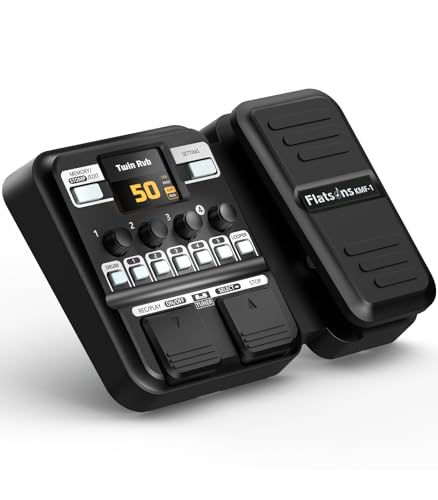
- 77 effects with 18 amp models and 18 cabinet simulators
- 50 presets, plus stomp mode and detailed edit mode
- Built-in tuner, looper, drum rhythms, and AUX input
Best For: Beginners who want lots of sounds and practice tools in one processor
Simple Practice Modeler
Zoom G1 Four Guitar Multi-Effects Processor
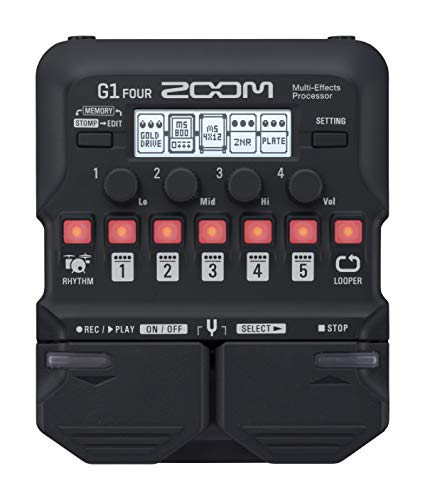
- 65 built-in effects and 13 amp models
- 30-second looper with 68 rhythm patterns
- Battery powered with USB editing software
Best For: New players who want a portable, easy practice processor
Compact Battery-Powered Starter Pedal
LEKATO Cube Baby Multi Effects Pedal

- 9 amp models with 8 IR cabinets and basic core effects
- Built-in battery lasts 6 to 8 hours and can charge while playing
- Headphone output, Bluetooth, and recording support practice
Best For: Beginners who want a small, portable practice pedal with quiet monitoring
Portable Tone Lab

- 100+ effects with 20 amp models
- Rechargeable, pocket-sized design
- USB audio interface and app editing
Best For: Beginners who want a compact all-in-one processor
Ultra-Compact Practice Rig
Flatsons P1 Portable Multi Effects

- Ultra-compact body with color screen
- 80 preset slots and amp/cab sims
- Wireless audio and 7-9 hour battery
Best For: Beginners who want a tiny, rechargeable multi-effects unit
Feature-Rich Pocket Processor
LEKATO Multi Effects Guitar Pedal

- 125 effects with 99 presets
- Amp, cab, NAM, and IR support
- Bluetooth editing plus USB audio
Best For: Beginners who want a compact processor with deep editing
Beginner-Friendly All-Rounder – Zoom G1X Four Guitar Multi-Effects Processor with Expression Pedal
If you’re comparing guitar effects processors for beginners, the Zoom G1X Four is a straightforward place to start because it gives you a wide effects library, amp models, and practice tools in one compact unit. It’s built for experimentation, whether you’re shaping clean tones, adding distortion, or just making practice sessions more fun.
Best For: New players who want lots of sounds, a looper, and built-in rhythm patterns for practice.
Pros:
- 71 built-in effects and 13 amp models for broad tone experimentation
- 30-second looper for solo practice and quick songwriting ideas
- 68 rhythm patterns to keep practice sessions moving
- Works with guitar input, aux audio, amp monitoring, or headphones for flexible practice
Cons:
- Requires Zoom Guitar Lab on Mac/Windows for deeper patch editing
- Feature-rich layout may take some time to learn
The G1X Four is a strong beginner pick if you want a pedal that can grow with you. It balances easy practice features with enough effects and amp models to stay useful as your playing develops.
Premium Pocket Option – BOSS GX-1 Ultra-Portable Guitar Effects Processor
For guitar effects processors for beginners who want a polished feel from the start, the BOSS GX-1 stands out for its simple operation, preset memories, and compact size. It combines a large effects selection with a color display and category buttons, making it easier to explore tones without getting buried in menus.
Best For: Beginners who want premium BOSS sound in a portable, easy-to-use format.
Pros:
- 23 amplifier types and over 140 BOSS effects
- AIRD technology for authentic tube amp tone and touch response
- Color display and intuitive effect category buttons for straightforward operation
- Includes 99 preset memories and 99 user memories for quick setup and saving sounds
Cons:
- More feature-heavy than a very basic starter pedal
- Larger and heavier than the most compact beginner units
This is a beginner-friendly processor if you value sound quality and an organized interface over simplicity alone. The GX-1 gives you room to learn without feeling stripped down.
Practice-First Budget Pick – MOOER GE100 Multi-Effects Guitar Pedal
If you want guitar effects processors for beginners that cover practice, learning, and basic tone building, the MOOER GE100 is a practical option. It offers plenty of presets, an expression pedal, and built-in rhythm and looper features, so you can work on tones and timing without adding extra gear.
Best For: Beginners who want a feature-packed practice pedal with learning tools.
Pros:
- 80 preset patches and 80 user patches for easy sound storage
- 66 effect types across 8 modules for a wide range of tones
- 180-second looper and drum machine for solo practice and jams
- Scale and chord learning function adds beginner-friendly guidance
Cons:
- Uses an analog signal format, which may matter to players seeking a fully digital workflow
- Interface may feel busy for absolute first-time users
The GE100 is a solid choice when you want learning features along with a lot of sound options. It’s especially useful if you plan to practice, save patches, and experiment with rhythmic backing right away.
App-Driven Tone Builder – AME-100 Guitar Multi-Effects Processor
The AME-100 is one of the more modern guitar effects processors for beginners, especially if you like the idea of shaping tones with app support and AI help. It combines a large effects set, preset storage, looping, drum patterns, and wireless control features in a compact battery-powered design.
Best For: Beginners who want app-assisted tone shaping and flexible recording or practice features.
Pros:
- AI Tone Companion can generate and modify tones from text descriptions
- 147 effect models with 80 onboard preset slots
- 20-second looper with unlimited overdubbing plus 40 drum styles
- Bluetooth audio, USB connectivity, and BLE-MIDI support for wireless control options
Cons:
- AI Tone Companion requires login through the AUDOTA STUDIO app
- More app-dependent than a simple plug-and-play starter pedal
If you want a beginner processor with extra creative guidance, the AME-100 offers a lot to explore. Its app features and deep effect count make it a strong choice for practice, recording, and livestreaming.
Beginner-Friendly All-in-One Modeler – Flatsons KMF-1 Multi-Effects Guitar Pedal
If you’re comparing guitar effects processors for beginners, the Flatsons KMF-1 stands out because it packs a huge range of sounds into a single, easy-to-explore unit. With 77 effects, 18 amp models, 18 cabinet simulators, and 50 presets, it gives new players plenty to try without needing to build a pedalboard piece by piece.
Best For: Beginners who want a feature-rich practice and recording processor with lots of presets, amp/cab options, and built-in extras.
Pros:
- 77 effects across 8 modules, including amp, cab, drive, modulation, delay, dynamics, reverb, and filter
- 50 preset patches plus stomp mode and edit mode for easy learning and deeper tweaking
- Built-in tuner, 30-second looper, 42 drum rhythms, and AUX input for practice along with backing tracks
- Clear 128×32 LCD and intuitive controls help keep operation approachable
Cons:
- Battery use is limited to about 2.5 hours, so longer sessions will likely need external power
- The cab module needs to be managed carefully when using real amps or headphones to avoid double cab simulation
- Its many features may take some time for a first-time user to learn fully
This is a strong pick if you want one processor that can cover practice, tone exploration, and simple live use. The KMF-1 offers a lot of flexibility for beginners, but it also has enough control to grow with you.
Simple Practice Modeler – Zoom G1 Four Guitar Multi-Effects Processor
Among guitar effects processors for beginners, the Zoom G1 Four is a practical choice if you want a straightforward unit with enough effects to experiment and practice. It includes 65 built-in effects, 13 amp models, a 30-second looper, and 68 rhythm patterns, so you can start shaping tones right away without a complicated setup.
Best For: New players who want a compact, battery-powered processor for practice, looping, and basic amp modeling.
Pros:
- 65 built-in guitar effects and 13 amp models cover a wide range of beginner needs
- 30-second looper and 68 rhythm patterns support practice and timing work
- Battery-powered design adds portability for rehearsals or practice anywhere
- USB connection and free Zoom Guitar Lab software make tone editing easier on Mac or Windows
Cons:
- It uses a more basic control layout, so deeper editing may take some learning
- The looper is limited to 30 seconds
- It doesn’t offer the same broad preset count or cab options as some larger modelers
The G1 Four is a sensible entry-level multi-effects processor if you value simplicity and portability. It covers the essentials well and gives beginners room to explore without feeling overloaded.
Compact Battery-Powered Starter Pedal – LEKATO Cube Baby Multi Effects Pedal
If you’re shopping for guitar effects processors for beginners and want something small, portable, and easy to practice with, the LEKATO Cube Baby is worth a look. It combines distortion, overdrive, delay, and reverb with 9 amp models and 8 IR cabinets, while also adding preset, edit, and live modes for simple tone changes.
Best For: Beginners who want a compact practice pedal with headphone output, Bluetooth playback, and built-in battery power.
Pros:
- 9 amp models and 8 IR cabinet simulations provide useful core tones
- Preset, edit, and live modes make it easier to store and swap sounds
- Built-in battery supports 6 to 8 hours of use and can charge while working
- Headphone output, Bluetooth playback, and recording support are handy for quiet practice
Cons:
- The effects selection is narrower than larger multi-effects processors
- IR loading and third-party file support may be more than a true beginner needs at first
- As a mini pedal, it’s focused more on practice convenience than deep multi-module control
This model makes sense if you want a beginner-friendly unit that is easy to carry and simple to use for daily practice. It offers the essentials plus a few modern conveniences without becoming bulky or overly complex.
Portable Tone Lab – SONICAKE QME-10 Pocket Master
If you want guitar effects processors for beginners that do a lot without taking over your desk or pedalboard, the SONICAKE QME-10 Pocket Master is easy to consider. It packs 100+ effects, 20 amp models, a looper, drum rhythms, and a clear color screen into a pocket-sized unit with rechargeable power, so it works well for practice, writing, and simple home recording.
Best For: Beginners who want a compact all-in-one processor with lots of sounds to explore.
Pros:
- 100+ built-in guitar, bass, and acoustic effects with 20 amp models
- Rechargeable battery and pocket-sized design for easy portability
- 99 drum rhythms, looper, and 100 presets for practice and creativity
- USB audio interface plus Mac, Windows, iOS, and Android software support
Cons:
- Advanced features like NAM A2 and IR support may be more than a first-time user needs
- Small form factor can mean more menu navigation than a simple analog pedal
For beginners who want one compact device that covers practice, tone shaping, and basic recording, this model offers a strong feature set. It is especially appealing if you want room to grow into deeper editing later.
Ultra-Compact Practice Rig – Flatsons P1 Portable Multi Effects
Among guitar effects processors for beginners, the Flatsons P1 stands out for keeping things small, simple, and portable. It offers 80 preset slots, amp and cab simulation, a bright color screen, wireless connection, and rechargeable battery power, making it a practical choice for bedroom practice, travel, or quick recording sessions.
Best For: Beginners who want a tiny, rechargeable multi-effects unit for quiet practice and mobile use.
Pros:
- Ultra-compact design with a bright 1.18-inch color display
- 80 preset slots with amp modeling, cab sims, and ambient effects
- Built-in wireless plus 7-9 hour rechargeable battery life
- Supports third-party IR loading and OTG recording for mobile or desktop use
Cons:
- Battery life is solid but shorter than some larger competitors
- OTG adapter is sold separately for some mobile recording setups
The P1 is a good fit if you want a beginner-friendly processor that does not take up much space. Its mix of portability, wireless convenience, and recording support makes it especially useful for casual players.
Feature-Rich Pocket Processor – LEKATO Multi Effects Guitar Pedal
If you are comparing guitar effects processors for beginners and want something that can grow with you, the LEKATO Multi Effects Guitar Pedal is built with a lot of room to explore. It includes 125 effects, amp and cab sims, NAM and IR support, a looper, drum rhythms, Bluetooth editing, and USB audio interface functionality, all in a compact rechargeable format.
Best For: Beginners who want a compact processor with deep editing, recording, and expansion options.
Pros:
- 125 effects across 8 modules with 99 presets
- 30 amp models, 30 cab sims, plus NAM and IR slots
- 40-second looper and 100 drum rhythms for practice
- USB audio interface, OTG recording, and Bluetooth app editing
Cons:
- More advanced than a very basic starter pedal
- Battery life is listed at about 4 hours, which is modest for long sessions
This LEKATO unit is best for beginners who know they want more than just a few starter sounds. It offers a lot of features in a portable format, so it can serve as both a learning tool and a long-term practice rig.
How We Picked the Best Guitar Effects Processors for Beginners
For Guitar Effects Processors for Beginners, we prioritized straightforward operation, clear preset organization, built-in amps and effects, and helpful practice extras like tuners, drum patterns, looper functions, headphone output, and USB connectivity. We also looked for units that offer enough depth to grow with you without feeling overwhelming on day one.
Quick Comparison
In general, simpler pocket-style processors are best for practice and portability, while larger multi-effects units usually offer more editing depth, amp modeling, and connectivity. Expression pedals, IR loading, and looper features can be useful, but they are not essential if you mainly want an easy learning tool.
Key Buying Factors for Guitar Effects Processors for Beginners
Ease of Use
Look for a clear interface, easy preset switching, and minimal setup. If you are new to effects, a processor that sounds good in factory presets is usually more valuable than one with a huge feature list.
Practice Features
Headphone monitoring, drum machines, loopers, and tuner functions can make daily practice more productive. These features are especially helpful if you are learning at home.
Sound Variety
A good beginner processor should cover core sounds like clean, crunch, overdrive, delay, reverb, and modulation. More effects are nice, but the basics matter most at the start.
Portability and Power
Compact, rechargeable units are great for taking to lessons or rehearsals. Desktop-style models can be a better fit if you want a more traditional pedalboard feel or easier editing at home.
Connectivity
USB audio, app control, and IR support can extend usefulness over time. If you plan to record or practice with backing tracks, these features are worth considering.
Who Should Buy Which Guitar Effects Processors for Beginners?
If you want the simplest path into effects, choose a compact model with intuitive presets and built-in practice tools. If you want room to experiment, pick a fuller-featured multi-effects processor with amp models, cab sims, and deeper editing. Beginners who value convenience should lean toward rechargeable or ultra-portable options, while players planning to record or gig later may prefer a more expandable unit.
For most new players, the best choice is the processor that makes you practice more often. In other words, the best Guitar Effects Processors for Beginners are the ones you will actually enjoy turning on every day.