Shopping for drum machines under 300 means balancing sound, workflow, and features without paying for extras you may never use. The best options in this range can cover everything from sketching ideas to performing live.
Below, we focus on models that offer the best mix of value, usability, and creative flexibility for beginners, beatmakers, and guitar players alike.
Best 10 Drum Machines Under 300 Picks for 2026
Compact Analog Punch

- Separate accent per drum
- Song mode for chaining patterns
- Optional Color shaping on most instruments
Best For: Producers wanting punchy analog beat-making and live pattern control
Classic Studio Workhorse
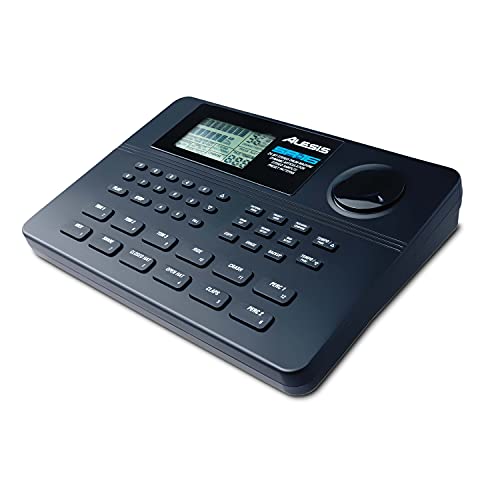
- 233 professional sounds
- 50 preset and 50 user drum kits
- Full MIDI support and stereo outputs
Best For: Songwriters and performers needing a proven, flexible drum machine
Portable Analog Hybrid

- Built-in speaker and battery power
- Electribe-style 16-step sequencer
- SYNC I/O and MIDI In
Best For: Portable beatmaking and beginner-friendly groove programming
Touch-Pad Starter Pick

- 16 touch-sensitive finger pads
- 48 drum kits and 100 preset patterns
- USB-C or battery power
Best For: Affordable portable use with touch pads and preset patterns
Analog Starter Sequencer
Behringer RD-6 Baby Blue Drum Machine

- 8 analog drum voices with classic electronic percussion sounds
- 16-step sequencer for simple pattern building
- USB/MIDI connectivity plus distortion effects
Best For: Beginners who want an affordable analog drum machine with hands-on controls
Pad Controller Beat Maker
Donner STARRYPAD MIDI Drum Controller

- 16 backlit silicone pads with 3 banks for 48 assignments
- 2 faders, 2 knobs, and 3 buttons expand control
- Requires DAW software; includes Melodics and Cubase LE
Best For: DAW users who want a compact MIDI pad controller for beat programming
Analog Value Bundle
Behringer RD-6 Orange Bundle with Headphones
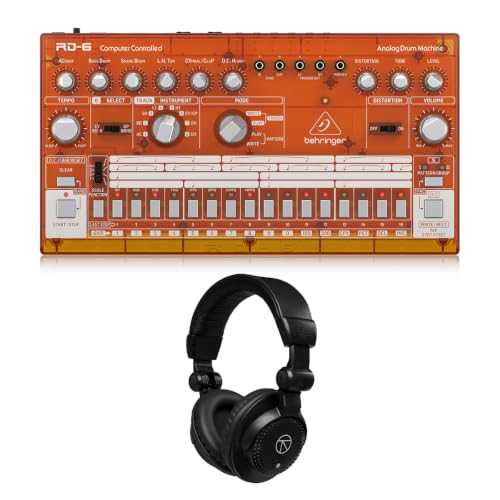
- Bundle includes the RD-6, power supply, manual, and warranty
- 8 analog drum sounds with dedicated level controls
- USB 2.0 and MIDI In/Out/Thru for studio integration
Best For: Shoppers who want a complete RD-6 package with analog sequencing
Compact Stylus Beat Maker

- 4 drum kits and 4 bass sounds
- Record multiple layers and patterns
- Built-in speaker with headphone support
Best For: portable stylus-based beat sketching
Classic Analog Step Sequencer

- 15 drum sounds and 34 rhythm presets
- 16-step sequencer for custom beats
- Compact alloy steel design
Best For: easy analog-style programming and live use
Guitar-Friendly Drum Pedal

- 121 grooves across 11 music styles
- Tap tempo and fill function for live use
- Dual footswitch support and preset storage
Best For: guitar or bass players needing foot-controlled rhythms
Compact Analog Punch – Arturia DrumBrute Impact
If you want drum machines under 300 with a hands-on analog feel, the Arturia DrumBrute Impact stands out for fast pattern building and immediate sound shaping. It keeps the workflow simple while still giving you real performance control, including separate accent per drum and optional Color shaping on most instruments.
Best For: Producers who want an affordable analog drum machine for punchy beat-making and live pattern chaining.
Pros:
- Separate accent control per drum helps patterns feel more dynamic.
- Song mode supports chaining patterns into longer arrangements.
- Optional Color sound-shaping adds extra movement to most instruments.
- Metal build gives it a sturdy, hardware-focused feel.
Cons:
- Color shaping is not available on the Cowbell.
- Included components are limited to cymbal and snare.
Overall, this is a strong pick if you value tactile control and analog-style immediacy over a long list of extras. It is especially appealing for beatmakers who want a compact machine that can go from sketch to song quickly.
Classic Studio Workhorse – Alesis SR-16
The Alesis SR-16 is one of the most established drum machines under 300 for songwriters, live performers, and remix engineers who want a proven digital kit. With 233 sounds, built-in effects, and full MIDI support, it covers both quick ideas and more structured production setups.
Best For: Songwriters and performers who want a reliable drum machine with MIDI connectivity and a large sound library.
Pros:
- 233 professional sounds provide plenty of kit variety.
- 50 preset and 50 user drum kits support flexible setup.
- Built-in digital effects add realism to programmed drums.
- Complete MIDI support makes it easy to integrate with keyboards, computers, and DAWs.
Cons:
- Plastic body may not feel as rugged as metal-built rivals.
- It is a more traditional machine rather than a modern pad-based groovebox.
If you want a dependable classic instead of a boutique-style box, the SR-16 remains easy to recommend. Its feature set is practical, flexible, and still very useful for studio or live use.
Portable Analog Hybrid – Korg Volca Beats
Korg Volca Beats Analog Rythem Machine w/Electribe-style 16-step Sequencer and Real Analog Sounds
Check Price On AmazonFor buyers comparing drum machines under 300, the Korg Volca Beats is a compact option that focuses on portability and quick programming. Its real analog sounds, Electribe-style 16-step sequencer, and built-in speaker make it easy to sketch beats anywhere, while the PCM engine handles clap and crash-style sounds.
Best For: Portable beatmaking, beginner-friendly sequencing, and battery-powered sessions.
Pros:
- Compact design with built-in speaker supports on-the-go use.
- Electribe-style 16-step sequencer keeps programming straightforward.
- Eight memory patches let you store custom sequences and patterns.
- SYNC I/O and MIDI In make it easy to connect with other gear or a DAW.
Cons:
- Minimal parameters may feel limiting if you want deep sound design.
- Included components are listed as not included.
The Volca Beats is best when you want a small, immediate machine that does the basics well. It is a smart choice for portable beat sketches and simple analog-style groove creation.
Touch-Pad Starter Pick – Medeli MR101S
The Medeli MR101S is a practical option in the drum machines under 300 category if you want touch pads and simple preset-driven play. It pairs 16 touch-sensitive finger pads with 48 drum kits and 100 preset patterns, plus USB-C or battery power for flexible use.
Best For: Players who want an affordable, portable drum machine with touch-sensitive pads and preset patterns.
Pros:
- 16 touch-sensitive finger pads offer a responsive playing surface.
- 48 drum kits and 100 preset patterns provide plenty to start with.
- Hands-free flexibility with the included foot pedal.
- USB-C or battery power supports portable use.
Cons:
- The feature set is more preset-focused than deeply programmable.
- White finish may not suit every setup.
For straightforward triggering and portable practice, the MR101S is easy to understand and easy to carry. It fits buyers who want a simple, touch-based drum machine without a complicated setup.
Analog Starter Sequencer – Behringer RD-6 Baby Blue Drum Machine
If you want one of the more straightforward drum machines under 300 for hands-on beat making, the Behringer RD-6 keeps the focus on classic analog sounds and simple sequencing. It gives you 8 drum voices, a 16-step sequencer, distortion effects, and USB/MIDI connectivity, so it fits neatly into a compact studio or live setup.
Best For: Beginners and budget-minded producers who want an affordable analog drum machine with real tactile controls.
Pros:
- 8 analog drum sounds cover core kicks, snares, toms, cymbal, clap, and hi-hats.
- 16-step sequencer makes pattern creation quick and direct.
- USB/MIDI connectivity helps it integrate with a computer-based setup.
- Distortion effects add extra character for punchier rhythms.
Cons:
- Only 8 drum voices, so it is not built for deep sample libraries.
- Sequencing is 16-step based, which may feel limited for more complex programming.
The RD-6 is a good value pick if your priority is analog sound and immediate control rather than an all-in-one production box. Among drum machines under 300, it stands out as a practical, no-frills option for building beats fast.
Pad Controller Beat Maker – Donner STARRYPAD MIDI Drum Controller
For buyers comparing drum machines under 300, the Donner STARRYPAD is more of a MIDI pad controller than a standalone sound box, so it makes the most sense if you already use DAW software. It offers 16 backlit silicone pads, 3 pad banks for 48 assignable pads, 2 faders, 2 knobs, and USB-C connectivity for plug-and-play control.
Best For: Producers who want a portable MIDI pad controller for triggering drums, samples, and DAW instruments.
Pros:
- 16 backlit pads with 3 banks give you up to 48 assignable pads.
- Includes 2 faders, 2 knobs, and 3 buttons for extra control.
- Class-compliant USB-C connection makes setup simple on supported systems.
- Comes with Melodics courses and Cubase LE software kit.
Cons:
- It does not make sound on its own and requires DAW software.
- Apple mobile use needs an additional Lightning to USB adapter.
If your workflow is built around software instruments, the STARRYPAD gives you a flexible way to finger-drum and control production tools. It is less of a traditional drum machine and more of a compact performance controller, which is an important distinction when shopping this category.
Analog Value Bundle – Behringer RD-6 Orange Bundle with Headphones
If you want an analog option in the drum machines under 300 category and like getting the essentials in one box, this Behringer RD-6 bundle is worth a look. It includes the drum machine, power supply, user manual, and a 1-year limited warranty, while the unit itself offers 8 analog drum sounds, a 16-step sequencer, and USB 2.0 plus MIDI I/O.
Best For: Buyers who want a ready-to-use RD-6 package with analog sounds and basic connectivity.
Pros:
- Includes the RD-6 unit, power supply, user manual, and warranty coverage.
- 8 authentic analog sounds cover the core drum kit elements.
- 16-step sequencer with 2x 16 pattern capacity supports pattern building.
- USB 2.0 and MIDI In/Out/Thru help it connect to a studio setup.
Cons:
- Still limited to 8 drum sounds, so it is focused on classic drums only.
- Plastic housing and compact design may not appeal to everyone.
This bundle makes the RD-6 easier to buy as a complete starter setup, especially if you prefer analog workflow and want the connection pieces included. It is a solid practical choice when you want a simple rhythm box without spending beyond the sub-$300 range.
Compact Stylus Beat Maker – Stylophone Beat
If you want one of the more unusual drum machines under 300, the Stylophone Beat keeps things compact and hands-on with a stylus-based approach. It offers 4 drum kits and 4 bass sounds, plus recording features that let you layer parts, mute sounds, and save multiple patterns while staying locked to tempo with the click track.
Best For: Players who want a portable, stylus-controlled rhythm machine for sketching beats and layering ideas.
Pros:
- 4 drum kits and 4 bass sounds for quick pattern building
- Record multiple layers and multiple patterns
- Click track and tempo lock help keep performances in time
- Built-in speaker plus wired headphone support for flexible monitoring
Cons:
- Powered by 3 AA batteries, which are not included
- Compact layout may feel limited compared with larger drum machines
This is a good pick if portability and immediate beat-making matter more than deep sequencing. Its built-in speaker, headphone option, and layered recording tools make it practical for quick sketch sessions at home or on the go.
Classic Analog Step Sequencer – Behringer RD-78
The Behringer RD-78 fits well in a search for drum machines under 300 if you want a straightforward analog-style box with ready-made rhythm starting points. It includes 15 drum sounds, 34 rhythm presets, and a 16-step sequencer, so you can move from preset patterns to custom beats without a complicated workflow.
Best For: Musicians who want an easy-to-use analog drum machine for studio writing or live performance.
Pros:
- 15 authentic drum sounds cover core analog-style percussion
- 34 rhythm presets provide fast starting points
- 16-step sequencer supports custom programming
- Compact, durable alloy steel build suits studio and live use
Cons:
- Relies on a more traditional feature set than modern grooveboxes
- Included components are limited to the manual
Overall, the RD-78 is a practical choice if you want classic drum-machine functionality in a simple package. Its preset library and step sequencer make it easy to start quickly while still leaving room to program your own patterns.
Guitar-Friendly Drum Pedal – MOOER DRUMMER X2
The MOOER DRUMMER X2 stands out among drum machines under 300 because it is designed as a guitar pedal, not a tabletop box. It gives you 121 built-in drum grooves across 11 music styles, plus fill functions, tap tempo, dual footswitch control, and song bank storage for building backing rhythms around guitar or bass rigs.
Best For: Guitarists and bass players who need a foot-controlled rhythm machine for practice, songwriting, or performance.
Pros:
- 121 drum grooves across 11 music styles
- Fill function and tap tempo add live flexibility
- Dual footswitch support makes on/off and groove changes easier
- USB editor software supports preset management and firmware updates
Cons:
- Pedal format is less suited to traditional drum-machine workflows
- Requires the included 9V DC adapter for power
If you want rhythm support that fits naturally into a pedalboard setup, this is a strong and practical option. The combination of groove variety, foot control, and preset storage makes it useful for both practice sessions and live playing.
How We Picked These Drum Machines Under 300
We prioritized models that deliver usable sounds, reliable timing, and clear hands-on control at a budget price. For Drum Machines Under 300, that usually means a strong sequencer, enough sound-shaping to stay creative, and a layout that makes programming beats fast rather than frustrating.
We also looked at portability, connectivity, and how well each unit fits a real buyer use case: studio sketching, live jamming, practice, or pairing with other gear.
Quick Comparison
In this price range, the main differences are less about “better” and more about “better for you.” Analog-inspired boxes often favor immediate beat programming and punchy character. Sample-based units tend to offer broader utility and familiar drum kit sounds. Pad controllers and stylus-based units emphasize performance and tactile triggering, while pedal-style rhythm machines are built for solo players who need accompaniment on the floor.
Key Buying Factors for Drum Machines Under 300
Sound Engine
Choose between analog-style synthesis, sampled sounds, or hybrid designs. Analog machines usually excel at raw character and simplicity, while sample-based models often feel more familiar for standard drum patterns.
Sequencer and Workflow
A good step sequencer matters more than flashy extras. Look for enough pattern length, pattern storage, and hands-on controls to make programming quick. If you plan to jam live, easy mute, fill, and variation functions are especially useful.
Connectivity
Check for MIDI, USB, audio outputs, and sync options if you want to integrate with a DAW, synths, or pedals. For Drum Machines Under 300, connectivity can be the difference between a standalone toy and a real part of your setup.
Form Factor
Desktop units suit studio tables and live rigs. Compact models are great for travel and couch writing sessions. Guitar pedal drum machines are ideal for solo practice and live accompaniment, but they usually sacrifice deep programming.
Who Should Buy Which Drum Machines Under 300?
If you want a hands-on beat machine for techno, electro, or live performance, analog-style options are the most immediate and inspiring. If you need realistic kit sounds for songwriting or practice, a sample-based unit is usually the safer pick. If you’re a guitarist or bassist, a pedal drum machine may be the most practical choice. And if your priority is portability or learning the basics, compact and pad-based models are often the easiest place to start.
For most buyers, the best Drum Machines Under 300 are the ones that match your workflow first and your sound preferences second. Focus on how you’ll actually use the machine, and you’ll get far more value from your budget.