The right drum machine can speed up songwriting, tighten your timing, and give your home studio a reliable groove source without needing a full drum kit.
From classic step-sequencers to compact pad controllers and hybrid beat makers, this roundup focuses on practical options for different budgets and workflows.
Best 10 Drum Machines for Home Studios Picks for 2026
Analog Beat Maker

- All-analog drum machine with metal body
- Separate accent per drum for dynamics
- Song mode for chaining patterns
Best For: Producers who want hands-on analog beat sequencing in a home studio
Software-Ready Pad Controller
Akai MPC Studio USB MIDI Pad Controller

- USB-powered controller for Windows and Mac
- 16 RGB velocity- and pressure-sensitive pads
- Includes MPC2 software and production tools
Best For: MPC and DAW users who want hands-on beat control at the desk
Classic Standalone Drum Machine
Alesis SR-16 Standalone Drum Machine
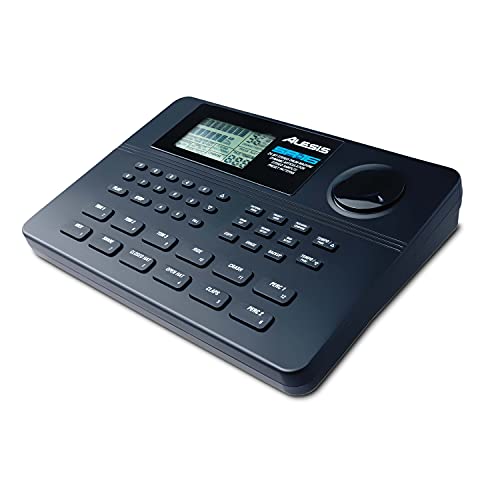
- Standalone unit with 233 sounds
- 50 preset and 50 user drum kits
- MIDI support for DAWs and keyboards
Best For: Songwriters who want a classic hardware drum machine for home studios
Portable Tabletop Drum Set
Pyle PTED06 Electronic Drum Kit

- Portable tabletop kit with 7 pads
- 55 preset plus 10 custom kits
- USB MIDI plus AUX connectivity
Best For: Beginners and home users wanting a portable practice kit with MIDI
Classic Analog Beat Box

- 15 authentic drum sounds
- 34 rhythm presets for quick starts
- 16-step sequencer in a compact build
Best For: Producers who want a simple analog-style beat maker for home studios
Looper + Groove Utility

- Combines looper and drum machine in one unit
- 100 grooves across 10 musical styles
- Up to 160 minutes of loop recording
Best For: Guitarists and writers who want rhythm backing plus looping in one pedal
Portable Pad Studio

- 8 touch-sensitive pads with pedals
- 600 sounds and MIDI/USB control
- Headphone and battery-powered practice
Best For: Beginners and home users who want a compact pad kit for practice and MIDI use
Portable Beat Sketcher
Stylophone Beat for quick pattern sketching

- 4 drum kits and 4 bass sounds
- Click track, tempo lock, and layering
- Built-in speaker with compact body
Best For: Portable rhythm ideas in a small home studio
Quiet Mesh Practice Kit
Xkorce mesh electronic drum set for home practice

- All-mesh heads for quieter playing
- 360 sounds with 20 preset kits
- Computer, smartphone, and dual Bluetooth support
Best For: Quiet home practice and beginner drummers
DAW Pad Controller
Donner STARRYPAD for DAW beat making

- 16 pads with 48 assignable slots
- Faders, knobs, and MIDI in/out
- Requires DAW software to produce sound
Best For: Software beat makers and MIDI-based home studios
Analog Beat Maker – Arturia DrumBrute Impact
If you want drum machines for home studios with a hands-on feel, the Arturia DrumBrute Impact is built around an all-analog workflow. It offers separate accent per drum, song mode for chaining patterns, and optional Color sound-shaping on all instruments except the cowbell, which makes it useful for building evolving beats without relying on software.
Best For: Home producers who want an analog drum machine with fast pattern building and performance-oriented control.
Pros:
- All-analog drum machine with metal construction and compact desktop footprint
- Separate accent per drum helps add movement and dynamics
- Song mode supports chaining patterns for fuller arrangements
- Optional Color shaping expands the tonal range of most instruments
Cons:
- Does not offer Color sound-shaping on the cowbell
- Uses 1/4 inch TRS connectivity rather than USB MIDI
- Fewer included components than a full electronic kit setup
For a home studio that prioritizes tactile beat programming, the DrumBrute Impact stands out as a focused hardware option. Its strength is in immediate sound shaping and arrangement-friendly pattern chaining rather than broad multi-purpose features.
Software-Ready Pad Controller – Akai MPC Studio USB MIDI Pad Controller
For drum machines for home studios that center on software production, the Akai Professional MPC Studio is a USB-powered MIDI pad controller built for MPC2 integration. Its 16 RGB velocity- and pressure-sensitive pads, touch strip, and transport controls are meant to give you a tactile way to program beats, trigger sounds, and work inside your DAW.
Best For: Beat makers who want a portable controller tightly tied to MPC software and DAW-based production.
Pros:
- USB-powered and compact for desktop studio use
- 16 RGB pads with velocity, pressure sensitivity, and aftertouch
- 1:1 integration with MPC2 software and cross-compatibility with major DAWs
- Includes MPC2 software license plus extra production tools and educational content
Cons:
- Requires software to function as a full production tool
- Not a standalone drum machine
- Plastic build may feel less substantial than hardware drum units
This is a strong choice if your home studio already runs on a computer and you want expressive pad control instead of an all-in-one box. The included software bundle adds a lot of value for producers who prefer making beats inside MPC2 or a compatible DAW.
Classic Standalone Drum Machine – Alesis SR-16 Standalone Drum Machine
The Alesis SR-16 remains a practical pick among drum machines for home studios because it is a standalone unit with a long track record and easy MIDI integration. It includes 233 sounds, 50 preset and 50 user drum kits, built-in effects, and velocity-sensitive pads, so it can cover songwriting, practice, and simple production work without extra software.
Best For: Songwriters and home studio users who want a classic standalone drum machine with MIDI support.
Pros:
- Standalone drum machine with 233 professional sounds
- 50 preset and 50 user drum kits for flexible setup
- Built-in effects plus sound stacking and step editing
- MIDI support works with keyboards, computers, DAWs, and electronic drum kits
Cons:
- Plastic build is less premium than metal-bodied alternatives
- Older design may feel basic compared with newer pad-based controllers
- Limited to the onboard workflow unless you connect external gear
If you want a dependable hardware drum machine with a straightforward feature set, the SR-16 still makes sense. It is especially useful for home studios that value MIDI compatibility and classic drum-machine workflow over flashy extras.
Portable Tabletop Drum Set – Pyle PTED06 Electronic Drum Kit
If you are comparing drum machines for home studios and want something that leans toward practice and tabletop performance, the Pyle PTED06 is a portable electronic drum kit with a digital panel. It includes 7 pads, hi-hat and kick bass pedal controllers, 55 preset plus 10 custom kits, and USB MIDI connectivity for use with computer software.
Best For: Beginners, practice setups, and home users who want a portable electronic drum kit with MIDI output.
Pros:
- Portable tabletop design with included drumsticks
- 7 pads plus hi-hat and kick bass pedal controllers
- 55 preset and 10 custom drum kits with 300+ sounds
- USB MIDI, AUX in, and phone out connections for flexible use
Cons:
- Tabletop kit format is different from a dedicated standalone drum machine
- Plastic/bass wood build is not as rugged as metal desktop units
- Battery operation depends on C batteries if you want wireless use
The PTED06 is best viewed as a compact drumming and practice solution that can also feed your computer-based setup. For home studio buyers who want a portable kit feel with MIDI connectivity, it offers a lot of utility in a small package.
Classic Analog Beat Box – Behringer RD-78
If you want drum machines for home studios with a straightforward, hands-on workflow, the Behringer RD-78 focuses on classic analog-style rhythm creation. It offers 15 drum sounds, 34 rhythm presets, and a 16-step sequencer, making it a practical choice for building beats quickly without a complicated setup.
Best For: Home studio producers who want an easy-to-use analog-style drum machine for quick beat programming and live-style pattern building.
Pros:
- 15 authentic drum sounds cover a solid range of classic rhythm parts.
- 34 rhythm presets can speed up songwriting and idea generation.
- 16-step sequencer supports more detailed beat programming.
- Compact, durable build is suited to studio use and portability.
Cons:
- Focused on classic drum-machine sounds rather than deep modern sound design.
- Only the included basic interface and controls are mentioned, so advanced editing may be limited.
The RD-78 is a good fit if you want a no-frills hardware drum machine that gets ideas down fast. Its mix of presets, step sequencing, and compact design makes it especially appealing for small studio setups.
Looper + Groove Utility – FLAMMA FS21
For players shopping drum machines for home studios that also need looping, the FLAMMA FS21 combines a stereo looper pedal with a drum machine in one compact unit. It includes 100 drum grooves across 10 musical styles, plus 160 minutes of looping capacity, so it works well for sketching song parts, practicing, or layering ideas at the desk.
Best For: Guitarists and home-recording players who want a loop pedal with built-in drum grooves for practice and songwriting.
Pros:
- 2-in-1 design combines looping and drum-machine functions.
- 100 drum grooves across 10 styles give plenty of rhythm choices.
- 160 minutes total looping capacity is useful for longer practice sessions.
- Dual footswitches and TAP tempo add practical control.
Cons:
- Exported audio files only include looper-recorded audio, not drum kit sounds.
- Requires a 9V DC center-negative power adapter.
- Software editing is needed for some data management functions.
The FS21 makes sense if your home studio workflow blends guitar looping with rhythm support. It is less of a dedicated drum machine and more of a flexible writing tool, which is exactly what many small setups need.
Portable Pad Studio – Pyle Digital Drum Kit
If you need drum machines for home studios that feel more like an electronic practice kit, the Pyle tabletop digital drum set offers 8 touch-sensitive pads, pedals, and a large sound library. It is aimed at players who want to practice, trigger sounds, and connect to computer software through USB/MIDI.
Best For: Beginners or home users who want a compact drum pad kit for practice, recording, and MIDI control.
Pros:
- 8 touch-sensitive pads and pedals create a more kit-like playing feel.
- 600 sounds provide a wide range of electronic drum options.
- USB connection lets it function as a MIDI controller with Mac and PC software.
- Headphone output and battery power support quiet, flexible practice.
Cons:
- Larger and heavier than a small desktop drum machine.
- Uses an ABS plastic body rather than a more rugged metal build.
- Sound selection may be broader than needed if you only want simple beat patterns.
This Pyle kit is best viewed as a compact electronic drum practice and control surface rather than a classic groovebox. For home studio users who want pads, MIDI, and lots of sounds in one portable package, it covers a lot of ground.
Portable Beat Sketcher – Stylophone Beat for quick pattern sketching
If you want one of the more hands-on drum machines for home studios, the Stylophone Beat is a compact option for sketching rhythms fast. It gives you 4 drum kits and 4 bass sounds, plus recording tools like multiple layers, mute functions, and multiple pattern storage, so it works well for building ideas without a complicated setup.
Best For: Home studio producers who want a portable, battery-powered rhythm sketchpad with simple performance controls.
Pros:
- Compact body with a built-in speaker and volume control
- 4 drum kits and 4 bass sounds for quick groove building
- Click track and tempo lock help keep patterns in time
- Can record multiple layers and multiple patterns
Cons:
- Powered by 3 AA batteries, which are not included
- Smaller format than a full-size drum machine or pad controller
- Wired headphones only, so there’s no wireless monitoring option
Overall, this is a practical pick if you value portability and immediate hands-on rhythm making over deep studio integration. It’s best suited to quick beat ideas, layering, and basic pattern work in a home setup.
Quiet Mesh Practice Kit – Xkorce mesh electronic drum set for home practice
For players comparing drum machines for home studios with a more realistic feel, this electronic drum set stands out for its all-mesh heads and quiet practice design. It includes a full multi-piece layout, 360 sounds, 20 preset kits, and recording plus metronome tools, making it a flexible choice for home drumming and basic computer or smartphone connectivity.
Best For: Apartment players and beginners who want a quiet electronic kit with lots of built-in sounds.
Pros:
- All-mesh drum heads help reduce noise during practice
- 360 sounds and 20 preset kits provide broad style coverage
- Supports computer and smartphone connection plus dual Bluetooth
- Includes headphones, sticks, cables, and stand hardware
Cons:
- Takes up more space than a compact drum machine
- More of a full electronic drum kit than a tabletop beat maker
- Setup is more involved than a simple plug-and-play controller
This kit makes sense if your home studio needs a quiet practice setup that still feels close to acoustic drumming. It offers more playability and connectivity than smaller rhythm boxes, but it is best for users with room to spare.
DAW Pad Controller – Donner STARRYPAD for DAW beat making
If your search for drum machines for home studios is really about MIDI beat creation, the Donner STARRYPAD is built for software-based production. It uses 16 backlit pads with 3 banks for 48 assignable pads, plus faders, knobs, and MIDI in/out, so it’s aimed at triggering drums, samples, and effects inside a DAW rather than making sound on its own.
Best For: Producers who want a compact USB MIDI controller for software drums, samples, and DAW control.
Pros:
- 16 velocity-sensitive pads with 48 assignable pad slots total
- 2 faders, 2 knobs, and 3 buttons add control flexibility
- Works with Android, iOS, Mac, and Windows
- Includes Melodics courses and Cubase LE software kit
Cons:
- Does not make sound by itself and needs DAW software
- iPhone and iPad use requires an Apple Lightning to USB adapter
- Software setup may be more involved than a standalone groove box
This is the most studio-oriented option here if you already produce inside software. It’s a strong fit for beat programming, sample triggering, and DAW-based workflow, but it’s not a standalone drum machine.
How We Picked These Drum Machines for Home Studios
We prioritized ease of use, sound quality, sequencing workflow, connectivity, footprint, and whether each model makes sense in a home recording setup. Since Drum Machines for Home Studios often need to do more than just play patterns, we also looked at controls, headphone support, MIDI or USB integration, and how well each unit fits solo production, practice, or sketching ideas quickly.
Quick Comparison: What Matters Most
Before choosing, compare sound engine type, pattern creation method, and how you’ll connect to the rest of your gear. Analog and hybrid machines can deliver hands-on character, while pad controllers and tabletop units may offer broader software integration or more sounds. If you need a fast writing tool, prioritize a clear sequencer. If you want versatility, look for assignable pads, external sync, and easy recording workflow.
Key Buying Factors for Drum Machines for Home Studios
Sound Character
Decide whether you want punchy analog drums, realistic sampled kits, or a wider sound library. For home studios, the best choice depends on whether you’re making electronic tracks, demos, beats, or practice loops.
Sequencing and Workflow
A straightforward step sequencer can be a major advantage when you need to build patterns fast. More advanced controls help with live performance and detailed editing, while simpler layouts are ideal for beginners.
Connectivity
USB, MIDI, headphone outputs, Bluetooth, and external sync can make a big difference in a compact studio. If you plan to record into a DAW, make sure the unit fits your setup without extra adapters or unnecessary friction.
Size and Noise
Desk space matters. Smaller units are easier to keep nearby, and quiet pads or headphones support make late-night sessions more practical.
Who Should Buy Which Drum Machines for Home Studios?
Choose a classic standalone drum machine if you want immediate hands-on groove creation and minimal setup. Pick a pad controller or MIDI beat maker if your home studio relies on software instruments and sample libraries. Go with a tabletop digital drum set if you want practice-friendly pads and built-in sounds. If you need a flexible all-in-one tool for songwriting, looping, or live sketching, a hybrid device may be the smartest buy.
For most buyers, the best fit is the machine that matches your workflow first and your sound second. In Drum Machines for Home Studios, speed, simplicity, and connectivity often matter more than sheer feature count.