Finding the right floor unit can make it easier to shape your tone, simplify your setup, and carry fewer pedals to every gig.
This roundup highlights ten of the best floor guitar effects processors for 2026, with options for beginners, gigging players, and home-recording guitarists.
Best 10 Floor Guitar Effects Processors Picks for 2026
Flagship Hands-On Option
BOSS ME-90 all-in-one floor processor
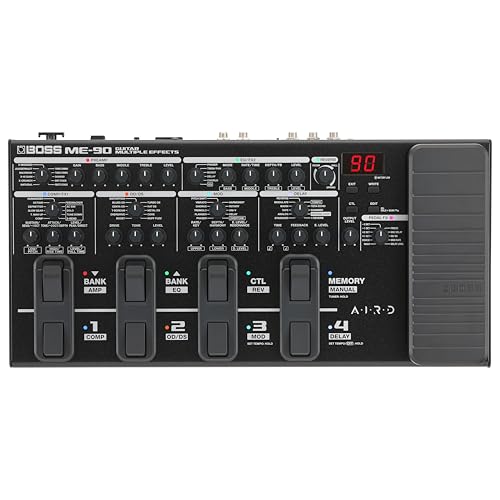
- Knob-based editing with stompbox-style workflow
- 11 amp models, IR loading, and 60 effects
- 8 footswitches and expression pedal included
Best For: Players who want an intuitive, all-in-one floor processor with classic BOSS handling
Portable HX Modeling Pick
Line 6 POD Go compact multi-effects pedal

- Large color display with simple interface
- 270+ HX and legacy amp/effects models
- Stereo loop plus third-party IR loading
Best For: Guitarists who want a portable processor with a simple layout and deep model library
Compact Touchscreen Workhorse
BOSS GX-10 compact guitar and bass processor

- GX-100 sound engine in a compact metal chassis
- 32 amp types and 170 BOSS effects
- Touch display with up to 15 assignable blocks
Best For: Guitar and bass players who want advanced BOSS processing in a compact footprint
Feature-Packed All-Rounder
VALETON GP-200 multi-effects pedal with USB

- 240+ effects with 140 amp/cab simulations
- 11-block routing and 256 presets
- Color LCD, MIDI, FX loop, and USB audio interface
Best For: Multi-instrument players who want extensive effects, routing options, and built-in recording tools
Battery-Powered Stage Control

- Up to 9 hours of lithium battery life
- 8 footswitches with CTRL mode mapping
- Stereo balanced XLR outputs for live use
Best For: Players wanting a compact live processor with battery power and deep foot control
Feature-Rich Live Rig

- Over 240 effects and 140+ amp/cab models
- USB-C interface with loopback and re-amping
- Built-in looper, drum machine, and expression pedal
Best For: Players who want an all-in-one processor for stage, practice, and recording
Compact Practice Multieffects

- 71 effects and 13 amp models
- 30-second looper and 68 rhythm patterns
- Compact unit with included expression pedal
Best For: Players who want an affordable, portable practice and songwriting processor
Smart Feature Pick

- 130+ effects with 100 preset slots
- NAM and cabinet IR file support
- USB audio interface with loopback and re-amp
Best For: Players who want a compact processor with deep editing and stage-ready controls
Performance Flex Pick

- 200 presets and 170 effects
- Four footswitches plus expression pedal
- USB OTG recording and looper support
Best For: Live players and home recordists who want flexible foot control and broad tone options
Ultra-Portable Pick

- Pocket-sized multi-effects processor
- 100+ effects with IR and NAM support
- Rechargeable battery and USB audio streaming
Best For: Traveling players and home users who want a tiny, battery-powered multi-effects unit
Flagship Hands-On Option – BOSS ME-90 all-in-one floor processor
If you want floor guitar effects processors that feel fast to use on stage, the BOSS ME-90 is built around simple knob-based control and a familiar stompbox-style workflow. It combines premium BOSS tones, amp modeling, IR loading, and multiple effect categories in a compact unit that is easy to dial in without menu diving.
Best For: Players who want an intuitive, all-in-one floor processor with classic BOSS handling and broad tone shaping.
Pros:
- Easy stompbox-style editing with a knob-based interface
- 24-bit AD/DA and 32-bit floating-point processing for advanced audio quality
- 11 AIRD amp models, IR loading, and 60 effects from the GT-1000 family
- Eight multi-function footswitches plus a redesigned expression pedal
Cons:
- More feature-rich than a basic multi-effects pedal, so setup can take time
- Wireless editing and streaming require the optional Bluetooth adapter
The ME-90 is a strong pick if you want a practical floorboard that balances depth with speed. Its preset and user patch memory, effects loop, and BOSS Tone Studio support make it flexible enough for rehearsals, gigs, and home use.
Portable HX Modeling Pick – Line 6 POD Go compact multi-effects pedal
The Line 6 POD Go is a compact choice among floor guitar effects processors, especially if you want a large color display and a straightforward interface. It packs more than 270 HX and legacy amp and effects models, plus third-party IR loading and a stereo effects loop, into a lightweight design that is easy to move from home to gig.
Best For: Guitarists who want a portable processor with a simple layout and a deep Line 6 model library.
Pros:
- Large color display makes navigation easy
- 270+ HX and legacy amp/effects models
- Third-party IR loading for more cabinet flexibility
- Stereo effects loop and expression pedal/footswitch input
Cons:
- Fewer onboard controls than larger floor processors
- Shoulder bag is sold separately
If you value portability and a clear screen over maximum onboard complexity, the POD Go is easy to recommend. It gives you a broad sound palette and enough connectivity for a streamlined live or practice rig.
Compact Touchscreen Workhorse – BOSS GX-10 compact guitar and bass processor
For players comparing modern floor guitar effects processors, the BOSS GX-10 stands out for packing the GX-100 sound engine into a smaller, travel-ready chassis. It combines a color touch display, 32 amplifier types, 170 BOSS effects, and flexible routing, so you can build detailed tones without needing a large board.
Best For: Guitar and bass players who want advanced BOSS processing in a compact footprint.
Pros:
- GX-100 core technology in a smaller format
- 24-bit AD and 32-bit DA conversion with 32-bit floating-point processing
- 32 amp types and 170 BOSS effects for broad tonal range
- Up to 15 assignable blocks with WAV speaker IR support
Cons:
- Only three footswitches, so hands-on control is more limited than larger boards
- Compact size may not suit players who want a sprawling control surface
The GX-10 is a smart option if you want serious sound design in a portable format. Its rugged metal chassis, touch display, and flexible signal routing make it a strong fit for stage, studio, or travel rigs.
Feature-Packed All-Rounder – VALETON GP-200 multi-effects pedal with USB
The VALETON GP-200 is one of the most flexible floor guitar effects processors in this group, with 240+ built-in effects, 140 amp and cabinet simulations, and a highly adjustable signal chain. It also adds a 4.3-inch color LCD, 8 customizable LED footswitches, FX loop, MIDI, and USB audio interface features for players who want a single pedal to cover many jobs.
Best For: Multi-instrument players who want extensive effects, routing options, and built-in recording tools.
Pros:
- 240+ effects, 140 amp/cab sims, and 100 stompbox-style effects
- Up to 11 simultaneous effect blocks with adjustable signal chain
- 4.3-inch color LCD plus 8 customizable LED footswitches
- FX loop, MIDI, stereo output, and USB-C audio interface support
Cons:
- Feature set is broad, so it may take time to learn fully
- 90-day free return window is shorter than many buyers may prefer
If you want maximum flexibility from a single processor, the GP-200 brings a lot to the table. Its mix of amp modeling, looper, drum rhythms, and software editing makes it especially practical for players who build tones, record, and rehearse in one place.
Battery-Powered Stage Control – MOOER GE150 Max Li
If you want floor guitar effects processors that are built for live flexibility, the MOOER GE150 Max Li brings a lot to the table. It combines amp modeling, multi-effects, an expression pedal, and battery power in a compact floor unit, with 8 footswitches and CTRL mode for deeper preset control on stage.
Best For: Guitarists who need a battery-powered, stage-ready processor with expanded footswitch control and balanced outputs.
Pros:
- Integrated lithium battery with up to 9 hours of runtime
- 8 footswitches plus CTRL mode for per-module control
- Stereo balanced XLR outputs for long-distance live routing
- 50 banks and 200 preset slots with spill-over for smoother changes
Cons:
- Battery-powered design may be less relevant if you always use a power supply
- Large feature set may take time to set up and learn
The GE150 Max Li stands out among floor guitar effects processors if your priority is live convenience and routing options. With 55 amp preamps, 26 cabinet sims, 3rd-party IR loading, looping, and drum-machine support, it covers a wide range of performance needs in one floorboard.
Feature-Rich Live Rig – Valeton GP-200
The Valeton GP-200 is a strong pick if you want floor guitar effects processors that cover rehearsal, recording, and live use without feeling limited. It packs a large effects library, amp and cab modeling, IR loading, USB audio interface features, and a built-in expression pedal into a rugged metal chassis.
Best For: Guitarists and bassists who want a versatile all-in-one processor with broad connectivity and performance tools.
Pros:
- Over 240 effects with 140+ amp and cabinet models
- Supports 20 user cabinet IRs and 256 patch slots
- USB-C audio interface with loopback and re-amping support
- Includes looper, drum machine, expression pedal, and gig bag
Cons:
- Corded power only, so it is not built for battery use
- Feature depth may be more than casual players need
For players who want a single floorboard to handle tone creation and computer interfacing, the GP-200 is especially compelling. Its mix of modeling, routing flexibility, and practical extras makes it easy to build a complete working setup around one pedal.
Compact Practice Multieffects – Zoom G1X Four
The Zoom G1X Four is one of the more approachable floor guitar effects processors for players who want a simple, compact way to explore tones. It offers 71 effects, 13 amp models, a 30-second looper, and 68 rhythm patterns, plus an expression pedal for added control.
Best For: Practice-focused players who want a small multi-effects unit with looper, rhythms, and expression control.
Pros:
- 71 built-in effects and 13 amp models
- 30-second looper for layered ideas and practice
- 68 rhythm patterns for built-in backing
- Expression pedal included in a compact design
Cons:
- Feature set is more limited than larger stage processors
- Analog signal format may not suit every workflow
If you mainly need a portable processor for practice and songwriting, the G1X Four keeps things straightforward. It is easy to carry, easy to power, and gives you enough effects and supporting tools to experiment without the complexity of a larger floor unit.
Smart Feature Pick – SONICAKE QME-20 Smart Box
If you want floor guitar effects processors that can cover modern gigging, recording, and practice in one box, the SONICAKE QME-20 Smart Box is built to do a lot. It combines 130+ effects, amp and cabinet IR support, and deep editing tools, while still keeping stompbox-style footswitch control for live use.
Best For: Guitarists who want a compact floor processor with wide effects coverage, IR/NAM support, and easy stage control.
Pros:
- 9 simultaneous effect modules with amp, cab IR, EQ, delay, reverb, and more
- Supports third-party NAM and cabinet IR files for expanded tone options
- USB audio interface features plus loopback and re-amp support
- Built-in looper, tuner, metronome, and 100 drum rhythms
Cons:
- Firmware update warning for Windows 11 users
- 9V DC cable or USB cable is not included in the package
As a floor guitar effects processor, the QME-20 stands out for flexibility rather than simplicity. It makes the most sense for players who want lots of sounds, strong connectivity, and the option to edit presets in software or on mobile.
Performance Flex Pick – MOOER GE150 Pro
The MOOER GE150 Pro is a strong choice if you’re comparing floor guitar effects processors for live control and preset browsing. It pairs 200 factory presets with 170 effects, four multi-purpose footswitches, and an expression pedal, so it is designed to handle both performance switching and hands-on tone shaping.
Best For: Players who want a feature-packed floor unit with flexible foot control, expression options, and recording support.
Pros:
- 200 presets and 170 effects with 55 amp models and 26 cab sims
- Four multi-purpose footswitches for more flexible live control
- Expression pedal supports parameter control and volume control
- USB OTG recording, tuner, looper, and drum machine functions
Cons:
- Standard model is mains-powered rather than battery-powered
- Menu and control system may be more involved than a basic pedalboard setup
The GE150 Pro is aimed at players who want a lot of onboard tone options and enough foot control to manage patches and looping without reaching down often. Its recording-friendly USB OTG support also makes it useful for practice and quick ideas.
Ultra-Portable Pick – SONICAKE QME-10 Pocket Master
If portability matters most in floor guitar effects processors, the SONICAKE QME-10 Pocket Master keeps a lot of features in a very small footprint. It offers 100+ effects, amp modeling, IR and NAM support, plus battery power and USB audio streaming for players who want a grab-and-go rig.
Best For: Guitarists, bassists, and acoustic players who want a pocket-sized effects processor for travel, practice, and quick recording.
Pros:
- Compact, pocket-sized design with built-in rechargeable battery
- 100+ effects, 100 presets, and up to 9 simultaneous effect blocks
- Supports third-party IR files and NAM A2 files
- USB audio interface with stereo streaming and OTG support
Cons:
- Smaller format may be less convenient for players who want a larger foot-control surface
- Uses a 5V power specification rather than a full-size pedalboard power setup
The QME-10 is a practical option for players who need a portable floor guitar effects processor without giving up editing depth or recording features. Its small size and rechargeable battery make it especially appealing for travel and casual sessions.
How We Picked the Best Floor Guitar Effects Processors
We focused on Floor Guitar Effects Processors that balance sound quality, ease of use, feature set, and real-world flexibility. Key factors included amp and cab modeling, the quality and variety of effects, connectivity for recording or live use, preset handling, expression control, and whether the unit suits practice, rehearsal, or stage work.
Quick Comparison
If you want the simplest path, choose a compact model with a straightforward layout and a smaller learning curve. If you need deeper editing, USB audio, stereo outputs, or IR loading, look for a more advanced processor with stronger routing and expansion options. Battery-powered and pocket-sized units are best for travel and casual practice, while larger floorboards are better when you need a central hub for your sound.
Key Buying Factors for Floor Guitar Effects Processors
Sound Engine and Amp Modeling
The core of any processor is how convincing its amp, cab, and effect models sound. Players who rely on direct recording or go amp-free should prioritize realistic modeling and easy access to cabinet simulation or impulse response support.
Controls and Workflow
A clear screen, logical footswitch layout, and responsive expression pedal can save time on stage. If you tweak sounds often, look for deep editability; if you mostly call up presets, prioritize fast navigation and simple patch organization.
Connectivity
USB audio, stereo outs, MIDI, and effects loops can make a big difference depending on your rig. These features matter most for players integrating their processor with DAWs, external pedals, or complex live setups.
Portability and Power
Some Floor Guitar Effects Processors are built for all-in-one performance, while others are designed to travel light. Battery-powered options are useful for practice and mobile playing, but mains-powered models usually offer more features and roomier control layouts.
Who Should Buy Which Floor Guitar Effects Processors?
Beginners and casual players should lean toward easy-to-use processors with a manageable number of presets and effects. Gigging guitarists often benefit most from models with strong foot control, robust outputs, and amp-modeling flexibility. Recording players should favor USB audio, IR support, and quiet direct-out performance. If you want maximum portability, choose a compact or battery-powered unit; if you want one central board for many sounds, a larger multi-effects processor is the better fit.