Clear dialogue can make a bigger difference to a film than an expensive camera. The right lavalier microphone keeps voices intelligible while letting subjects move naturally through a scene.
We’ve gathered 10 strong options for filmmakers, creators, interviews, and mobile production—from compact wireless systems to dependable wired lapel microphones.
Best 10 Lavalier Microphones for Filmmaking Picks for 2026
Best Ultralight Single-Transmitter Option
DJI Mic Mini Wireless Lavalier
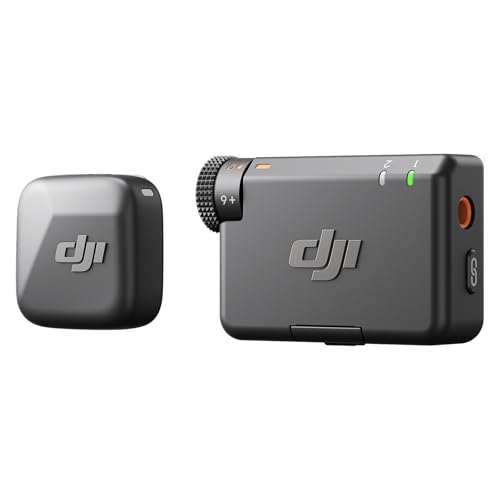
- 10 g discreet transmitter
- Up to 400 m advertised range
- Two-level noise cancellation
Best For: Solo filmmakers and DJI ecosystem users
Best Two-Person Smartphone Kit
Hollyland Lark A1 Wireless Lavalier

- Two 8 g magnetic transmitters
- 48kHz/24-bit audio specification
- Three noise-cancellation levels
Best For: Two-person smartphone filming and livestreaming
Best Mobile Dual-Mic DJI Kit
DJI Mic Mini 2 TX Wireless Lavalier

- Two 10 g transmitters included
- Two-level active noise cancellation
- USB-C mobile receiver
Best For: Two-person mobile filmmaking and interviews
Best All-Rounder
RØDE Lavalier GO Professional Lavalier/Lapel Microphone Broadcast

- Broadcast-grade 4.0mm capsule
- 3.5mm TRS connector for broad compatibility
- Kevlar-reinforced cable with pop shield
Best For: Filmmaking, broadcast, and location voice recording
Best DJI-System Match

- Designed for DJI Mic 2 and DJI Mic
- Rotating design supports flexible placement
- Cable routing helps prevent unplugging
Best For: DJI-system interviews, vlogs, and livestreams
Best Value Color Option

- Discreet capsule for wearable recording
- Standard 3.5mm camera connection
- Includes pop shield, pouch, and durable cable
Best For: Everyday wired camera and filmmaking setups
Best Wireless Phone Pick
MAYBESTA Wireless Mini Lavalier Mic

- Two wireless omnidirectional microphones
- Lightning and USB-C phone compatibility
- Plug-and-play setup with noise reduction
Best For: Smartphone filmmakers and two-person interviews
Best Wired Adapter Pick
NEEWER CM5 Dual Lavalier Microphones

- Two wired omnidirectional condenser mics
- 3.5mm TRS and selected transmitter compatibility
- No batteries, drivers, or software required
Best For: Camera rigs and existing wireless transmitter systems
Best Feature-Rich Wireless Pick
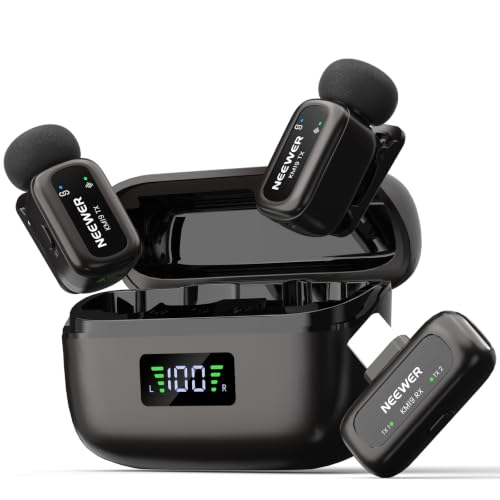
- Two transmitters with stereo or mono output
- Three-level noise cancellation and mute control
- Up to 30 hours with charging case
Best For: USB-C mobile filmmakers recording interviews and live content
Best Portable Camera Kit – Movo WMX-2 Wireless Lavalier
The Movo WMX-2 is a practical pick for filmmakers who want a compact wireless setup for DSLR cameras. Its 2.4GHz connection, built-in omnidirectional transmitter microphone, included lavalier microphone, and charging case make it well suited to mobile shoots and everyday content creation.
Best For: DSLR filmmaking, vlogging, interviews, and creators who need a portable camera-focused wireless microphone.
Pros:
- Compact 2.4GHz wireless system with auto-pairing receiver.
- Advertised transmission range of up to 328 feet with Adaptive Frequency Hopping.
- Up to 7 hours of battery life, plus a charging case for an additional charge.
- Includes a lavalier microphone, windshields, carrying pouch, and USB-C cable.
Cons:
- Designed around a single-channel setup.
- Its camera connection uses a 3.5 mm jack rather than USB-C.
For filmmakers using Canon, Sony, Nikon, or similar DSLR cameras, the WMX-2 offers a straightforward wireless workflow and useful travel accessories. It is especially appealing when portability and extended shooting time matter more than a multi-transmitter configuration.
Best Ultralight Single-Transmitter Option – DJI Mic Mini Wireless Lavalier
The DJI Mic Mini is an ultralight choice for filmmakers seeking discreet wireless audio. The 10 g transmitter, 400 m advertised transmission range, two-level noise cancellation, and automatic limiting provide a convenient setup for interviews, outdoor filming, and general content creation.
Best For: Solo filmmakers, interviews, smartphone or camera recording, and users already working with compatible DJI OsmoAudio devices.
Pros:
- 10 g transmitter is designed to be discreet and comfortable to wear.
- Advertised 400 m maximum transmission range for flexible positioning.
- Two noise-cancellation levels help adapt to quiet or noisy environments.
- Automatic limiting helps reduce clipping when audio input becomes too loud.
Cons:
- This package includes one transmitter, limiting two-person interview use.
- Its listed signal-to-noise ratio is 70 dB, lower than the Movo WMX-2 specification.
The DJI Mic Mini is a strong fit when a small, low-profile transmitter is a priority. Its camera, computer, and smartphone compatibility adds flexibility, while direct DJI OsmoAudio connections can simplify setups for compatible devices.
Best Two-Person Smartphone Kit – Hollyland Lark A1 Wireless Lavalier
The Hollyland Lark A1 is built for filmmakers and creators recording directly to a USB-C smartphone. With two transmitters, 48kHz/24-bit audio, three noise-cancellation levels, and included furry windshields, it offers a flexible setup for interviews, paired presenters, and outdoor video.
Best For: Two-person smartphone filming, live streaming, interviews, and creators who want plug-and-play USB-C connectivity.
Pros:
- Two magnetic 8 g transmitters support two-person recording.
- 48kHz/24-bit recording and 120 dB SPL handling are specified.
- Three noise-cancellation levels provide more environment-specific control.
- Advertised 200 m range and up to 18 hours of alternating transmitter use.
Cons:
- The supplied receiver is USB-C and is listed as compatible with smartphones, not DSLR cameras.
- The receiver is powered by the mobile phone according to the supplied notes.
For smartphone-first filmmaking, the Lark A1 combines a dual-transmitter design with quick plug-and-play operation. It is particularly useful when dialogue involves two people and outdoor protection is important.
Best Mobile Dual-Mic DJI Kit – DJI Mic Mini 2 TX Wireless Lavalier
The DJI Mic Mini 2 TX package is a streamlined option for filmmakers using phones, tablets, or PCs. It includes two ultralight transmitters and a mobile receiver, with active noise cancellation, automatic limiting, and a stated 300 m maximum transmission range for flexible interviews and on-the-go production.
Best For: Two-person mobile filmmaking, interviews, livestreaming, and creators using USB-C smartphones or compatible DJI OsmoAudio products.
Pros:
- Includes two 10 g transmitters for interviews and dual-speaker recordings.
- Two noise-cancellation levels support quiet and noisy shooting locations.
- Automatic limiting helps prevent clipping from overly loud input.
- Works with iPhone 17/16/15 series, Android phones, PCs, and tablets through the USB-C receiver.
Cons:
- The supplied mobile receiver uses USB-C, so camera compatibility may require a separate workflow or adapter.
- The listed maximum transmission range is 300 m, below the single-transmitter DJI package’s stated 400 m.
This package makes sense for filmmakers who need two compact transmitters and a mobile-first receiver. Its direct DJI OsmoAudio support can also simplify recording with compatible DJI devices, while the charging docks and included windscreens help with repeat shoots.
Best All-Rounder – RØDE Lavalier GO Professional Lavalier/Lapel Microphone Broadcast
For filmmakers who need a dependable wired option, the RØDE Lavalier GO combines a discreet capsule, broadcast-grade capture, and broad 3.5mm TRS compatibility. Its omnidirectional pickup is forgiving when talent moves or placement is not perfect.
Best For: Filmmaking, location recording, broadcast, and content creation with cameras, interfaces, or wireless transmitters.
Pros:
- Professional-grade audio capture from a compact 4.0mm capsule
- Standard 3.5mm TRS connector works with many cameras and transmitters
- Omnidirectional pattern offers flexible placement in fast-paced shoots
- Kevlar-reinforced 1.2m cable, clip, cable management, and foam pop shield included
Cons:
- Wired design requires a cable connection to the recording setup
- Omnidirectional pickup can capture sound from all directions
The Lavalier GO is a strong general-purpose choice among lavalier microphones for filmmaking, especially when compatibility and quick rigging matter more than a wireless setup.
Best DJI-System Match – DJI Lavalier Microphone
The DJI Lavalier Microphone is designed for creators using DJI Mic 2 or DJI Mic systems. Its rotating design supports flexible positioning, while the cable-routing feature helps reduce accidental unplugging during interviews, vlogs, and other mobile shoots.
Best For: DJI Mic 2 and DJI Mic users recording interviews, vlogs, livestreams, and filmmaking projects.
Pros:
- Compatible with DJI Mic 2 and DJI Mic
- Rotating design allows flexible recording angles
- Cable routing helps prevent accidental unplugging
- Compact, concealable form suits on-camera talent
Cons:
- Its compatibility is specifically centered on DJI receivers
- Unidirectional pickup is less forgiving of placement than an omnidirectional lavalier
Choose this model when your filmmaking kit already uses DJI’s wireless microphone ecosystem and you want a compact lavalier with practical cable management.
Best Value Color Option – RØDE Lavalier GO Black
The black RØDE Lavalier GO is a practical wired pick for filmmakers who want a discreet wearable microphone with a standard 3.5mm connection. Its omnidirectional capsule, included pop shield, and durable cable make it well suited to repeat production use.
Best For: Camera-based filmmaking, streaming, broadcast, and video calls where a black lavalier blends naturally with wardrobe and rigs.
Pros:
- Discreet 4.0mm capsule provides broadcast-grade audio capture
- 3.5mm connector supports compatible cameras and audio equipment
- Omnidirectional pattern is forgiving during talent movement
- Includes clip, cable management, pop shield, pouch, and Kevlar-reinforced cable
Cons:
- Wired operation limits movement compared with a wireless microphone
- Omnidirectional pickup may capture surrounding sound
As one of the more straightforward lavalier microphones for filmmaking, this black Lavalier GO offers useful accessories and rugged cable construction for everyday camera work.
Best Wireless Phone Pick – MAYBESTA Wireless Mini Lavalier Mic
For creators seeking lavalier microphones for filmmaking with a smartphone, the MAYBESTA wireless set offers a straightforward two-mic setup. It supports Lightning and USB-C devices, connects without an app, and includes noise reduction, windscreens, and a longer receiver designed to work with many phone cases.
Best For: Smartphone filmmakers, vloggers, interviewers, and creators recording with two speakers.
Pros:
- Includes two omnidirectional wireless lavalier microphones for interviews and dual-speaker recordings.
- Supports iPhone, iPad, Android phones, laptops, and tablets with Lightning or USB-C connectivity.
- Plug-and-play setup requires no adapter or application after selecting the correct receiver connection.
- Noise reduction, windscreens, a mute function, and rechargeable operation support mobile shooting.
Cons:
- It is primarily designed for phones, tablets, and computers rather than dedicated camera inputs.
- The supplied specifications list a single channel, which may limit more advanced multi-channel workflows.
The MAYBESTA is a practical choice when portability and fast phone compatibility matter most. Its two-transmitter design is particularly useful for interviews, while the wireless connection keeps speakers free from a cable to the recording device.
Best Wired Adapter Pick – NEEWER CM5 Dual Lavalier Microphones
The NEEWER CM5 is a simple wired option for filmmakers who value dependable plug-and-play recording. These lavalier microphones for filmmaking use 3.5mm TRS connections, work with compatible cameras and recorders, and can also connect to several wireless transmitter systems.
Best For: Camera users, presentations, stage work, and creators who already own compatible 3.5mm or wireless transmitters.
Pros:
- Two omnidirectional condenser microphones provide a useful spare or dual-speaker setup.
- Compatible with devices featuring a 3.5mm TRS jack, including cameras, camcorders, smartphones, and recorders.
- Works with Rode Wireless GO II, DJI Wireless Mic transmitters, and selected NEEWER systems.
- Requires no batteries, drivers, or software and includes 3.9-foot cords, clips, and windscreens.
Cons:
- It is wired, so subjects remain tethered to the camera or transmitter.
- Devices without a 3.5mm jack require a separately purchased adapter.
- The microphones are not compatible with Sony microphone systems.
The CM5 makes sense for a controlled production setup where cable reliability is more important than wireless freedom. Its broad 3.5mm and transmitter compatibility also makes it a flexible add-on for existing filmmaking audio equipment.
Best Feature-Rich Wireless Pick – NEEWER KM19 Mini Lav Mic
The NEEWER KM19 combines a compact wireless design with adjustable noise cancellation and app-supported controls. For filmmakers comparing lavalier microphones for filmmaking, its two transmitters, USB-C receiver, stereo or mono output, and charging case make it suited to mobile interviews and multi-person recordings.
Best For: USB-C phone and computer users who want two transmitters, extended battery life, and adjustable recording modes.
Pros:
- Includes two 6-gram transmitters, a compact receiver, and a charging case with up to 30 hours of total runtime.
- Offers three noise-cancellation levels, mute control, and omnidirectional 48kHz/24-bit voice recording.
- Supports stereo and mono output, with up to a 100-meter wireless range under suitable conditions.
- Receiver supports charging during use and includes USB-C and OTG connection options.
Cons:
- It is not compatible with GoPro cameras.
- Some Android phones require OTG activation, and iOS use does not include the same app interaction as Android.
- The USB-C system is less suitable for devices that lack USB-C connectivity.
The KM19 is the most adjustable option of the three, especially for creators who need two transmitters and flexible mono or stereo recording. Confirm USB-C and OTG support on the intended device before buying.
How We Picked the Best Lavalier Microphones for Filmmaking
We focused on practical recording needs rather than specifications alone. The roundup includes wireless systems for flexible camera or phone shooting, wired lavs for simple and dependable setups, and affordable dual-microphone kits for interviews or two-person scenes.
Our comparison considers connection type, transmitter and receiver configuration, device compatibility, portability, noise control, monitoring options, charging convenience, and the likely quality of dialogue in real filming situations. Because no single microphone suits every production, we included choices for beginners, mobile creators, DSLR and mirrorless users, and filmmakers who already own a compatible wireless transmitter.
Quick Comparison
- Best for flexible wireless production: DJI Mic Mini systems offer compact transmitters and options for one or two speakers.
- Best for phone-first filming: Hollyland Lark A1 and the MAYBESTA kit are designed around mobile content workflows.
- Best for a wired setup: RØDE Lavalier GO and DJI Lavalier Microphone are straightforward options when wireless range is unnecessary.
- Best for budget experimentation: NEEWER and MAYBESTA kits provide multiple microphones at a lower entry cost.
- Best for DSLR-style kits: Movo’s wireless system includes a charging case and is aimed at cameras, vlogging, and filmmaking.
Key Buying Factors for Lavalier Microphones for Filmmaking
Wired or Wireless
Wired lavs are usually simpler, lighter, and less dependent on batteries. They work well when the subject stays close to the camera or when the microphone can connect to a recorder hidden nearby. Wireless systems are better for movement, wide shots, interviews, and fast production setups, but add charging, pairing, and radio-range considerations.
Device Compatibility
Check whether the receiver uses a camera output, USB-C, Lightning, or another connector. A microphone intended for a phone may not connect directly to a camera, and some lav capsules require a compatible transmitter rather than plugging into a recording device on their own.
One or Two Speakers
For interviews, documentaries, and collaborative videos, a two-transmitter kit can save time and keep both voices recorded consistently. A single-transmitter system may be smaller and less expensive for solo creators.
Noise, Placement, and Monitoring
Noise cancellation can help with steady background sound, but good placement remains essential. Clip the capsule near the upper chest, keep fabric from rubbing against it, and use headphones or test recordings whenever possible. Also confirm whether the system supports onboard recording, gain adjustment, or safety-track features if your workflow needs them.
Who Should Buy Which Lavalier Microphones for Filmmaking?
Choose a compact wireless kit if you film moving subjects, interviews, weddings, or cinematic scenes where a cable would be restrictive. Choose a two-transmitter system for podcasts, interviews, and two-person social videos. Choose a phone-focused receiver if most of your work is recorded directly on an iPhone or Android device. Choose a wired lavalier for classroom work, controlled sets, voice recording, or a low-maintenance backup microphone. For the best result, match the connector and transmitter system to your camera before buying, then prioritize reliable placement and clean gain levels over extra features you will not use.