The best audio mixers make it easier to combine microphones, instruments, playback devices, and computers without sacrificing control. The right choice depends on your channel needs, connectivity, effects, and whether you prefer hands-on analog controls or app-based digital mixing.
We compare 10 audio mixers across recording, streaming, gaming, DJ, rehearsal, and live-sound use cases so you can choose a practical fit for your setup and budget.
Best 10 Audio Mixers Picks for 2026
Best for Wireless Digital Mixing
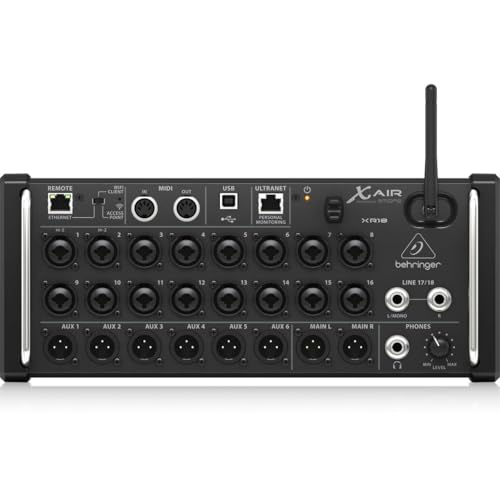
- 18 channels and 12 buses
- 16 programmable MIDAS preamps
- Built-in Wi-Fi and 18x18 USB
Best For: Live bands, studios, and tablet-controlled setups
Best for Versatile Small Mixes

- 10 inputs with USB connectivity
- SPX digital effects
- Class A D-PRE preamps and compressors
Best For: Small live shows, rehearsals, and home recording
Best for Streaming and Recording

- Bluetooth playback and USB-C recording
- 24 GigFX+ effects with tap tempo
- Onyx preamps on microphone channels
Best For: Streaming, podcasting, band practice, and compact live setups
Best for Compact Simplicity

- Six-channel analog layout
- Two microphone preamps and four stereo channels
- Compact 900-gram design with effects
Best For: Small performances, rehearsals, and portable setups
Versatile Karaoke Pick
FULUODE CT-80S 8-Channel Mixer

- Eight channels with 48V phantom power
- Bluetooth, MP3/USB playback, and USB recording
- Thin design with large LED display
Best For: Home KTV, karaoke, small performances, and conferences
Streaming-Friendly Analog Choice

- Eight-input analog mixing and equalization
- Stereo USB interface for computer or mobile use
- Mixes PC and gaming audio into streaming output
Best For: Streaming, podcasting, and home recording
Compact Feature Set

- PC recording plus USB-drive playback and recording
- Bluetooth streaming, 48V phantom power, and effects
- XLR, 1/4-inch, and RCA connectivity
Best For: Streaming, podcasts, small events, and active-speaker setups
Streamer Sound Hub

- 48V XLR microphone support with built-in preamp
- Voice effects, sound pads, noise reduction, and loopback
- RGB lighting and compatibility with major streaming platforms
Best For: Gaming streamers using an XLR microphone
Stage-Ready Controller
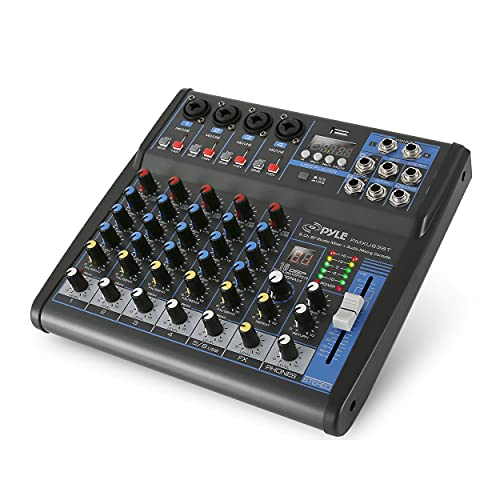
- Six channels with XLR and 1/4-inch inputs
- Bluetooth, USB, flash-reader, and MP3 playback
- 3-band EQ, 48V phantom power, and 16-bit DSP effects
Best For: Live gigs, karaoke, and compact DJ setups
Effects Mixing Console

- Four XLR inputs with switchable 48V phantom power
- Bluetooth and USB playback with mixing and recording support
- 3-band EQ and 16 built-in DSP effects
Best For: Karaoke, small studio, and live audio setups
Best for Wireless Digital Mixing – Behringer X AIR XR18
For flexible live sound or studio setups, the Behringer X AIR XR18 is one of the most capable audio mixers here. It combines tablet control, 18 inputs, programmable MIDAS preamps, built-in Wi-Fi, and an 18-by-18 USB interface in a compact digital format.
Best For: Live bands, studios, and users who want wireless tablet-based control with extensive routing and recording capability.
Pros:
- 18-channel, 12-bus design suits larger setups.
- 16 programmable MIDAS-designed microphone preamps.
- Built-in tri-mode Wi-Fi avoids the need for an external router.
- 18-by-18 bidirectional USB interface supports direct recording.
Cons:
- Tablet control may be less convenient than a traditional physical control surface.
- Its larger feature set may be more than small setups require.
The XR18 is a strong choice when remote control, multichannel USB recording, and expandable digital routing matter more than hands-on knobs.
Best for Versatile Small Mixes – Yamaha MG10XU
The Yamaha MG10XU is a practical pick for users who want straightforward controls, USB connectivity, and built-in effects. Its 10-input layout, Class A D-PRE preamps, three-band EQ, high-pass filters, and one-knob compressors make it a flexible option among compact audio mixers.
Best For: Small live performances, home recording, rehearsals, and users who prefer a traditional analog workflow with digital effects.
Pros:
- 10-input design fits many small setups.
- USB connectivity supports computer-based audio work.
- SPX digital effects add onboard processing.
- Rugged powder-coated metal chassis is built for regular use.
Cons:
- It offers fewer inputs than larger digital mixers.
- The 7.7-pound weight is relatively substantial for a compact mixer.
Choose the MG10XU if you want familiar analog operation and useful onboard processing in a durable 10-input format.
Best for Streaming and Recording – Mackie ProFX10v3+
The Mackie ProFX10v3+ is designed for users who need an all-in-one hub for live sound, streaming, and recording. This 10-channel audio mixer combines Bluetooth playback, USB-C recording, Onyx preamps, and a 24-effect GigFX+ engine.
Best For: Podcasters, streamers, bands, and creators who need wireless playback and computer recording from one desk.
Pros:
- Bluetooth supports convenient wireless playback.
- USB recording works alongside live mixing and streaming.
- Onyx preamps are included on every microphone channel.
- GigFX+ provides 24 effects with tap tempo.
Cons:
- Its 10-channel capacity may limit larger productions.
- Users seeking a fully digital mixer may prefer a different design.
The ProFX10v3+ stands out for compact content and performance setups where Bluetooth, USB-C, effects, and simple connectivity are priorities.
Best for Compact Simplicity – Yamaha MG06X
The Yamaha MG06X is a compact analog option for simple audio mixer setups. It provides six channels, two microphone preamps, four dedicated stereo line channels, onboard digital effects, and EQ in a small 900-gram chassis.
Best For: Small performances, basic rehearsals, presentations, and users who need essential mixing controls in a portable format.
Pros:
- Compact, lightweight design is easy to transport.
- Two microphone preamps support basic vocal or instrument setups.
- Four dedicated stereo line channels handle playback and line-level sources.
- Built-in digital effects add flexibility without extra gear.
Cons:
- Six channels provide less capacity than the other mixers here.
- Its compact design is better suited to simpler setups.
The MG06X is a sensible choice when portability and straightforward analog mixing matter more than extensive routing or multichannel recording.
Versatile Karaoke Pick – FULUODE CT-80S 8-Channel Mixer
For shoppers comparing audio mixers for karaoke, small performances, or home setups, the FULUODE CT-80S combines eight channels with Bluetooth, USB playback and recording, MP3 support, and built-in reverb. Its thin design and large LED display add convenience where space and quick visibility matter.
Best For: Home KTV, karaoke, campus activities, conferences, and small live music setups.
Pros:
- Eight-channel design supports wired, wireless, condenser-microphone, and instrument connections.
- Includes Bluetooth 5.0, MP3/USB input, USB recording, and song-name display.
- Offers 48V phantom power and built-in reverb for compatible microphones and performances.
- Ultra-thin 1.57-inch design and large LED display suit compact work areas.
Cons:
- Uses a corded 110V American-plug power supply.
- The supplied notes do not specify detailed software-update support.
The CT-80S is a feature-heavy choice for buyers who want Bluetooth, karaoke-oriented effects, and multiple connection options in one affordable-style console. Confirm your power and input requirements before purchase.
Streaming-Friendly Analog Choice – Behringer XENYX 802S Mixer
Behringer XENYX 802S Premium Analog 8-Input Mixer with USB Streaming Interface
Check Price On AmazonThe Behringer XENYX 802S is one of the more focused audio mixers for streaming, podcasting, and recording. It pairs analog mixing and equalization with a stereo USB interface, while allowing PC or gaming audio to be mixed directly into the streaming output.
Best For: Streamers, podcasters, and home users who want analog controls with USB computer or mobile connectivity.
Pros:
- Provides eight inputs for flexible analog mixing.
- Stereo USB audio interface connects to a computer or mobile device.
- Supports direct mixing of PC and gaming sounds into the stream output.
- Designed for low-noise streaming, podcasting, and recording use.
Cons:
- The supplied notes do not mention Bluetooth, onboard effects, or phantom-power functionality.
- Its listed dimensions are relatively large for a compact desktop mixer.
This model makes the most sense for buyers prioritizing straightforward analog control and USB streaming integration over karaoke-focused features or wireless playback.
Compact Feature Set – Aveek 5-Channel USB Mixer
Among compact audio mixers, the Aveek 5-channel model stands out for combining PC recording, USB-drive playback and recording, Bluetooth streaming, 48V phantom power, and onboard echo or delay. Its input layout accommodates microphones, instruments, keyboards, computers, and other stereo sources.
Best For: Live streaming, podcasts, small band shows, meetings, weddings, and users connecting active speakers.
Pros:
- Offers three XLR inputs plus 1/4-inch and RCA stereo connections for varied sources.
- Built-in recording chip supports plug-and-play PC recording through USB-B.
- Includes Bluetooth streaming, USB-drive playback and recording, and headphone monitoring.
- Provides 48V phantom power, two-band EQ, gain controls, and echo or delay effects.
Cons:
- Bluetooth, USB, and four/five-channel functions cannot be used simultaneously.
- Bluetooth operation is specified within a 15-foot range.
- Output connections are intended for active speakers or compatible amplification equipment.
The Aveek is a versatile small-system mixer when you need many source options and built-in recording features. Pay close attention to its simultaneous-use limitation and active-speaker requirement when planning your setup.
Streamer Sound Hub – Compact Gaming Mixer
For gamers and new creators, the MAONO G1 Neo is one of the more focused audio mixers for building a streaming setup around an XLR microphone. It combines 48V phantom power, one-click noise reduction, sound pads, Bluetooth accompaniment, loopback, and customizable RGB lighting in a compact interface.
Best For: Gaming streamers who want voice effects, quick controls, and XLR microphone support.
Pros:
- Built-in preamp and 48V phantom power support XLR condenser microphones.
- One-click noise reduction, mute, direct monitoring, and loopback simplify streaming.
- Voice changing, custom sound pads, reverb, and sidechain add creative options.
- Works with OBS, Discord, Twitch, YouTube, Streamlabs, and other listed platforms.
Cons:
- It does not support USB microphones, Xbox, or MAONO devices.
- Its feature set is geared toward streaming rather than broad multi-channel live mixing.
The G1 Neo is a practical choice when gaming-focused controls matter more than a traditional channel-heavy console. Confirm your microphone type and device compatibility before buying, especially if you use a USB microphone or Xbox.
Stage-Ready Controller – Pyle 6-Channel Mixer
The Pyle PMXU63BT is a versatile option among audio mixers for live gigs, karaoke, small studio work, and DJ-style playback. Its six channels combine XLR and 1/4-inch inputs with Bluetooth, USB, a built-in MP3 player, 3-band EQ, and 16-bit DSP effects.
Best For: Performers, karaoke users, and small live setups needing wired inputs plus wireless playback.
Pros:
- Six-channel design supports microphone and stereo line inputs.
- Bluetooth, USB, flash-drive, computer, and MP3 playback provide flexible source options.
- Each channel includes a 3-band EQ, while 48V phantom power supports suitable microphones.
- Steel chassis and sealed rotary controls are designed for regular handling.
Cons:
- The mixer requires corded power and uses a separate power adapter.
- The supplied notes do not identify supported software updates.
Choose the PMXU63BT if you need a straightforward, compact console with multiple input formats and built-in playback. Its multi-voltage power supply also makes it a useful option for users who need 100V–240V compatibility.
Effects Mixing Console – 6-Channel Audio Mixer
This six-channel console is a flexible pick among audio mixers for karaoke, studio use, streaming, and recording. It offers four XLR inputs with 48V phantom power, stereo 1/4-inch channels, Bluetooth and USB playback, 3-band EQ, and 16 built-in DSP effects.
Best For: Users who need several microphone or instrument connections with basic effects and playback.
Pros:
- Four XLR inputs support condenser and dynamic microphones, with selectable 48V phantom power.
- Bluetooth and USB support wireless streaming, flash-drive playback, mixing, and recording.
- Individual channel controls include gain, 3-band EQ, and effect adjustment.
- Sixteen DSP effects add delay or reverb options to the mix.
Cons:
- The manufacturer provides a 90-day warranty.
- Operation errors may result in no sound, so setup instructions should be followed carefully.
- The supplied dimensions indicate a relatively substantial console for a compact setup.
This mixer suits buyers who prioritize input flexibility and built-in effects over advanced digital features. It is worth considering for small performances, karaoke, and recording applications, provided you are comfortable with traditional analog mixer controls.
How We Picked These Audio Mixers
We selected models that cover the most common mixer requirements, from compact two- and six-input boards to full-featured digital systems. Our comparison considers channel count, microphone preamps, phantom power, USB connectivity, Bluetooth, onboard effects, monitoring options, portability, and ease of use. We also included both traditional analog mixers and modern interfaces designed for streaming or tablet-controlled operation.
Because specifications and included accessories can vary by seller, verify the current listing before buying—especially the exact number of microphone inputs, USB functions, power requirements, and included cables.
Quick Comparison
| Best For | Look For | Recommended Type |
|---|---|---|
| Live bands and larger setups | More channels, buses, and preamps | Digital mixer such as the Behringer X AIR XR18 |
| Home recording | USB recording, quiet preamps, and flexible monitoring | USB-equipped analog mixer |
| Livestreaming and podcasting | Simple routing, effects, Bluetooth, and loopback-style connectivity | Streaming mixer or audio interface |
| Small rehearsals and presentations | Compact size, easy controls, and built-in effects | Six- to 10-input analog mixer |
| DJ or casual playback | Bluetooth, USB, MP3 playback, and reverb | Feature-rich compact mixer |
Key Buying Factors for Audio Mixers
Channel Count and Inputs
Count the sources you will connect at the same time, not just the number you own. A microphone, guitar, keyboard, phone, and computer can quickly use several inputs. Leave extra capacity for future equipment and remember that stereo channels may not offer the same microphone connectivity as mono channels.
USB, Bluetooth, and Recording Features
USB can serve different purposes: stereo recording, playback, streaming, or multitrack recording. Confirm the mixer’s actual USB capability before assuming it can record every channel independently. Bluetooth is convenient for backing tracks and casual playback, but it is not a replacement for a low-latency wired connection when precise monitoring matters.
Phantom Power and Microphone Preamps
Choose 48V phantom power if you use condenser microphones or active direct boxes. Compare the number and quality of microphone preamps, particularly if you plan to record vocals, acoustic instruments, or multiple performers. Dynamic microphones usually need more clean gain than basic consumer sources.
Effects, Routing, and Monitoring
Built-in reverb and other effects can simplify live vocals and streaming, while separate monitor and headphone controls make troubleshooting easier. Digital mixers provide deeper routing and recallable settings, but analog boards are generally faster to operate at a glance.
Size, Power, and Software
For mobile use, check weight, power requirements, and control layout. Digital models may require a tablet, computer, or network connection, so consider whether you want software-based control or dedicated physical knobs and faders.
Who Should Buy Which Audio Mixers?
Choose the Behringer X AIR XR18 if you need many inputs, remote control, and flexible live-sound routing. The Yamaha MG10XU or Mackie ProFX10v3+ suits home recording, small performances, and users who want a practical balance of physical controls and computer connectivity.
For compact setups, the Yamaha MG06X is a sensible choice when you need only a few inputs and basic effects. Budget-oriented buyers may prefer the FULUODE, Aveek, Pyle, or similar compact boards when Bluetooth, MP3 playback, and simple mixing matter more than advanced routing. Gamers, streamers, and solo creators should consider the MAONO G1 Neo for its creator-focused controls and microphone support.
Before ordering, match the mixer’s input layout to your equipment, confirm the required connections, and prioritize clean monitoring and dependable gain control over a long list of extra features.