The best NAS enclosure for backups gives you centralized storage, automated protection, and convenient access without relying entirely on cloud subscriptions. The right model depends on capacity, drive redundancy, network speed, and how much administration you want to handle.
Our selection spans straightforward home backup hubs, flexible multi-bay systems, expandable private-cloud platforms, and high-performance options for creators, developers, and small businesses.
Best 10 Nas Enclosure for Backups Picks for 2026
Best Balanced NAS for Backups

- Automated backups across multiple destinations
- RAID and snapshots add layered protection
- Intel hardware supports 4K media transcoding
Best For: Home creators needing backups and media streaming
Best High-Performance NAS for Backups

- Intel Core processor and expandable DDR5 memory
- Four bays support multiple RAID configurations
- 10GbE and 2.5GbE networking enable fast transfers
Best For: Professionals and power users with demanding workflows
Best Simple NAS for Backups
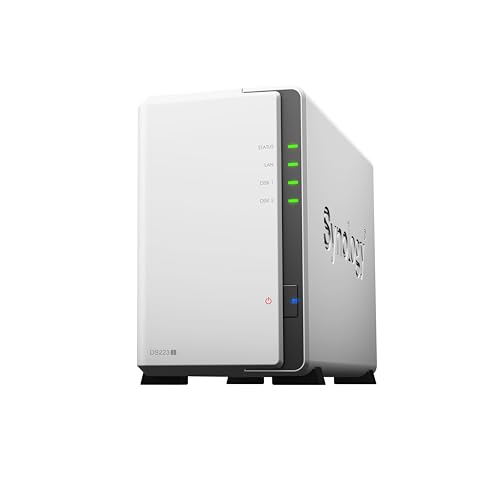
- Automated backups for computers and mobile devices
- Private cloud with multi-platform access
- Compact two-bay design for home storage
Best For: Home users seeking simple, centralized backups
Best Advanced Home NAS for Backups

- Up to 80TB using HDD bays and M.2 slots
- 8GB DDR5 RAM and Intel N100 CPU
- 2.5GbE networking for large file transfers
Best For: Creators and advanced households with growing libraries
Best DAS Backup Enclosure

- Four-bay USB Type-C storage
- Hardware RAID with RAID 5 support
- Diskless, lockable metal enclosure
Best For: Local backups and QNAP storage expansion
Best Home Backup NAS

- Compact two-bay diskless NAS
- Automated computer and mobile backups
- File sharing and version control
Best For: Home and small-office data protection
Best High-Performance Backup NAS

- Six-bay diskless NAS enclosure
- Core i5 processor with 32GB memory
- Dual 2.5GbE and PCIe expansion
Best For: Demanding business and multimedia backup systems
Professional Team Hub

- Four-bay diskless design for scalable storage
- RAID, automated backups, and snapshots
- File sharing, media streaming, and surveillance support
Best For: Offices and small businesses needing shared storage with layered data protection
Secure Private Cloud

- Four-bay enclosure for shared storage
- Multi-destination backups and snapshots
- Private cloud, file permissions, and surveillance tools
Best For: Home users and small businesses wanting flexible backups and secure file sharing
Expandable Backup Platform

- Two-bay starting point with DX525 expansion
- Up to 140 TB of stated capacity
- RAID, backups, snapshots, and surveillance support
Best For: Home and small-business users planning to scale storage over time
Best Balanced NAS for Backups – Synology DS225+
The Synology DS225+ is a practical nas enclosure for backups when you want private storage, automated protection, and a built-in media server in one compact two-bay unit. It supports backups to cloud services, external drives, and remote NAS devices, while RAID and snapshots add additional data-protection options.
Best For: Home users, creators, and small households that want dependable backups plus 4K media streaming.
Pros:
- Automated backups to cloud, external drives, and remote NAS devices
- RAID redundancy and snapshot support provide layered protection
- Intel CPU supports hardware transcoding for media streaming
- Three-year warranty and support for up to 30 IP cameras
Cons:
- Diskless design requires separate drive purchases
- Two bays provide less expansion room than four-bay models
The DS225+ is a well-rounded choice if backups are the priority but you also want private-cloud access, media streaming, and surveillance features without paying for a larger enclosure.
Best High-Performance NAS for Backups – UGREEN DXP4800 Pro
The UGREEN DXP4800 Pro is a powerful nas enclosure for backups aimed at professionals, developers, and power users. Its four drive bays, expandable DDR5 memory, dual high-speed networking, RAID options, and support for Docker and virtual machines make it suitable for demanding backup and data-management workloads.
Best For: Offices, video editors, developers, and advanced users managing large datasets or multiple services.
Pros:
- Intel Core i3-1315U processor with 8GB expandable DDR5 RAM
- 10GbE and 2.5GbE ports support transfers up to 1.25GB/s
- Four-bay design supports RAID 0, 1, 5, and 10
- Docker, virtual machines, and dual M.2 SSD slots expand its capabilities
Cons:
- May be more hardware and complexity than casual home users need
- Diskless design requires separate HDDs or SSDs
- Two-year warranty is shorter than some premium alternatives
With substantial processing power, flexible storage, and fast networking, the DXP4800 Pro is a strong fit when backup duties share space with virtualization, development, media, or business workloads.
Best Simple NAS for Backups – Synology DS223j
The Synology DS223j is a straightforward nas enclosure for backups designed for households and small setups. It provides a private cloud for files and media, supports automated backups from computers and mobile devices, and can send backup copies to multiple destinations including cloud services and external drives.
Best For: Budget-conscious home users who want easy device backups and private file access.
Pros:
- Automated backup support for Macs, PCs, and mobile devices
- Private-cloud access from multiple platforms
- Supports backups to cloud and external-drive destinations
- Can support home surveillance with multiple IP cameras
Cons:
- Two-bay diskless enclosure requires separate storage drives
- Less suited to demanding applications than higher-performance NAS models
The DS223j focuses on the essentials: centralized files, remote access, and set-and-forget backups. It is a sensible starting point for users who value Synology’s software ecosystem over advanced hardware features.
Best Advanced Home NAS for Backups – UGREEN DXP2800
The UGREEN DXP2800 is an advanced two-bay nas enclosure for backups, media libraries, and centralized household data. Its Intel N100 processor, 8GB of DDR5 RAM, 2.5GbE networking, and dual M.2 NVMe slots give it more headroom for large files, creator workflows, media-server apps, and multiple devices.
Best For: Advanced home users, remote workers, and creators backing up phones, computers, photos, and 4K video.
Pros:
- Supports up to 80TB across two HDD bays and two M.2 NVMe slots
- Intel N100 CPU and 8GB DDR5 RAM support heavier applications
- 2.5GbE networking helps speed up large file transfers
- Works across Windows, macOS, Android, iOS, browsers, and compatible TVs
Cons:
- Drives are not included
- Two HDD bays limit expansion compared with four-bay enclosures
- Advanced features may require more setup than a basic backup appliance
The DXP2800 bridges the gap between a basic home NAS and a compact creator workstation. It is especially appealing when backups need to coexist with 4K media, RAW photos, Docker, virtual machines, or AI-assisted photo organization.
Best DAS Backup Enclosure – QNAP TR-004
QNAP TR-004 4 Bay USB Type-C Direct Attached Storage (DAS) with hardware RAID (Diskless)
Check Price On AmazonThe QNAP TR-004 is a practical nas enclosure for backups when you want direct-attached storage rather than a networked NAS. Its four drive bays connect over USB Type-C to Windows, macOS, or Linux systems, and it can also serve as external backup storage for a compatible QNAP NAS.
Best For: Users seeking a flexible, diskless four-bay backup enclosure with hardware RAID.
Pros:
- Four 3.5-inch SATA bays support RAID 0, 1, 5, JBOD, and individual-disk modes.
- USB Type-C connectivity works with Windows, macOS, and Linux computers.
- Lockable drive bays and a metal enclosure add practical protection.
Cons:
- It is direct-attached storage, not a standalone network NAS.
- Drives are not included.
- QNAP NAS compatibility has specific model and QTS version limitations.
The TR-004 is a strong fit for straightforward local backups and expandable storage, especially for QNAP users who understand its compatibility and migration restrictions.
Best Home Backup NAS – Synology DS223
The Synology DS223 is a compact nas enclosure for backups designed to centralize files from computers, phones, and external drives. Its two-bay diskless design supports a home or small-office setup with automated backup workflows, file sharing, and access to multiple backup destinations.
Best For: Home and office users who want centralized files and automated backups in a compact NAS.
Pros:
- Centralizes data from computers, mobile devices, and external drives.
- Supports automated backups to cloud and external-drive destinations.
- Includes file collaboration, syncing, and version-control features.
- Two-year warranty and ongoing software updates provide continued support.
Cons:
- Only two drive bays are provided.
- Drives are not included.
- Surveillance features may require additional compatible equipment and setup.
For households and small offices, the DS223 offers a focused way to consolidate files and automate protection without paying for a larger multi-bay platform.
Best High-Performance Backup NAS – QNAP TVS-h674
The QNAP TVS-h674 is a high-performance nas enclosure for backups aimed at demanding business, multimedia, and gaming environments. It combines six drive bays with a Core i5 processor, 32GB of memory, dual 2.5GbE ports, and expansion options for faster networking and storage.
Best For: Businesses and creative users needing a powerful six-bay NAS with room for performance upgrades.
Pros:
- Six-bay design provides substantial storage capacity and expansion potential.
- Intel Core i5-12400 processor and 32GB memory support demanding workloads.
- Two M.2 PCIe Gen4 slots enable NVMe caching or compatible AI acceleration.
- PCIe expansion supports faster networking, QM2 cards, or entry-level graphics cards.
Cons:
- Its powerful hardware may be excessive for simple home backups.
- Drives are not included.
- Expansion and multimedia capabilities can add setup complexity.
The TVS-h674 makes sense when backups are part of a broader, performance-sensitive storage system rather than a basic archive. Its six bays and upgrade paths leave room to grow.
Professional Team Hub – Synology DS425+
Synology DS425+ Private Cloud Media Server - Stream, Back Up & Share Files (4-Bay Diskless NAS)
Check Price On AmazonThe Synology DS425+ is a practical NAS enclosure for backups when you also need centralized file storage, media streaming, and business-oriented access controls. Its four bays, RAID support, automated backups, and snapshots provide a flexible foundation for protecting documents and media.
Best For: Offices, small businesses, and households that need a shared file server, media hub, and layered backup protection.
Pros:
- Supports concurrent access for 10 or more users and speeds up to 278 MB/s.
- Combines RAID redundancy, automated backups, and snapshots.
- Offers granular access controls, audit logs, and support for up to 30 IP cameras.
- Includes a 3-year warranty and optional enterprise support.
Cons:
- Diskless design requires purchasing compatible drives separately.
- Its business-focused features may be more than a basic home backup setup needs.
Choose the DS425+ if collaboration and centralized administration matter as much as backup capacity. It is especially compelling for users who want one enclosure to handle files, media, and surveillance.
Secure Private Cloud – Synology DS423
The Synology DS423 is a well-rounded NAS enclosure for backups, private-cloud file access, and household or business media storage. It supports multi-destination backups and snapshots, helping protect files while keeping shared folders and permissions organized.
Best For: Families, home offices, and small businesses seeking secure file sharing, backup flexibility, and optional surveillance features.
Pros:
- Provides private-cloud access and sharing from anywhere.
- Supports backups to multiple destinations and snapshots for malware protection.
- Includes team folders, permission controls, and versioned backup strategies.
- Supports monitoring and archiving for up to 30 IP cameras, with licenses purchased separately.
Cons:
- Diskless design requires separate drive purchases.
- Camera licenses are not included.
- Its 2-year warranty is shorter than the warranties listed for the other supplied models.
The DS423 makes sense when straightforward file sharing and backup resilience are priorities. Its four-bay layout and ransomware-resistant backup features offer a strong balance for mixed home and business use.
Expandable Backup Platform – Synology DS725+
The Synology DS725+ is a compact NAS enclosure for backups that can grow with a home or small-business storage plan. It starts with two drive bays and can expand with a DX525 unit, while RAID, automated backups, and snapshots add multiple layers of data protection.
Best For: Users who want to start with a smaller NAS and expand toward up to 140 TB as their files, media library, or surveillance needs increase.
Pros:
- Expands from two bays to up to five additional bays with one DX525 expansion unit.
- Supports up to 140 TB of stated storage capacity.
- Combines RAID redundancy, automated backups, and snapshots.
- Supports professional surveillance features and up to 30 IP cameras.
Cons:
- Only two drive bays are available initially.
- The DX525 expansion unit is required for the additional bays and capacity.
- Diskless design requires separate storage drives.
The DS725+ is the best fit when future expansion is central to the buying decision. Its smaller starting footprint keeps the initial enclosure compact, while the expansion path helps avoid replacing the NAS as storage requirements rise.
How We Picked the Best Nas Enclosure for Backups
We focused on storage enclosures that can serve as dependable backup destinations for computers, phones, media libraries, and business files. Key considerations included bay count, RAID support, backup software and operating-system features, network connectivity, expansion options, noise, and overall suitability for the intended user.
A NAS is not automatically a complete backup strategy. It should ideally be paired with versioned backups, snapshots where supported, and an additional copy stored offline or in the cloud. Diskless models also require separately purchased drives, so total cost includes both hardware and storage media.
Quick Comparison
- Two-bay NAS: A practical starting point for home users, remote workers, and small offices. RAID 1 can mirror two drives for protection against a single-drive failure.
- Four-bay NAS: Offers more capacity, better expansion flexibility, and additional RAID choices without immediately requiring a larger enclosure.
- Six-bay NAS: Best for substantial media collections, virtualization, surveillance, or demanding multi-user workloads.
- USB DAS: A direct-attached alternative that can be simpler and less expensive, but it generally lacks the remote access, application ecosystem, and network-wide convenience of a true NAS.
Key Buying Factors for a Nas Enclosure for Backups
Drive Redundancy and Capacity
Choose the number of bays according to both current storage needs and future growth. Mirrored RAID improves availability, while larger RAID arrays can balance capacity and protection across three or more drives. RAID is not a substitute for an independent backup.
Performance and Connectivity
For routine document and photo backups, a basic gigabit network connection may be sufficient. Faster Ethernet, stronger processors, and more memory matter when several users transfer files simultaneously, stream media, run applications, or back up large video projects.
Software and Automation
Look for scheduled computer backups, mobile photo uploads, file versioning, snapshots, cloud synchronization, and clear health alerts. A polished management interface can save substantial time, especially for first-time NAS owners.
Expansion and Maintenance
Check whether the enclosure supports additional drives, memory upgrades, SSD caching, or expansion units. Also verify drive compatibility, warranty coverage, replacement-drive costs, and the manufacturer’s update history.
Who Should Buy Which Nas Enclosure for Backups?
Choose a two-bay Synology or UGREEN system if you want an approachable private cloud for household files, photos, and laptop backups. These models are typically easier to place in a home office and less expensive to populate.
Choose a four-bay NAS if you have growing storage requirements, several users, or want more flexibility than a mirrored two-drive setup provides. It is often the best long-term balance for families and small businesses.
Choose a six-bay performance model for intensive file sharing, video production, virtualization, surveillance, or a large media library. Choose a USB DAS when direct-attached storage and hardware RAID are enough and network access is not a priority.