Open-back planar headphones can deliver a spacious, detailed presentation, but they are not all equally comfortable, easy to drive, or suited to the same setup. The right choice depends on where you listen and what you plug them into.
These nine options span budget listening, home and studio use, and gaming. Use the buying guide below to narrow the field before comparing individual models.
Best 9 Open Planar Magnetic Headphones Picks for 2026
Craftsmanship Pick

- 97mm ultra-large planar diaphragm
- Walnut, aluminum, and sheepskin construction
- Pivoting earcups and breathable pads
Best For: At-home listening with premium materials
Accessible Planar Pick

- Stealth Magnets target lower diffraction
- Detachable cable with 6.35mm adapter
- Adjustable headband for long sessions
Best For: No-frills wired planar listening
Detail-Focused Pick

- Nanometer-thickness planar diaphragm
- Stealth Magnets and reflection-reducing grille
- Asymmetrical cups with weight-dispersing headband
Best For: Detailed listening in quiet spaces
Premium Materials Pick
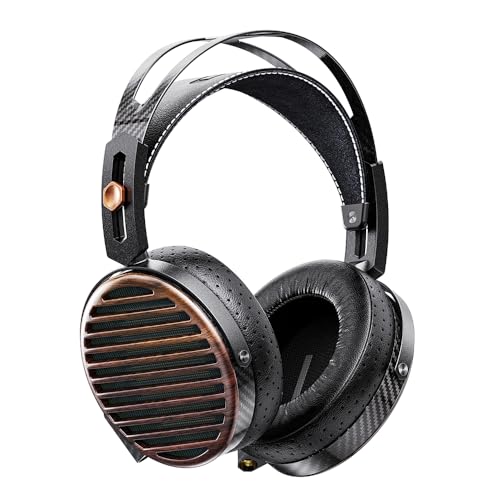
- 106mm planar driver with 1μm diaphragm
- Two interchangeable ear pad sets
- Detachable 4.4mm cable with adapters
Best For: Premium materials and flexible wired listening
Home Listening Pick

- Nanometer-thickness planar diaphragm
- Stealth Magnets designed to reduce diffraction
- Replaceable 3.5mm cable connections
Best For: Dedicated home or studio music listening
Gaming Headset Pick

- ROG-tuned HIFIMAN planar drivers
- On-cable MEMS boom microphone
- Multiple plugs and USB-C adapter included
Best For: Wired gaming with open-back planar sound
Diaphragm-Tech Pick

- 95 × 86 mm planar unit
- 1 μm dual-coated diaphragm
- Designed for a wide lateral stage
Best For: Quiet home or studio listening
Large-Driver Pick

- 106 mm planar drivers
- Open-back presentation
- Large comfort ear pads
Best For: Long listening sessions at home
Craftsmanship Pick – Fosi Audio i5
The Fosi Audio i5 is a distinctive choice among open planar magnetic headphones if you want a large 97mm diaphragm and materials that feel considered. Its walnut chambers, CNC-milled aluminum frame, and sheepskin headband set it apart from more utilitarian designs.
Best For: At-home listeners who value detailed sound and premium materials.
Pros:
- 97mm, 2μm-thin planar diaphragm is designed to reveal fine detail.
- Open-back grille and 44 N50 magnets are intended to support an expansive soundstage and fast response.
- Pivoting earcups, adjustable sliders, and breathable pads accommodate longer sessions.
Cons:
- Open-back design offers no noise isolation.
- Wired-only and not water-resistant.
With a listed 28-ohm impedance and compatibility across desktops, laptops, tablets, and phones, the i5 offers flexible wired listening. Choose it chiefly for its combination of large-driver planar design and upscale construction.
Accessible Planar Pick – HIFIMAN HE400SE
The HIFIMAN HE400SE is a straightforward entry point into open planar magnetic headphones. Its Stealth Magnets are shaped to reduce interference with sound waves, while the adjustable headband is designed for extended listening.
Best For: Listeners seeking a no-frills wired planar headphone for music or studio use.
Pros:
- Stealth Magnet design aims to reduce diffraction and distortion.
- Detachable dual-sided 3.5mm cable includes a 6.35mm adapter.
- Adjustable headband is designed to stay comfortable over long sessions.
Cons:
- Open-back design provides no noise isolation.
- At a listed 390g, it may not suit listeners seeking a particularly light headphone.
The HE400SE favors practical connectivity and the core benefits of planar drivers over decorative materials. Its 3.5mm connection and included adapter make it easy to match with a range of wired sources.
Detail-Focused Pick – HIFIMAN Ananda Nano
Among open planar magnetic headphones, the HIFIMAN Ananda Nano targets listeners who prioritize fine detail and instrument placement. It pairs a nanometer-thickness diaphragm with Stealth Magnets and a window-shade grille designed to reduce sonic reflections.
Best For: At-home listeners focused on detail, imaging, and a spacious presentation.
Pros:
- Thin diaphragm is designed for quick transients and detailed playback.
- Stealth Magnets and window-shade grille aim to reduce interference and reflections.
- Asymmetrical earcups and weight-dispersing headband support extended listening.
- Detachable cable connects through 3.5mm earcup jacks.
Cons:
- Open-back design provides no noise isolation.
- Listed weight of 419g may feel substantial to some listeners.
The Ananda Nano is the detail-oriented option here, with a stated 5Hz–55kHz frequency range and a design built around clarity and imaging. Although the notes mention portable-device compatibility, its open-back design makes it better suited to quiet spaces.
Premium Materials Pick – FiiO FT7
The FiiO FT7 brings a 106mm planar driver and an ultra-thin diaphragm to open planar magnetic headphones. Its carbon-fiber housing and zebrawood grille make it a distinctive choice for home listening.
Best For: Listeners who want premium materials, pad options, and flexible wired connections.
Pros:
- 106mm driver uses a 1μm diaphragm with gold-and-silver coating.
- Includes lambskin and breathable fabric ear pads.
- Detachable 4.4mm balanced cable comes with two adapter plugs.
Cons:
- At a stated 427g, it may still feel heavy to some listeners.
- Open-back design is less suited to shared or noisy spaces.
The FT7 stands out for its driver construction and included accessories. Consider its weight and open-back format before choosing it for long sessions or use around others.
The HIFIMAN Arya Organic is a full-size option among open planar magnetic headphones, pairing a nanometer-thickness diaphragm with Stealth Magnets designed to reduce interference with sound waves. Its open-back construction is aimed at focused home or studio listening.
Best For: Listeners seeking an open-back planar headphone for dedicated music sessions.
Pros:
- Stealth Magnet design aims to reduce wave diffraction.
- Asymmetrical ear cups follow the shape of the ear.
- User-replaceable 3.5mm connectors make cable swaps possible.
Cons:
- No noise control; the open-back design is a poor fit for noisy surroundings.
- Included cable has a 6.35mm plug, which may require an adapter for smaller headphone jacks.
Choose the Arya Organic if its open design and replaceable-cable setup suit your listening space. Check your source’s output before relying on the included cable.
The ASUS ROG Kithara adapts open planar magnetic headphones to gaming with ROG-tuned HIFIMAN drivers and an on-cable boom microphone. It also includes connection options for PCs, consoles, mobile devices, DACs, and amps.
Best For: Gamers who want open-back planar listening and a wired microphone in one headset.
Pros:
- Open-back design is intended to provide a spacious soundstage.
- Includes a full-band MEMS boom microphone cable.
- Supplied 3.5mm, 6.3mm, and 4.4mm plug options plus a USB-C adapter.
- Two ear cushion sets offer a choice of materials.
Cons:
- Open-back ear cups offer no noise isolation for busy rooms.
- Wired cables and adapters add setup steps compared with a simple wireless headset.
The Kithara makes the most sense when gaming and high-fidelity wired listening share the same desk. Its microphone and connection kit add versatility, but its open design calls for a relatively quiet space.
Wide-Stage Pick – HIFIMAN Edition XS
The HIFIMAN Edition XS is a strong choice among open planar magnetic headphones if you want a spacious presentation for home or studio listening. Its Stealth Magnet design and thin NEO supernano diaphragm are intended to preserve detail and imaging.
Best For: Listeners who prioritize an open, natural soundstage and a replaceable cable.
Pros:
- Stealth Magnet design aims to reduce sound-wave interference.
- Thin diaphragm supports fast response and detailed imaging.
- Memory-foam headband and detachable 3.5 mm cable add practicality.
Cons:
- Open-back design is a poor fit when you need isolation.
- Wired connection limits mobility.
Choose the Edition XS for its emphasis on spacious, detailed listening; plan to use it where sound leakage will not bother others.
The FiiO FT1 Pro suits shoppers comparing open planar magnetic headphones for home or studio use. It pairs a 95 × 86 mm planar unit with an ultra-thin, dual-coated diaphragm and a magnetic-field design intended to limit uneven movement.
Best For: Listeners interested in planar-driver engineering and a wide lateral soundstage.
Pros:
- Large planar unit is designed for a wide lateral soundstage.
- 1 μm PET diaphragm uses sapphire and aluminum coatings.
- Uniform magnetic-field design aims to reduce distortion.
Cons:
- Open-back design provides no noise isolation.
- Wired-only connection is less convenient on the move.
The FT1 Pro is worth a look if its diaphragm design appeals to you, but it makes the most sense in a quiet listening space.
The Monolith M1060 brings 106 mm drivers to the open planar magnetic headphones category. Its open-back design targets a more expansive presentation than an isolated closed-back headphone, while large ear pads are intended for extended sessions.
Best For: At-home listeners who want large planar drivers and roomy ear pads.
Pros:
- 106 mm planar magnetic drivers.
- Open-back design favors an expansive listening experience.
- Large ear pads are designed for long sessions.
Cons:
- Open back will not suit noisy or shared spaces.
- Wired connection offers no wireless convenience.
Consider the M1060 if driver size and an open presentation matter more to you than isolation.
How We Picked These Open Planar Magnetic Headphones
We chose nine models that represent different budgets and uses, from entry-level wired listening to higher-end home setups and gaming. The shortlist considers open-back design, published driver and connection details, intended use, and practical ownership factors such as fit and replaceable cables. Specifications help narrow choices, but they cannot establish sound quality or comfort on their own; use the individual product sections for model-specific trade-offs.
Quick Comparison: Where to Start
For a lower-cost entry point, start with the HIFIMAN HE400SE or FiiO FT1 Pro. If you want a step up for dedicated music listening, compare the HIFIMAN Edition XS and Ananda Nano; the Arya Organic sits at the more ambitious end of this group. The Fosi Audio i5, FiiO FT7, and Monolith offer alternative large-driver designs worth checking against your fit, cable, and budget needs. The ASUS ROG Kithara is the clearest starting point if an included microphone matters.
Those are shopping paths, not a sound-quality ranking. Confirm current price, included accessories, and the connector your source requires before deciding.
Key Buying Factors for Open Planar Magnetic Headphones
Listening Space and Leakage
Open backs leak sound outward and let room noise in. They make the most sense at a desk or in a quiet room, not on a commute or beside someone who needs silence. An open design does not guarantee a wider soundstage, so weigh sound impressions alongside the practical trade-off.
Power and Source Matching
Do not judge drive requirements by impedance alone. Sensitivity, the output of your phone, laptop, interface, or amplifier, and your preferred listening level also matter. Some planar headphones benefit from more capable amplification, while others may work satisfactorily from a modest source. Check the manufacturer’s specifications and avoid buying an amp solely on the basis of driver size.
Fit, Weight, and Connections
For long sessions, examine headphone weight, clamp, pad openings, and headband adjustment. Large earcups are not automatically comfortable for every head shape. Also check whether cables detach, which plugs are supplied, and whether a microphone is included or must be added separately. These details can matter more day to day than small specification differences.
Who Should Buy Which Open Planar Magnetic Headphones?
First-time planar buyers: Compare the HE400SE and FT1 Pro against the source gear you already own. Focused home listeners: Look at the Edition XS and Ananda Nano, then consider the Arya Organic if your budget allows. Shoppers comparing materials and large-driver designs: Review the i5, FT7, and Monolith for fit, cable options, and overall cost. Gamers who need voice chat: Start with the ROG Kithara’s mic-equipped setup.
If you need isolation, portable convenience, or quiet late-night listening near other people, closed-back headphones may be a better purchase than any Open Planar Magnetic Headphones on this list.