Choosing the right XLR cable for a subwoofer can help you build a clean, dependable connection between a receiver, processor, mixer, or amplifier and your powered sub. The best options combine balanced signal transmission, solid connectors, effective shielding, and a length that fits your room without excessive slack.
We’ve gathered 10 XLR-to-XLR cables in practical lengths and price ranges, from compact 6-foot pairs to extended 50-foot options. Use the guide below to compare construction, installation needs, and value before buying.
Best 10 Xlr Cables for Subwoofers Picks for 2026
Premium Shielding Pick
SVS SoundPath 9.84-ft Balanced XLR Cable

- Five-layer shielding helps reject RFI
- 24K gold-plated contacts
- Male-to-male XLR design
Best For: Medium-length home audio connections
Durability Pick
10-ft XLR Cable with REAN Connectors

- REAN connectors with gold-plated contacts
- Kevlar-reinforced core
- Dual shielding and lifetime warranty
Best For: Repeated studio, DJ, and live-use handling
Value Pick
Monoprice Premier Series 10-ft XLR Cable

- Balanced design helps reduce EM and RF noise
- 16AWG wire and braided shielding
- Gold-plated connectors with lifetime warranty
Best For: Budget-minded standard audio connections
Long-Run Pick
SVS SoundPath 39.37-ft Balanced XLR Cable
- 39.37-foot reach for distant components
- Five-layer insulation rejects interference
- Red and white channel markers
Best For: Large home theater and long-distance subwoofer runs
Best Value 2-Pack
Cable Matters Premium XLR to XLR

- Two 6-foot XLR cables
- 21 AWG OFC conductors
- Braided shielding and metal connectors
Best For: Short balanced-audio runs and backup connectivity
Best for Everyday Use

- 25-foot cable length
- Hi-flex design
- Chrome male-to-female XLR connectors
Best For: Longer connections between separated audio equipment
Best Noise-Rejection Pick

- 25-foot balanced XLR cable
- Two layers of shielding
- Molded plugs with strain relief
Best For: Longer, quieter audio connections
Reliable Everyday Pick
Amazon Basics 10-Foot XLR Cable

- 10-foot male-to-female 3-pin XLR design
- Copper conductors and spiral shielding for low-noise use
- Flexible, tangle-free PVC jacket
Best For: Compact PA, studio, and speaker setups
Best Value Two-Pack
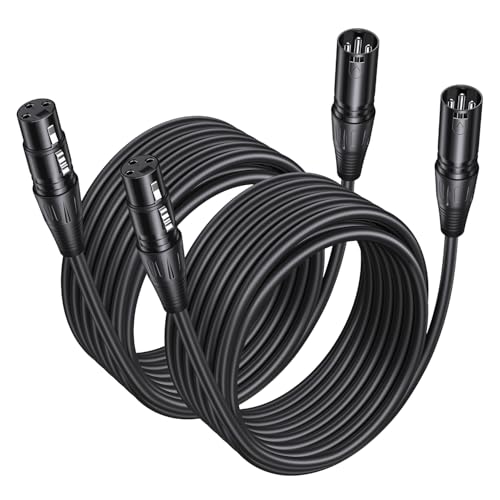
- Includes two 25-foot male-to-female cables
- OFC conductors and balanced construction
- Self-locking connectors with durability testing
Best For: Longer runs and multi-cable audio setups
Long-Run Pair
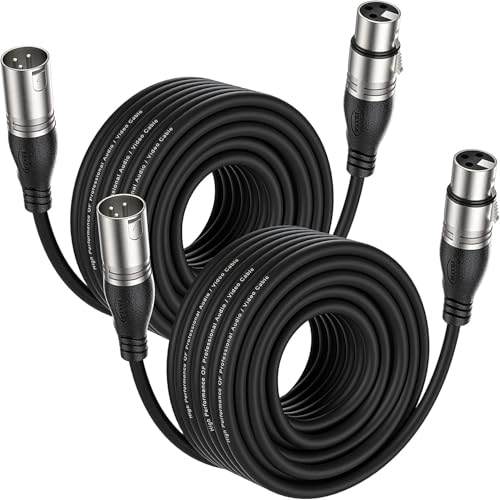
- Two 50-foot male-to-female XLR cables
- Braided shielding and oxygen-free copper conductor
- Locking 3-pin connectors and flexible PVC jacket
Best For: Stages, events, and widely spaced audio equipment
Premium Shielding Pick – SVS SoundPath 9.84-ft Balanced XLR Cable
For users seeking dependable xlr cables for subwoofers, the SVS SoundPath cable combines male-to-male XLR connectivity with five-layer shielding designed to reject interference. Its 9.84-foot length suits many home audio and component-to-subwoofer setups.
Best For: Home audio systems needing a shielded male-to-male XLR connection over a medium-length run.
Pros:
- Five-layer shielding helps resist RFI interference.
- 24K gold-plated contacts support conductivity.
- Three high-purity, multi-strand conductors and a 56-strand outer shield reinforce signal integrity.
- Braided cotton jacket provides an easy-grip outer layer.
Cons:
- Only available here in a 9.84-foot length.
- Male-to-male connectors may not suit equipment requiring a female XLR end.
This is a well-specified choice when interference resistance and secure connections matter. Confirm that both your source and subwoofer use male-to-male-compatible XLR connections before ordering.
Durability Pick – 10-ft XLR Cable with REAN Connectors
This 10-foot cable is a practical option for xlr cables for subwoofers when you need extra reach and a rugged construction. Its male-to-female design uses REAN connectors, dual shielding, and a Kevlar-reinforced core for repeated handling.
Best For: Studio, DJ booth, rehearsal, or live-use setups needing a flexible 10-foot male-to-female XLR cable.
Pros:
- Genuine REAN connectors feature 24K gold-plated contacts.
- Dual shielding and 99.99% OFC conductors help reduce interference.
- Kevlar reinforcement and protected solder joints improve resistance to pulling and bending.
- Lifetime warranty and a nylon outer braid add practical value.
Cons:
- Male-to-female ends may not match every subwoofer connection layout.
- The supplied compatibility information emphasizes microphones and broader audio equipment rather than a specific subwoofer model.
Choose this model when cable durability and connector quality are priorities. Check your equipment’s XLR gender requirements, since this is not a male-to-male cable.
Value Pick – Monoprice Premier Series 10-ft XLR Cable
The Monoprice Premier Series offers a straightforward 10-foot male-to-female connection for buyers comparing xlr cables for subwoofers on a budget. Its balanced design, braided shield, heavy-gauge wire, and gold-plated connectors target cleaner audio transmission.
Best For: Cost-conscious home audio and recording setups that need a standard 10-foot male-to-female XLR cable.
Pros:
- Balanced lines help reduce electromagnetic and radio-frequency noise.
- Separate braided shielding provides added interference resistance.
- 16AWG conductors, gold-plated connectors, and sturdy housings support everyday use.
- Includes a lifetime warranty.
Cons:
- The supplied specifications contain inconsistent connector and connectivity labels, so verify the listing details before purchase.
- Male-to-female ends may not fit systems requiring two male XLR connectors.
This cable is appealing for buyers who want a conventional balanced connection without feature-heavy construction. Confirm the connector type carefully because the supplied listing details include contradictory entries.
Long-Run Pick – SVS SoundPath 39.37-ft Balanced XLR Cable
For installations where the subwoofer sits far from the source, this 39.37-foot SVS SoundPath cable provides extended reach. It is designed for balanced XLR audio connections and uses five-layer insulation to help reject interference.
Best For: Long-distance connections between preamps, AV receivers, amplifiers, and subwoofers with balanced XLR inputs and outputs.
Pros:
- 39.37-foot length accommodates wide equipment spacing.
- Five-layer insulation is designed to reject interference.
- 24K gold-plated pins support conductivity.
- Red and white marking bands help identify left and right channels.
Cons:
- Its long length may be excessive for compact setups.
- Male-to-male connectors may not work with every XLR port arrangement.
This is the strongest fit of the group for long runs, particularly in larger home theater or audio layouts. Measure the route first and verify that both connected devices accept the male-to-male configuration.
Best Value 2-Pack – Cable Matters Premium XLR to XLR
If you need xlr cables for subwoofers and want a spare included, this two-pack offers two 6-foot male-to-female XLR cables. Its balanced construction, OFC conductors, and braided shielding are suited to speaker systems and other professional audio equipment with 3-pin XLR connections.
Best For: Buyers who need two short XLR cables for speaker systems, mixers, preamps, or backup use.
Pros:
- Includes two 6-foot XLR cables for flexible setups or replacements.
- 21 AWG oxygen-free copper conductors support clear, balanced audio.
- Copper braided shielding helps reduce unwanted noise.
- Heavy-duty metal connectors and molded strain relief support durability.
Cons:
- Six-foot length may be limiting for larger speaker or subwoofer layouts.
- Designed for indoor use according to the listed specifications.
This is a practical value pick when a pair of shorter cables is more useful than one long run. Verify that your subwoofer and source both use standard 3-pin XLR connectors.
Best for Everyday Use – Shure C25J 25-Foot XLR Cable
For longer connections, the Shure C25J provides a 25-foot run with chrome XLR connectors. This hi-flex, male-to-female cable is specified for low-impedance operation and can connect compatible audio equipment, including speakers.
Best For: Audio setups that need a single 25-foot XLR connection between equipment placed farther apart.
Pros:
- 25-foot length accommodates wider equipment placement.
- Hi-flex construction is designed for flexible handling.
- Chrome XLR connectors provide a straightforward male-to-female connection.
- Listed for indoor and outdoor usage.
Cons:
- Only one cable is included.
- The supplied details describe it primarily as a low-impedance microphone cable.
The C25J makes sense when reach is the priority and you need one extended XLR cable. Check your equipment’s connector type and impedance requirements before ordering.
Best Noise-Rejection Pick – D'Addario Classic Series XLR
The D’Addario Classic Series is a 25-foot balanced XLR cable built with two layers of shielding for noise rejection. Its male-to-female connectors, molded plugs, and low-capacitance In=Out Technology make it a solid choice for audio connections where signal transparency and quiet operation matter.
Best For: Users seeking a long XLR cable with added shielding for quiet indoor or outdoor audio setups.
Pros:
- Two shielding layers help reject noise.
- Low-capacitance In=Out Technology is designed for signal transparency.
- 25-foot length supports longer cable runs.
- Molded plugs provide protection and strain relief.
Cons:
- One cable is included rather than a multi-pack.
- Its 24 AWG construction is lighter gauge than the Cable Matters option.
Choose this cable when shielding and a long reach are more important than getting multiple cables in one package. As with any XLR connection, confirm your subwoofer or audio equipment accepts 3-pin male-to-female XLR.
Reliable Everyday Pick – Amazon Basics 10-Foot XLR Cable
For straightforward connections between compatible speakers, PA systems, mixers, and other audio equipment, this 10-foot Amazon Basics cable is a practical choice among XLR cables for subwoofers. Its male-to-female, 3-pin XLR design and copper conductors support simple, low-noise setups.
Best For: Home audio, studio recording, and live sound setups needing a dependable 10-foot cable.
Pros:
- All-copper conductors with inner copper spiral shielding help minimize noise interference.
- Zinc alloy, nickel-plated connectors include protective metal housing for secure connections.
- Flexible PVC jacket and tangle-free round design make coiling and storage easier.
Cons:
- At 10 feet, it may be too short for widely spaced equipment.
- Sold as a single cable rather than a multi-pack.
This cable is a sensible fit when you want a compact, flexible connection without needing extra length or multiple cables. Confirm that your subwoofer and source use compatible 3-pin XLR connections before ordering.
Best Value Two-Pack – Premium 25-Foot XLR Cables
This two-pack provides extra reach and convenience for systems that need more than one connection. With 25-foot lengths, balanced construction, and male-to-female 3-pin XLR connectors, these cables are useful candidates among XLR cables for subwoofers and broader stage or home-theater setups.
Best For: Buyers who need two long cables for studios, live sound, speaker systems, or professional audio equipment.
Pros:
- Two 25-foot cables offer useful reach and value for multi-cable setups.
- Oxygen-free copper conductors and balanced design are intended to support clear, low-interference audio.
- Self-locking connectors and testing for over 20,000 bends and 10,000 plug cycles support frequent use.
Cons:
- Long 25-foot cables may be more cable than needed for compact installations.
- The supplied specifications focus on indoor use details, so check fit for your particular outdoor setup.
Choose this pack when distance and quantity matter more than a compact cable run. Its two-cable format is especially practical for paired equipment connections, provided your devices have 3-pin XLR ports.
Long-Run Pair – 50-Foot XLR Cable Two-Pack
When equipment is spread across a stage, studio, or event space, this two-pack supplies two 50-foot male-to-female cables. The 3-pin balanced design, oxygen-free copper conductor, and braided shielding make it a practical long-distance option among XLR cables for subwoofers.
Best For: Stage sound, outdoor events, studios, and other setups requiring two extended XLR runs.
Pros:
- Two 50-foot cables provide substantial reach for separated equipment.
- Copper-core construction and high-density braided shielding are designed to resist interference.
- Locking metal connectors help maintain a close, secure connection.
- Flexible PVC insulation is easier to handle and clean.
Cons:
- Fifty-foot cables can be bulky for short connections and require careful coiling.
- The product is listed as 24-gauge, which may not suit every buyer’s preferred cable specification.
This is the strongest match of the three for long cable paths and two-cable installations. Its length is useful for larger layouts, but measure your route first to avoid unnecessary cable slack.
How We Picked the Best Xlr Cables for Subwoofers
We focused on balanced male-to-female XLR cables suitable for powered subwoofers, audio interfaces, mixers, PA systems, and home-theater processors. The selection includes widely used brands, budget-friendly alternatives, multipacks, and several lengths for different room layouts. We also considered connector quality, shielding claims, conductor construction, flexibility, and whether the cable offers useful value for multi-subwoofer or multi-speaker setups.
Because cable performance depends heavily on the connected equipment and installation, no single option is ideal for every system. The right choice is usually the cable that fits your required distance cleanly and provides dependable strain relief and shielding.
Quick Comparison
- Short runs: Six- to 10-foot cables work well in compact racks, studios, and nearfield setups.
- Standard room layouts: 25-foot cables provide useful flexibility when equipment and subwoofers are separated.
- Long runs: 39- to 50-foot cables suit larger rooms, stages, and installations where routing distance matters.
- Multiple connections: Two-packs are practical for stereo systems, dual subwoofers, or backup inventory.
- Premium construction: Shure, SVS, D’Addario, and other established options may be preferable when durability and consistent fit matter most.
Key Buying Factors for Xlr Cables for Subwoofers
Length and Cable Routing
Measure the actual path from the source to the subwoofer, including turns around furniture or racks. Avoid choosing a cable so short that it is under tension, but do not buy excessive length if it will be tightly coiled or create a trip hazard. Longer runs are convenient, though they can be harder to manage.
Balanced XLR Construction
A standard subwoofer connection typically uses an XLR male-to-female cable: the source output is usually female, while the powered subwoofer input is usually male. Balanced wiring can help reject electromagnetic interference, particularly across longer runs or near power cables. Confirm your equipment’s connector type before ordering.
Shielding and Connectors
Look for effective shielding, sturdy strain relief, and connectors that seat securely without excessive looseness. Gold plating is not essential for good subwoofer performance, but reliable connector fit and durable cable jackets are important for frequent handling.
Gauge, Flexibility, and Value
Do not select a cable based on conductor gauge alone. For line-level subwoofer signals, shielding, balanced wiring, construction quality, and suitable length generally matter more than unusually heavy conductors. Flexible cables are easier to route behind furniture and inside racks.
Who Should Buy Which Xlr Cables for Subwoofers?
Home-theater owners: Choose a 10- or 25-foot cable based on the distance between your AV receiver or processor and the subwoofer. A slightly longer cable can simplify routing.
Dual-subwoofer users: A two-pack can reduce cost and keep both signal paths consistent, provided each cable is long enough.
Studio and desktop users: Six-foot cables are often easier to manage and prevent unnecessary loops around monitors, interfaces, and subwoofers.
PA and live-sound users: Prioritize rugged connectors, flexible jackets, and longer lengths when cables will be moved or reused frequently.
Large rooms or permanent installations: Consider 39- to 50-foot options, but route them safely and keep signal cables separated from power cords where practical.