Choosing the right mixer can make podcast recording feel far less intimidating. The best beginner-friendly options balance simple controls, clear mic input, and just enough features to grow with your setup.
In this roundup of podcast mixer consoles for beginners, we focused on ease of use, audio quality, and practical tools like XLR inputs, phantom power, USB connectivity, and onboard effects.
Best 10 Podcast Mixer Consoles for Beginners Picks for 2026
Compact Starter Streaming Mixer
FIFINE Audio Mixer with Slider Fader

- 4-channel layout for simple source control
- XLR input with 48V phantom power
- Monitoring, mute, and volume fader controls
Best For: Beginners who want an easy mixer for podcasts and streaming
Studio-Style Entry Mixer
Yamaha MG10XU 10-Input Stereo Mixer

- 10 channels with USB and digital effects
- 3-band EQ, filters, and one-knob compressors
- Rugged metal chassis for regular use
Best For: Beginners who want more channels and hands-on audio control
All-in-One Podcast Console
RØDECaster Duo Compact Production Solution
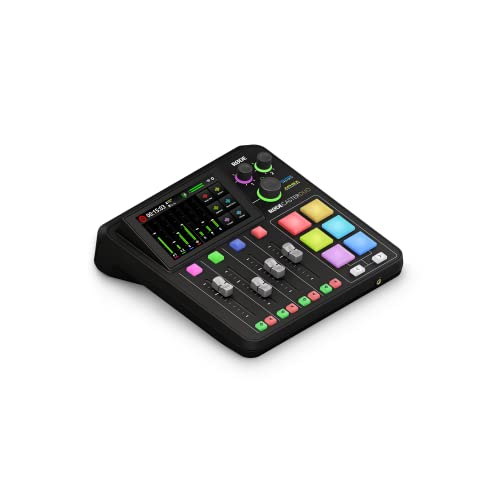
- All-in-one podcasting and streaming workflow
- Two combo jacks with high-gain preamps
- Touchscreen, faders, and SMART pads
Best For: Beginners who want a polished all-in-one podcast console
Flexible Budget Mixer
Pyle 8 Channel Bluetooth Studio Mixer

- 8 channels with Bluetooth and USB recording
- 4 XLR/1/4 combo inputs plus phantom power
- DSP effects, LCD display, and LED meters
Best For: Beginners who want versatile inputs and easy streaming features
Starter Streamer Mixer
Aveek 4-Channel USB Podcast Console

- 4-channel layout with combo mic inputs
- Plug-and-play PC recording via Type-C
- Bluetooth, USB playback, 99 DSP effects
Best For: Beginners who want easy recording and basic mixing
Budget Multi-Device Mixer
Depusheng DX6 6-Channel Desk Board

- 6 channels for more flexible setups
- USB, flash reader, MP3, and Bluetooth compatibility
- 48V phantom power with EQ and level metering
Best For: Beginners who need more inputs and simple device support
Compact Podcast Pick
Z4 4-Channel Home Studio Mixer

- Small 4-channel layout for desks and home studios
- 48V phantom power plus PAD and high-pass filter
- USB recording and Bluetooth 5.0 support
Best For: First-time podcasters who want a compact recording mixer
Compact 4-Channel Starter Mixer
4-Channel Bluetooth USB Audio Board

- 4 channels with simple controls
- USB, Bluetooth input, XLR, 6.35mm, RCA
- +48V phantom power and portable size
Best For: New podcasters who need a compact, easy-to-use mixer
Easy-Setup 6-Channel Pick
Beginner-Friendly 6-Channel Mixer

- 6 channels with independent gain, EQ, and volume
- Bluetooth, USB/MP3 playback, and DSP effects
- 48V phantom power for condenser mics
Best For: Beginners who want more channels and built-in effects
Feature-Rich Midrange Option

- 5 channels with mic, line, and stereo inputs
- USB-B recording plus USB drive playback
- 48V phantom power with echo and delay effects
Best For: Beginners who want recording, playback, and vocal effects
Compact Starter Streaming Mixer – FIFINE Audio Mixer with Slider Fader
If you want podcast mixer consoles for beginners that feel approachable right away, this FIFINE unit keeps the layout simple while still offering useful control. The four channels, slider fader, XLR mic input, and built-in monitoring make it a practical pick for basic podcast recording, game voice, or streaming setups.
Best For: Beginners who want a compact mixer with XLR support, easy level control, and simple multi-device routing.
Pros:
- 4-channel design lets you adjust multiple sources separately.
- XLR mic input with built-in 48V phantom power supports condenser mics.
- Includes mute, volume adjustment, and real-time monitoring for quick control.
- Multiple rear audio ports support dual-PC or mixed-device setups.
Cons:
- Built around core functions rather than advanced studio features.
- RGB lighting and voice-change extras may be unnecessary for a pure podcast setup.
Overall, this is a beginner-friendly mixer that focuses on the basics most new podcasters need: clear mic support, straightforward controls, and flexible connections. It is a good fit if you want to learn on a compact console without getting overwhelmed.
Studio-Style Entry Mixer – Yamaha MG10XU 10-Input Stereo Mixer
For podcast mixer consoles for beginners who want room to grow, the Yamaha MG10XU offers a more traditional mixer layout with 10 channels and built-in effects. Its USB connectivity, 3-band EQ, high-pass filters, and one-knob compressors give you practical tools for shaping speech and cleaning up a basic recording chain.
Best For: Beginners who want a full-featured mixer with more channels and simple sound-shaping tools.
Pros:
- 10-channel design offers plenty of input flexibility.
- USB connection and SPX digital effects add useful recording options.
- 3-band EQ and high-pass filters help reduce unwanted noise.
- One-knob compressors make vocal control easier to manage.
Cons:
- More channels and controls may be more than some first-time users need.
- Heavier, larger chassis is less compact than mini podcast mixers.
This is a strong option if you want a beginner mixer that can also serve as a longer-term studio tool. It is not the simplest path, but it gives you more control over sound once you are ready to move beyond the basics.
All-in-One Podcast Console – RØDECaster Duo Compact Production Solution
If you are comparing podcast mixer consoles for beginners and want something that feels like an all-in-one studio, the RØDECaster Duo is built for that workflow. It combines two combo jacks, broadcast-style faders, a touchscreen, SMART pads, and APHEX processing in one compact unit for podcasting, streaming, and content creation.
Best For: Beginners who want an all-in-one podcasting console with guided controls and built-in processing.
Pros:
- All-in-one design brings recording, mixing, and effects into one unit.
- Two Neutrik combo jacks with high-gain Revolution Preamps support clean mic input.
- Touchscreen, haptic feedback, and SMART pads make operation more intuitive.
- APHEX processing includes Aural Exciter and Big Bottom effects.
Cons:
- Only two combo inputs, so it is not built for larger multi-mic setups.
- More advanced feature set may feel pricey for absolute beginners.
This model stands out if you want a beginner-friendly path with less need for extra gear. It is especially appealing when you prefer a polished, integrated console instead of assembling a separate mixer and processor.
Flexible Budget Mixer – Pyle 8 Channel Bluetooth Studio Mixer
For shoppers looking at podcast mixer consoles for beginners on a budget, this Pyle mixer gives you a lot of connectivity without a complicated layout. With 8 channels, Bluetooth, USB recording, XLR combo inputs, and built-in DSP effects, it can handle basic podcasting, streaming, and small-session mixing in one compact box.
Best For: Beginners who want a versatile mixer with Bluetooth and multiple input options.
Pros:
- 8-channel layout supports mics, instruments, and playback sources.
- Bluetooth and USB recording make streaming and playback easier.
- Includes 48V phantom power for compatible microphones.
- Front-panel knobs, LCD display, and LED meters simplify level checks.
Cons:
- More input options can take a little time to learn.
- It is more feature-rich than a very basic plug-and-play podcast mixer.
This is a practical choice if you want one mixer that can do more than just podcasting. It offers a broad set of inputs and effects while still keeping the controls straightforward enough for a new user to learn.
Starter Streamer Mixer – Aveek 4-Channel USB Podcast Console
If you’re comparing podcast mixer consoles for beginners, this Aveek 4-channel board gives you a practical starting point with straightforward inputs, USB recording, Bluetooth playback, and built-in DSP. It covers the core needs for podcasting, karaoke, and live streaming without pushing you into a more complex rack-style setup.
Best For: Beginners who want a compact mixer with easy PC recording, basic mic support, and simple playback options.
Pros:
- Built-in PC recording chip supports plug-and-play recording through the Type-C connection.
- 2 XLR/6.35mm combo inputs plus 48V phantom power support condenser microphones.
- Bluetooth and USB flash drive support make playback and recording more flexible.
- 99 DSP effects and 3-band EQ help shape sound for podcasts and streaming.
Cons:
- Only 4 channels, so it may feel limited for larger multi-guest setups.
- Bluetooth is for music playback, not connecting an output device.
- Best suited to simple workflows rather than advanced routing needs.
This is a solid beginner-friendly mixer if you want useful podcast features like phantom power, direct PC recording, and basic tone control in one compact unit. It keeps the learning curve manageable while still offering room to grow.
Budget Multi-Device Mixer – Depusheng DX6 6-Channel Desk Board
For shoppers browsing podcast mixer consoles for beginners, the Depusheng DX6 stands out if you want more inputs and a simple way to mix multiple devices. Its USB, flash reader, MP3, and Bluetooth compatibility make it easy to connect common sources while still giving you phantom power and EQ control.
Best For: Beginners who need extra channels for guests, instruments, or multiple audio sources.
Pros:
- 6-channel layout gives more room for expanding beyond a basic solo podcast setup.
- USB/flash reader/MP3 and Bluetooth support make device connections easy.
- 48V phantom power supports compatible microphones.
- 3-band EQ, LED peak indicators, and output level meter help with basic level control.
Cons:
- Larger and heavier than compact 4-channel options.
- Designed as an analog mixer, so it may be less beginner-simple than ultra-basic recorders.
- No built-in PC recording chip is listed in the supplied specs.
The DX6 is a good fit if you expect your show setup to grow and want a mixer that can handle more sources from the start. It balances accessibility with enough controls to learn the basics of live mixing.
Compact Podcast Pick – Z4 4-Channel Home Studio Mixer
If you’re shopping podcast mixer consoles for beginners and want a compact, recording-focused option, this 4-channel mixer keeps the essentials front and center. It adds 48V phantom power, 99 DSP effects, USB recording, and Bluetooth 5.0 in a small footprint that suits home studios and streaming desks.
Best For: First-time podcasters who want a small mixer with recording features and basic sound-shaping tools.
Pros:
- Compact design with 4 channels is easy to place on a home desk.
- 48V phantom power supports condenser microphones.
- PAD (-26dB) and 80Hz high-pass filter help manage hot inputs and low-frequency rumble.
- USB recording, OTG support, and Bluetooth 5.0 add flexible connectivity.
Cons:
- Only 4 channels, so it may not suit larger panel-style podcasts.
- The supplied details list XLR output connector type, which may limit flexibility versus mixers with more output options.
- Its feature set is focused on basics, not advanced production routing.
This is a strong beginner choice if you want a small mixer that still includes useful tools for cleaner voice capture. The PAD and high-pass filter are especially helpful for learning how to manage podcast audio more confidently.
Compact 4-Channel Starter Mixer – 4-Channel Bluetooth USB Audio Board
If you’re comparing podcast mixer consoles for beginners, this compact 4-channel board is built around simple controls and flexible input options. It covers common starter setups with USB, Bluetooth input, XLR, 6.35mm, RCA, and +48V phantom power, making it easier to connect a mic, instrument, or playback device without a steep learning curve.
Best For: Beginners who want a small, portable mixer for podcasting, streaming, karaoke, and basic home recording.
Pros:
- 4-channel layout keeps the control surface straightforward for new users
- Supports USB, Bluetooth input, XLR, 6.35mm, and RCA connections
- Includes +48V phantom power for condenser microphones
- Compact size makes it easy to pack for mobile podcasting or livestreams
Cons:
- Bluetooth works as input only, not output
- Only 4 channels, so it is less expandable than larger mixers
- Small footprint may limit hands-on control for more complex setups
For beginners who want a low-fuss mixer with broad compatibility, this model offers a practical entry point. It favors portability and simple operation over advanced routing, which is often the right tradeoff for first-time podcast setups.
Easy-Setup 6-Channel Pick – Beginner-Friendly 6-Channel Mixer
This is a strong fit for podcast mixer consoles for beginners because it combines an easy setup with the kinds of features new users actually need. The 6-channel layout, Bluetooth playback, USB/MP3 input, DSP effects, and 48V phantom power give you room to build a starter podcast or streaming rig without jumping into a pro-level board.
Best For: Beginners who want a compact mixer with more channels, effects, and simple recording options.
Pros:
- 6 input channels provide more flexibility than smaller beginner mixers
- Bluetooth and USB/MP3 playback support background music and pre-recorded audio
- Built-in DSP effects add reverb, delay, and echo for voices and instruments
- 48V phantom power supports condenser microphones for podcasting
Cons:
- Extra effects and controls may take a little time to learn
- USB/MP3 playback is useful, but it is still a compact feature set
- Best suited to small setups rather than larger multi-host productions
If you want a beginner mixer that leaves room to grow, this one strikes a useful balance. It stays approachable while adding enough channels and processing to handle podcasts, karaoke, and small live-stream setups.
Feature-Rich Midrange Option – 5-Channel USB Bluetooth Mixer
For buyers browsing podcast mixer consoles for beginners, this 5-channel mixer offers a lot of practical tools without becoming overly complex. It includes USB recording, Bluetooth streaming, USB drive playback, echo and delay effects, and 48V phantom power, so it can handle a basic podcasting or streaming setup with room for future experimentation.
Best For: Beginners who want a versatile mixer with recording, playback, and vocal effects.
Pros:
- 5-channel design is manageable for first-time users
- Built-in recording chip supports plug-and-play USB-B recording to a computer
- USB drive playback and recording add extra flexibility
- 48V phantom power, EQ, gain, echo, and delay help shape vocals
Cons:
- Bluetooth is for streaming input, not output to an output device
- Bluetooth, USB, and 4/5 channel functions cannot be used simultaneously
- More features mean a slightly steeper learning curve than the simplest mixers
This model is a good middle ground if you want beginner-friendly operation but also want a few more recording and processing options. It is especially appealing when you want to connect a computer and monitor through headphones from the same unit.
How We Picked the Best Podcast Mixer Consoles for Beginners
We prioritized Podcast Mixer Consoles for Beginners that are easy to learn, work well with common microphones, and avoid unnecessary complexity. We looked for clean gain control, straightforward routing, reliable monitoring, and useful extras such as USB audio, Bluetooth, and phantom power.
Quick Comparison
For the simplest all-in-one experience, compact podcast-focused consoles are often the easiest starting point. If you want more live control and flexible routing, a traditional mixer with multiple channels may be a better fit. If your goal is to record and publish with minimal setup, look closely at models with built-in USB recording and clear one-knob or fader-based controls.
Key Buying Factors for Podcast Mixer Consoles for Beginners
Input Type and Microphone Support
Make sure the mixer supports your microphone type. XLR inputs are ideal for most podcast mics, while combo inputs can add flexibility if you plan to use other gear later. If you use condenser microphones, 48V phantom power is important.
Ease of Setup
Beginners should favor mixers with clearly labeled knobs, simple channel layouts, and USB plug-and-play compatibility. Too many advanced effects or routing options can slow you down when you just want to start recording.
Monitoring and Control
Headphone monitoring helps you catch noise, clipping, or room echo before you record a full episode. Fader-style controls are often easier for newcomers than dense button-heavy layouts.
Effects and Extras
Built-in DSP effects, Bluetooth, and MP3 playback can be useful, but they should be secondary to clean voice capture. Choose extras only if you know you will use them.
Who Should Buy Which Podcast Mixer Consoles for Beginners?
If you are starting a solo show or a two-person podcast, a compact, easy-to-read mixer is usually the safest choice. If you plan to stream, record guests, or expand into music or video content, a larger mixer with more inputs and better routing flexibility may be worth the extra cost.
For creators who want the most polished podcast workflow, dedicated podcast production units are often the best long-term investment. For budget-minded beginners, simpler USB mixers can still deliver strong results as long as they match your microphone and recording needs.