The best RAID enclosures for data security make it easier to combine drive capacity, redundancy, cooling, and fast connectivity in one manageable storage setup. The right enclosure can protect against a single drive failure while keeping backups, media libraries, work files, and archives accessible.
We selected 10 options spanning two- to five-bay desktop designs, all-flash systems, rackmount hardware, and high-speed Thunderbolt storage. Use the guide below to match bay count, RAID features, drive compatibility, and connection speed to your storage and security needs.
Best 10 Raid Enclosures for Data Security Picks for 2026
Flexible Desktop RAID
CENMATE 4-Bay Aluminum Enclosure

- Eight RAID modes with four drive bays
- Supports 2.5-inch and 3.5-inch SATA drives
- USB 3.0 and eSATA connectivity
Best For: Configurable desktop storage and backup setups
Compact Redundancy
Icy Dock FatCage RAID MB901SPR-B R1

- Two-drive hardware RAID 1 support
- Installs in two 5.25-inch drive bays
- Status LEDs and up to 6Gbps transfer speed
Best For: Internal desktop mirroring and JBOD
High-Capacity Desktop RAID
MAIWO 4-Bay SATA RAID Enclosure

- Up to 96TB across four 3.5-inch drives
- Eight RAID, Clone, and JBOD modes
- USB-A/C transfer speeds up to 5Gbps
Best For: Large backups, media libraries, and professional storage
Rack-Ready Hot-Swap Storage
SilverStone RS431U 4-Bay 1U RAID Unit
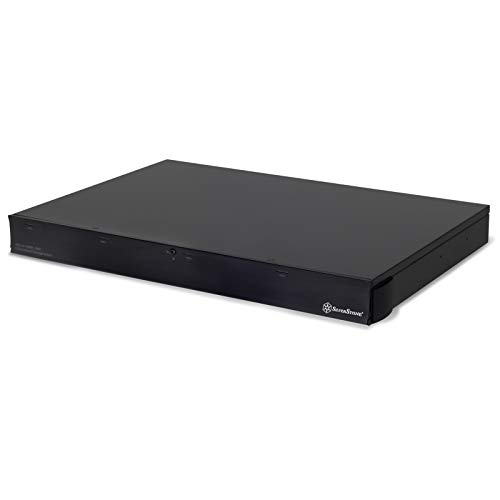
- Four 3.5-inch SATA bays in a 1U chassis
- Supports hot-swapping and screw-less installation
- Built-in power supply, fans, USB 3.0, and eSATA
Best For: Server racks needing serviceable four-drive storage
High-Capacity Choice

- Eight RAID modes, including RAID 5 and RAID 10
- Supports up to five 3.5-inch drives and 110TB
- Cooling fan, drive lock, and 150W built-in power
Best For: Large-capacity backups and flexible RAID management
Professional-Speed Pick
HighPoint RocketStor 8-Bay RAID

- Eight hot-swappable 2.5-inch or 3.5-inch bays
- Thunderbolt 3 supports up to 40Gb/s
- RAID 0, 1, 5, 10, 50, and JBOD support
Best For: High-throughput professional and SMB storage
Compact Two-Drive Option

- Four modes: RAID 0, RAID 1, Normal, and JBOD
- Supports two 2.5-inch or 3.5-inch drives up to 20TB each
- USB-A/C 3.0 connectivity with aluminum cooling design
Best For: Personal and small-office two-drive storage
Best Heavy-Duty Pick
ORICO 5-Bay 2.5/3.5-Inch DAS Enclosure

- Hardware RAID includes redundancy and cloning modes
- Supports five 2.5- or 3.5-inch SATA drives
- 150W power supply and active cooling aid stability
Best For: Large desktop backups and media libraries
Best NVMe Clone RAID
NEWQ Dual-Bay M.2 NVMe Enclosure

- RAID 1, RAID 0, JBOD, and offline Clone modes
- 20Gbps transfer speed for demanding file work
- Tool-free design with aluminum heat-dissipating casing
Best For: NVMe backups, drive upgrades, and offline cloning
Flexible Desktop RAID – CENMATE 4-Bay Aluminum Enclosure
For shoppers comparing raid enclosures for data security, the CENMATE offers four bays, eight selectable RAID modes, and support for both 2.5-inch and 3.5-inch SATA drives. It connects over USB 3.0 or eSATA and supports up to 80TB total capacity, making it a flexible desktop DAS for backups and storage expansion.
Best For: Individuals or small workgroups needing configurable external RAID storage with broad drive compatibility.
Pros:
- Supports RAID 0, 1, 3, 5, 10, Clone, Large, and Normal modes.
- Accepts four 2.5-inch or 3.5-inch SATA HDDs or SSDs, up to 80TB total.
- Includes USB-A/C 3.0 and eSATA connectivity, aluminum construction, and cooling fans.
Cons:
- Hot-swapping is not supported.
- Changing RAID modes requires a manual power-off and reset procedure and may cause data loss.
- Fan noise is rated around 40–50 decibels, and eSATA multi-bay access depends on host RAID support.
The CENMATE is notably versatile, but its manual RAID switching and lack of hot-swap support call for careful setup. Verify your computer’s eSATA capabilities and back up important data before reconfiguring the array.
Compact Redundancy – Icy Dock FatCage RAID MB901SPR-B R1
The Icy Dock FatCage is a compact choice among raid enclosures for data security, pairing two SATA drive bays with hardware RAID 1 for mirrored storage. It installs into two standard 5.25-inch optical drive bays and provides status indicators to help monitor drive activity and rebuild progress.
Best For: Desktop users who want a space-efficient, internally mounted RAID 1 or JBOD solution.
Pros:
- Supports RAID 1 mirroring and JBOD mode.
- Fits a standard external 2 x 5.25-inch optical drive bay arrangement.
- Offers up to 6Gbps transfer speeds, RAID status LEDs, vibration reduction, and a three-year warranty.
Cons:
- Supports only two drives, limiting capacity and RAID configuration choices.
- Requires a compatible desktop enclosure with two 5.25-inch bays rather than operating as a standalone external unit.
- Uses internal SATA and power connections, so installation is less plug-and-play than a USB enclosure.
For straightforward redundancy, the FatCage’s hardware RAID 1 and clear status LEDs are useful advantages. Its internal installation format makes it best suited to desktops or workstations with the required bay space and cabling.
High-Capacity Desktop RAID – MAIWO 4-Bay SATA RAID Enclosure
For data-heavy users evaluating raid enclosures for data security, the MAIWO provides four 3.5-inch SATA bays, eight RAID options, and capacity up to 96TB. Its USB-A/C 3.1 interface reaches up to 5Gbps, while dual switch-controlled fans help manage drive temperatures during sustained use.
Best For: Professionals, businesses, and power users building large backup, media, surveillance, or workstation storage systems.
Pros:
- Supports Normal, RAID 0, 1, 3, 5, 1/10, Clone, and Large/JBOD modes.
- Accommodates four 3.5-inch SATA drives up to 24TB each, for a stated 96TB maximum.
- Includes USB-A to USB-C and USB-C to USB-C cables, LED drive indicators, and two switch-controlled cooling fans.
Cons:
- Designed for 3.5-inch SATA drives and does not list 2.5-inch drive support.
- USB transfer speed is capped at up to 5Gbps.
- RAID configuration choices require careful planning because redundancy and usable capacity vary by mode.
The MAIWO stands out for its stated 96TB ceiling and broad RAID selection. It is a strong fit when capacity and cooling matter, provided your workflow is built around 3.5-inch SATA drives and USB connectivity.
Rack-Ready Hot-Swap Storage – SilverStone RS431U 4-Bay 1U RAID Unit
The SilverStone RS431U is a rack-oriented option among raid enclosures for data security, supporting four 3.5-inch SATA hard drives in a compact 1U chassis. Its built-in power supply, three fans, USB 3.0 interface, and hot-swap support suit server environments where serviceability matters.
Best For: Server and rackmount users who need four-drive storage with tool-free installation and hot-swappable disks.
Pros:
- Supports four 3.5-inch SATA HDDs in a compact 1U rackmount design.
- Fully supports hot-swapping for easier drive maintenance.
- Includes a built-in power supply, three 40mm fans, screw-less drive installation, and USB 3.0 speeds up to 5Gbps.
Cons:
- The supplied notes do not specify selectable RAID modes or RAID-level support.
- Designed for server or rackmount use rather than general desktop placement.
- Only a one-year parts-and-labor warranty is listed.
The RS431U is a practical hardware enclosure for rack deployments where hot-swapping and compact size are priorities. Before buying, confirm how RAID functionality will be provided in your specific server setup, since the listed details do not identify onboard RAID modes.
High-Capacity Choice – ORICO 5-Bay RAID Enclosure
For users comparing raid enclosures for data security, the ORICO 5-bay model combines eight RAID modes with support for up to five 3.5-inch SATA drives. Its USB 3.0 connection, cooling fan, locking mechanism, and 150W built-in power supply make it suited to centralized desktop storage and backup.
Best For: Large-capacity projects, video libraries, and users who need flexible RAID configurations.
Pros:
- Supports RAID 0, 1, 3, 5, 10, JBOD, CLONE, and CLEAR modes.
- Holds up to five drives, with a stated maximum capacity of 110TB.
- Includes an 80mm cooling fan, drive safety lock, and 150W power supply.
- Compatible with Windows, macOS, and Linux.
Cons:
- USB 3.0 transfer performance is lower than Thunderbolt 3 alternatives.
- Data should be backed up before switching RAID modes.
The ORICO is a versatile option when capacity and configuration flexibility matter most. Its RAID 5 support and physical drive lock add useful safeguards, but RAID changes still require careful planning and separate backups.
Professional-Speed Pick – HighPoint RocketStor 8-Bay RAID
The HighPoint RocketStor 6618V is a professional-oriented choice among raid enclosures for data security, offering eight hot-swappable bays and a hardware RAID engine. Its dual Thunderbolt 3 ports provide up to 40Gb/s transfer performance for demanding desktop storage workflows.
Best For: Professionals, small businesses, and users who need high-speed multi-drive storage.
Pros:
- Provides eight 2.5-inch or 3.5-inch hot-swappable drive bays.
- Supports RAID 0, 1, 5, 10, 50, and JBOD configurations.
- Dual Thunderbolt 3 USB-C ports support up to 40Gb/s transfer performance.
- Works with Windows, Mac, and Linux systems.
Cons:
- Requires a Thunderbolt 3-equipped setup to use its maximum interface speed.
- Its 7.96 kg metal enclosure is less portable than smaller desktop models.
Choose the RocketStor when throughput, bay count, and hot-swappable storage are higher priorities than compact size. Its RAID 5 and RAID 50 options provide useful array flexibility, while the fast Thunderbolt connection suits large file transfers.
Compact Two-Drive Option – CENMATE 2-Bay RAID Enclosure
For a smaller desktop setup, the CENMATE 2-bay enclosure offers four RAID modes and accepts either 2.5-inch or 3.5-inch SATA HDDs and SSDs. USB 3.0 connectivity, USB-A/C cables, an aluminum body, and a built-in fan make it a practical entry-level choice for raid enclosures for data security.
Best For: Individuals and small offices needing a simple two-drive RAID enclosure.
Pros:
- Supports RAID 0, RAID 1, Normal, and JBOD modes.
- Accepts 2.5-inch and 3.5-inch drives up to 20TB each.
- Includes USB-A and USB-C 3.0 connectivity and plug-and-play operation.
- Aluminum construction and a built-in fan help with heat management.
Cons:
- USB 3.0 limits transfer performance to the 5Gbps interface class.
- The fan may produce approximately 40–50 decibels of noise.
- Changing or resetting a RAID array can result in data loss; macOS has no RAID software support noted.
The CENMATE keeps RAID storage straightforward and relatively compact, with RAID 1 available for drive redundancy. It is a sensible fit for personal or small-business use, provided you are comfortable with fan noise and carefully follow the reset instructions.
Best Portable Flash RAID – ORICO 4-Bay 2.5-Inch All-Flash Enclosure
For creators seeking raid enclosures for data security without sacrificing portability, this ORICO model combines four-bay storage with seven RAID modes. Its 2.5-inch SSD and HDD support, USB-C connectivity, and card slots make it especially practical for mobile editing and field backups.
Best For: Video editors, photographers, and mobile professionals who need flexible RAID storage and fast access to project files.
Pros:
- Supports RAID 0, 1, 3, 5, 10, JBOD, and CLEAR modes.
- Accepts four 2.5-inch drives, with up to 40TB total capacity according to the supplied specifications.
- Includes two 10Gbps USB ports plus SD and TF 3.0 card slots.
- Compact solid-state design is more portable and shock-resistant than traditional 3.5-inch enclosures.
Cons:
- Supports only 2.5-inch drives, not 3.5-inch hard drives.
- The listed 5Gbps SATA transfer rate is lower than the enclosure’s maximum USB 3.2 capability.
This is a strong fit when portability and workflow flexibility matter as much as redundancy. Its multiple RAID options and card-reader expansion are useful for active media projects, while the 2.5-inch format limits compatibility with larger desktop drives.
Best Heavy-Duty Pick – ORICO 5-Bay 2.5/3.5-Inch DAS Enclosure
For desktop users prioritizing capacity and dependable multi-drive operation, this ORICO enclosure is a practical choice among raid enclosures for data security. It supports both 2.5- and 3.5-inch SATA drives, offers hardware-controlled RAID modes, and includes dedicated power and cooling for demanding workloads.
Best For: Large backups, media libraries, video-editing workstations, and users running several drives for extended periods.
Pros:
- Hardware RAID supports RAID 0, 1, 3, 5, 10, JBOD, Clone, and Clear modes.
- Five bays accommodate both 2.5- and 3.5-inch SATA HDDs and SSDs.
- Built-in 150W power supply is designed to support five high-consumption mechanical drives.
- Aluminum housing, an 80mm fan, and honeycomb vents help manage heat during long-term use.
Cons:
- USB 3.0 connectivity is slower than newer 10Gbps and 20Gbps enclosure interfaces.
- Its desktop-oriented size and cooling fan are less suited to portable use.
- The supplied title cites 130TB, while the supplied bullet specifies up to 110TB with five 22TB drives.
This enclosure makes the most sense for a stationary workstation where drive capacity, hardware RAID flexibility, and sustained cooling outweigh portability. Its USB 3.0 connection is adequate for backups, but performance-focused users may prefer a newer interface.
Best NVMe Clone RAID – NEWQ Dual-Bay M.2 NVMe Enclosure
This compact NEWQ enclosure is a focused option for raid enclosures for data security when your drives are M.2 2280 NVMe SSDs. It combines RAID 1 redundancy with RAID 0, JBOD, and offline Clone modes, making it useful for backups, upgrades, and direct drive duplication.
Best For: NVMe SSD users who need portable redundancy, rapid transfers, or tool-free disk cloning.
Pros:
- Offers RAID 0, RAID 1, JBOD, and Clone modes.
- 20Gbps transfer capability suits large files and data-intensive tasks.
- Tool-free installation simplifies SSD replacement and cloning workflows.
- Aluminum construction supports heat dissipation in a compact 0.46 kg design.
Cons:
- Supports only two M.2 2280 NVMe SSDs, not SATA or 2.5-inch drives.
- Requires an auxiliary USB-C input for stable operation with two high-capacity SSDs.
- Its listed memory capacity is 16TB, so total usable capacity depends on the installed drives and RAID mode.
Choose this model when fast NVMe storage and cloning are more important than broad drive compatibility. RAID 1 provides a straightforward redundancy option, while the tool-free design makes it convenient for frequent drive swaps and duplications.
How We Picked the Best Raid Enclosures for Data Security
We focused on enclosure design, drive compatibility, supported RAID modes, cooling, host connectivity, and practical expandability. The selection includes models for SATA hard drives and SSDs, NVMe M.2 storage, compact desktop systems, rackmount installations, and high-throughput professional workflows.
Because RAID is not a substitute for backup, we also considered how easily each type of enclosure can fit into a broader data-protection plan. A useful enclosure should provide sensible access to drives, reliable cooling, and a connection standard that matches your computer or server.
Quick Comparison
| Best For | Recommended Type | What to Look For |
|---|---|---|
| Basic home storage | Two-bay enclosure | RAID 1, USB 3.x, quiet cooling |
| Large media libraries | Four- or five-bay enclosure | Higher capacity, RAID 5, active cooling |
| Fast creative workflows | Thunderbolt enclosure | Thunderbolt 3 or faster, SSD support |
| Server rooms | Rackmount enclosure | 1U installation, eSATA or USB, serviceable drives |
| Portable SSD setups | NVMe or all-flash enclosure | USB 20Gbps, clone mode, compatible M.2 support |
Key Buying Factors for Raid Enclosures for Data Security
RAID Level and Drive Count
RAID 1 mirrors data across two drives and is usually the simplest choice for important files. RAID 5 can provide usable capacity and single-drive fault tolerance in larger arrays, while RAID 0 improves speed but offers no redundancy. JBOD treats drives separately and may be useful when maximum flexibility matters more than protection.
Drive Compatibility
Check whether the enclosure accepts 2.5-inch drives, 3.5-inch SATA drives, M.2 NVMe SSDs, or a combination. Confirm maximum supported capacity and whether the enclosure requires matching drives. A larger bay count does not help if your existing disks use an unsupported interface.
Cooling and Reliability
Hard drives and SSDs can slow down or fail prematurely when heat builds up. Look for a properly ventilated chassis, a controllable cooling fan, and tool-free or secure drive access. For continuous operation, prioritize build quality and easy maintenance over the lowest purchase price.
Connection Speed
USB 3.x is suitable for many backups and general file transfers. USB 10Gbps or 20Gbps is better for fast SSD arrays, while Thunderbolt is aimed at demanding video, photography, and workstation workloads. Make sure your host computer supports the advertised interface.
Who Should Buy Which Raid Enclosures for Data Security?
Choose a two-bay RAID enclosure if you want a straightforward mirrored backup target for home documents, photos, or small-business files. A four- or five-bay model is a better fit for growing media collections, shared storage, and RAID 5 configurations that need more capacity.
Pick an all-flash or NVMe enclosure when low latency and compact size matter most, such as editing, development, or mobile workstation use. A Thunderbolt model makes the most sense for compatible professional computers and sustained high-speed transfers. For a server cabinet or equipment room, a rackmount enclosure offers cleaner installation and easier integration.
Whichever model you choose, keep a separate backup on another device or location. RAID can reduce downtime after a drive failure, but it cannot protect files from deletion, malware, theft, power events, or damage to the entire enclosure.