Standing studio desks can improve comfort, organization, and workflow in a space where long sessions are the norm. The best options balance height adjustment, sturdy construction, and enough surface area for your gear.
Below, we focus on practical picks for music production, hybrid workstations, and creative setups so you can match the desk to your room and routine.
Best 10 Standing Studio Desks Picks for 2026
Editor's Choice

- Electric height adjustment from 28.35" to 46.46"
- Stores up to 4 memory presets
- Heavy-duty steel frame with low-VOC materials
Best For: everyday home office or gaming use with easy height changes
Studio Workflow Pick
Hand-Crank Adjustable Studio Desk
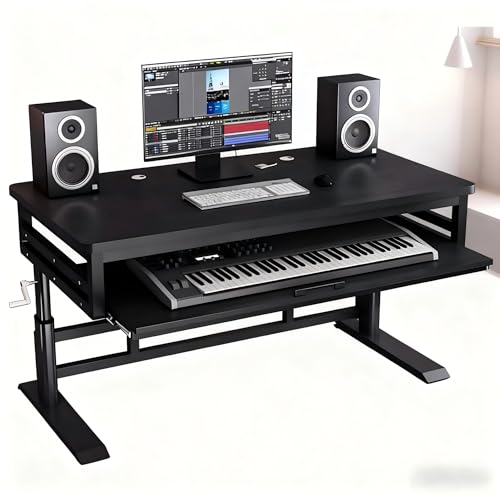
- Manual crank lift for sit-stand use
- Sliding tray for MIDI keyboards and controllers
- Three-tier design with cable management
Best For: music production workstations that need organized gear placement
Value Pick

- Electric adjustment from 28.3" to 46.5"
- 3 memory presets with reinforced steel frame
- Quick setup with mostly pre-assembled parts
Best For: compact home offices that need a sturdy budget-friendly sit-stand desk
Storage Upgrade
HUANUO Standing Desk with Drawers

- Two drawers plus open storage cubicle
- Supports C-clamp monitor mounts
- 4 preset heights with ergonomic curved edges
Best For: organized workspaces that need storage and monitor-mount flexibility
Corner Lift Pro
VIVO 63 x 55 in L-Shaped Standing Desk
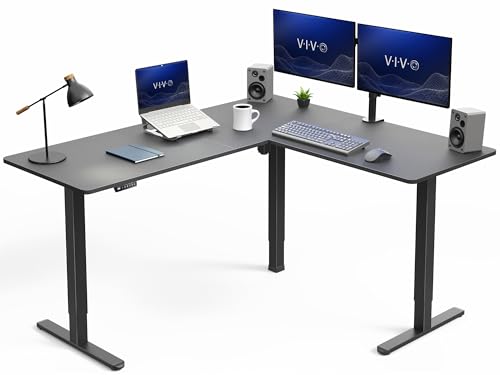
- Large corner-friendly L-shape
- Electric height range with presets
- 225 lb support with steel frame
Best For: Corner offices and multi-monitor workstations
Executive Power Hub
OffiGo 71 Inch Electric Standing Desk

- 71-inch desktop with room to spread out
- Built-in outlets and USB charging
- Three memory presets for easy height changes
Best For: Home offices that need power and cable management
Compact Stability Pick
48 x 24 Electric Standing Desk

- Compact 48 x 24 size
- Quiet motor with anti-collision
- Reinforced frame with 132 lb capacity
Best For: Smaller rooms and straightforward sit-stand use
Large, Stable Pick
Veken 63" Super Large Standing Desk

- 63" x 28" desktop for roomy setups
- Dual-beam frame helps reduce wobble
- Quiet motor with memory presets
Best For: Large home offices, gaming, and multitasking
Storage-Heavy Pick

- Includes outlets, USB ports, and LED lights
- Two drawers plus keyboard tray add storage
- Monitor shelf and cable tray improve organization
Best For: Organized home offices with lots of accessories
Extra-Wide Rolling Pick

- Huge 70.8" x 27.5" desktop
- Lockable casters make it easy to move
- 3 memory presets and anti-collision tech
Best For: Large work areas that need mobility
Editor's Choice – ErGear Electric Standing Desk
This standing studio desks option keeps things simple: a 48 x 24-inch electric sit-stand surface with smooth height changes from 28.35″ to 46.46″. It suits home offices, gaming setups, and productivity workspaces, and the memory presets make it easy to return to your preferred working position.
Best For: Buyers who want an affordable electric standing desk with memory presets and a stable frame for everyday work or study.
Pros:
- Electric lift adjusts quickly with quiet motor control.
- Saves up to 4 preferred height settings for easy switching.
- Heavy-duty alloy steel frame is built for stability, even at full height.
- Low-VOC materials and included tools make setup more user-friendly.
Cons:
- Assembly is required and recommended for two people.
- Smaller 48 x 24-inch size may feel tight for larger studio layouts.
- Only 3 height positions are listed in the details despite multiple memory settings.
Overall, this is a practical pick if you want a straightforward electric desk that covers the basics well. It focuses on stability, preset convenience, and easy height transitions rather than studio-specific extras.
Studio Workflow Pick – Hand-Crank Adjustable Studio Desk
If you want standing studio desks built around music production, this 47-inch workstation is designed with a pull-out keyboard tray, multi-tier layout, and cable management features. The hand-crank lift system lets you move between sitting and standing positions without electricity, while the three-level design helps organize monitors, screens, and gear vertically.
Best For: Music producers and studio users who want a manual standing workstation with a MIDI keyboard shelf and organized multi-tier layout.
Pros:
- Hand-crank height adjustment supports sit-stand workflow without power.
- Dedicated sliding keyboard tray fits MIDI controllers and electronic pianos.
- Three-level layout helps position monitors, screens, and audio gear.
- Solid wood desktop and metal frame are built for stability and vibration resistance.
Cons:
- Manual crank adjustment is less convenient than electric lift systems.
- Requires assembly.
- At 47 inches wide, it may not suit larger production setups.
This desk stands out for studio-specific organization rather than general office flexibility. If your workspace centers on music gear and you value a tidy, tiered layout, it offers a focused and practical setup.
Value Pick – FEZIBO Electric Standing Desk
This standing studio desks option gives you a clean electric sit-stand setup in a 48 x 24-inch footprint with height adjustment from 28.3″ to 46.5″. It uses 3 memory presets, a reinforced steel frame, and a splice desktop, making it a solid choice for compact home offices or study areas.
Best For: Shoppers who want a simple electric standing desk with quick assembly and a sturdy frame in a compact size.
Pros:
- One-touch electric adjustment with 3 memory presets.
- Reinforced steel frame supports up to 176 lbs.
- Assembly is designed to be quick, with most parts pre-assembled.
- FSC-certified wood desktop adds a more sustainable material option.
Cons:
- Maximum height tops out at 46.5″, which may not suit taller users.
- Includes a splice desktop rather than a single-piece top.
- Assembly still requires attaching legs and connecting the desktop.
For buyers who want a no-fuss electric desk, this model balances convenience, stability, and a compact footprint. It is especially appealing if you value fast setup and a familiar sit-stand layout over extra storage features.
Storage Upgrade – HUANUO Standing Desk with Drawers
Among standing studio desks, this 48 x 24-inch electric model stands out for built-in organization. It pairs a height-adjustable frame with two desktop drawers, an open storage cubicle, and C-clamp monitor mount compatibility, giving you more ways to keep a workstation tidy and functional.
Best For: Users who want a sit-stand desk with built-in storage and monitor mount compatibility for a cleaner desktop.
Pros:
- Two drawers and an open cubicle help keep accessories organized.
- Rear platform edge supports C-clamp monitor mounts.
- 4 preset buttons make switching between heights easy.
- Curved ergonomic edges add comfort during daily use.
Cons:
- Storage features can reduce open legroom compared with simpler desks.
- Assembly is required and recommended for two people.
- Maximum height of 46.4″ may be limiting for some users.
This is a strong pick if desk clutter is your main problem and you want storage built into the workstation. The combination of drawers, a cubicle, and monitor-mount support makes it especially practical for organized home offices.
Corner Lift Pro – VIVO 63 x 55 in L-Shaped Standing Desk
If you want standing studio desks that make the most of a corner, this VIVO L-shaped model gives you a large, adaptable workspace with electric height adjustment. It’s built for users who need room for multiple screens, paperwork, and accessories while still moving easily between sitting and standing.
Best For: Corner offices, multi-monitor setups, and anyone who wants a large L-shaped standing desk with memory presets.
Pros:
- Spacious 63″ x 55.2″ corner layout fits a broad work setup.
- Electric lift adjusts from 28.5″ to 46.8″ for sit-stand use.
- Memory controller saves preferred height settings.
- 225 lb weight capacity and steel frame add support.
Cons:
- L-shaped design is better for corners than compact rooms.
- Assembly is required and recommended for two people.
This is a strong pick if your priority is usable surface area and ergonomic flexibility in one desk. The L-shape, preset controller, and heavier-duty frame make it more of a workstation than a minimalist desk.
Executive Power Hub – OffiGo 71 Inch Electric Standing Desk
For standing studio desks that double as a full-featured workstation, this OffiGo model stands out with a long desktop, built-in charging, and electric height adjustment. It’s a practical fit for home offices or conference-style setups where you want space, power access, and a clean cable layout.
Best For: Users who want a long standing desk with built-in outlets, USB charging, and an organized desktop.
Pros:
- 71″ desktop provides room for monitors, laptops, and documents.
- Built-in AC, USB-A, and USB-C ports add convenient charging.
- Electric lift offers 29.1″ to 48″ height adjustment with 3 presets.
- Cable grommets and side hook help keep the workspace tidy.
Cons:
- Desktop is not designed for monitor arm mounting.
- Weight capacity is lower than heavier-duty standing desks at 154 lbs.
This desk makes sense if integrated power is more important than maximum load capacity. It combines size, storage-friendly details, and everyday convenience in a straightforward electric standing desk package.
Compact Stability Pick – 48 x 24 Electric Standing Desk
If you’re shopping for standing studio desks with a smaller footprint, this 48″ x 24″ model focuses on stability, quiet lifting, and easy setup. It’s a sensible option for a home office, gaming setup, or study space where you want ergonomic height adjustment without a large desk taking over the room.
Best For: Smaller workspaces that still need a stable electric sit-stand desk with memory presets.
Pros:
- Reinforced steel frame and anti-wobble design support steady use.
- Quiet motor operates below 50 dB for smooth adjustments.
- Two memory presets and anti-collision protection add convenience and safety.
- Rated for up to 132 lbs, which suits typical dual-monitor setups.
Cons:
- 48″ x 24″ surface is smaller than full-size executive desks.
- Only two memory presets are included.
This desk is a practical fit when stability matters more than maximum surface area. It keeps the feature set focused on the basics: smooth lift, decent capacity, and a compact size that works in tighter rooms.
Large, Stable Pick – Veken 63" Super Large Standing Desk
If you want standing studio desks with a true oversized work surface, this Veken model is built for spread-out setups. The 63″ x 28″ desktop gives you room for multiple monitors and office essentials, while the dual-beam frame is designed to keep wobble down during both work and height changes.
Best For: Users who need a wide, stable sit-stand desk for multitasking, gaming, or a larger home office layout.
Pros:
- Extra-large 63″ x 28″ desktop offers generous room for monitors and accessories
- Dual-beam construction is made to improve stability and reduce wobble
- Quiet electric adjustment runs under 52 decibels with memory presets
- Pre-installed threaded inserts and metal connectors simplify assembly
Cons:
- The desktop is joined from pieces rather than a single slab
- Requires assembly
- Large footprint may be more desk than smaller rooms need
This is a straightforward choice if your priority is space plus steadiness. It leans practical rather than flashy, and the low-noise motor and cleaner indoor-air material notes make it feel suited to everyday home office use.
Storage-Heavy Pick – AODK 55 Inch Standing Desk
This AODK option fits standing studio desks shoppers who want more than a plain lifting surface. Along with electric height adjustment, it adds drawers, a keyboard tray, a monitor shelf, power outlets, LED lights, and hidden cable management, making it a feature-packed setup for a compact workspace.
Best For: People who want a sit-stand desk with built-in storage, charging, and a monitor riser for an organized desk zone.
Pros:
- Built-in outlet hub with 3 outlets and 2 USB ports
- Two cloth drawers and a keyboard tray add useful storage
- Monitor shelf supports a more ergonomic viewing position
- Hidden cable management helps keep the desktop tidy
Cons:
- Smaller 55-inch top offers less surface area than oversized desks
- Maximum height range is more limited than some larger models
- More built-in features can mean a busier look
For buyers who value organization as much as height adjustability, this desk brings a lot into one frame. It’s especially appealing if you want power, storage, and lighting in a single workstation.
Extra-Wide Rolling Pick – farexon 71" Standing Desk
Among standing studio desks, this farexon model stands out for sheer width and mobility. The 70.8″ x 27.5″ desktop gives multiple people or multiple devices plenty of room, and the included lockable casters make it easier to move than a fixed desk.
Best For: Buyers who need a very large sit-stand surface with the option to roll the desk around when needed.
Pros:
- Oversized 70.8″ x 27.5″ desktop supports expansive setups
- Lockable casters add easy movement and repositioning
- 3 memory presets make height changes simple
- Anti-collision protection and power-off height retention add peace of mind
Cons:
- The 70-inch top is made of 4 panels
- Requires assembly
- Large size may be excessive for smaller rooms
If your priority is maximum workspace, this desk delivers a lot of surface area without locking you into one spot. The mix of memory presets, rolling casters, and safety features makes it a flexible option for a busy home office or shared workspace.
How We Picked the Best Standing Studio Desks
We focused on desks that make sense for real studio use: stable frames, smooth height adjustment, usable work surfaces, and features that support cables, controllers, monitors, and accessories. We also looked at size variety, from compact desks for tighter rooms to larger models for multi-device setups.
Because Standing Studio Desks are used for both sitting and standing sessions, reliability mattered as much as convenience. Desks with memory presets, strong weight support, and practical add-ons like drawers, trays, or cable management scored especially well.
Quick Comparison
Smaller 48-inch desks are a good fit for minimal productions, laptop-first workflows, or home offices that double as studios. Mid-size 55-inch to 63-inch models offer more room for dual monitors, audio interfaces, and keyboards. Extra-wide desks around 71 inches are better for control-heavy setups, collaborative work, or users who want more breathing room.
Key Buying Factors for Standing Studio Desks
Surface Size and Layout
Measure your gear before you buy. Leave space for monitors, speakers, MIDI controllers, and a comfortable mouse area. If you use racks or multiple screens, prioritize width and depth over decorative features.
Stability and Motor Quality
A good standing desk should feel steady at both low and high positions. For studio work, wobble can be distracting when you are typing, mixing, or playing instruments. Quiet motors and reinforced frames are worth paying for.
Storage and Cable Management
Drawers, keyboard trays, hooks, and built-in cable routing can make a big difference in keeping a studio tidy. If you frequently swap gear, choose a desk that supports easy cable access and cleaner routing.
Height Range and Presets
Check that the desk adjusts high enough for standing and low enough for seated work. Memory presets are especially useful if multiple people use the desk or if you switch positions often during long sessions.
Weight Capacity and Accessories
Audio gear, monitors, and desktop accessories add up quickly. Make sure the desk can handle your setup with some margin to spare. If you use clamp-mounted accessories, confirm compatibility before purchasing.
Who Should Buy Which Standing Studio Desks?
If you want a compact, affordable setup, a 48-inch standing desk is usually the safest choice. If you need more room for production gear, look to 55-inch or 63-inch models. For larger studios, executive-style desks, corner layouts, or 71-inch surfaces offer the most flexibility. Among Standing Studio Desks, the best pick is the one that fits your workflow first and your room second.