Choosing studio monitors with subwoofer output can make bass-heavy mixes easier to hear without forcing you to replace an entire monitoring system. The right combination adds low-end extension while preserving balance, detail, and useful volume control.
This roundup covers compact near-field monitors, dedicated studio subwoofers, and flexible home-studio options. Use the guide below to match your room, connections, listening goals, and budget.
Best 10 Studio Monitors with Subwoofer Output Picks for 2026
Best Budget Pick
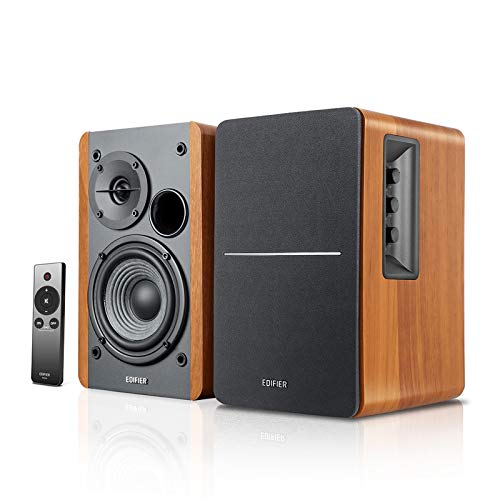
- Automatic subwoofer output and crossover
- 42W powered stereo design
- Dual RCA inputs with remote control
Best For: Desktop listening, gaming, and home offices
Best Compact Studio Subwoofer

- 10-inch active subwoofer with 130W output
- Adjustable crossover, phase, and volume
- Footswitch bypass for mix checking
Best For: ADAM T-Series studio monitor systems
Best Desktop Pair

- Complete 50W stereo monitor pair
- TRS, RCA, aux, and headphone connections
- High- and low-frequency tuning controls
Best For: Compact desks, gaming, and entry-level production
Best Professional Bass Extension
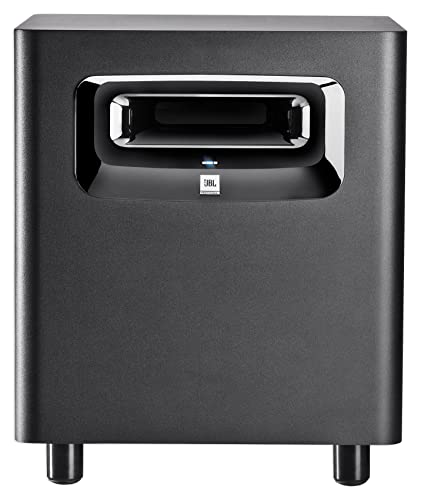
- 10-inch driver with response into the 20 Hz region
- Balanced XLR and 1/4-inch connectivity
- XLF club-style bass setting
Best For: Professional studio monitor systems and bass-heavy production
Best Bluetooth Subwoofer

- 8-inch driver reaches down to 30 Hz
- Bluetooth 5.0 and flexible wired inputs
- Adjustable crossover and room-tuning controls
Best For: Flexible music, gaming, and multimedia setups
Best for Studio Integration

- 150-watt amplifier with an 8-inch driver
- 22 Hz–150 Hz frequency response
- Adjustable filters and phase switch
Best For: Fixed wired recording and monitoring systems
Best Compact Monitor Pair

- Compact pair with 4.5-inch woven-composite woofers
- 50 watts of Class AB power
- Designed to pair with the Eris Sub 8BT
Best For: Desktops and small 2.1 studio-monitor setups
Desktop Bass Expansion
Mackie CR8SBT 8-inch Studio Subwoofer

- Built for CR Series monitors
- TRS, RCA, and Bluetooth connectivity
- Remote volume, bypass, and adjustable crossover
Best For: CR Series desktop monitoring setups
Compact Studio Control
KRK S8.4 8-inch Powered Subwoofer

- 8-inch glass aramid composite woofer
- Bass extension to 30Hz and 112dB max SPL
- Front port and wired XLR connectivity
Best For: Music production and recording studios
Deep Low-End Extension
KRK S10.4 10-inch Powered Subwoofer

- 10-inch woofer extends bass to 28Hz
- 160 watts and 117dB maximum SPL
- TRS and XLR wired connectivity
Best For: Professional production, mixing, and listening
Best Budget Pick – Edifier R1280Ts
If you want studio monitors with subwoofer output for a desktop, office, or casual listening setup, the Edifier R1280Ts offers a straightforward powered stereo solution. Its dedicated subwoofer output automatically detects an attached active subwoofer and activates a built-in crossover.
Best For: Desktop listening, gaming, home offices, and buyers who want simple subwoofer expansion.
Pros:
- Dedicated subwoofer line out with automatic detection and crossover activation.
- 42 watts of continuous power from 4-inch woofers and silk-dome tweeters.
- Dual RCA inputs, side-panel EQ controls, and a remote control.
Cons:
- Wired connectivity is less convenient than a fully wireless setup.
- The compact 4-inch woofer may not provide the low-end output of a dedicated studio subwoofer.
The R1280Ts is a practical entry-level choice when easy connections and future subwoofer support matter more than professional balanced connectivity.
Best Compact Studio Subwoofer – ADAM Audio T10S
The ADAM Audio T10S is an active 10-inch subwoofer for listeners building a more capable system around studio monitors with subwoofer output or compatible monitor-chain connections. It is designed to extend low-frequency response while offering controls for room and monitor matching.
Best For: Studio setups using ADAM T5V or T7V monitors and producers who need adjustable bass extension.
Pros:
- 10-inch driver and 130-watt maximum output support substantial low-end extension.
- Adjustable crossover, phase rotation, and dedicated volume controls help integrate it with monitors.
- Downward-facing woofer offers more placement flexibility.
- Footswitch-compatible bypass makes checking mixes with or without bass extension convenient.
Cons:
- It is a subwoofer rather than a complete pair of monitors.
- Its 27 Hz frequency-response specification may not reach as low as some larger subwoofer designs.
The T10S makes sense when calibration and workflow controls are priorities, particularly in a T-Series monitoring system.
Best Desktop Pair – PreSonus Eris 3.5
The PreSonus Eris 3.5 is a compact stereo pair suited to desks, gaming stations, and small production spaces. For shoppers comparing studio monitors with subwoofer output, it provides balanced TRS and RCA inputs plus useful acoustic controls, though the supplied specifications do not identify a dedicated subwoofer output.
Best For: Compact desktop setups, entry-level music production, gaming, and everyday media.
Pros:
- Sold as a complete stereo pair with 50 watts of built-in amplification.
- 3.5-inch woven-composite woofers and 1-inch silk-dome tweeters deliver a compact near-field design.
- Balanced TRS, RCA, front aux, and headphone connections support varied sources.
- High- and low-frequency controls help tailor the sound to the room.
Cons:
- The supplied notes do not confirm a dedicated subwoofer output.
- Its compact 3.5-inch woofers are less suited to powerful deep bass than larger monitors or a dedicated subwoofer.
The Eris 3.5 is a flexible small-space monitor pair, but buyers specifically requiring a verified subwoofer output should confirm the connection layout before purchasing.
Best Professional Bass Extension – JBL LSR310S
The JBL LSR310S is a professional 10-inch studio subwoofer for extending the low end of monitor systems. Its balanced XLR and 1/4-inch inputs and XLR outputs make it a strong fit for setups built around professional studio monitors with subwoofer output or balanced signal routing.
Best For: Studio production, professional monitor systems, and bass-heavy music workflows.
Pros:
- 10-inch driver delivers low-frequency response into the 20 Hz region according to the supplied product notes.
- Balanced XLR and 1/4-inch inputs plus XLR outputs support professional integration.
- Selectable sensitivity accommodates different signal levels.
- XLF setting provides an alternate club-style bass tuning.
Cons:
- It is a dedicated subwoofer, so a separate pair of monitors is required.
- The larger floor-standing enclosure is less suited to very compact desktop spaces.
- Its feature set may be more than needed for casual listening.
The LSR310S is the strongest option here for adding substantial, professionally connected bass extension, especially when balanced inputs and outputs are important.
Best Bluetooth Subwoofer – PreSonus Eris Sub 8BT
If you want studio monitors with subwoofer output in a flexible home setup, the PreSonus Eris Sub 8BT adds controlled low end without requiring a complicated connection scheme. Its 8-inch driver reaches down to 30 Hz, while adjustable filters help blend it with compatible monitors.
Best For: Music production, hi-fi listening, gaming, and multimedia setups that benefit from Bluetooth and flexible wired inputs.
Pros:
- 8-inch front-firing driver with bass extension down to 30 Hz
- Bluetooth 5.0 plus balanced TRS and unbalanced RCA inputs
- Adjustable highpass, lowpass, and room-tuning controls
- Front headphone output and automatic power-saving mode
Cons:
- Its plastic-and-metal construction may feel less substantial than larger professional subwoofers
- Bluetooth range is limited to approximately 10 meters
The Eris Sub 8BT is a practical choice when connectivity and easy tuning matter as much as deeper bass. Its crossover controls make it easier to integrate with compact monitors, particularly PreSonus Eris models.
Best for Studio Integration – Yamaha HS8S
For a more traditional wired addition to studio monitors with subwoofer output, the Yamaha HS8S focuses on powerful, adjustable low-frequency performance. Its 150-watt amplifier, 8-inch bass-reflex design, and dedicated filter controls suit recording and live-music applications.
Best For: Recording setups and wired studio monitoring systems that need substantial low-end extension and phase adjustment.
Pros:
- 150-watt amplifier provides strong output
- 22 Hz–150 Hz frequency response
- Low-cut switch, adjustable low-cut and high-cut controls, and phase switch
- Wired XLR connectivity for studio-oriented systems
Cons:
- At 33.6 pounds, it is less convenient to move than compact alternatives
- It does not offer the Bluetooth-focused flexibility of the PreSonus Eris Sub 8BT
The HS8S is the better fit when you want a dedicated studio subwoofer with high output and hands-on crossover control. Its wired design and phase switch make it especially suitable for a fixed monitoring position.
Best Compact Monitor Pair – PreSonus Eris E4.5
The PreSonus Eris E4.5 is a compact pair for shoppers building a system around studio monitors with subwoofer output. Its 4.5-inch woven-composite woofers and 50 watts of Class AB amplification provide balanced near-field sound, with the option to add the Eris Sub 8BT for more low-end extension.
Best For: Desktops, small studios, personal entertainment, gaming, and listeners who want a compact 2.1 upgrade path.
Pros:
- Compact 4.5-inch near-field monitors supplied as a pair
- 50 watts of Class AB amplification, rated at 25 watts per side
- Balanced TRS, RCA, and front auxiliary connectivity
- Built-in headphone amplifier and high- and low-frequency tuning
Cons:
- The smaller 4.5-inch woofers do not provide the low-end reach of a dedicated subwoofer
- The pair includes one active and one passive monitor, so placement requires speaker-to-speaker wiring
The Eris E4.5 makes sense when desk space is limited but you still want studio-style connectivity and tuning. Adding the compatible Eris Sub 8BT can turn the pair into a more capable 2.1 system for music production and everyday listening.
Desktop Bass Expansion – Mackie CR8SBT 8-inch Studio Subwoofer
If your desktop monitors need more low-end weight, the Mackie CR8SBT is a practical choice among studio monitors with subwoofer output. Designed for CR Series monitors, it connects through TRS or RCA and adds a controllable 8-inch subwoofer to a compact monitoring setup.
Best For: CR Series desktop monitor users who want adjustable bass, Bluetooth playback, and convenient remote control.
Pros:
- Designed for Mackie CR Series monitors with TRS and RCA connectivity
- Adjustable crossover helps blend the subwoofer with the monitors
- Includes a desktop volume control with subwoofer bypass
- Bluetooth input supports smartphones, tablets, computers, and other compatible devices
Cons:
- Its 8-inch, 200-watt design takes up substantial desktop or floor space
- Best suited to compatible CR Series setups rather than every monitor system
The CR8SBT emphasizes convenience: remote volume, bypass control, Bluetooth, and flexible analog inputs make it easy to add bass without complicating a desktop workflow.
Compact Studio Control – KRK S8.4 8-inch Powered Subwoofer
The KRK S8.4 is a focused option for studio monitors with subwoofer output, pairing an 8-inch glass aramid composite woofer with wired XLR connectivity. Its front-firing port and curved cabinet make placement more flexible in production and recording spaces.
Best For: Music producers and recording studios seeking an 8-inch powered subwoofer with strong output and footswitch-ready control.
Pros:
- 8-inch glass aramid composite woofer extends bass down to 30Hz
- Reaches a listed maximum SPL of 112dB
- Front-firing bass port supports more flexible placement
- Class D amplification keeps the powered design lightweight
Cons:
- Footswitch control is available, but the footswitch is not included
- Uses wired XLR connectivity rather than wireless connections
With its studio-oriented construction, front port, and footswitch-enabled sub and crossover bypass, the S8.4 is a sensible fit when controlled low-end extension matters more than consumer-oriented features.
Deep Low-End Extension – KRK S10.4 10-inch Powered Subwoofer
For larger monitoring environments that need deeper bass, the KRK S10.4 is a substantial choice among studio monitors with subwoofer output. It combines a 10-inch glass aramid composite woofer, TRS and XLR connectivity, and 160 watts of amplification for professional music production and mixing.
Best For: Professional producers, mixers, and listeners who want extended low end and higher output from a 10-inch studio subwoofer.
Pros:
- 10-inch glass aramid composite woofer reaches down to 28Hz
- Listed maximum SPL of 117dB provides substantial output capability
- TRS and XLR connections support wired studio setups
- Front-firing port and curved design offer placement flexibility
Cons:
- The 10-inch cabinet is larger and heavier than the S8.4
- Footswitch control is supported, but the footswitch is not included
- No wireless communication technology is provided
The S10.4 is the more powerful KRK option here, offering deeper rated extension and greater output in exchange for a larger footprint. It makes the most sense when the room and monitoring system can accommodate its scale.
How We Picked These Studio Monitors with Subwoofer Output
We selected products that suit practical home, project, and professional studio setups. The list includes powered monitors, compact speaker pairs, and dedicated subwoofers from established audio brands. We considered connection flexibility, cabinet size, power, low-frequency extension, controls, and how easily each model can integrate into a stereo monitoring chain.
Because a monitor and subwoofer must work together, compatibility matters as much as specifications. Products with dedicated subwoofer outputs, line-level inputs and outputs, crossover controls, or widely supported studio connections received particular consideration. Room size and placement remain essential; a larger subwoofer is not automatically better in a small or untreated space.
Quick Comparison
- Compact desktop setups: Edifier R1280Ts and PreSonus Eris 3.5 offer space-conscious solutions for casual production, editing, and media work.
- Mid-size near-field monitoring: PreSonus Eris E4.5 provides more cabinet volume while remaining suitable for smaller rooms.
- Dedicated low-end expansion: ADAM Audio T10S, JBL LSR310S, Yamaha HS8, PreSonus Eris Sub 8BT, Mackie CR8SBT, and KRK S8.4 or S10.4 are designed to extend bass below a monitor pair.
- Higher-output bass: The KRK S10.4 and larger 10-inch options suit listeners who need deeper, stronger low-frequency reproduction and have adequate room space.
Key Buying Factors for Studio Monitors with Subwoofer Output
Connection and Crossover Controls
Check whether the monitors provide a subwoofer output or whether the sub can sit between your audio interface and monitors. Balanced XLR or TRS connections are preferable for longer runs and quieter studio systems. Adjustable crossover and phase controls help blend the sub with the main speakers instead of creating a noticeable bass bump.
Room Size and Placement
Small rooms often benefit from an 8-inch or smaller subwoofer, while a 10-inch model may be more appropriate for larger spaces. Place the sub on the floor, away from corners when possible, and test several positions. Use isolation and avoid placing it directly against a wall unless the design and room treatment support that placement.
Power, Frequency Range, and Calibration
Power ratings indicate available output, not necessarily accuracy. Prioritize a smooth, controllable response and useful protection features. Set the subwoofer level conservatively, then verify bass on headphones, reference tracks, and other playback systems. Room correction or measurement tools can improve results substantially.
Who Should Buy Which Studio Monitors with Subwoofer Output?
Choose a compact monitor pair if you work at a desk, have limited space, or mainly edit podcasts, videos, and light music projects. Choose a dedicated 8-inch subwoofer for a balanced upgrade to a small or medium near-field system. Choose a 10-inch subwoofer if you produce electronic, hip-hop, cinematic, or other bass-intensive material in a room that can handle greater output.
For the most dependable results, match the subwoofer brand and series to your monitors when possible, but prioritize connection compatibility and room fit over brand matching alone. A carefully positioned, modest system will usually outperform a more powerful setup that is poorly integrated.