Thick acoustic panels can reduce reflections, echo, and harsh room sound more effectively than thin decorative treatments. The right option depends on your room size, wall coverage needs, installation method, and whether you prefer fiberglass or foam.
We selected 10 panel kits ranging from large broadband absorbers to compact foam tiles, so you can match your treatment plan to a home theater, office, church, studio, or recording room.
Best 10 Thick Acoustic Panels Picks for 2026
Best for Maximum Absorption
Large 2-Inch Fiberglass Panels

- NRC above 0.95 for strong absorption
- Large 47.2-by-23.6-inch panel size
- Includes brackets and nails
Best For: Large rooms needing substantial echo reduction
Best for Large Room Kits
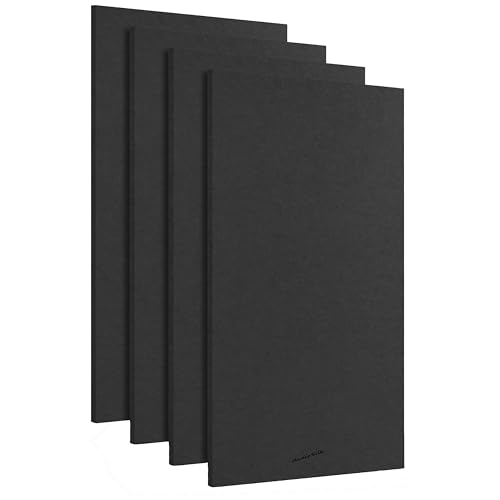
- Four large panels for broad coverage
- NRC up to 0.91
- Removable mounting option
Best For: Project studios and rented spaces
Best for Flexible Placement
Compact 2-Inch Fiberglass Panels

- Four modular 2-inch panels
- Includes templates and nails
- White fiberglass core with E0 rating
Best For: Targeted treatment in smaller rooms
Best Budget-Friendly Foam Option

- 24 lightweight pyramid tiles
- Flame-retardant polyurethane foam
- Designed for echo reduction, not isolation
Best For: Studios, podcast rooms, and gaming setups
Best for Large-Coverage Sound Absorption

- NRC 0.95 absorption rating
- Large panels cover more wall area
- Includes hanging hardware
Best For: Studios, theaters, offices, and larger rooms
Best for Easy Foam Installation
Self-Adhesive 2-Inch Acoustic Tiles

- Quickly expands to full size
- Self-adhesive installation
- 12 square feet per pack
Best For: Home studios, gaming rooms, and podcast spaces
Heavy-Duty Fiberglass Pick
2-Inch Removable Fiberglass Panels

- 2-inch fiberglass core for sound absorption
- Includes mounting templates and hardware
- Removable, fabric-wrapped design
Best For: Studios, conference rooms, and commercial spaces
Coverage Value Pick

- 50 high-density polyurethane foam panels
- Designed to reduce echoes and reverberation
- Adhesive must be purchased separately
Best For: Large-area studio and theater treatments
Decorative Performance Pick
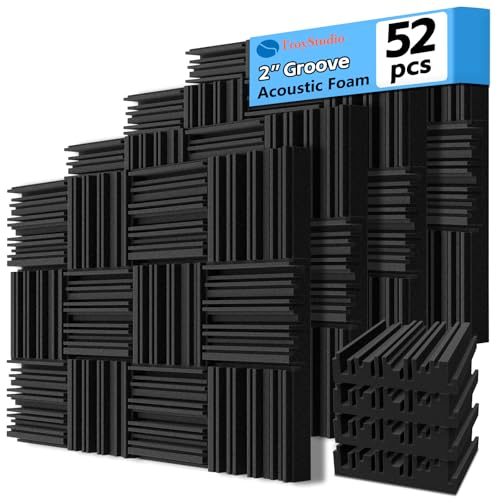
- 52 panels cover 52 square feet
- NRC 0.8 with grooved absorption design
- Flame retardant and easy to cut
Best For: Studios, streaming rooms, and decorative acoustic treatment
Best for Maximum Absorption – Large 2-Inch Fiberglass Panels
These thick acoustic panels are a strong choice when you want substantial wall coverage and high sound absorption. Each 2-inch fiberglass panel measures 47.2 by 23.6 inches and includes hardware for wall or ceiling mounting, though it is not self-adhesive.
Best For: Home theaters, recording rooms, offices, churches, gaming rooms, and other larger spaces where reducing echo and reverberation is a priority.
Pros:
- 2-inch thickness and reported NRC above 0.95 support strong sound absorption.
- Large panels cover considerable wall area with only two pieces.
- Includes metal brackets and nails for wall or ceiling installation.
- High-density polyester fabric surrounds a white fiberglass core.
Cons:
- Mounting hardware is included, but the panels are not self-adhesive.
- The two-panel package weighs 23.9 pounds, so installation may require careful handling.
Choose this set when absorption performance and large-format coverage matter more than peel-and-stick convenience. The heather grey finish also offers a restrained look for professional or shared spaces.
Best for Large Room Kits – Black PET Acoustic Panels
This four-panel room kit suits buyers who want broad coverage from relatively lightweight thick acoustic panels. The recycled PET panels measure about 45.7 by 22.8 inches and are designed to reduce flutter echo, reverb, and distortion.
Best For: Project studios, rehearsal spaces, rented rooms, and creative work areas where removable installation and a clean modern appearance are useful.
Pros:
- Four large panels provide broad treatment coverage.
- Reported NRC is up to 0.91 for reducing echo and reverberation.
- Made from post-consumer recycled PET with no harsh chemical smell noted.
- Removable installation is possible with separately purchased sticky strips.
Cons:
- At 0.4 inches thick, these are thinner than the fiberglass options in this roundup.
- Sticky strips or adhesive are not included.
This kit is a practical fit for renters and project studios that need flexible placement. Its large black panels emphasize coverage and appearance, while the included treatment advice can help with positioning.
Best for Flexible Placement – Compact 2-Inch Fiberglass Panels
These four thick acoustic panels offer the deeper 2-inch construction associated with stronger sound absorption while using a compact 23.6-by-11.8-inch format. Included templates and nails support stable, removable wall or ceiling installation.
Best For: Recording rooms, home video theaters, gaming spaces, offices, and other rooms where smaller panels can be arranged around specific reflection points.
Pros:
- 2-inch fiberglass construction is positioned as more absorbent than typical 1-inch polyester panels.
- Four smaller panels allow more flexible layout options than large single panels.
- Metal templates and nails are included for stable mounting.
- Polyester fabric and a white fiberglass core carry an E0 environmental rating.
Cons:
- Each panel covers less area than the large-format alternatives.
- Installation uses nails and templates rather than a self-adhesive backing.
Consider this linen set when you want 2-inch thickness but prefer a modular arrangement. The smaller footprint can make it easier to target echo-prone areas without committing to oversized wall panels.
Best Budget-Friendly Foam Option – 2-Inch Pyramid Acoustic Foam
This 24-pack provides thick acoustic panels in a lightweight pyramid-foam format. The 12-by-12-inch polyurethane foam tiles are intended to absorb sound, reduce echo and reverberation, and improve room acoustics rather than block outside noise.
Best For: Home studios, podcast rooms, gaming setups, vocal booths, offices, and home theaters needing flexible small-tile treatment.
Pros:
- Twenty-four 2-inch pyramid tiles provide many placement possibilities.
- Pyramid shaping increases surface area for sound diffusion and absorption.
- Lightweight foam is easy to install on walls or ceilings.
- Flame-retardant construction is noted for added safety.
Cons:
- Adhesive or nano double-sided tape is required but not included.
- The product is for sound absorption, not full soundproofing or external-noise isolation.
- Individual 12-by-12-inch tiles require more installation steps than large panels.
This option makes sense when you want to cover a room with many small tiles and value visual texture. Use it to manage reflections and echo, while keeping expectations focused on acoustic treatment rather than sound isolation.
Best for Large-Coverage Sound Absorption – 2-Inch Fiberglass Panels
These thick acoustic panels are a practical choice when you want substantial wall coverage with strong sound absorption. Each 2-inch fiberglass panel measures 47.2 by 23.6 inches, and the pair is rated at NRC 0.95 for reducing reverberation, noise, and echoes.
Best For: Studios, recording rooms, home theaters, gaming rooms, meeting rooms, and other larger spaces needing wall-mounted acoustic treatment.
Pros:
- NRC 0.95 sound absorption rating.
- Large 47.2-by-23.6-inch panels provide broad coverage.
- Includes hanging hardware for stable wall installation.
- High-density polyester fabric wraps a fiberglass core with an E0 environmental rating.
Cons:
- The two-panel set weighs 22.9 pounds, so installation may require careful handling.
- The large panel size may be less convenient for small walls or compact layouts.
Choose this set if you prioritize large coverage and high stated absorption over portability. The included hardware also makes it more installation-ready than panels sold without mounting accessories.
Best for Easy Foam Installation – Self-Adhesive 2-Inch Acoustic Tiles
These thick acoustic panels suit buyers who want lightweight foam treatment with a straightforward installation process. The 12-pack includes one-square-foot, 2-inch-thick tiles with upgraded self-adhesive backing and a quick-expand design.
Best For: Home studios, podcast rooms, gaming spaces, video-blogging setups, home theaters, offices, and rehearsal rooms.
Pros:
- 2-inch-thick, high-density 35 kg/m³ acoustic foam.
- Self-adhesive backing avoids the need for additional tape.
- Expands to normal size within seconds rather than requiring days.
- Each 12-pack covers 12 square feet.
Cons:
- Small 12-by-12-inch tiles require more individual placements than large panels.
- The pack covers 12 square feet, so larger rooms may need multiple packs.
- Installation depends on pressing the adhesive firmly against the wall.
This is a convenient option for renters, creators, and hobbyists who want to cover a measured area without mounting hardware. Measure your wall first, since broader coverage is described as providing a stronger noise-reduction effect.
Best for Commercial-Size Wall Coverage – 2-Inch Fiberglass Wall Panels
For buyers seeking thick acoustic panels with a large, professional-style footprint, this two-pack combines 2-inch fiberglass construction with 24-by-48-inch dimensions. Its absorption coefficient is listed at up to 0.95, making it suited to rooms where noise control and sound quality are priorities.
Best For: Recording studios, home theaters, offices, restaurants, and other spaces that benefit from substantial wall coverage.
Pros:
- 2-inch fiberglass core is designed for stronger absorption than standard 1-inch options.
- Large 24-by-48-inch size supports broad wall coverage.
- Absorption coefficient reaches up to 0.95.
- Includes impaling clips for installation.
Cons:
- The large panels may be difficult to position in smaller rooms.
- The two-pack weighs 19.11 pounds, so mounting requires planning.
- Impaling-clip installation may be less convenient for surfaces where wall penetration is a concern.
Consider this set when you want fewer, larger panels instead of many small tiles. Its dark grey finish and included impaling clips make it a practical fit for permanent acoustic treatment in commercial or dedicated media spaces.
Heavy-Duty Fiberglass Pick – 2-Inch Removable Fiberglass Panels
These thick acoustic panels use a 2-inch fiberglass core to absorb reverberation, noise, and echoes more effectively than typical 1-inch polyester panels. The fabric-wrapped design and included mounting hardware make them a practical choice for studios, meeting rooms, theaters, and other spaces where stable, removable installation matters.
Best For: Recording rooms, home studios, conference spaces, gaming rooms, and larger commercial interiors needing durable fiberglass absorption.
Pros:
- 2-inch-thick fiberglass construction is designed for strong sound absorption.
- Includes metal templates, nails, and wall-mounting hardware.
- Removable design and 100% polyester fabric covering.
- Backed by a stated two-year manufacturer warranty.
Cons:
- Only four panels are included, so additional packs may be needed for broad coverage.
- These panels are heavier-duty than foam and may require more planning during installation.
- No STC rating is specified in the supplied details.
Choose this set when absorption performance and a secure, removable mounting system are more important than maximizing panel count. Its fiberglass construction makes it the more substantial option for treated rooms and professional-style spaces.
Coverage Value Pick – 50-Pack 2-Inch Foam Wedges
For buyers covering a large wall area on a budget, these thick acoustic panels provide 50 two-inch polyurethane foam wedges for managing echoes and reverberation. They are intended for acoustic treatment—not full soundproofing—and suit studios, theaters, offices, and game rooms.
Best For: Expansive wall or ceiling treatments in personal studios, recording booths, theaters, offices, and gaming spaces.
Pros:
- Large 50-panel pack offers substantial coverage for distributed acoustic treatment.
- 2-inch high-density foam absorbs unwanted echoes and background noise.
- Designed to recover its shape after compression with proper ventilation.
- Low-odor, non-toxic foam is suitable for indoor personal studio spaces.
Cons:
- Adhesive is not included.
- Foam manages reflections and reverberation rather than blocking sound transmission.
- No manufacturer warranty is listed in the supplied details.
This pack is a practical quantity-first choice for treating a broad area with thick foam. Plan for a separate adhesive purchase and use realistic expectations: it improves room sound, but it is not a substitute for structural soundproofing.
Decorative Performance Pick – Grooved 2-Inch Foam Tiles
These thick acoustic panels combine two-inch polyurethane foam with a grooved 3D pattern that adds visual texture to walls and ceilings. With an NRC of 0.8 and an average absorption coefficient of 0.77, the 52-piece set is designed to reduce reverb, echo, standing waves, and reflected noise.
Best For: Home studios, streaming rooms, gaming spaces, vocal booths, home theaters, and rooms where appearance matters alongside acoustic treatment.
Pros:
- 52 panels provide 52 square feet of stated coverage.
- Grooved structure supports sound absorption while adding decorative wall texture.
- Specified NRC of 0.8 and average absorption coefficient of 0.77.
- Flame retardant, odorless, non-toxic, and easy to cut.
Cons:
- External tape, spray adhesive, or screws are required for installation.
- Adhesive and mounting supplies are sold separately.
- Foam treatment addresses reflections and room acoustics rather than complete sound isolation.
This is the strongest fit for buyers who want broad foam coverage with a more intentional decorative appearance. The published acoustic ratings add useful performance context, while the flexible installation options help adapt the tiles to different room layouts.
How We Picked the Best Thick Acoustic Panels
We compared these kits by panel thickness, dimensions, material, quantity, stated sound-absorption purpose, installation approach, and overall coverage potential. Large fiberglass panels generally offer broader absorption and a more finished appearance, while foam kits provide flexible placement and easier expansion across larger wall areas.
Because room acoustics vary, we also considered whether each option suits targeted reflection control or more extensive treatment. Product specifications and included accessories should be checked before purchase, especially when mounting hardware, adhesive, or frames are important to your installation.
Quick Comparison
| Panel type | Best for | Main advantage |
|---|---|---|
| Large 2-inch fiberglass panels | Home theaters, offices, churches | Broad coverage with a finished wall-panel format |
| Smaller fiberglass four-packs | Targeted reflection control | Flexible positioning in compact rooms |
| 12-inch foam tiles | Studios, vocal booths, gaming rooms | Easy to arrange across larger areas |
| Pyramid foam panels | Echo and reflection reduction | Textured surface and modular placement |
Key Buying Factors for Thick Acoustic Panels
Thickness and Material
A 2-inch panel is a useful baseline for broadband absorption, but thickness alone does not determine performance. Fiberglass panels are often preferred for wider-frequency control and a more polished appearance. Foam is lightweight and convenient, though its performance depends heavily on density, shape, spacing, and placement.
Coverage and Panel Size
Large panels cover more wall area with fewer pieces, making them practical for first-reflection points and broad treatment plans. Smaller tiles are easier to arrange around windows, shelves, doors, and equipment. Measure the available wall space before choosing a pack size.
Installation and Safety
Confirm whether the package includes hanging hardware, adhesive, or mounting accessories. Heavy fiberglass panels may need secure anchors or a suitable hanging system. Foam tiles should be installed with an adhesive compatible with both the wall and the panel, particularly in rented spaces.
Placement Strategy
Do not cover every wall automatically. Begin with major reflection points, the wall behind speakers or microphones, and the rear wall if flutter echo remains. Leaving some reflective surface can help preserve liveliness while reducing excessive reverberation.
Who Should Buy Which Thick Acoustic Panels?
Choose large fiberglass panels if you want noticeable broadband treatment, a cleaner appearance, and efficient coverage in a theater, church, office, or serious recording space. Smaller fiberglass kits work well when you need targeted treatment or want to build a balanced layout gradually.
Choose foam tiles if low weight, modular installation, and broad surface coverage matter most. Pyramid designs are suitable for users focused on reducing high-frequency reflections, while dense 2-inch foam kits offer a practical starting point for vocal booths, gaming rooms, and small studios. In every case, plan placement around the room’s listening or recording position rather than relying on panel count alone.