The best wireless microphone for presentations keeps your voice clear while freeing you from cables, podiums, and awkwardly passing a handheld mic. The right choice depends on your presentation space, audience size, device, and preferred microphone style.
We compared compact lavalier kits, headset systems, bodypack transmitters, and voice amplifiers to help you choose a reliable setup for classrooms, meetings, tours, lectures, and live events.
Best 10 Wireless Microphone for Presentations Picks for 2026
Best Compact Pick

- 10 g transmitters with discreet clip-on design
- Two-level noise cancellation and automatic limiting
- Up to 300 m range and 11.5 hours of operation
Best For: Mobile presenters and content creators
Best PA-System Option

- Headset and lapel microphones included
- 15 tunable UHF frequencies with 160–200 ft range
- Connects to PA systems, mixers, and powered speakers
Best For: Teachers and live presenters using PA equipment
Best Voice Amplifier
WinBridge Wireless Voice Amplifier

- 15W speaker amplification for classrooms
- Auto-pairing lapel mic with mute controls
- 12–15 hour speaker and 10+ hour mic battery life
Best For: Teachers and presenters addressing small-to-medium rooms
Best Long-Range Mobile Pick

- 9 g transmitter with up to 1,000 ft line-of-sight range
- 48 kHz/24-bit audio and adjustable noise cancellation
- Up to 30 hours with the charging case
Best For: Presenters recording mobile video from a distance
Best UHF Presentation System

- 200-foot line-of-sight wireless range
- Headset and lapel mic options
- 15 adjustable UHF frequencies
Best For: Presentations using a mixer, amplifier, speaker, or PA system
Best Portable Voice Amplifier
WinBridge Wireless Presentation Mic

- Includes handheld mic and amplifier
- 50-foot-plus wireless transmission
- Long-lasting rechargeable batteries
Best For: Portable classroom, tour, meeting, and small-event amplification
Best for Phone Presentations
Hollyland Lark A1 Wireless Mic

- 48kHz/24-bit audio capture
- Three-level noise cancellation
- Two compact magnetic transmitters
Best For: Smartphone presentations, livestreams, Zoom, and video recording
Best for PA Systems
Bietrun Wireless Headset Microphone
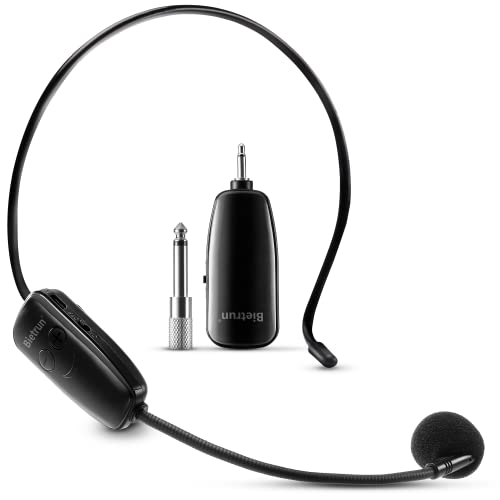
- Up to 160-foot stated range
- Headset and handheld formats
- About six hours of battery life
Best For: Presenters using compatible PA systems or voice amplifiers
Best for Mobile Presentations
Mini Mic Pro Wireless Lavalier

- USB-C and Lightning adapters included
- Plug-and-play, app-free setup
- Up to six hours per charge
Best For: Mobile presentations, interviews, and recordings
Best for Two-Person Presentations
Dual Wireless Headset Microphone System

- Two headsets use one receiver
- Up to 160-foot stated range
- About eight hours of battery life
Best For: Co-presenters using a compatible PA system or amplifier
Best Compact Pick – DJI Mic Mini
The DJI Mic Mini is a practical wireless microphone for presentations when you want discreet, lightweight audio for phones, tablets, or PCs. Its 10 g transmitters, automatic limiting, and two-level noise cancellation help keep speech clear without complicated setup.
Best For: Presenters, interviewers, and content creators who need a compact mic for mobile devices and flexible indoor or outdoor use.
Pros:
- Very lightweight 10 g transmitters are comfortable and discreet.
- Two noise-cancellation levels help manage quiet or noisy environments.
- Up to 300 m transmission range and up to 11.5 hours of operating time.
- USB-C receiver supports iPhone, Android, PC, and tablet connectivity.
Cons:
- The mobile receiver and USB-C setup are geared toward compatible phones, tablets, and computers rather than traditional PA systems.
- Strong noise cancellation may be unnecessary for quiet presentation rooms.
Choose the DJI Mic Mini if portability and fast mobile compatibility matter most. It is especially appealing for presenters who also record interviews, livestreams, or other video content.
Best PA-System Option – Phenyx Pro PDP-1-1B
The Phenyx Pro PDP-1-1B is a wireless microphone for presentations that connects to amplifiers, mixers, powered speakers, and PA systems through its receiver. It includes both headset and lapel microphones, making it adaptable for presenters who move around while speaking.
Best For: Teachers, church speakers, wedding presenters, and small-stage users who need headset or lavalier flexibility with a traditional sound system.
Pros:
- Includes both headset and lapel microphones.
- 15 tunable UHF frequencies help accommodate multiple systems and crowded spectrum conditions.
- 160–200 ft line-of-sight range is suitable for many indoor presentation spaces.
- Receiver works with PA systems, powered speakers, mixers, amplifiers, and audio interfaces.
Cons:
- Uses a 6.35 mm receiver connection, so it is less convenient for direct phone or computer recording.
- Range depends on line of sight and antenna positioning.
- The bodypack design is less discreet than an ultra-small mobile lavalier system.
This is the stronger choice when your presentation setup already includes a speaker or PA system. Its interchangeable headset and lapel options add useful flexibility for teaching and live events.
Best Voice Amplifier – WinBridge Wireless Voice Amplifier
The WinBridge Wireless Voice Amplifier is a wireless microphone for presentations designed to amplify your voice through a portable 15W speaker. Its auto-pairing lapel mic, mute controls, and long battery life make it a straightforward option for classrooms and small-to-medium spaces.
Best For: Teachers, tour guides, fitness instructors, and presenters who need portable voice amplification rather than recording audio into a phone.
Pros:
- 15W amplification helps speech carry through small-to-medium classrooms.
- Lightweight 0.64 oz lapel mic allows hands-free movement.
- Speaker battery lasts 12–15 hours, while the mic provides 10+ hours of use.
- Auto-pairing and separate mute buttons simplify operation.
Cons:
- It is a speaker-and-microphone system, not a direct recording microphone for a camera or computer.
- The compact speaker weighs 11.6 ounces and still needs to be carried separately.
- Amplification is intended for small-to-medium spaces rather than large venues.
Pick the WinBridge when your main goal is reducing vocal strain while addressing a room. Bluetooth playback also adds versatility for background music, but users seeking recorded presentation audio should consider a receiver-based lavalier system instead.
Best Long-Range Mobile Pick – Hollyland Lark M2
The Hollyland Lark M2 is a wireless microphone for presentations and mobile video work, offering a compact 9 g transmitter, USB-C receiver, and up to 1,000 ft of line-of-sight range. Factory pairing and plug-and-play connectivity make it convenient for presenters recording to compatible phones, tablets, laptops, or cameras.
Best For: Mobile presenters, educators, vloggers, and speakers who want high-quality recorded audio with long range and extended battery life.
Pros:
- Lightweight 9 g transmitter is easy to wear during presentations.
- 48 kHz/24-bit audio and a 70 dB signal-to-noise ratio support detailed speech capture.
- Up to 1,000 ft line-of-sight transmission range.
- Up to 30 hours of total battery life with the charging case.
Cons:
- The stated maximum range requires line-of-sight conditions.
- The USB-C version is intended for compatible USB-C phones, computers, tablets, and cameras rather than standard PA inputs.
- Noise-cancellation controls and app features may be more than needed for simple indoor presentations.
The Lark M2 is a strong fit for presenters who record video while moving around, especially when long range and battery endurance are priorities. For room amplification, pair it with a compatible recording or playback setup rather than relying on the receiver alone.
Best UHF Presentation System – TONOR Bodypack & Lavalier Mic
For a wireless microphone for presentations that supports hands-free speaking, the TONOR TW621 combines a bodypack with both lavalier and headset microphones. Its UHF connection is designed for compatible PA equipment, mixers, speakers, and amplifiers rather than Bluetooth devices.
Best For: Presenters, teachers, tour guides, churches, conferences, and events using a 6.35mm (1/4-inch) microphone input.
Pros:
- Offers up to 200 feet of line-of-sight range.
- Includes both headset and lapel microphone options for hands-free use.
- Provides 15 adjustable frequencies to help manage interference.
- Rechargeable receiver runs approximately 6–8 hours per charge.
Cons:
- Requires a compatible speaker, mixer, amplifier, or PA system; it does not work independently.
- Does not support Bluetooth and cannot connect directly to TVs or soundbars.
- The bodypack requires two AA batteries, which are not included.
This is the most presentation-focused option here when your venue already has traditional PA equipment. Check the input compatibility carefully, and use the frequency controls if you encounter interference.
Best Portable Voice Amplifier – WinBridge Wireless Presentation Mic
The WinBridge S97 is a wireless microphone for presentations with its own portable voice amplifier, making it useful when you need a compact all-in-one setup. The handheld microphone connects wirelessly to the amplifier and is suited to classrooms, meetings, tours, and small events.
Best For: Teachers, presenters, tour guides, fitness instructors, and speakers who need portable amplification without a separate PA system.
Pros:
- Includes a handheld wireless microphone and voice amplifier.
- Provides 50 feet or more of stable wireless transmission.
- Amplifier battery is rated for 12–15 hours, while the microphone is rated for more than 10 hours.
- One-touch mute controls are available on both the microphone and amplifier.
Cons:
- Its 15-watt output is intended for portable voice amplification rather than large venues.
- Uses a handheld microphone, so it is less hands-free than a bodypack and lapel setup.
- Bluetooth connectivity is central to the system, which may not suit every presentation setup.
Choose this model when simplicity and portability matter more than connecting to an existing sound system. It is particularly practical for classrooms, tours, and small-to-medium speaking environments where the included amplifier can handle the audio.
Best for Phone Presentations – Hollyland Lark A1 Wireless Mic
The Hollyland Lark A1 is a wireless microphone for presentations recorded or delivered through a USB-C mobile device. Its two compact magnetic transmitters, direct receiver connection, and noise-cancellation settings make it well suited to video presentations, livestreams, remote meetings, and on-the-go content.
Best For: Smartphone-based presentations, Zoom sessions, livestreams, interviews, and recorded speaking content.
Pros:
- Records 48kHz/24-bit audio and handles sound levels up to 120dB SPL.
- Offers three levels of intelligent noise cancellation.
- Provides up to 200 meters of wireless transmission in suitable conditions.
- Each transmitter is rated for up to nine hours, with two transmitters enabling alternating use.
Cons:
- The supplied receiver is USB-C, so compatibility depends on the recording or presentation device.
- It connects directly to phones rather than traditional mixers, amplifiers, or PA systems.
- The receiver is mobile-phone powered, so phone battery life remains a consideration.
This is the strongest fit for presenters who work from a smartphone and need clean recorded or streamed audio. It is less suitable for powering a room through conventional PA hardware, but its compact design and noise controls are valuable for mobile presentations.
Best for PA Systems – Bietrun Wireless Headset Microphone
For presentations that use a PA system or voice amplifier, this wireless microphone for presentations provides a hands-free headset format, a stated range of up to 160 feet, and support for both 3.5mm and 6.35mm microphone inputs. Confirm that your equipment has a dedicated mic jack before buying.
Best For: Speakers, instructors, presenters, and performers using compatible PA systems or voice amplifiers.
Pros:
- Hands-free headset design with a detachable handheld option.
- Up to 160 feet of transmission distance with anti-howling and anti-jamming features.
- Rechargeable transmitter and receiver offer about six hours of use.
- Includes a 6.35mm adapter for compatible amplifiers.
Cons:
- Works with mic jacks, not auxiliary inputs.
- Not supported with iPhones, Android phones, laptops, MacBooks, Bluetooth speakers, or PCs.
- Only one microphone is included.
This is a practical choice when your presentation setup already includes a compatible PA system or voice amplifier. Its main limitation is equipment compatibility, so check the input type and supported devices before ordering.
Best for Mobile Presentations – Mini Mic Pro Wireless Lavalier
If you present or record from a phone, tablet, or laptop, this wireless microphone for presentations is a compact lavalier option with included USB-C and Lightning adapters. It uses plug-and-play connectivity without an app or Bluetooth and includes wind-protection accessories for outdoor recording.
Best For: Mobile presenters, online speakers, interviewers, and creators recording with smartphones, tablets, or laptops.
Pros:
- Includes USB-C and Lightning adapters for compatible devices.
- Compact clip-on design weighs under an ounce.
- Noise reduction and included foam and dead-cat wind covers help with spoken audio.
- Up to six hours of recording per charge, with simultaneous device charging supported.
Cons:
- Its omnidirectional lavalier format may pick up sound from around the speaker.
- Best suited to compatible mobile, tablet, or laptop recording workflows rather than PA systems.
- The listed warranty and replacement coverage is limited in duration.
The Mini Mic Pro is a convenient choice for presenters who need to capture clear speech directly on a mobile device. Its small size and broad adapter support are useful for on-the-go work, while the included wind protection adds flexibility outdoors.
Best for Two-Person Presentations – Dual Wireless Headset Microphone System
For co-presenters, this wireless microphone for presentations includes two headset microphones that can connect to one receiver and operate within a stated 160-foot range. It is designed for compatible PA systems, amplifiers, karaoke machines, and other equipment with a microphone input.
Best For: Two-person presentations, team teaching, fitness instruction, tours, and shared speaking engagements.
Pros:
- Supports two headset microphones with one receiver.
- Hands-free design allows presenters to move freely.
- About eight hours of stated working time and simultaneous USB charging.
- Includes a 3.5mm-to-6.35mm adapter for compatible equipment.
Cons:
- Requires a compatible microphone jack and does not support iPhones, Bluetooth speakers, PCs, or laptops according to the supplied notes.
- The system uses a single receiver, so it is less flexible for separate audio destinations.
- Only one channel is listed in the product details.
This system stands out when two people need to speak through the same compatible PA setup. Its dual-headset design simplifies shared presentations, but verifying the input and device compatibility is essential before purchase.
How We Picked the Best Wireless Microphone for Presentations
We focused on the factors that matter during real presentations: speech clarity, dependable wireless performance, wearing comfort, setup time, compatibility, battery convenience, and the ability to connect to common phones, amplifiers, PA systems, or cameras. The lineup includes single-speaker and two-person systems, plus dedicated voice amplifiers for situations where portability and room coverage matter more than recording features.
Because presentation environments vary widely, no single system is ideal for everyone. A compact 2.4 GHz microphone may suit mobile video and small meetings, while a UHF bodypack or headset system can be a better fit for speakers using a PA or amplifier.
Quick Comparison
| Best For | Recommended Type | What to Prioritize |
|---|---|---|
| Phone recording and online presentations | Compact wireless lavalier kit | Device compatibility, noise reduction, USB-C or phone connector |
| Classrooms and guided tours | Voice amplifier with headset or lapel mic | Speaker output, battery life, lightweight design |
| PA systems and venues | UHF bodypack or headset system | Connector type, range, interference resistance |
| Two presenters | Dual-transmitter system | Independent channels, charging, included receivers |
Key Buying Factors for a Wireless Microphone for Presentations
Microphone Style
Lavalier microphones clip near the collar and provide a discreet appearance, but clothing movement can create noise. Headsets keep the microphone consistently positioned near your mouth and are often better for energetic speakers, teachers, and tour guides. Handheld or bodypack-compatible systems offer more flexibility when connecting to existing audio equipment.
Compatibility and Connections
Check whether the receiver connects through USB-C, Lightning, 3.5 mm audio, or a 1/4-inch plug. Phone-focused kits are not automatically compatible with PA systems, and traditional UHF receivers may require an amplifier or mixer. If you use an iPhone, Android device, camera, or laptop, confirm the exact connector and whether adapters are included.
Range, Reliability, and Interference
Published range figures are usually measured in open conditions. Walls, people, Wi-Fi networks, and other radio devices can reduce performance. For a typical presentation, stable operation and simple pairing are more useful than maximum advertised distance. UHF systems may be preferable for dedicated PA use, while 2.4 GHz kits are convenient for mobile recording.
Battery Life and Charging
Choose a system that comfortably exceeds your presentation length, allowing time for setup and unexpected delays. Charging cases simplify multi-device kits, while replaceable or rechargeable batteries may be more practical for frequent events. Check whether the receiver and transmitter charge together or require separate cables.
Who Should Buy Which Wireless Microphone for Presentations?
Choose a compact phone-ready kit if you record presentations, teach remotely, or need quick setup with a USB-C smartphone. Choose a headset and voice amplifier for classrooms, tours, fitness instruction, and outdoor speaking where built-in speaker output is valuable. Choose a UHF bodypack system if you already use a PA, mixer, or amplifier with compatible audio inputs. Choose a dual-transmitter kit when two people need to speak during interviews, demonstrations, or co-presentations.
Before buying, verify connector compatibility, microphone placement, expected audience size, and whether you need recording or room amplification. Those four checks will usually narrow the options faster than range or feature counts alone.