Clear, dependable audio helps congregations follow sermons, worship leaders, announcements, and special events without distracting cable runs. The best wireless microphones for church balance coverage, channel capacity, feedback control, and simple operation.
This roundup compares 10 systems ranging from two-microphone packages to multi-channel UHF kits, helping churches choose equipment that fits their rooms, teams, and budget.
Best 10 Wireless Microphones for Church Picks for 2026
Best Multi-Mic Setup

- Four UHF channels for multiple handhelds
- Cardioid capsules help reduce feedback
- All-metal build with up to 260 ft range
Best For: Church services and events needing four handheld microphones
Best Plug-and-Play Pair
JBL Wireless Two Microphone System
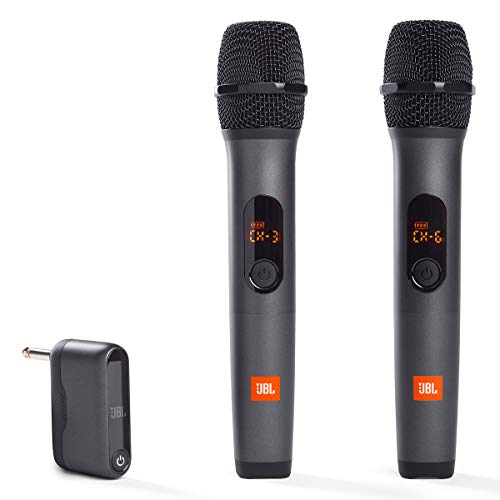
- Dual-channel setup for two microphones
- Simple plug-and-play operation
- Designed for compatible JBL PartyBox speakers
Best For: Small gatherings using a JBL PartyBox speaker
Best for Mixed Voices

- Two handheld and two bodypack channels
- Includes headset and lavalier microphones
- Individual volume controls and up to 260 ft range
Best For: Churches needing handheld and hands-free microphones
Flexible Two-Mic Value

- 30 tunable UHF frequency groups
- Two cardioid handheld microphones
- Up to 200 feet line of sight
Best For: Small churches and worship teams needing two dependable handhelds
Large-Group Coverage

- Six UHF handheld microphones included
- Six separate XLR outputs
- 200-foot line-of-sight range
Best For: Churches, conferences, and events needing six microphones
Long-Range Frequency Control

- Auto Scan for lower-interference frequencies
- Up to 328 feet line of sight
- Supports up to 16 transmitters
Best For: Larger churches needing range and wireless coordination
Best Budget Quad Set
innopow WM-400 4-Channel System

- Four handheld mics with individual volume controls
- Metal housing and 14–17-hour battery life
- 150–200-foot range with XLR and mixed outputs
Best For: Small churches needing a simple four-mic setup
Best for Large Groups
Phenyx Pro PTU-6000-8H 8-Channel System

- Eight UHF handheld mics with auto-scan frequency selection
- 290–328-foot line-of-sight range and IR pairing
- Cardioid pickup, mute controls, and replaceable mic heads
Best For: Large churches and worship teams needing eight microphones
Best Flexible Four-Mic Option

- Four channels with 40 selectable frequencies each
- Auto Scan, IR pairing, lock, and mute functions
- 290–328-foot line-of-sight range and cardioid pickup
Best For: Churches needing four mics with flexible frequency management
Best Multi-Mic Setup – Phenyx Pro PTU-5000-4H
For churches needing several handheld microphones, the Phenyx Pro PTU-5000-4H is a practical wireless microphones for church option with four UHF channels, individual volume controls, and up to 260 feet of stated range. Its cardioid dynamic capsules are designed to reduce unwanted noise and feedback, while the all-metal construction suits regular event use.
Best For: Church services, worship teams, speeches, and events requiring four handheld microphones.
Pros:
- Four separate UHF channels with individual volume controls
- Cardioid dynamic capsules help limit background noise and feedback
- All-metal receiver and microphone construction
- Includes four handheld microphones, batteries, and audio cabling
Cons:
- Fixed frequencies may be less flexible than a frequency-agile system
- Requires an amplifier, mixer, PA system, or speaker for sound output
- Not intended for multiset operation
This is a strong fit when a church wants a straightforward four-microphone system for a fixed setup. The fixed-frequency design simplifies deployment, but buyers should confirm that the listed frequencies work well in their venue.
Best Plug-and-Play Pair – JBL Wireless Two Microphone System
The JBL Wireless Two Microphone System is a simple choice for churches that need two microphones with minimal setup. Its dual-channel UHF receiver mixes both microphones through a compatible speaker, and JBL states up to six hours of playback for the rechargeable receiver. Compatibility is centered on JBL PartyBox speakers.
Best For: Small church gatherings, announcements, and services using a compatible JBL PartyBox speaker.
Pros:
- Two microphones connect through a dual-channel receiver
- Plug-and-play setup with no complicated configuration described
- Designed for clear vocal reproduction with JBL Original Pro Sound
- Microphones use replaceable AA batteries
Cons:
- Compatibility is specifically listed for JBL PartyBox models
- Less suitable for churches needing XLR outputs or four microphones
- Plastic enclosure may be less rugged than an all-metal system
This system makes sense for a portable, JBL-based church audio setup rather than a traditional mixer-and-PA installation. Verify your speaker model before buying, since the supplied compatibility information focuses on JBL PartyBox products.
Best for Mixed Voices – Phenyx Pro PTU-5000-2H2B
The Phenyx Pro PTU-5000-2H2B stands out among wireless microphones for church because it combines two handheld microphones with two bodypack transmitters. That gives a church options for worship leaders, speakers, presenters, and hands-free performers, while the four-channel receiver provides separate volume controls and up to 260 feet of stated freedom of movement.
Best For: Churches needing both handheld and headset or lavalier microphones in one system.
Pros:
- Includes two handhelds plus two bodypacks
- Headset and lavalier microphones support hands-free speaking
- Four UHF channels with individual volume controls
- All-metal receiver and handheld construction for frequent use
Cons:
- Fixed frequencies offer less adjustment flexibility
- Requires an external amplifier, mixer, PA system, or speaker
- Not intended for multiset operation
This is the more versatile Phenyx option for services with varied microphone needs. It offers useful microphone-format flexibility, though the fixed-frequency architecture makes it best suited to a planned, dedicated installation.
Best Long-Range Pair – Loewieta Dual Metal Wireless Microphones
For churches that prioritize range and channel selection, this Loewieta dual microphone system offers up to 500 feet in open space and 200 adjustable channels across two frequency groups. Auto Scan is designed to find a clear channel, while the metal receiver and handheld microphones provide a durable option for services, presentations, and larger events.
Best For: Churches and venues needing two handheld microphones with extended open-space range.
Pros:
- Up to 500 feet of stated range in open space
- 200 adjustable channels with Auto Scan for channel selection
- Metal construction for the receiver and microphones
- Separate XLR outputs plus a mixed 1/4-inch output
Cons:
- Listed range may be lower indoors or around obstructions
- Not compatible directly with laptops or Bluetooth speakers
- Supplied warranty is three months
This system is appealing when a church needs two durable handhelds and more frequency flexibility than a fixed-frequency setup. Plan to connect it to an audio mixer, amplifier, or PA system rather than a laptop or Bluetooth speaker.
Flexible Two-Mic Value – Phenyx Pro PTU-52-2H
For churches needing two wireless microphones for church services, the Phenyx Pro PTU-52-2H combines tunable UHF operation with straightforward connections for mixers, speakers, and amplifiers. Its cardioid microphones, frequency hopping, and up-to-200-foot line-of-sight range make it a practical choice for services, announcements, and events.
Best For: Churches needing a durable two-handheld setup with flexible frequency selection.
Pros:
- Offers 30 tunable frequency groups in the 500MHz band.
- Supports up to three units at the same time, according to the supplied specifications.
- Includes two XLR outputs, a mixed 1/4-inch output, batteries, and connection accessories.
- Metal receiver and microphones are designed for heavy use.
Cons:
- Its stated operating range is up to 200 feet in open-space line of sight.
- It provides two microphones, so larger groups need additional equipment.
This is a well-rounded option for smaller worship teams and church events. Frequency flexibility and automatic pairing simplify setup, while the metal construction and included accessories add practical value.
Large-Group Coverage – PRORECK MX66 Six-Mic System
The PRORECK MX66 is designed for churches that need multiple wireless microphones for church services, conferences, speeches, or group performances. With six handheld microphones, individual volume controls, and separate XLR outputs, it can connect to a broad range of mixers, amplifiers, and powered speakers.
Best For: Churches and event venues that need six microphones from one receiver.
Pros:
- Includes six UHF handheld microphones for larger groups.
- Provides six XLR outputs plus one mixed 1/4-inch output.
- Offers a stated 200-foot line-of-sight operating range.
- Features separate volume controls, an LCD display, signal indicators, and eight EQ modes.
Cons:
- The microphones use two AA batteries each, and batteries are not included.
- Two sets cannot be used together, according to the supplied notes.
- The system uses fixed frequencies rather than selectable channels.
The MX66 stands out when microphone quantity matters more than compactness or frequency flexibility. Its dedicated outputs and per-microphone controls are useful for larger church productions, though the fixed-frequency design requires more careful system planning.
Long-Range Frequency Control – Phenyx Pro PTU-71-2H
For churches seeking wireless microphones for church services in larger rooms, the Phenyx Pro PTU-71-2H offers auto scanning, selectable UHF frequencies, and a stated line-of-sight range of up to 328 feet. Its cardioid handhelds are designed to reject ambient noise, while IR synchronization and frequency locking help streamline setup.
Best For: Churches needing two microphones with extended range and stronger frequency-management options.
Pros:
- Auto Scan identifies lower-interference frequencies for synchronization.
- Provides 2 x 100 selectable UHF frequencies and supports up to 16 transmitters for multiset operation.
- Offers a stated 290- to 328-foot line-of-sight range.
- Includes metal construction, mute controls, replaceable microphone heads, and battery indicator lights.
Cons:
- It includes only two handheld microphones.
- The extended range is specified for line-of-sight operation.
The PTU-71-2H is the strongest fit here for churches managing interference or covering a larger venue. Auto Scan and frequency locking add control, while the durable metal build and replaceable heads support continued use.
Best Budget Quad Set – innopow WM-400 4-Channel System
If you need wireless microphones for church services, this innopow system provides four handheld mics with straightforward fixed-frequency operation. Its metal construction, individual channel volume controls, and 150–200-foot open-area range make it a practical choice for vocal use in smaller venues.
Best For: Churches and small events that need four microphones for services, presentations, or group singing.
Pros:
- Includes four handheld microphones with separate volume control for each channel.
- Metal housing and internal antennas offer a durable, clean-looking setup.
- Provides up to 14–17 hours of battery use and a 150–200-foot open-area range.
- Offers two individual XLR outputs plus a mixed 6.35mm output.
Cons:
- Fixed-frequency design cannot be used simultaneously with multiple units.
- Its stated range is shorter than the Phenyx Pro alternatives in this roundup.
This is a sensible fit when a church wants a simple four-mic package and does not need multiset expansion. For larger or more frequency-flexible installations, an auto-scan system may be a better match.
Best for Large Groups – Phenyx Pro PTU-6000-8H 8-Channel System
For churches that need many speakers or singers on stage, this Phenyx Pro system combines eight handheld microphones with auto-scan frequency selection. Its selectable UHF channels, IR synchronization, and advertised 290–328-foot line-of-sight range support larger, more demanding setups.
Best For: Larger churches, choirs, worship teams, and venues needing up to eight microphones in one system.
Pros:
- Includes eight handheld UHF microphones and an eight-channel receiver.
- Auto Scan helps identify lower-interference frequencies, while selectable channels support multiset operation.
- Offers IR synchronization, mute controls, battery indicator lights, and a 290–328-foot line-of-sight range.
- Cardioid pickup, tuned EQ, and replaceable microphone heads support vocal use.
Cons:
- Requires 16 AA batteries, making battery management more involved.
- The eight-microphone package may be more equipment than smaller churches need.
This is the most capable option here for expanding microphone coverage. Its channel flexibility and large capacity are useful when multiple performers or speakers must work at the same time.
Best Flexible Four-Mic Option – Phenyx Pro PTU-7000-4H
This four-channel Phenyx Pro system is a strong middle ground for wireless microphones for church use. It includes auto-scan frequency selection, IR pairing, and a 290–328-foot line-of-sight range, while keeping the microphone count manageable for many worship spaces.
Best For: Churches that need four wireless handhelds with more frequency flexibility than a fixed-frequency system.
Pros:
- Four selectable UHF channel ranges provide 40 frequencies per channel.
- Auto Scan, lock, and IR synchronization help simplify setup and reduce interference.
- Advertised range reaches 290–328 feet line of sight, with cardioid pickup for focused vocal capture.
- Metal construction, mute controls, battery indicators, and replaceable mic heads add practical flexibility.
Cons:
- Still requires eight AA batteries for the four microphones.
- Four channels may not cover larger choirs or events as well as the eight-channel model.
Choose this model when four microphones are enough but your church benefits from selectable frequencies and auto scanning. It offers a useful balance between capacity, range, and setup control.
How We Picked the Best Wireless Microphones for Church
We focused on the practical needs of worship spaces and church events: microphone count, UHF operating design, receiver capacity, stated range, frequency management, included handheld transmitters, and ease of setup. Multi-channel systems can support worship teams, speakers, choirs, and volunteers, while dual-microphone kits may be more appropriate for smaller services or occasional events.
We also considered whether a system offers fixed frequencies, auto scanning, or tunable channels. These features affect how easily a church can avoid interference and coordinate several systems. Product descriptions and specifications were compared for overall flexibility rather than treating a higher channel count as automatically better.
Quick Comparison
- Two microphones: A practical starting point for sermons, ceremonies, interviews, and small worship teams.
- Four microphones: A flexible middle ground for churches that regularly use multiple speakers or vocalists.
- Six or eight microphones: Best for larger services, rotating performers, productions, and organizations that want room to expand.
- Fixed-frequency systems: Often straightforward to deploy, but they require careful frequency planning when multiple wireless systems operate together.
- Auto-scan or tunable systems: Better suited to changing environments and installations where interference management matters.
Key Buying Factors for Wireless Microphones for Church
Channel Capacity
Count how many microphones may be active at the same time, then leave room for growth. Extra channels can be useful, but they also add setup complexity and require enough mixer inputs.
Frequency Coordination
Churches using several wireless devices should prioritize systems with compatible frequency controls, auto scanning, or clear channel documentation. Avoid assuming that two systems will work together simply because both use UHF.
Range and Room Layout
Advertised range is usually measured under favorable conditions. Walls, people, metal structures, and nearby electronics can reduce performance. Place the receiver where it has a clear path to the transmitters and use suitable antennas or extension options when supported.
Receiver and Mixer Compatibility
Confirm the receiver’s output connections match the church’s mixer, amplifier, or sound interface. For multi-microphone systems, verify that each channel can be routed and adjusted independently.
Handling, Battery Life, and Support
Handheld microphones should be comfortable for speakers and singers to hold. Check battery type, expected runtime, spare-battery availability, mute controls, included accessories, warranty terms, and replacement-microphone options before committing to an installation.
Who Should Buy Which Wireless Microphones for Church?
Small churches and occasional events: Choose a dependable dual-microphone system when one speaker and one vocalist, two speakers, or simple ceremonies are the usual applications.
Growing congregations: A four-channel kit offers useful flexibility without the footprint of a large production system. It suits worship teams, Bible studies, announcements, and seasonal programs.
Large worship teams and event-focused churches: Six- or eight-channel systems are worth considering when many handheld microphones are needed at once. Plan frequency coordination, mixer inputs, storage, and volunteer training before installation.
Churches with changing venues or interference concerns: Favor auto-scan or tunable models and test them in the actual room. Regardless of channel count, soundcheck every microphone, keep spare batteries available, and maintain a wired backup for important services.