Choosing your first synthesizer can be exciting, but the options range from simple pocket instruments to full-featured MIDI controllers. The right pick depends on whether you want built-in sounds, computer-based production, portability, or room to grow.
We’ve gathered 10 approachable options for new players, including compact keyboards, pocket synths, and beginner-focused learning tools. Use the guide below to match the features, workflow, and price range to your goals.
Best 10 Synthesizers for Beginners Picks for 2026
Best Standalone Pick

- Built-in speaker and over 100 sounds
- 25 keys, pads, knobs, arpeggiator, and note repeat
- Includes music-production and learning software
Best For: Beginners wanting a portable keyboard with standalone sounds
Best for Bowie Fans
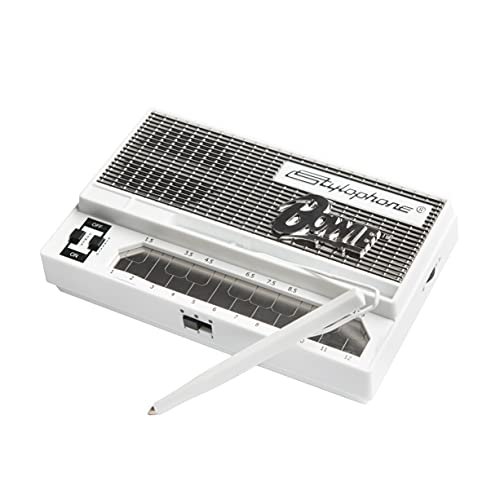
- Limited-edition David Bowie-inspired design
- Stylus-controlled interface with three sound modes
- Compact and battery-powered
Best For: Casual beginners and collectors exploring analog-style sounds
Best Beginner MIDI Controller

- 25 velocity-sensitive keys with pads, knobs, and sliders
- Includes multiple music-production instruments and software
- Portable USB-C controller with DAW integration
Best For: Computer-based beginners who want hands-on production controls
Best Expanded MIDI Controller

- 37 keys cover three full octaves
- Built-in 64-step sequencer supports standalone composition
- CV/Gate and MIDI I/O connect external hardware
Best For: Beginners planning to combine a DAW with hardware gear
Best Beginner Synth Guide
Synthesizer for Absolute Beginners

- Plain-English introduction to synthesis
- Patch recipes and daily exercises
- Includes melodies, cheat sheets, and recording guidance
Best For: First-time synth learners using hardware or software instruments
Best Starter MIDI Controller
Donner N-25 Mini MIDI Keyboard

- 25 velocity-sensitive mini keys
- Includes controls and 40 teaching courses
- Works with computers, mobile devices, and DAWs
Best For: Beginners using virtual synths and music-production software
Best Standalone Pick – Akai MPK Mini Play MK3
For beginners seeking synthesizers for beginners that can work beyond a computer, the Akai MPK Mini Play MK3 combines a 25-key velocity-sensitive keyboard with built-in sounds, a speaker, drum pads, and USB MIDI control. Its compact design also makes it practical for portable music-making.
Best For: Beginners who want standalone sounds, beat-making controls, and computer-based production in one portable keyboard.
Pros:
- Includes over 100 internal drum and instrument sounds plus a built-in speaker.
- Provides eight MPC pads, eight knobs, an arpeggiator, and note repeat for hands-on experimentation.
- Includes MPC Beats, AIR Music Tech instruments, Melodics lessons, and a Splice trial.
Cons:
- Battery power requires batteries, which are not included.
- The 25-key layout may feel limiting for more advanced keyboard parts.
The MPK Mini Play MK3 is a versatile starting point for learning keys, rhythms, and basic synthesis without needing a full desktop setup.
Best for Bowie Fans – Bowie Stylophone Synthesizer
The Bowie Stylophone is an approachable option among synthesizers for beginners, using a distinctive stylus-controlled keyboard rather than conventional keys. Its compact, battery-powered design and three sound modes make it suited to casual experimentation and collectible appeal.
Best For: Beginners, Bowie fans, and anyone who wants a simple pocket instrument for exploring classic analog-style sounds.
Pros:
- Limited-edition David Bowie-inspired design with an embossed Bowie logo.
- Simple stylus interface offers an accessible way to experiment with notes.
- Three modes provide classic analog synth and bass sounds.
Cons:
- Its compact stylus format is less suitable for traditional keyboard practice.
- It is designed primarily for simple sound exploration rather than broad production control.
This is a fun, highly portable introduction to electronic sounds, especially for shoppers who value character and collectibility over extensive controls.
Best Software-Ready Controller – Arturia MiniLab 3
For beginners choosing synthesizers for beginners to use with a computer, the Arturia MiniLab 3 offers a focused MIDI-control setup with 25 velocity-sensitive keys, RGB pads, knobs, sliders, and DAW integration. The included software also gives new producers a practical starting point.
Best For: Bedroom producers who want an intuitive USB-C controller with hands-on controls and bundled music-production software.
Pros:
- Includes 25 velocity-sensitive keys, eight RGB pads, eight encoders, and four sliders.
- Built-in arpeggiator, Chord mode, transposition, and touch controls support creative practice.
- Includes Arturia Analog Lab and Ableton Live Lite, with MIDI out and USB-C connectivity.
Cons:
- It is a MIDI controller rather than a standalone synthesizer with built-in speakers or sounds.
- The compact 25-key format may not suit players needing a larger range.
The MiniLab 3 is a strong computer-centered learning tool, particularly for beginners who want to grow from basic keyboard input into structured DAW production.
Best Pocket Intro – Stylophone Mini
The Stylophone Mini offers one of the simplest ways to try synthesizers for beginners: a genuine working electronic instrument with a touch-stylus keyboard in a keychain-sized format. It is small enough for spontaneous play and arrives ready to use with included AA batteries.
Best For: Beginners, gift shoppers, and musicians who want an ultra-portable instrument for basic melodies and sound experiments.
Pros:
- Fully functional synthesizer with an accessible touch-stylus keyboard.
- Extremely compact at 75 × 45 × 18 mm and lightweight at 42 g.
- Includes AA batteries and comes in branded packaging with three available color options.
Cons:
- The very small format limits playing comfort and control depth.
- It is intended for simple experimentation rather than full music production.
The Stylophone Mini is best viewed as a playful first step into electronic sound, offering immediate portability rather than the range of a conventional keyboard controller.
Best Beginner MIDI Controller – Arturia MiniLab 3 Mint Green
For beginners exploring synthesizers for beginners, the Arturia MiniLab 3 is a compact way to control virtual instruments and build tracks. Its 25 velocity-sensitive keys, pads, knobs, sliders, and included software make it suitable for learning hands-on music production without taking up much space.
Best For: Beginners who want a portable MIDI controller for computer-based production.
Pros:
- Includes 25 velocity-sensitive keys, RGB pads, knobs, sliders, and touch controls.
- Built-in arpeggiator, chord mode, and browsing controls support quick experimentation.
- Includes Analog Lab V, Ableton Live Lite, UVI Model D, NI The Gentleman, and other software.
- Works with major DAWs and includes USB-C, MIDI Out, and a five-year warranty.
Cons:
- It is a MIDI controller rather than a standalone synthesizer with its own sound engine.
- The 25-key layout may feel limiting for players who want a wider keyboard range.
The MiniLab 3 is a strong starting point for computer-based music making, especially if bundled software and extensive physical controls matter more than standalone operation.
Best Pocket Synthesizer – Stylophone Original
The Stylophone Original offers an approachable introduction to synthesizers for beginners through a simple stylus-controlled interface. Its touch-sensitive metal surface, built-in speaker, and battery-powered design make it easy to start playing without a computer or complex setup.
Best For: Beginners seeking a fun, portable standalone instrument with a distinctive retro sound.
Pros:
- Simple stylus operation makes notes easy to play by tapping and sliding.
- Provides three octaves and an optional vibrato effect.
- Compact, battery-powered design includes a built-in speaker and headphone socket.
- Can connect to a computer or other gear through its 3.5mm connection.
Cons:
- Its touch-surface layout is less familiar than a conventional keyboard.
- It has a limited feature set compared with larger controllers or production-focused synthesizers.
Choose the Stylophone if immediate playability, portability, and its warm vintage character are priorities. It is more of a compact musical instrument than a full music-production hub.
Best Expanded MIDI Controller – Akai MPK Mini Plus
The Akai MPK Mini Plus gives beginners studying synthesizers for beginners more room to grow than a compact 25-key controller. Its 37-key layout, pads, chord and scale modes, sequencer, and broad connectivity support both computer-based production and external synthesizer or modular gear.
Best For: Beginners who want a larger controller with sequencing and hardware-integration options.
Pros:
- 37 keys provide three full octaves for melodic and harmonic playing.
- Includes an onboard 64-step sequencer for drums and melodies or chords.
- Offers CV/Gate and MIDI I/O for connecting sound modules, synthesizers, and modular gear.
- Includes RGB MPC pads, chord and scale modes, assignable knobs, and MPC Beats software.
Cons:
- Its broader feature set may take longer for a complete beginner to learn.
- It requires external software or sound sources for a full range of sounds.
The MPK Mini Plus is a flexible choice for learners who expect their setup to expand. The extra keys, sequencing, and hardware connections make it more adaptable than a basic entry-level controller.
Best Beginner Synth Guide – Synthesizer for Absolute Beginners
For shoppers exploring synthesizers for beginners, this 128-page guide offers a structured way to learn sound design, basic playing, and recording without requiring music reading. Its short daily exercises and plain-English explanations make it a practical companion for a hardware or software synth.
Best For: Complete beginners who want to understand synthesis and create their first patches and melodies.
Pros:
- Explains oscillators, filters, envelopes, and LFOs in accessible language.
- Includes recipes for pads, leads, basses, and layered sounds.
- Provides a 7-Day Synth Challenge, cheat sheets, and printable patch sheets.
- Covers connecting a synth to a computer, free VSTs, and effects.
Cons:
- It is a learning book rather than a synthesizer or keyboard.
- The listed publication date is May 2026.
This is a strong starting point if you prefer guided practice over deciphering a technical manual. The 10-minute-a-day format and troubleshooting resources can help new players build confidence steadily.
Best Portable FM Synth – M-VAVE FM-1 Digital Synthesizer
The M-VAVE FM-1 is a compact option for shoppers comparing synthesizers for beginners who want hands-on sounds without a full-size keyboard. It combines 128 presets with a 6-operator FM engine, sequencing, effects, and several MIDI connection options.
Best For: Beginners, guitarists, and mobile producers who want a portable FM sound module with room to explore.
Pros:
- Offers 128 factory presets, 32 FM algorithms, and FM SYSEX import.
- Includes an arpeggiator, 16-step sequencer, 12-voice polyphony, and six effects.
- Supports USB-C, Bluetooth BLE MIDI, and 3.5mm MIDI connections.
- Battery-powered design weighs 251g and is rated for up to 12 hours of play.
Cons:
- The 27-key silicone keyboard may feel less familiar than standard keys.
- FM synthesis can offer a deeper learning curve than preset-based playing suggests.
- The product is especially oriented toward guitar rigs and DAW integration.
The FM-1 packs substantial functionality into a travel-friendly format. Its color display and presets can ease beginners in, while the FM architecture, sequencer, and MIDI options provide space to grow.
Best Starter MIDI Controller – Donner N-25 Mini MIDI Keyboard
The Donner N-25 is a compact MIDI controller for beginners shopping among synthesizers for beginners and planning to use computer or mobile music apps for the actual sounds. Its 25 velocity-sensitive keys, programmable controls, and included teaching courses provide an approachable entry into melody and arrangement.
Best For: New producers who want an inexpensive, portable keyboard for DAWs, virtual synths, and lessons.
Pros:
- 25 velocity-sensitive mini keys support expressive melodies and riffs.
- Includes arpeggiator, sustain, octave, tap tempo, and programmable banks.
- Works with Mac, Windows, iOS, Android, and various DAW software.
- Comes with 40 keyboard-teaching courses and music production software.
Cons:
- It is a MIDI controller, not a standalone synthesizer with built-in sounds.
- Mini keys may be less comfortable for players who prefer full-size keyboards.
- Its listed warranty is 90 days.
The N-25 makes sense when a beginner wants to learn keyboard input and control virtual instruments rather than buy a self-contained synth. Its small footprint and broad device compatibility also suit compact home studios and mobile setups.
How We Picked These Synthesizers for Beginners
We focused on instruments and controllers that are approachable for first-time players while offering a clear reason to keep using them as skills improve. Key considerations included ease of setup, playable key size, built-in sounds, portability, computer compatibility, hands-on controls, and overall learning value.
The list includes both standalone synthesizers and MIDI keyboard controllers. Standalone models can produce sound without a computer, while MIDI controllers generally require music software or an external sound source. That distinction is important when comparing Synthesizers for Beginners.
Quick Comparison
| Best For | What to Look For |
|---|---|
| Learning keyboard basics | Comfortable keys, velocity sensitivity, and simple controls |
| Making music on a computer | USB MIDI, bundled software, pads, knobs, and DAW compatibility |
| Playing without a computer | Built-in sounds, speakers, headphone output, or battery power |
| Travel and casual experimenting | Compact size, low weight, and quick setup |
| Growing into performance | More keys, expressive controls, presets, and flexible connectivity |
Key Buying Factors for Synthesizers for Beginners
Standalone Sound or MIDI Control
Decide whether you need an instrument that makes sound on its own. Pocket and standalone synthesizers are more immediate, while MIDI controllers are often better for recording and arranging with software. A controller is not necessarily a complete synthesizer unless it includes an internal sound engine.
Key Count and Playability
Twenty-five keys are compact and sufficient for melodies, bass lines, and basic chords. Thirty-seven keys provide more range without becoming difficult to transport. Mini keys save space, but full-size or velocity-sensitive keys may feel more natural if you plan to practice regularly.
Controls, Pads, and Software
Knobs make sound shaping more intuitive, while drum pads can help with beats and clip launching. Bundled music-production software is valuable for beginners because it reduces the cost and confusion of building a setup. Check that the included software works with your computer and preferred operating system.
Portability and Power
If you want to play anywhere, consider USB power, batteries, built-in speakers, headphone support, and the instrument’s physical footprint. Small devices are convenient, but the trade-off may be fewer keys, fewer controls, or less room for two-handed playing.
Who Should Buy Which Synthesizers for Beginners?
Choose a pocket synthesizer if you want immediate, informal experimentation, a travel-friendly instrument, or a fun introduction to electronic sound. These models are especially suitable for casual players and younger beginners.
Choose a compact MIDI controller if your main goal is recording, beat-making, or learning inside software. Look for velocity-sensitive keys, assignable knobs, pads, and included production tools.
Choose a larger controller or standalone keyboard if you expect to play with both hands, practice chords, or perform. Additional keys and more controls can reduce the need to upgrade quickly.
Choose a learning book or structured course alongside an instrument if you are starting from zero. A short, consistent daily practice routine can be more useful than buying the most advanced hardware. The best beginner setup is the one that makes it easy to start playing and keeps the learning process enjoyable.