The best hard drive docking stations for Mac make it easier to connect bare SATA drives, NVMe storage, memory cards, and peripherals without opening an enclosure every time. They can also simplify backups, drive cloning, and expandable desktop storage.
This roundup covers 10 options ranging from compact USB-C docks to dual-bay cloning stations and Mac mini stands with built-in NVMe storage. The right choice depends on your Mac’s ports, the drives you use, and whether convenience or maximum transfer speed matters most.
Best 10 Hard Drive Docking Stations for Mac Picks for 2026
Best Dual-Bay USB-C Cloner

- Offline SATA cloning without a computer
- Two independent bays for 2.5-inch and 3.5-inch drives
- USB-C, hot-swap design with no Mac drivers
Best For: Mac users cloning or transferring between bare SATA drives
Best Mac mini NVMe Stand

- Adds up to 4TB of NVMe storage
- Includes front USB-A ports and UHS-II SD reader
- Aluminum stand designed for select Mac mini models
Best For: Mac mini users building a compact storage and connectivity hub
Best Value Dual-Bay Dock
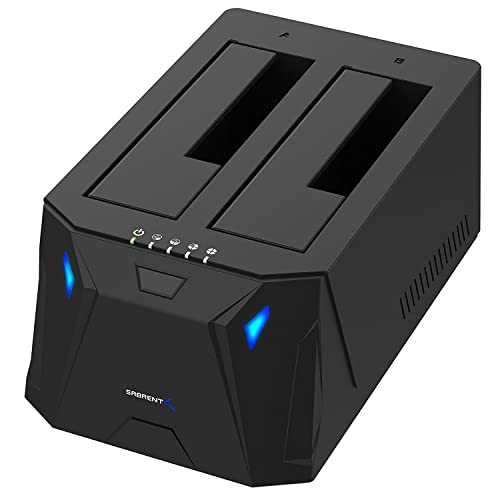
- Supports 2.5-inch and 3.5-inch SATA drives
- Offline cloning at up to 60Mbps
- USB 3.0 plug-and-play connectivity
Best For: Everyday SATA backups, transfers, and drive cloning
Best High-Capacity Mac mini Dock

- Supports up to 8TB of M.2 NVMe storage
- Adds 11 ports, including USB, SD, TF, and HDMI
- Mac mini stand with 10Gbps connectivity
Best For: Mac mini workstations needing storage and many expansion ports
Best SATA Value
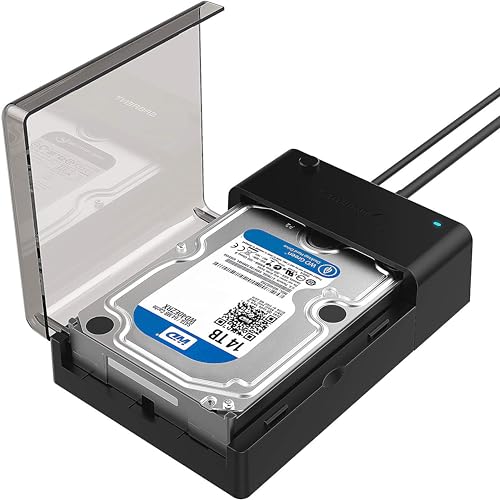
- Reads bare 2.5-inch and 3.5-inch SATA drives
- Tool-free hot-swap design with macOS support
- USB-A connection; 12V adapter included
Best For: Single-drive SATA access on USB-A Macs
Most Versatile
Sabrent NVMe and SATA USB-C Dock

- Supports NVMe, 2.5-inch SATA, and 3.5-inch SATA drives
- Includes USB-C and USB-A host cables
- Adds offline drive cloning and 10Gbps USB
Best For: Mixed-format drive work and cloning on Mac
Best Integrated Hub
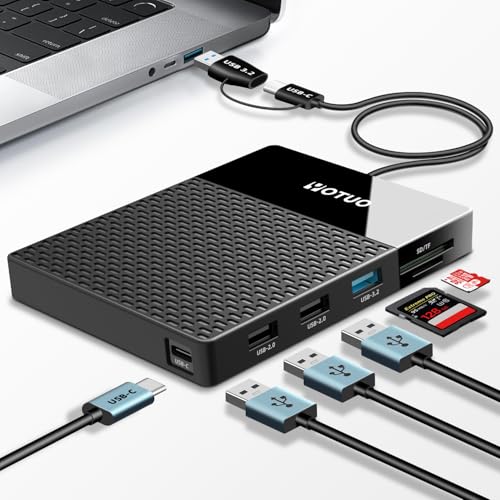
- Built-in 1TB drive plus USB, SD, and TF readers
- Adds hub functionality for USB-C Macs
- Compact and supports Mac OS
Best For: Portable storage and port expansion for USB-C Macs
Best Overall
SABRENT USB-C SATA Docking Station

- 10Gbps USB-C connection
- Supports 2.5-inch and 3.5-inch SATA drives
- Tool-free, hot-swappable single bay
Best For: Fast, flexible access to one SATA drive on a Mac
Best All-in-One

- Integrated 1TB external hard drive
- USB-C, USB, SD, and TF connectivity
- Compact design for portable Mac setups
Best For: Mac users wanting storage and hub functions together
Best for Cloning

- Two-bay 2.5-inch and 3.5-inch support
- Offline disk cloning capability
- UASP speeds up to 6Gbps
Best For: Intel Mac users cloning or managing two SATA drives
Best Dual-Bay USB-C Cloner – Sabrent EC-CH2B
The SABRENT EC-CH2B is a practical choice among hard drive docking stations for Mac if you need to access or clone two bare SATA drives. Its USB-C connection supports plug-and-play use on Mac, while the standalone cloner can copy one SATA drive to another without a computer.
Best For: Mac users who need dual-bay access and offline cloning for 2.5-inch or 3.5-inch SATA drives.
Pros:
- Clones SATA drives without a computer at up to 60MBps.
- Mounts both drives separately for simultaneous reading and writing.
- Supports tool-free, hot-swappable 2.5-inch and 3.5-inch SATA HDDs and SSDs.
- Includes a USB-C cable and requires no drivers on Mac.
Cons:
- Supports SATA drives only; M.2, NVMe, IDE/PATA, and Molex-connected drives are excluded.
- The included cable requires a USB-C port on the Mac or a separate adapter cable.
- Offline cloning requires the target drive to be the same size as or larger than the source.
Choose this dock when cloning and two-drive access matter more than broad drive-format support. Its 5Gbps USB interface is useful, though actual performance depends on the installed drives.
Best Mac mini NVMe Stand – Satechi Hub and SSD Enclosure
The Satechi hub and stand is a specialized option among hard drive docking stations for Mac, designed specifically for Mac mini M4, M5 Pro, and M6 setups. It adds an internal-style M.2 NVMe enclosure, front-facing ports, and an SD card reader while keeping the desktop compact.
Best For: Mac mini owners who want NVMe expansion, front access to peripherals, and an integrated stand.
Pros:
- Supports single-sided M.2 NVMe SSDs in 2230, 2242, 2260, and 2280 sizes.
- Provides up to 10Gbps NVMe and USB-A connectivity.
- Adds two USB-A 3.2 ports, a USB-A 2.0 port, and a UHS-II SD reader.
- Aluminum construction, cooling vents, and a dedicated power button suit a tidy Mac mini setup.
Cons:
- Designed exclusively for the listed Mac mini generations and requires macOS 14 Sonoma or later.
- SSD is not included; double-sided and heatsink-equipped NVMe SSDs are incompatible.
- USB-A ports do not support CD readers, Apple SuperDrive, or iPad charging.
This is less suitable as a general-purpose drive dock, but it is a neat, space-saving storage upgrade for a compatible Mac mini. Confirm your SSD type and Mac mini model before buying.
Best Value Dual-Bay Dock – Sabrent EC-HD2B
The SABRENT EC-HD2B is a straightforward dual-bay choice among hard drive docking stations for Mac when you need to read, write, or clone bare SATA drives. It supports standard 2.5-inch and 3.5-inch HDDs and SSDs, with USB 3.0 connectivity and plug-and-play operation.
Best For: Mac users who want an affordable dual-bay SATA dock with offline cloning.
Pros:
- Accommodates standard 2.5-inch and 3.5-inch SATA hard drives and SSDs.
- Supports two drives and offline cloning at up to 60Mbps.
- Offers USB 3.0 transfer speeds up to 5Gbps with no drivers required.
- Includes the power supply, USB 3.0 cable, and docking station.
Cons:
- Supports SATA drives rather than M.2 or NVMe storage.
- Listed drive support is up to 10TB per drive, with total capacity details presented as 20TB+.
- USB 3.0 performance depends on the connected drives.
For routine backups, drive transfers, and SATA cloning, this dock provides the essential features without adding a built-in storage enclosure. It is a sensible fit for users working with standard bare desktop or laptop drives.
Best High-Capacity Mac mini Dock – UGREEN 11-in-1 NVMe Hub
The UGREEN Mac mini dock combines an NVMe SSD enclosure with an 11-port connectivity hub, making it a versatile alternative among hard drive docking stations for Mac. It is tailored to Mac mini M4, M5 Pro, and M6 setups and adds fast storage, USB ports, card readers, and a convenient stand.
Best For: Mac mini users who need expandable NVMe storage plus extensive workstation connectivity.
Pros:
- Supports M.2 NVMe SSDs in 2230, 2242, 2260, and 2280 sizes, with expansion up to 8TB.
- Provides 10Gbps storage and USB-C/USB-A data connectivity.
- Offers 11 ports, including USB-A, USB-C, SD, TF, and HDMI connections.
- Includes a short cable, anti-slip pads, and a power-button lever for a tidy setup.
Cons:
- SSD is not included.
- Designed around compatible Mac mini models rather than general-purpose computers.
- External power is recommended for multi-device setups.
This dock is a strong fit when storage expansion and port variety are equally important. Its Mac mini-specific shape keeps the desk organized, while the NVMe enclosure provides faster storage than a typical SATA dock when paired with a suitable SSD.
Best SATA Value – Sabrent Single-Bay SATA Dock
If you need a straightforward option among hard drive docking stations for Mac, this Sabrent dock provides tool-free access to one bare 2.5-inch or 3.5-inch SATA drive. It connects through USB-A, supports USB 3.0 with UASP, and includes the 12V adapter required for 3.5-inch drives.
Best For: Mac users with a USB-A port who need to read, swap, or back up a single bare SATA HDD or SSD.
Pros:
- Supports SATA I/II/III 2.5-inch and 3.5-inch drives.
- Tool-free, hot-swappable design with power and activity LED.
- Includes a 12V power adapter for stable 3.5-inch drive operation.
- Works with macOS without additional drivers.
Cons:
- Does not support IDE/PATA, M.2, SAS, or drives already inside USB enclosures.
- Uses USB-A rather than USB-C; a separate adapter is needed for USB-C-only Macs.
- Only one drive can be connected at a time.
This is a practical, affordable choice when your drives are standard SATA models and your Mac has USB-A connectivity. Confirm the drive connector and host-port requirements before ordering.
Most Versatile – Sabrent NVMe and SATA USB-C Dock
For shoppers comparing hard drive docking stations for Mac, this Sabrent model stands out by supporting both M.2 PCIe NVMe SSDs and 2.5-inch or 3.5-inch SATA drives. Its 10Gbps USB-C interface, included cables, and offline cloning make it suited to upgrades, backups, and quick drive swaps.
Best For: Mac users who work with both NVMe and SATA drives or want computer-free drive cloning.
Pros:
- Accepts M.2 PCIe NVMe 2242, 2260, and 2280 SSDs plus 2.5-inch and 3.5-inch SATA drives.
- Includes USB-C-to-USB-C and USB-A-to-USB-C cables for newer and older computers.
- Supports 10Gbps USB 3.2 Gen 2 connectivity.
- Offers offline cloning with a direction switch, clone button, and progress LEDs.
Cons:
- Clone targets must be equal to or larger than the source drive.
- 3.5-inch drives require the included 12V power adapter.
- Actual transfer speed depends on the installed drive.
This is the strongest all-around pick when drive-format flexibility matters. It costs more complexity than a SATA-only dock, but the dual-format support and offline cloning can justify it for Mac storage work.
Best Integrated Hub – YOTUO 1TB USB-C Storage Hub
This YOTUO combines a built-in 1TB external hard drive with a multiport hub and SD/TF card readers. Among hard drive docking stations for Mac, it is aimed less at bare-drive swapping and more at adding storage and everyday connectivity to USB-C computers.
Best For: USB-C Mac users who want portable 1TB storage, memory-card readers, and extra USB connectivity in one device.
Pros:
- Combines 1TB built-in storage with USB, SD, and TF card connectivity.
- Includes a dual USB 3.2 and USB-C data connection cable.
- Supports Mac OS and other listed operating systems.
- Compact design is intended for portable, on-the-go use.
Cons:
- This is not a bare-drive dock; the 1TB hard drive is built in.
- Compatible Apple devices must have a USB-C port; Lightning adapters do not resolve the stated limitation.
- The supplied details do not identify a 10Gbps transfer specification.
Choose this device if you want an integrated storage-and-port expansion accessory rather than a conventional SATA or NVMe docking station. Its USB-C requirement makes it a better match for newer Macs.
Best Overall – SABRENT USB-C SATA Docking Station
The SABRENT DS-UC1B is a practical choice among hard drive docking stations for Mac if you want a straightforward way to access one bare SATA drive at a time. It supports both 2.5-inch and 3.5-inch HDDs and SSDs, connects over USB-C at up to 10Gbps, and includes both USB-C and USB-A connection options.
Best For: Mac users who need fast, tool-free access to one 2.5-inch or 3.5-inch SATA drive for backups, transfers, or storage expansion.
Pros:
- Supports 2.5-inch and 3.5-inch SATA HDDs and SSDs.
- Offers USB 3.2 Gen 2×1 speeds up to 10Gbps.
- Includes a power adapter for 3.5-inch drives and both USB-A and USB-C cables.
- Tool-free, hot-swappable design supports drives up to 20TB and larger.
Cons:
- Only supports one drive at a time.
- Requires a separate power connection for 3.5-inch drives.
With broad Mac compatibility, a retractable dust cover, and no-driver plug-and-play setup, the DS-UC1B is a well-rounded single-bay dock. It is especially appealing when speed and simple drive swapping matter more than cloning or multi-drive access.
Best All-in-One – YOTUO 1TB USB-C Hub and Drive
The YOTUO combines a 1TB external hard drive with a 7-in-1-style connectivity hub, making it a convenient option among hard drive docking stations for Mac users who also need more ports. It provides USB-C, USB 3.0, USB 2.0, SD, and TF connectivity in a compact design.
Best For: MacBook and other USB-C device users who want built-in storage, memory-card access, and extra connectivity in one portable unit.
Pros:
- Combines 1TB of storage with a multiport hub.
- Includes USB-C, USB 3.0, USB 2.0, SD, and TF card interfaces.
- Supports macOS, Windows, Linux, and USB-C Apple devices including iPhone 15 and later.
- Compact and lightweight for portable use.
Cons:
- USB-C Apple-device compatibility does not extend to Lightning devices through an adapter.
- Uses USB 2.0 and USB 3.0 interfaces rather than a stated 10Gbps connection.
- It is an integrated 1TB drive and hub, not a bare-drive SATA dock.
The YOTUO is better suited to everyday file access and port expansion than to swapping internal SATA drives. Its integrated storage and card slots can simplify a mobile Mac setup, particularly for users working with photos, media, or backups.
Best for Cloning – WAVLINK Dual-Bay SATA Dock
The WAVLINK WL-ST334UA is a dual-bay option among hard drive docking stations for Mac, supporting simultaneous access to two 2.5-inch or 3.5-inch SATA HDDs or SSDs. Its standout feature is offline disk cloning, though the supplied notes specify that it is not compatible with M1- or M2-based Macs.
Best For: Intel-based Mac users who need two-bay drive access or offline cloning from a source disk to an equal-or-larger target.
Pros:
- Supports two 2.5-inch or 3.5-inch SATA drives.
- Provides offline cloning without requiring a computer.
- Supports UASP transfer speeds up to 6Gbps and hot-swapping.
- Includes a built-in power switch and automatic sleep mode after inactivity.
Cons:
- Not compatible with M1- or M2-based Macs.
- Offline cloning requires the target drive to be equal to or larger than the source.
- Does not support online cloning.
For compatible Intel Macs, the WAVLINK offers useful flexibility for drive-to-drive work and cloning. Apple-silicon Mac owners should choose a different dock, while users who only need one drive may find its dual-bay design more than necessary.
How We Picked These Hard Drive Docking Stations for Mac
We focused on practical compatibility, connectivity, storage support, and workflow value. The selection includes docks for 2.5-inch and 3.5-inch SATA drives, NVMe SSDs, dual-drive setups, USB-C and USB 3.0 systems, and Mac mini-focused desktop configurations.
We also considered features that affect everyday use: offline cloning, UASP support, 10Gbps interfaces, card readers, integrated hubs, drive-bay access, and whether a dock can serve as a permanent desktop accessory or a temporary drive-transfer tool. Always verify the listed model’s drive and operating-system support before buying, especially when working with newer Mac hardware.
Quick Comparison
| Best For | Look For | Typical Advantage |
|---|---|---|
| Drive cloning | Dual bays and offline clone support | Copies one drive to another without a computer |
| Mac mini desks | Stand-and-hub design with NVMe enclosure | Saves space while adding storage and ports |
| Mixed SATA drives | 2.5-inch and 3.5-inch compatibility | Works with laptop and desktop drives |
| Fast external transfers | USB-C 10Gbps and UASP | Better throughput with compatible SSDs and cables |
| Media workflows | USB ports plus SD/TF readers | Combines storage access and peripheral expansion |
Key Buying Factors for Hard Drive Docking Stations for Mac
Drive Type and Bay Layout
Check whether you need SATA, NVMe, or both. A single-bay SATA dock is usually sufficient for accessing one bare drive, while dual-bay models are more useful for cloning, comparing drives, or managing separate source and backup disks. Confirm support for both 2.5-inch and 3.5-inch drives if you use desktop HDDs.
Speed and Connection
USB 3.0 is adequate for many hard drives, but USB-C 10Gbps can reduce transfer times with SATA SSDs and faster storage. The Mac, dock, cable, and drive all influence real-world performance, so a 10Gbps label does not guarantee 10Gbps results. UASP support can also improve performance and responsiveness with compatible systems.
Power and Convenience
3.5-inch hard drives generally require dedicated power, while some 2.5-inch drives may draw power over USB. If you plan to run multiple drives, choose a powered dock with stable cooling and clearly accessible controls. Offline cloning is convenient, but source and target drives must be correctly identified because the process can overwrite the destination.
Mac Compatibility and Extras
Most USB storage docks work with macOS when formatted with a compatible file system, but bundled software, cloning utilities, and advanced features may be platform-specific. For Mac mini users, integrated stands and hubs can reduce cable clutter. Card readers and additional USB ports are valuable for photographers, creators, and anyone connecting multiple accessories.
Who Should Buy Which Hard Drive Docking Stations for Mac?
Choose a dual-bay cloner if you regularly migrate drives, create full-disk backups, or maintain rotating storage. Pick a compact single-bay SATA dock for occasional drive recovery, upgrades, and file transfers. An NVMe-and-SATA model is the most flexible option if your storage collection includes both modern SSDs and older hard drives.
Mac mini owners should consider a stand-and-hub design when desk space and cable management matter more than portability. For photographers and video users, a dock with SD/TF readers and extra USB ports can replace several adapters. Finally, prioritize USB-C 10Gbps when you use SSDs and frequently move large files; for conventional hard drives, reliability, power delivery, and the right bay format may matter more than peak interface speed.